
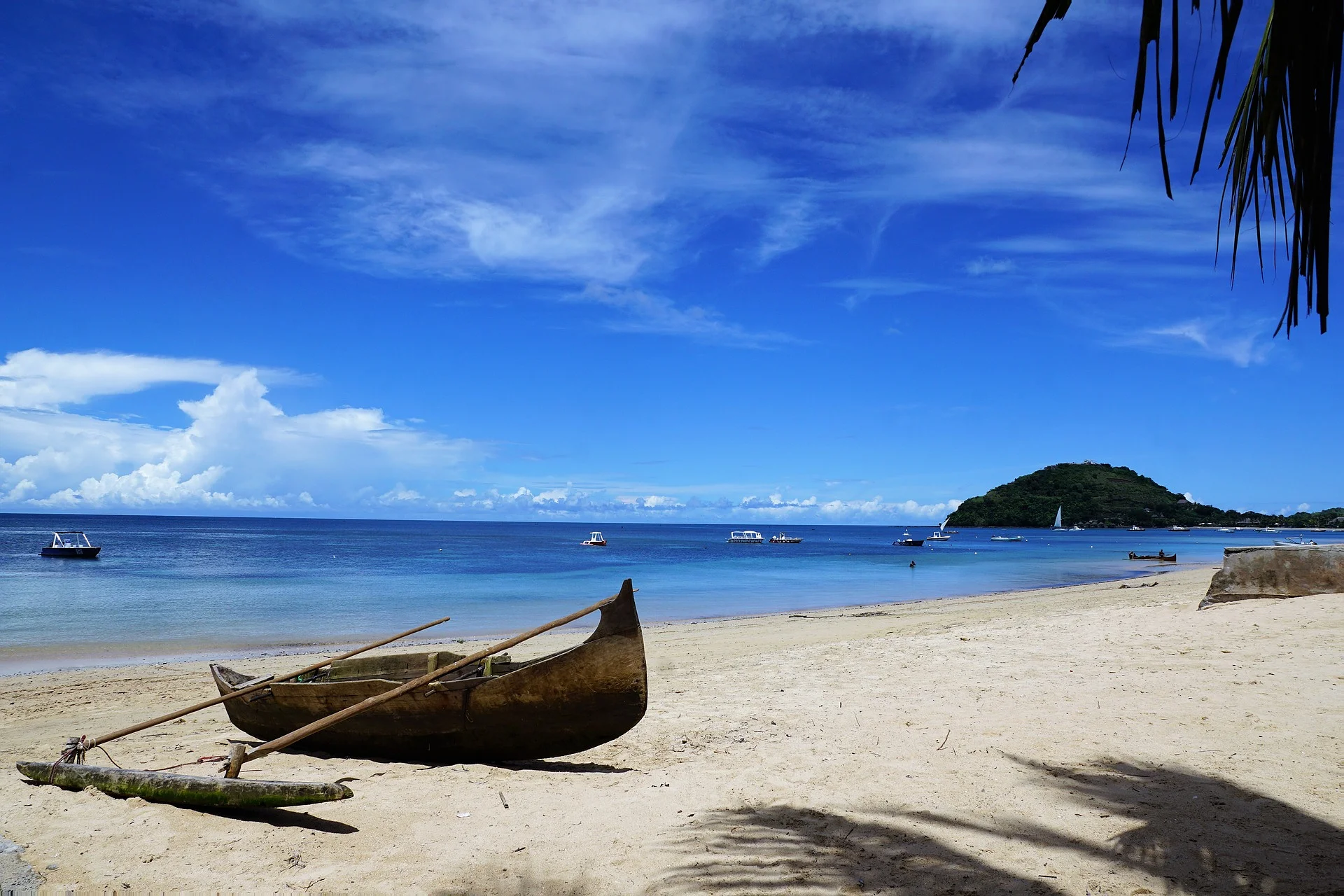
A destination primarily for tourists
Madagascar is a large island located off the coast of East Africa in the Indian Ocean. While vacationing on the "Red Island" has become trendy in recent years, few tourists are willing to return to settle down. Yet, Madagascar is overflowing with thousands of treasures just waiting to be discovered and explored by retirees and professionals looking to make a move.

As for the climate, there are only two seasons in Madagascar: the dry season from April to November and the wet season from December to March. Generally, temperatures hover between 20°C and 30°C year-round. Located in the Southern Hemisphere, the "coolest" months correspond to summer in the Northern Hemisphere: June through August. Do keep an eye out for cyclones, which can affect the north or south of the country between January and March.
There are beautiful beaches, nightlife every evening, and it never snows here. Even if these perks primarily benefit tourists, it’s still quite pleasant to enjoy them as a resident while exploring the island's various regions. But unless you are retired and planning to live off your pension, you are likely wondering what your professional life will look like on the ground.
Working and living in Madagascar
Starting a business: Yes, with resources and patience
It is the ideal place to grow a business, especially for business people or entrepreneurs who have capital and plenty of patience. Life on the island of lemurs is not expensive at all. The average monthly salary is less than €100, all charges included. Administered by France between the end of the 19th century and its independence in 1960, the country is Francophone, with French serving as an official language alongside Malagasy. Import/export with France and Europe seems easy to organize. However, keep in mind that when it comes to importing and exporting goods, customs formalities can prove complicated. For services, expect to spend time training your staff, and don't settle for the minimum wage if you want to attract top talent.
You should know that to hope to become a millionaire on the Red Island, you need to start with a significant amount of capital. Living in Madagascar should be a lifestyle choice first and foremost, not a get-rich-quick scheme. The big island is nothing like France. Here, things take time. Most expats living on the island have to be more involved than they would be in France to get things moving.
Settling in and social integration
When it comes to social life, the Malagasy people are very warm and welcoming. Not everyone will view you as a "colonizer" to be wary of, quite the opposite. Nevertheless, building deep connections is not always easy, and if you don't know how to recognize true values and real friends, you risk a rude awakening. Most Malagasy will first and foremost see you as a foreigner, a vasaha. To them, you are a good source of money.
Remember that this is completely understandable, as the standard of living between Madagascar and France is vastly different, as is the education system. Naturally, and for the sake of convenience, it is likely that the first friends you make will be other expats like yourself, from France or elsewhere.
The benefits of expat life in Madagascar

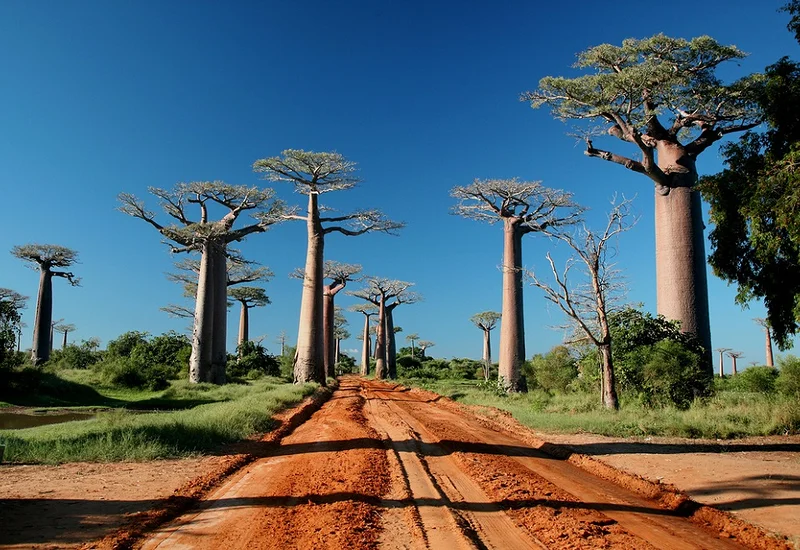
If you choose to move to Madagascar, you will surely make many surprising discoveries on this island-continent. Many animal species, such as the iconic lemur, and plant species are endemic, meaning they are found nowhere else.
This natural wealth translates into a wide variety of Malagasy cuisine. Local culinary specialties include fish, zebu meat (the Romazava), or pork (the Ravitoto), rice, as well as exotic fruits and vegetables... Local agricultural and fishing products will seem very inexpensive to you.
You will improve your quality of life by breaking away from the French pace of life. You will benefit from the hospitality of the Malagasy people, a very warm welcome, and the kindness of the locals. You can easily find help in your daily life or with your business projects by hiring local staff. Since life is much cheaper, salaries for experienced employees range between 150 and 200 euros per month. It’s a great opportunity to create jobs locally, and why not pass on professional skills?
The downsides
Cultural activities may also seem relatively limited. You won't find large museums, major bookstores, or international exhibitions here...
Socially, you will unfortunately realize that despite the abundance of food and raw materials, the country needs help because, all things considered, it remains poor. You might feel guilty at times when you see the gap in the standard of living compared to the locals.
These inequalities are not without consequences regarding insecurity, particularly on the main island. Since poverty is still prevalent, you could potentially be robbed in the street or have your home broken into... Day or night, it is safest to stay on your guard and not carry any valuables when you go out. The most prudent approach, especially if you are with family, is to travel accompanied by local guides.
Where to settle?
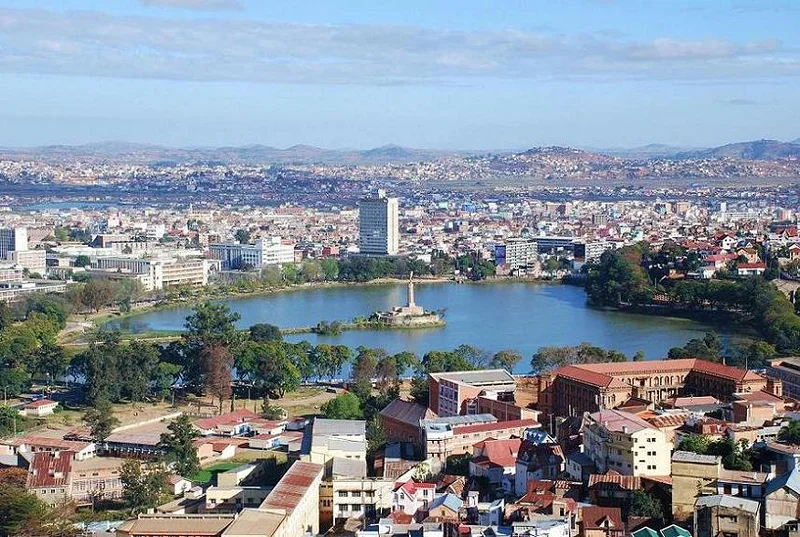
Antananarivo, the capital, for work

If your goal in moving to the Red Island is to work or even run a business, it will be more practical to settle in the capital, also called Tananarive, or Tana to those in the know. This is for several reasons:
- This is where you will more easily find collaborators who are perfectly fluent in French and possess the necessary skills.
- In the same vein, you will find the most varied service providers (services, transport, accounting, etc.), and, depending on the neighborhood, the best infrastructure (offices, internet connections...).
- Interactions with the Malagasy administration are often full of unpleasant surprises, especially if you are remote. You will save a lot of time by being present on-site, closer to the administrative centers. This applies to civil formalities, company registration, customs, import/export, etc.
- Antananarivo benefits from a central location, served by the main international airport and the country's primary road arteries.
- Toamasina, Madagascar's leading commercial port, is a 7-hour drive to the east, which remains acceptable by the country's standards. If you are getting into heavy import/export, it is likely your goods will transit through this port.
However, be careful to choose your neighborhood wisely. As mentioned above, the quality of infrastructure and the level of security vary quite a bit. If you wish to enroll your children in the French high school, you can settle nearby in the Ambatobe neighborhood, or Ankerana and Nanisana on the northeastern outskirts. North of the city, between Lake Masay and Tsarasaotra Park, the Ivandry neighborhood is one of the most upscale. Popular with wealthy families and expats, its rents are among the highest in the capital. If you are considering buying, keep in mind that your "ownership" title will only be valid for 99 years. It is therefore wiser to rent.
Nosy Be, or the coast, for a peaceful retirement

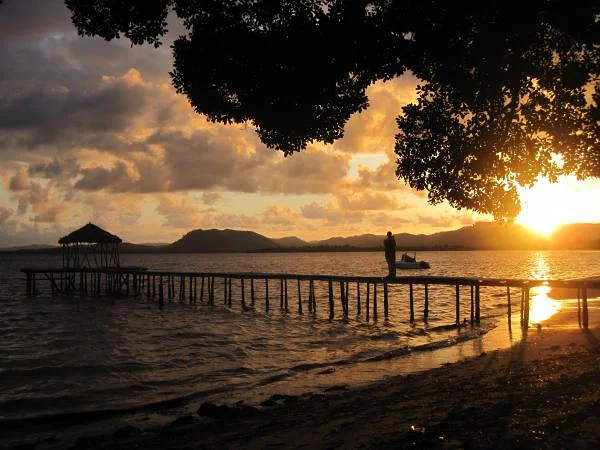
Nosy Be, the perfume island, is located in the northwest of Madagascar. This little earthly paradise is highly appreciated for its postcard-perfect beaches, favorable climate, and lush greenery. Nosy Be has its own international airport, with direct connections to Reunion Island, for example. The flip side is that life in Nosy Be is a bit more expensive than in the rest of the territory, although an average retirement pension allows you to live there comfortably. Still, other coastal destinations can offer an interesting alternative, such as the island of Sainte-Marie to the east. You could, for example, go whale watching there!

Remember, however, that Nosy Be and Sainte-Marie remain small islands. 50,000 people live in Nosy Be, on a surface area extending 25 kilometers from north to south and about twenty kilometers from east to west. Fewer than 30,000 people live in Sainte-Marie, on a (very) thin strip of land 50km long. In other words, you will quickly see everything there is to see, and if you have a wandering soul, you will probably prefer life on the mainland. You will find more varied activities there, as well as more accessible products and services, such as medical care, building professionals for maintenance and repair work, groceries, etc. The coastal region located east of Tana, between Toamasina (Toamasina in Malagasy) and Fénérive (Fenoarivo Atsinanana in Malagasy) has quite a few assets. To the northwest, why not opt for Majunga (Mahajanga in Malagasy), a port city in the heart of a wilder region, less frequented by tourists.
Source: http://madagascar.marcovasco.fr
Restez dans votre "France", un pays paradisiaque !!..où il n'y a pas de mendiant à chaque feu rouge, où on ne caillasse pas les policiers et les pompiers, où vous pouvez vous balader en pleine nuit sans danger dans les Villes ( Roubaix, Marseille, Nord de Paris...etc). Et j'en passe et des meilleurs...
"AVANT DE BALAYER DEVANT CHEZ LES AUTRES, BALAYER DEVANT VOTRE PORTE"
Il semble en effet y avoir de bonnes choses à y faire, choses qui pourraient être bénéfiques pour soi même comme pour le pays