
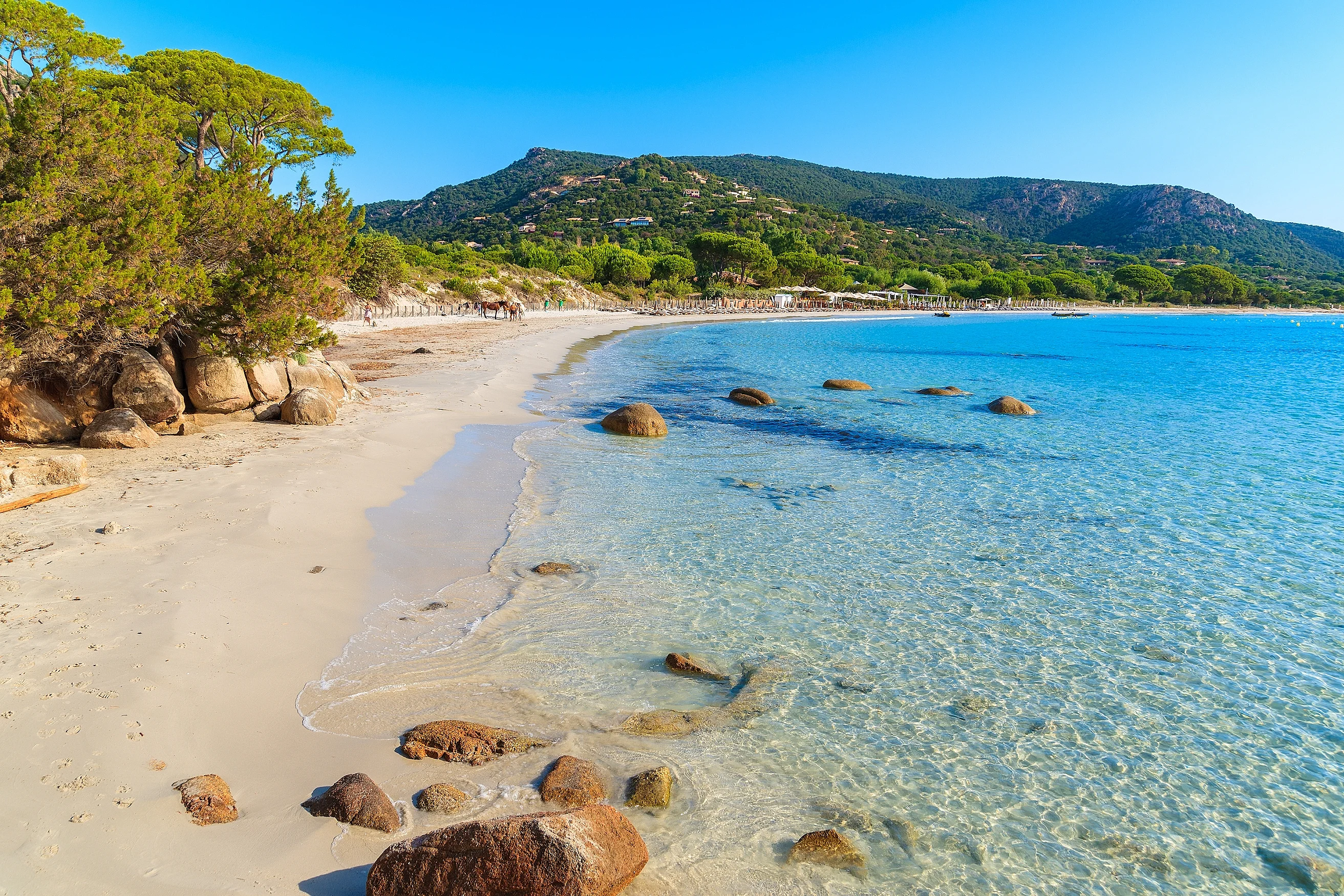
Corsica carries a stubborn reputation: that of a magnificent yet wildly expensive island where a two-week vacation costs the budget of a long-haul trip. With Camille, we spent 15 days there in June 2026, setting off from Lyon with our own car and tent. The all-inclusive total, from the first tank of gas to the final coffee on the ferry: {eur:2120} for two, which is {eur:1060} per person.
Yes, you read that right. And no, we didn't eat pasta every single night. We did a boat tour of Scandola, visited the Lavezzi Islands, ate out at restaurants twice a week, and went on about ten hikes. The difference doesn't come from deprivation: it comes down to three decisions made even before leaving. I'm breaking down everything for you, item by item, step by step, along with the mistakes we made along the way.
How much does a 15-day trip around Corsica really cost?
Let's start with the numbers, because that's what you came here for. Most articles give you a range like "between {eur:1000} and {eur:1400} per person, plus restaurants and activities". Translation: nobody actually crunched the numbers. We did.
Our detailed budget, for two, over 15 days
| Poste de dépense | Total pour 2 | Par personne |
|---|---|---|
| Ferry A/R Toulon-Bastia (2 pers. + voiture, cabine à l'aller) | 310 € | 155 € |
| Route Lyon-Toulon A/R (carburant + péages) | 135 € | 67,50 € |
| Carburant sur l'île (1 280 km) | 140 € | 70 € |
| Campings (13 nuits, emplacement + voiture + tente) | 420 € | 210 € |
| Courses et repas au réchaud | 390 € | 195 € |
| Restaurants (7 repas à deux) | 310 € | 155 € |
| Excursions, entrées et parkings | 300 € | 150 € |
| Divers (gaz, laverie, glaces, marchés) | 115 € | 57,50 € |
| TOTAL | 2 120 € | 1 060 € |
This total covers everything: campsite tourist taxes, beach parking, morning bread, and Camille's daily ice cream (no snitching intended 😇). Nothing is left hidden "on the side."
Camping or hotels: the gap we didn't see coming
Out of curiosity, I mapped out the same trip on paper staying in hotels, using the rates for the exact same dates. The result made me spit out my coffee.
| Poste | Notre version camping | La même chose en hôtels |
|---|---|---|
| Hébergement (13 nuits) | 420 € | 1 430 € |
| Repas | 700 € | 1 260 € |
| Transport (ferry, route, carburant) | 585 € | 585 € |
| Excursions et divers | 415 € | 415 € |
| TOTAL pour 2 | 2 120 € | 3 690 € |
That is a 1,570 € difference, almost entirely driven by two line items: lodging and food. Without a kitchenette or a stove, you end up eating out for lunch and dinner, and in Corsica in June, a decent dinner for two runs around 65 €. Multiply that by fourteen nights.
Price tip
The gap isn't a binary trap. We spent 13 nights under canvas, but nothing stops you from mixing things up: ten nights camping and three nights in a guesthouse in the hinterland will cost you about {eur:2500} for two, with real hot showers in between.
Ferry or plane: why we took off with our car
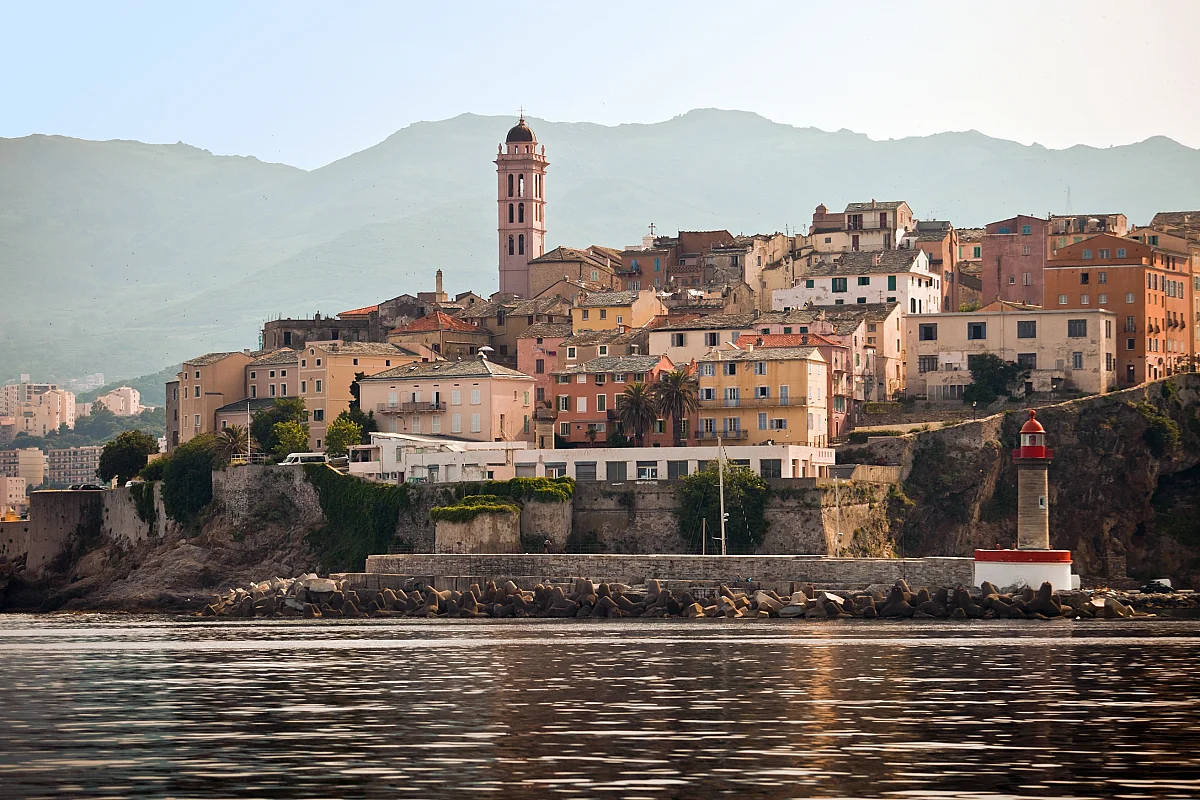 Arriving in Bastia by ferry in the morning
This is the first decision to make, and it sets the stage for everything else. Leaving from Lyon, you have two credible options.
The math we did before booking
| Ferry + notre voiture | Avion + location | |
|---|---|---|
| Trajet aller-retour | 310 € (ferry) + 135 € (route Lyon-Toulon) | 420 € (2 vols Lyon-Bastia) |
| Véhicule sur place | 0 € | 620 € (15 jours en juin, catégorie citadine) |
| Matériel emporté | Illimité (coffre entier) | 2 bagages en soute, +80 € |
| Total | 445 € | 1 120 € |
{eur:675} difference, and that is not even the biggest part. The real win is the trunk space. With our car, we can pack the tent, both sleeping pads, the stove, the cooler, folding chairs, and hiking boots without wondering if it will all fit. That is precisely what makes a camping budget actually work.
Watch out, though, because this calculation changes if you are leaving from Lille or Brest. At 900 km from the departure port, the drive starts taking a heavy toll in gas, tolls, and fatigue. From Lyon, Toulon is a 4-hour drive, which is the ideal sweet spot.
Take the overnight crossing, without hesitation
We boarded in Toulon at 8:00 PM to arrive in Bastia at 7:00 AM the next day. The two-berth cabin cost us 70 € more than a regular seat, and it is the best value of the trip: you save on a night of lodging, gain a full day at your destination, and step ashore feeling refreshed instead of having slept sitting up in an air-conditioned lounge.
Important
Book early. On this route, a one-way trip for two adults with a car runs around 107 € in the off-season, but July-August rates can triple. We booked in late February for June.
Camping in Corsica: what we wish we had known beforehand
This is the section I was searching for everywhere before leaving and couldn't find anywhere. Itinerary guides all send you to hotels costing 120 € a night, whereas camping is the most widespread accommodation on the island in the summer.
Wild camping is strictly prohibited
Let's get this out of the right away, because it is the first question everyone asks: no, you cannot pitch your tent on a deserted cove. Unlike Norway or Scotland, wild camping is strictly forbidden in Corsica, whether in a tent or a van, and the fines are steep. The maquis can go up in smoke in a matter of minutes during the summer, so this rule is far from just red tape.
The good news is that the island's campsite network is extensive, often stunningly located, and much less impersonal than you might think. Several of our spots were less than 300 metres from a beach, under the eucalyptus trees, for 28 € a night.
Corsican campsites are almost never booked in advance
Here is the point that threw me off the most, being a tech guy who plans everything three months in advance. Most campsites in Corsica do not take reservations for basic pitches, only for bungalows and mobile homes, usually by the week. For a tent, it is first-come, first-served.
The practical takeaway: arrive in the morning. We consistently showed up between 10 AM and noon, and we always had our pick of the spots. Couples rolling in at 6 PM ended up with the patch of dirt near the dumpsters, whenever anything was left at all. I wonder how it goes in July and August? 🤔
Price tip
Plan on {eur:25}-{eur:35} a night for two people with a car and tent in June, and more in August. Some networks offer prepaid voucher booklets valid at about fifteen campsites across the island, which are a great deal if you move around a lot.
What tent for a tour of Corsica?
I'm not an experienced camper, and I made the mistake of heading out with the gear I had on hand rather than what I actually needed. Three very real lessons learned the hard way:
- The ground is dry and hard as concrete in the summer. The thin tent stakes that come in the box bend on the third whack of the mallet. You need heavy-duty stakes and a proper hammer, not just some small rock you found lying around.
- The wind consistently picks up in the afternoon on coastal campsites, especially in Cap Corse and the Desert of Agriates. A poorly anchored tent turns into a kite.
- You'll be setting it up and packing it down seven times in two weeks. On a road trip, how fast it goes up matters just as much as how comfy it is once you're settled.
We considered a rooftop tent for Norway, but for Corsica, with the ferry and the narrow mountain roads, a traditional tent is still the easiest way to go. If you're starting from scratch, pay close attention to the packed size (your trunk fills up fast) and the actual sleeping capacity: a "3-person" tent is really just comfortable for two people plus your bags.
I've done some research for next time and I'm sharing what I found: check out which tent to choose here.
Our 15-day itinerary, step by step
One rule guided our whole itinerary: limit the number of campsites. In Norway, we had changed accommodation almost every night and we came out of it exhausted. This time, 7 bases for 13 nights, with day trips out from each one. It is the best compromise we made.
| Étape | Nuits | Base | Route depuis l'étape précédente |
|---|---|---|---|
| Cap Corse | 2 | Pietracorbara | 25 min depuis Bastia |
| Saint-Florent & Agriates | 2 | Saint-Florent | 1 h 45 (par la D80) |
| Balagne | 2 | Calvi | 1 h 30 |
| Golfe de Porto | 2 | Porto-Ota | 2 h 15 |
| Ajaccio | 1 | Porticcio | 2 h |
| Grand Sud | 3 | Près de Porto-Vecchio | 2 h 30 |
| Centre | 1 | Corte | 2 h |
Day 1: Lyon, Toulon, and the overnight crossing
Departure from Lyon at 2:00 PM, arrival at the port of Toulon around 6:15 PM, boarding at 7:00 PM. Give yourself plenty of time, as the vehicle queue starts well before the time shown on your ticket. Dinner on board (decent, nothing special, {eur:19} for a main dish), then off to your cabin. Waking up with the citadel of Bastia right outside your porthole is a hard welcome to beat.
Days 2 and 3: Bastia and Cap Corse
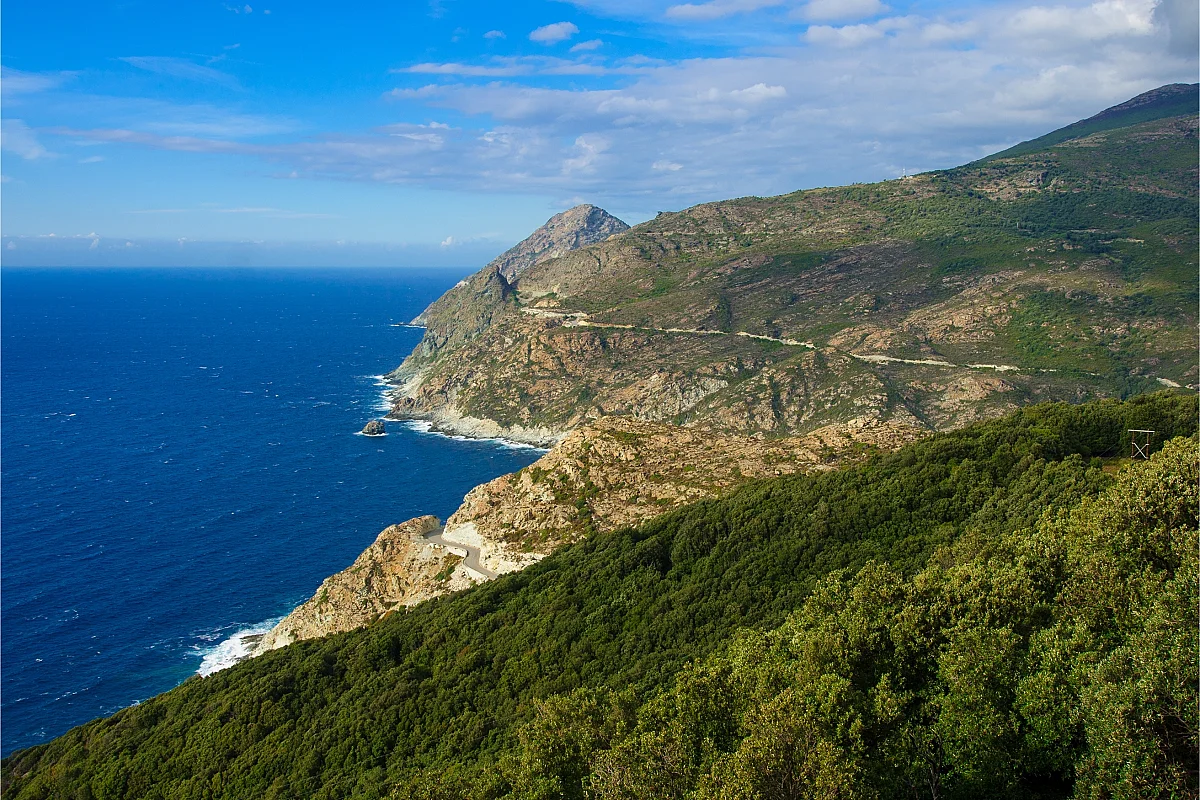 Cap Corse, in the north of the Island
Docked at 7:00 AM. We spent the morning exploring Bastia, the Old Port, the citadel, and the Romieu garden, before doing our first grocery shopping and heading up to the campground. You explore Cap Corse via the D80, a single road that loops around it for 40 km.
On paper, a breeze. In reality, plan on 4 hours of actual driving to complete the loop from Bastia to Saint-Florent, not counting stops.
On the first day, head north to Erbalunga and its little harbor, then to Macinaggio for the first stretch of the customs officers' trail. It is free, it is spectacular, and you can catch a boat back if you do not feel like walking the return trip.
The next day, head down the west coast for the view from the Mattei windmill, the harbor of Centuri, and Nonza with its black pebble beach. A detour through Brando is also well worth it for the vibe of the perched mountain villages.
Tip
On the west coast of the Cape, the road is carved right into the cliffside and passing oncoming cars is an extreme sport. Drive in the morning, before the RVs take over the switchbacks.
Days 4 and 5: Saint-Florent and the Agriates Desert
Saint-Florent takes two hours to visit, but it is the perfect base for the Agriates. We took the boat shuttle to Loto beach, {eur:20} round trip per person, then walked over to Saleccia beach via the coastal trail (1.5 hours, very easy, gorgeous). We headed back to Loto via the inland path, which is shorter and more monotonous.
On the second day, we checked out the Patrimonio vineyards for a tasting, followed by a long swim at Ostriconi beach on our way out the next day.
Price tip
We heard a lot of praise for taking a 4x4 along the dirt road to get to Saleccia. It is more expensive, it bumps you around for an hour, and you end up at the exact same beach. The boat shuttle is nicer and cheaper.
Days 6 and 7: Calvi and Balagne
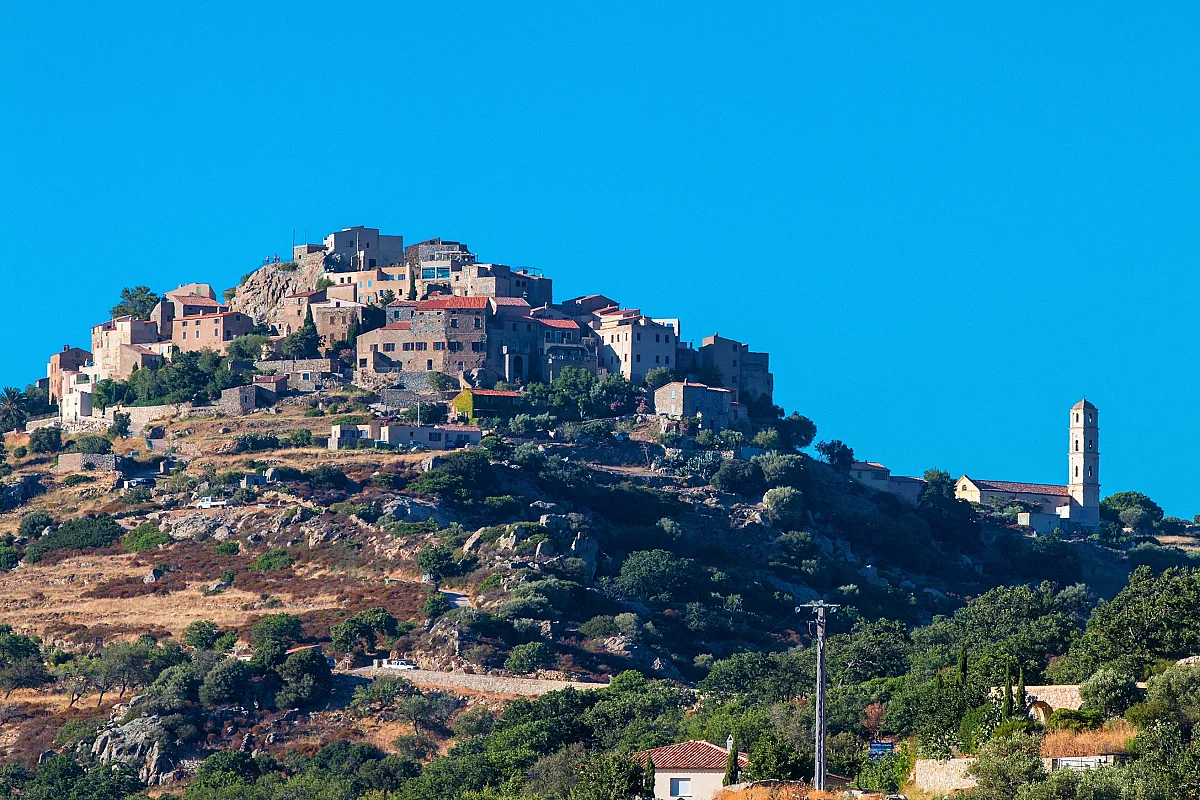 Village of Sant'Antonino, in Balagne
Calvi is the most touristy town in the north, and you can definitely feel it. The citadel and the walk along the ramparts are free and really worth the detour for the view over the bay. On the other hand, we found Quai Landry very expensive for what it offers.
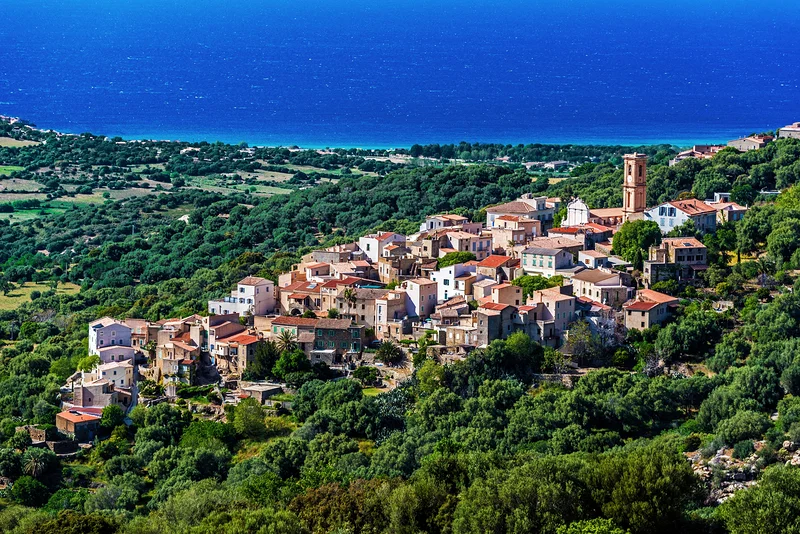
The real highlight of this leg of the trip is elsewhere: the Balagne hinterland. Pigna, Sant'Antonino, Lumio, stone villages clinging to the hillsides with sea views, almost deserted at 9 am. And the beaches of Bodri and Ghjunchitu, less famous than those in the south, feature water that is just as crystal clear.
Days 8 and 9: the Gulf of Porto, Scandola, and the Piana calanques
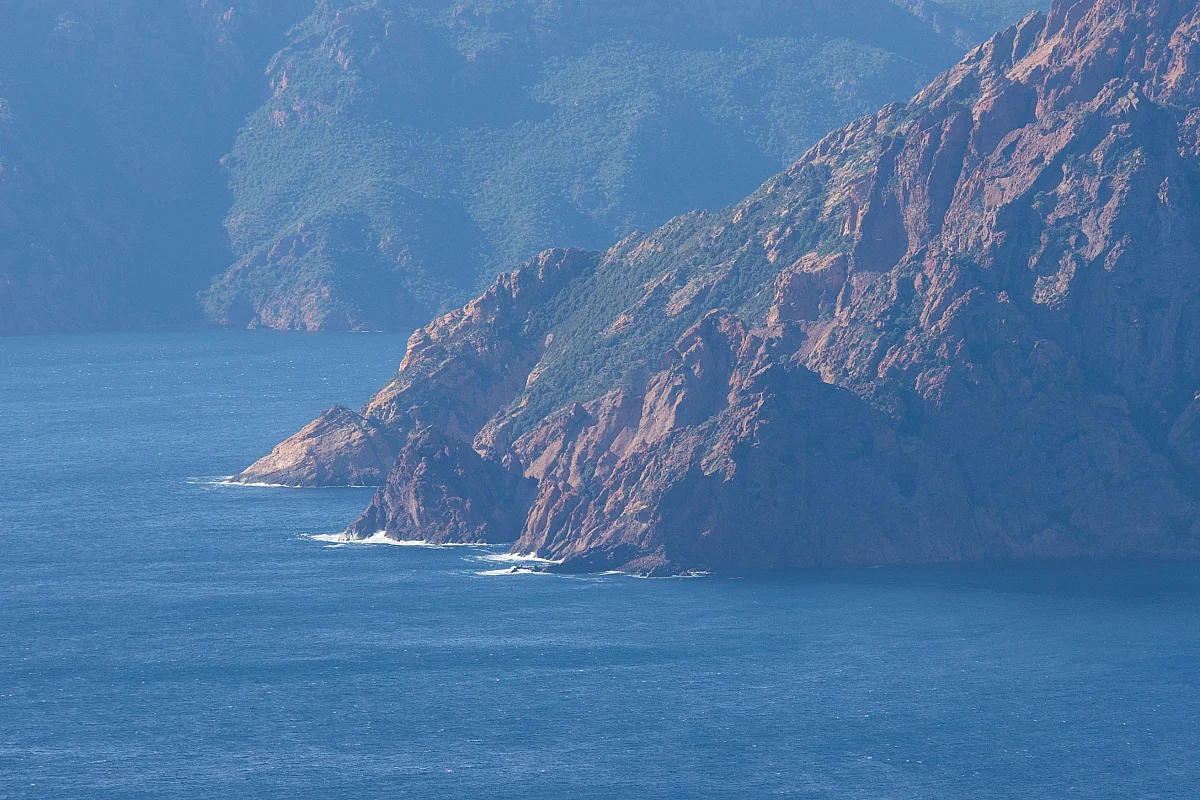 Calanques de Piana, in the morning
This is the most spectacular leg of the two weeks, and the only one where I advise you not to skimp.
The boat excursion to the Scandola Nature Reserve and the Gulf of Girolata costs 60 to 65 € per person depending on the type of boat. The zodiac is more adventurous and closer to the water, while the hybrid boat is more comfortable. We took the zodiac, with a stop in Girolata, and it is my favorite memory of the trip.
The next day, the Piana Calanques. The D81 running through them is gorgeous, but it is also a trap: starting at 10 AM in June, it turns into a crawl of creeping cars and you can no longer stop anywhere. We were there at 7:15 AM, practically alone, with the low light hitting the red rocks. If you are not moved by this, check your pulse.
In the afternoon, the Capo Rosso hike up to the Turghiu tower: 3h30 round-trip, medium difficulty, and a 360-degree view over the entire gulf. Free, and more impressive than many paid activities.
Day 10: Ajaccio and the Sanguinaires Islands
Just one night here, totally by design: it's a quick stop on the way south. We hiked the Sentier des Crêtes in the morning (about ten kilometres, free, with stunning views of the gulf), followed by the cruise to the Sanguinaires Islands, {eur:34} per person for about 3 hours, which includes a stopover on Mezzu Mare.
Downtown Ajaccio can be explored quickly; if you have to choose, prioritize the Pointe de la Parata at sunset.
Days 11-13: Bonifacio, Lavezzi Islands and the Far South
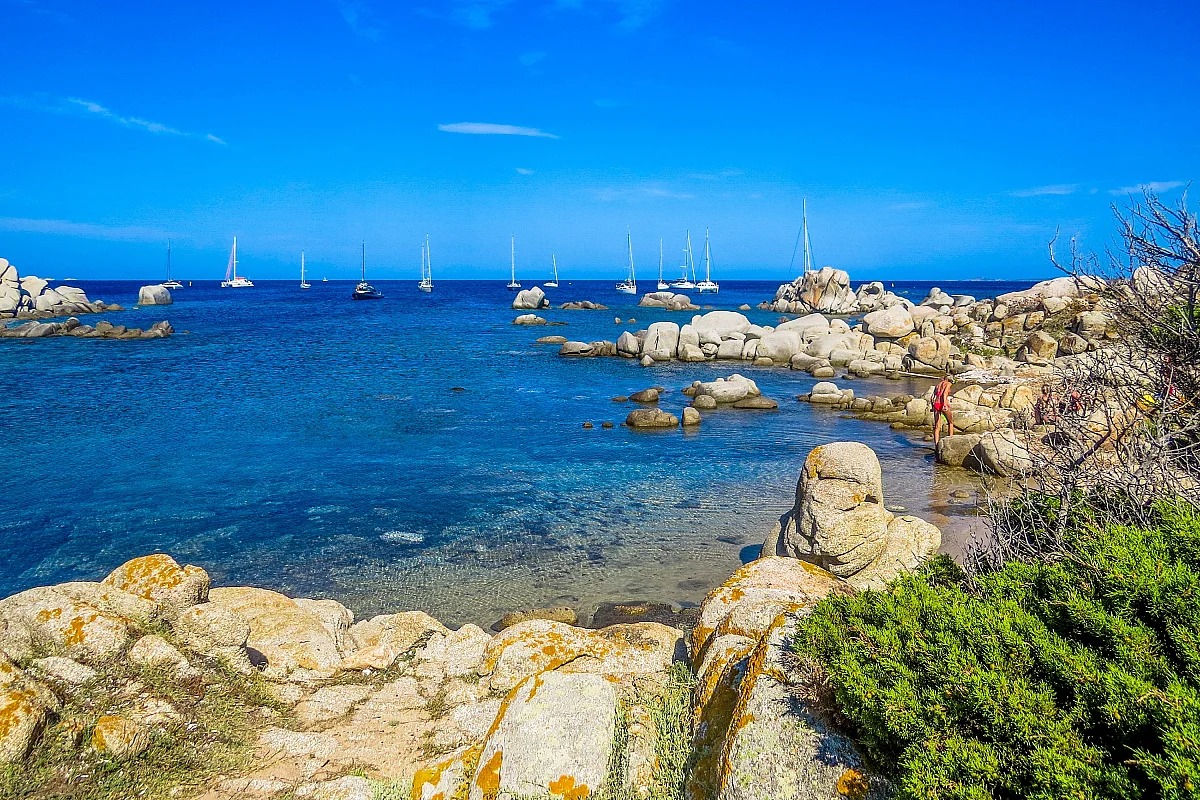 Boat trip to the Lavezzi Islands
Three nights based in a single spot was the right call, as everything is under 40 minutes away.
Day 11, Bonifacio
The upper town, the ramparts, and the King of Aragon's staircase, featuring 187 steps carved into the limestone cliff, vertigo-inducing on the way down and scorching on the way back up. The Monuments pass for {eur:6.50} includes the staircase and the Standard Bastion, making it the best value of the day.
Price tip
Don't bother trying to park downtown, it's a lost cause and it's expensive. Aim for the parking des Valli on the outskirts, {eur:10} a day, from where a free shuttle takes you down to the Marine every half-hour from 10 am to 6 pm, from June to mid-September.
Day 12, the Lavezzi Islands
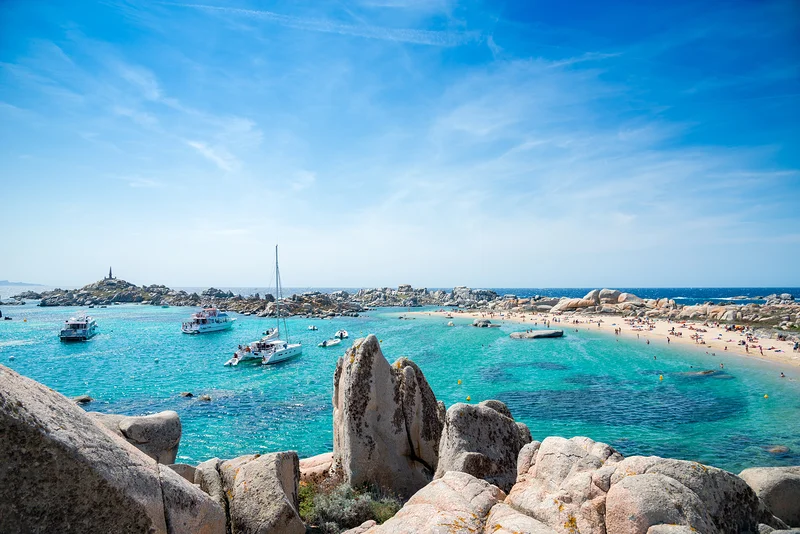
The ferry with the historic company from the port costs 39 € per person, about a 30-minute crossing. The archipelago is a designated nature reserve, meaning no infrastructure, no water fountains, and no snack bars. Bring a picnic, water, and a hat, as shade is practically nonexistent there.
Day 13, beaches and mountains
The famous beaches of Porto-Vecchio, Palombaggia, and Santa Giulia are gorgeous, but they get packed by 10:30 AM and feature paid private parking lots. We preferred Rondinara early in the morning and the Pinarello Bay in the afternoon, which are much more peaceful.
Another option for today is heading up to the Bavella Needles and hiking the Trou de la Bombe trail (1h30 round-trip, easy, with an unbeatable view-to-effort ratio).
Important
Access to the Purcaraccia rock pools is now regulated and is only allowed when accompanied by a hiking or canyoning guide. Do not go on your own based on an old blog post. For a beginner trip, the Pulischellu canyon in Bavella runs around {eur:50} for 3 hours.
Day 14: Corte and the Restonica Gorges
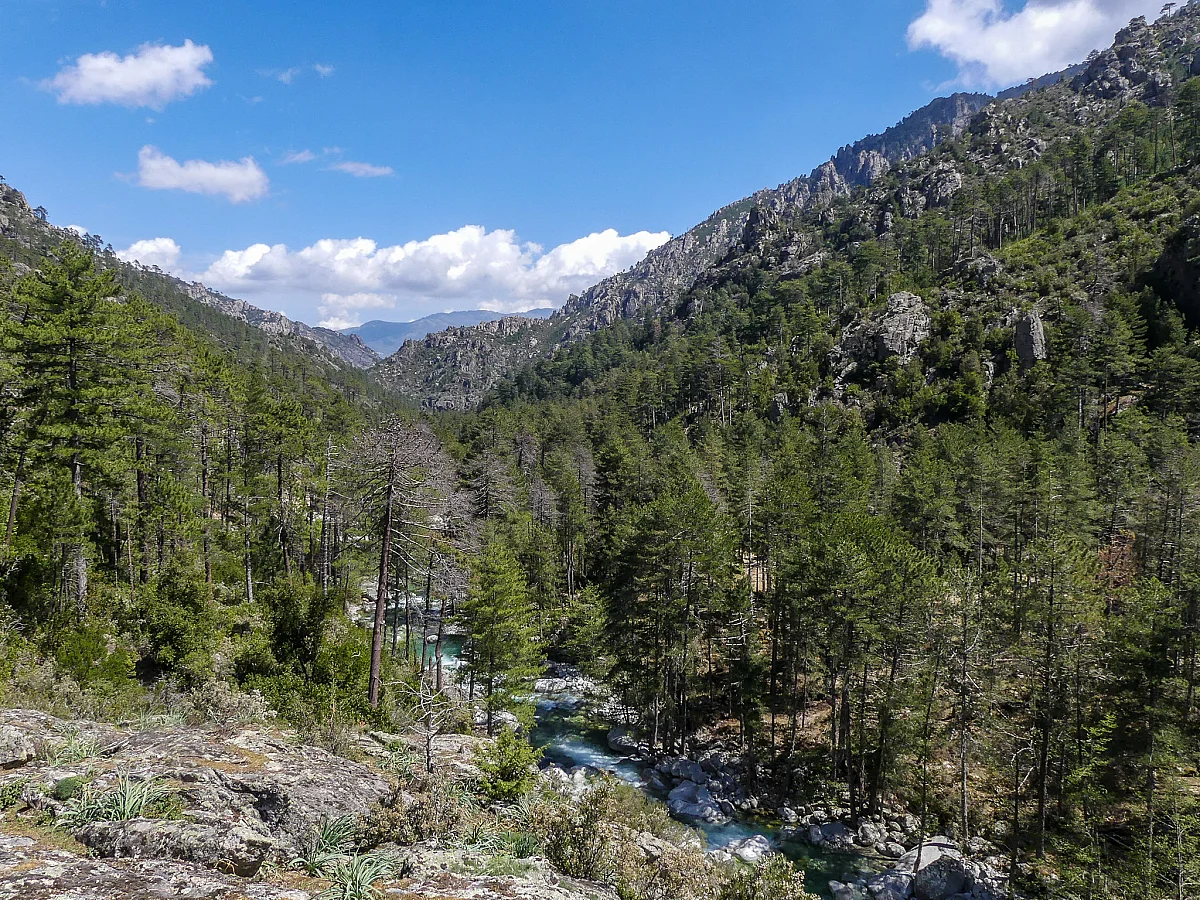 Gorges de Restonica © photo credit: Mike Prince
Heading back inland brings a radical change in scenery, taking you from turquoise beaches to the Corsican mountains in a two-hour drive. Corte is best explored on foot, including its citadel and viewpoint, but the real draw here is the Restonica Gorges.
One detail few articles keep up to date: since the storms of 2023, the valley road is no longer drivable all the way to the end. You have to stop at the Frassetta parking lot, about ten kilometres in, and finish the rest on foot. In the summer, a shuttle runs from Corte, but the schedule changes from one season to the next, so check with the tourist office the day before rather than relying on what you read online. Parking costs a fee and fills up before 9 am.
Day 15: return to Bastia and crossing
Corte-Bastia, 1h15 drive. Last fill-up, last market, and time to board. We took a daytime ferry for the return trip, and it was our most time-consuming logistics mistake (I'll get back to that below).
Real driving times: the number one trap
In Corsica, a kilometre doesn't mean much. The distance shown by your GPS is almost always underestimated by 25-40%, because apps don't take camper vans, herds of animals and impossible passing spots into account. Here are our actual, timed journey times from June:
| Trajet | Distance | Temps annoncé | Temps réel |
|---|---|---|---|
| Bastia → tour du Cap Corse → Saint-Florent | 110 km | 2 h 40 | 4 h |
| Saint-Florent → Calvi | 75 km | 1 h 15 | 1 h 30 |
| Calvi → Porto-Ota | 85 km | 1 h 50 | 2 h 15 |
| Porto → Ajaccio | 85 km | 1 h 40 | 2 h |
| Ajaccio → Porto-Vecchio | 140 km | 2 h 10 | 2 h 30 |
| Porto-Vecchio → Corte | 120 km | 1 h 50 | 2 h |
The rule I now follow: add 30% to the times posted on the west coast and in the Cape, 15% elsewhere. And never plan two major visits separated by more than 1h30 of driving in the same day.
Eating in Corsica without blowing the budget
The stove, the secret weapon
This is the expense that tips the budget. We had 25 out of 28 dinners at the campsite, cooked on a camp stove: pasta with brocciu, market tomato salads, cold cuts, and grilled fish whenever we walked past a fishmonger. Average cost of a dinner for two: 7,50 €. The exact same meal on a restaurant patio runs between 55 and 70 €.
Our lunches for under 5 €
Corsican bakeries are an absolute goldmine. Bastelles, those stuffed pastries filled with Swiss chard, onions, or brocciu cheese, cost {eur:3}-{eur:4} each and will easily keep you full all afternoon. Grab a zucchini fritter at a market and you've got lunch for {eur:5} per person, standing up and facing the sea.
Restaurants that are worth their price
Twice a week, we treated ourselves, but never right on the waterfront. Inland inns serve food twice as good for 30% less: in Sant'Antonino, a charcuterie board and a main course for two cost us {eur:42}, while the equivalent menu on the port of Calvi was {eur:68}. The rule applies across the entire island: as soon as you head 15 minutes inland, prices become fair again.
Excursions: which ones are worth the price?
| Excursion | Prix/pers. | Mon verdict |
|---|---|---|
| Scandola + Girolata en bateau | 60 à 65 € | Incontournable. Le seul accès possible, et ça les vaut. |
| Îles Lavezzi (navette) | 39 € | Oui, mais partez tôt et emportez tout. |
| Navette plage du Loto | 20 € | Excellent rapport qualité-prix. |
| Îles Sanguinaires | 34 € | Sympa, mais dispensable si le budget est serré. |
| Canyoning à Bavella | 50 € | La meilleure sensation forte de l'île. |
| 4x4 vers Saleccia | ~30 € | À éviter. Plus cher, moins agréable que le bateau. |
And the best part of all: the three moments that left the biggest impression on us, the coastal path, Capo Rosso at sunset and the calanques of Piana at 7:00 AM, didn't cost a single cent.
Good ideas vs. bad ideas
A refaire
- Traveling in June instead of August means fewer crowds, ferry prices cut in half, and water already at 22 °C
- Taking the overnight ferry on the outbound leg: a day gained and a night of accommodation saved
- Limiting it to 7 home bases for 13 nights (in Norway, we did the opposite and paid for it in fatigue)
- Arriving at campsites before noon, systematically
- Visit iconic sites before 8 AM or after 18h: Piana at dawn is something else
A faire différemment
- The daytime ferry on the way back. Nine hours of crossing in the blazing sun instead of a night of sleep, you lose a whole day of vacation just to save 70 €.
- Inadequate tent pegs. Three bent stakes on the very first night on the dry ground.
- The Restonica on a Sunday at 11 am. Parking lot full, road jammed, 40 minutes spent turning around in a single-lane road. You needed to be there by 7:30 am, period.
- Packing too much kitchen gear. Two saucepans, a frying pan, a stockpot: we used one saucepan and the frying pan.
- Bonifacio at 11:00 AM on the first day. We drove around for 25 minutes before figuring out how the Parking des Valli works.
Practical info to plan your trip
When to go?
June and September are the two best windows, hands down. In June, the water is already nice, the campsites aren't packed, ferry rates are still reasonable, and the roads are clear.
In August, you'll pay between 40% and 60% more to visit the exact same spots in the middle of crowds, with lines at the entrance of the calanques. May and October work really well too, but certain boat shuttles and campsites aren't running yet or anymore.
What budget according to your profile?
| Profil | Budget 15 jours (par personne) |
|---|---|
| Couple en camping, voiture perso, cuisine au réchaud | 1 000 à 1 150 € |
| Couple en camping avec quelques nuits en gîte | 1 250 à 1 400 € |
| Couple en hôtels et restaurants, avion + location | 1 800 à 2 200 € |
| Famille de 4 en camping (mobil-home) | 850 à 1 000 € par personne |
Frequently asked questions
15 days, is that enough to tour Corsica?
Yes, but it is the bare minimum for a complete tour without rushing. With 10 days, focus on half of the island. With 21 days, you can add sections of the GR20 or a getaway to Sardinia from Bonifacio.
Which direction should you take the itinerary?
That depends entirely on your arrival port or airport. From Bastia, the north-to-south direction makes the most sense and is the one we followed. From Ajaccio or Figari, simply reverse the order of the stops.
Can you visit Corsica without a car?
Technically yes, using the Bastia-Corte-Ajaccio train and a few buses, but you will miss 80% of the sights. The most beautiful beaches and villages are not served by public transit.
Do you need to book campsites in advance?
For a tent pitch, it is generally neither possible nor necessary outside of peak summer. Arrive in the morning. For a mobile home in July and August, book several months ahead.
Is fuel more expensive than on mainland France?
Yes, by around ten cents per liter, and even more at isolated mountain stations. Fill up in the major coastal towns, never up in the mountains.
My verdict
Corsica isn't a cheap destination, and I'm not going to tell you otherwise. But it's not the out-of-reach luxury people make it out to be either: {eur:2120} for two people for fifteen full days is cheaper than a week at a resort in the Balearic Islands, and you come back with ten hikes, three boat trips, and the memory of a sunrise over the Piana calanques.
It all comes down to three decisions made before setting off: bringing your own car, camping out, and cooking for yourself. The rest is just a bonus. To explore further, take a look at the most beautiful Corsican villages: it's in the backcountry, 15 minutes from the coast, that the island truly reveals itself.
Enjoy your trip to Corsica. You're going to love it.

Comments (0)
No comments yet. Be the first!