
Britain's oldest botanical garden grows on a medieval cemetery
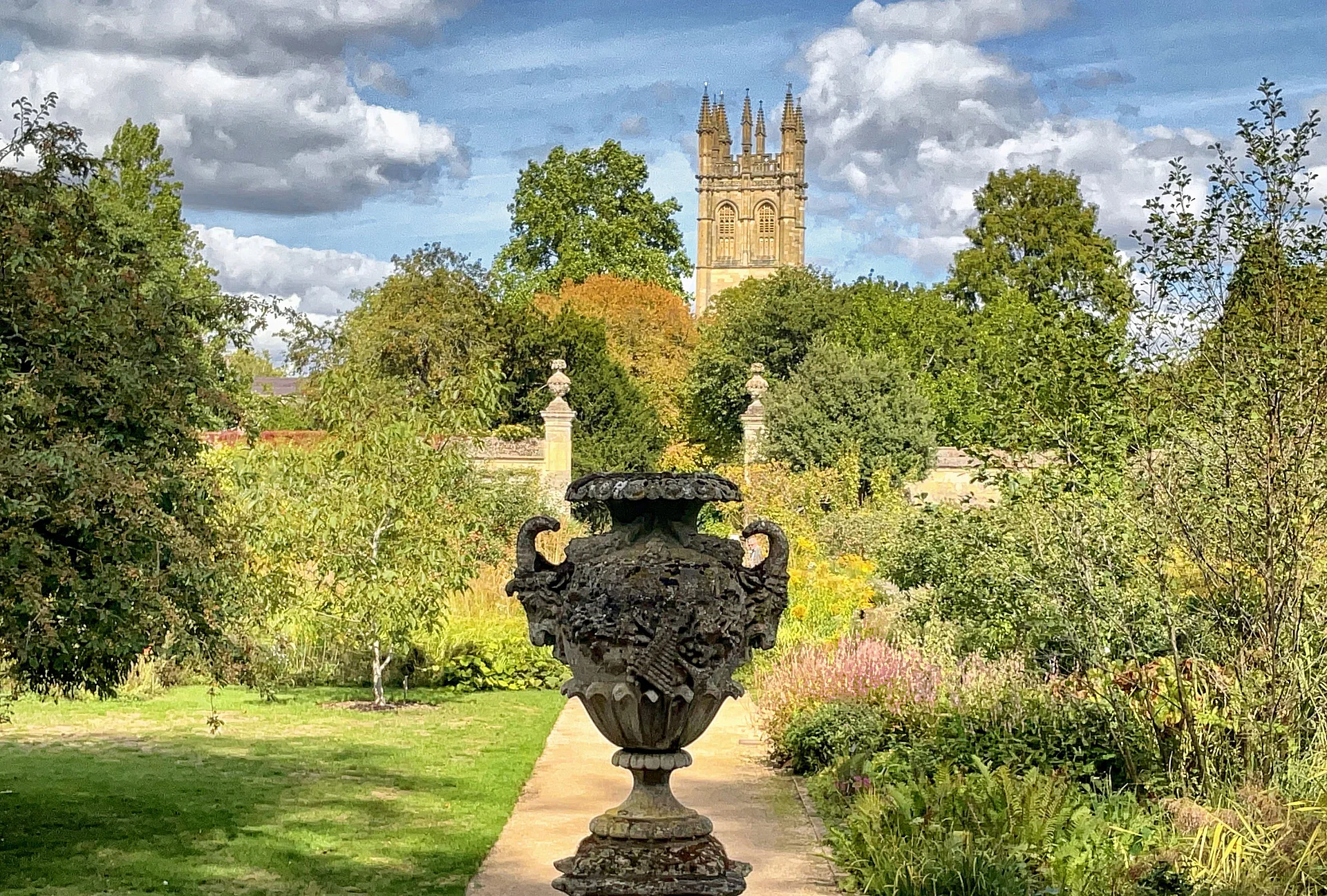
Behind a 17th-century stone gate, a walled garden opens along the banks of the river Cherwell, right across from Magdalen College. Herbaceous borders, a rock garden, vegetable plots, and formal flower beds are laid out in squares, with every plant labeled for anyone who wants to stop and read.
On the other side of the wall, the river keeps flowing. Flat-bottomed wooden boats called punts glide by, visible from the garden paths.
Why visit Oxford Botanic Garden
In 1621, Henry Danvers, 1st Earl of Danby, donated 5,000 pounds to establish a physic garden, "for the glorification of the works of God and for the advancement of learning." The site chosen was not accidental: a former 13th-century Jewish cemetery, abandoned since the expulsion of the Jews from England by Edward I.
The earliest plantings, mostly British and North American varieties, were overseen by John Tradescant the Elder, the garden's first keeper. In 1660, Scottish botanist Robert Morison became Oxford's first professor of botany, launching an ambitious project in 1669 to classify every plant known at the time.
From 18th-century glasshouses to modern biodiversity
In 1733, two greenhouses designed by William Townsend allowed for the cultivation of roughly 900 potted exotic plants, including coffee, tea, cotton, sugarcane, and pineapple. The current glasshouses continue this tradition, featuring a carnivorous plant house, a water lily house, an arid house, and a tropical house.
Spanning just 1.8 hectare, the garden today gathers over 5,000 different plant species, representing more than 90% of all higher plant families. It stands as one of the densest plant collections in the world. Among its quiet successes: the Cape ragwort, propagated here for the first time from seeds brought from Mount Etna.
Friendly tip: allow one to two hours for your visit, and keep in mind that there is no on-site parking. It is best to arrive on foot, perhaps crossing Magdalen Bridge and walking along the Cherwell riverbank.
How long for this activity
Plan for 1 to 2 hours to explore the greenhouses and paths of the garden.

I am used to visiting botanical gardens, and I found the one in Oxford really well maintained. The different plants are perfectly labeled, which makes the visit fun. There are so many plant species. It is a pleasant place for a walk, especially on sunny days.