The Netherlands Beyond the Clichés: Canals, Bikes, and a Lot More Than Tulips
A quarter of the Netherlands sits below sea level. This country literally engineered its own existence against nature, pumping, diking, and dredging for centuries. That stubborn relationship with space probably explains how the Dutch managed to pack so many museums, architectural landmarks, and cultural energy into a territory roughly the size of West Virginia.
The Netherlands Works for Almost Every Kind of Traveler
Amsterdam gets most of the attention, and that's a mistake. The country rewards a wider look, and it works just as well for a long weekend as for a two-week cycling trip.
thumb_up Good fit for:
- City-hoppers: Amsterdam, Rotterdam, Utrecht, and The Hague are all within an hour of each other by train
- Art and museum lovers (collections that rank among the best in Europe)
- Cyclists: the bike infrastructure here is genuinely the best in the world
- Families: excellent infrastructure, very safe country
- Nature travelers: dunes, forests, wetlands, and a long North Sea coastline
- Travelers flying into Amsterdam from the US: Schiphol is a major transatlantic hub with direct flights from dozens of American cities
warning Not ideal for:
- Sun-seekers: the weather is unpredictable year-round
- Crowd-avoiders: Amsterdam in summer is genuinely overrun
- Tight budgets: accommodation, especially in Amsterdam, is among the priciest in Western Europe
- Anyone looking for mountains or serious wilderness
Budget Reality: Western Europe Prices
The Netherlands won't break the bank, but Amsterdam hotel prices climb fast. Booking well ahead is essentially required in high season. Rotterdam and Utrecht are noticeably more affordable alternatives.
| Trip Type | Destination | Duration | Estimated Budget / Person |
|---|---|---|---|
| Art and culture city break | Amsterdam | Weekend (2 nights) | €250 to €500 (~$275, $550) |
| Architecture and urban design | Rotterdam | 2 to 3 days | €200 to €400 (~$220, $440) |
| Tulips and countryside | Keukenhof + Leiden region | 2 to 3 days | €200 to €400 (~$220, $440) |
| Cycling road trip | Country-wide | 1 to 2 weeks | €600 to €1,200 (~$660, $1,320) |
| Nature and national parks | Hoge Veluwe + Veluwe region | 3 to 4 days | €250 to €500 (~$275, $550) |
One of the Easiest Countries to Navigate as an American
US citizens don't need a visa for stays up to 90 days. A valid US passport is all you need. English is spoken fluently by virtually the entire population, including in small towns and rural areas. Dutch is the official language, and locals genuinely appreciate a few words of it, but you will never be stuck.
Trains run on time, bike infrastructure is flawless, and the country is consistently ranked among the safest in the world. For a first solo trip or a family vacation in Europe, it's hard to beat.
Amsterdam: How to See It Like a Local
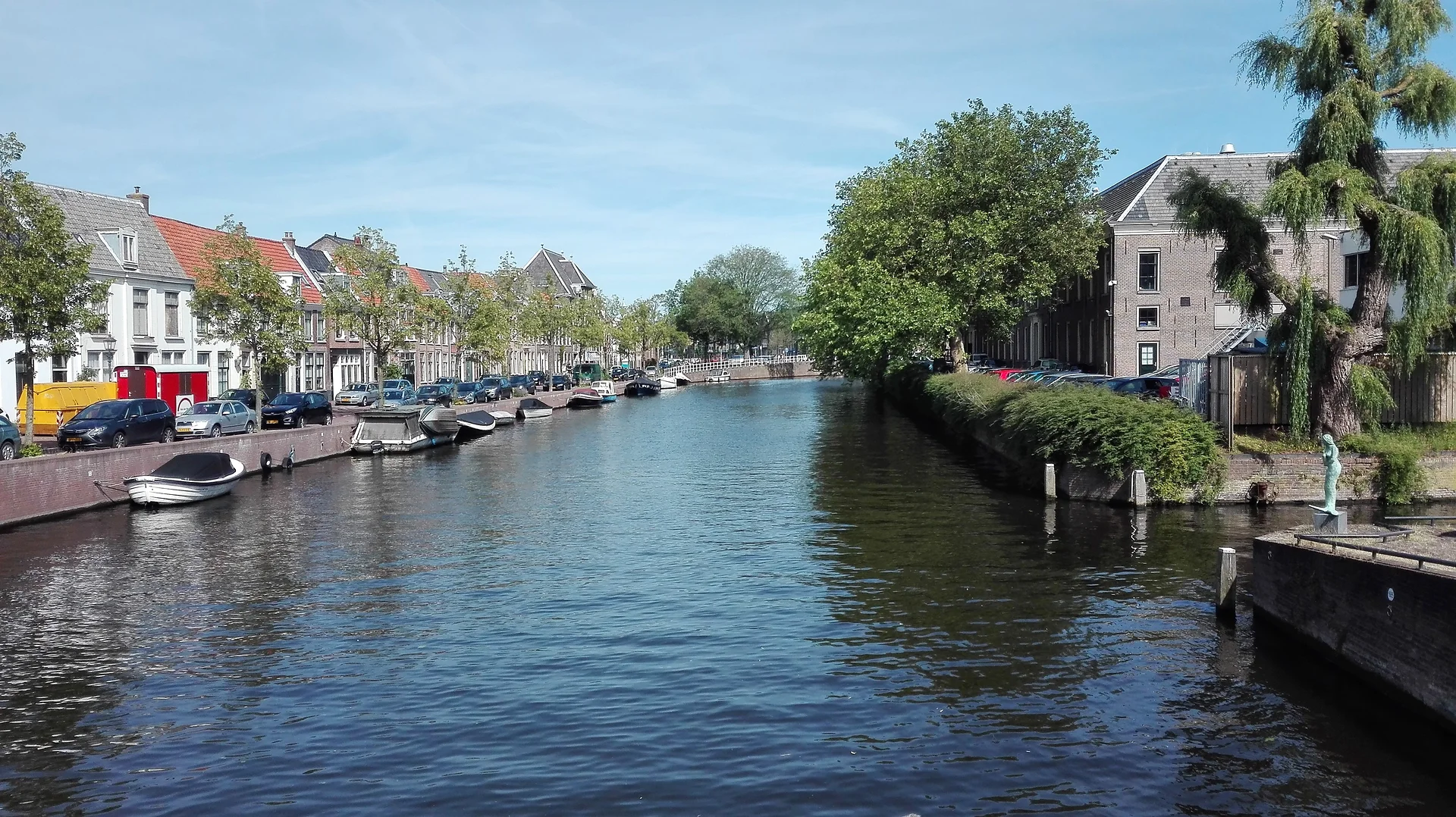
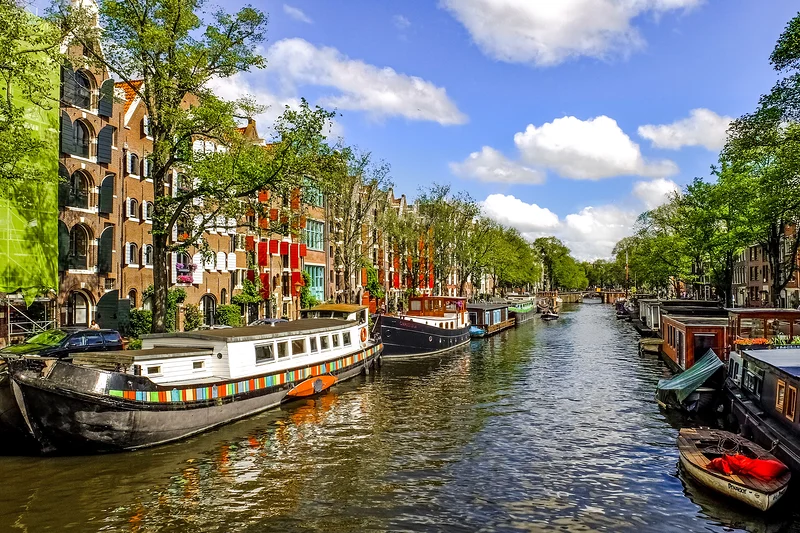
Amsterdam has a real overtourism problem in summer. That said, its UNESCO-listed canal ring, gabled facades, and genuinely world-class museums are worth it, as long as you visit smart.
The Rijksmuseum is non-negotiable (Rembrandt, Vermeer, one of the great collections on earth), and so is the Anne Frank House. Book both online weeks in advance. Walk-up lines are brutal and often pointless. The Stedelijk Museum, focused on contemporary art and design, tends to be less crowded and is just as rewarding.
Insider tip: skip the historic center for meals. Head instead to De Pijp (Albert Cuyp Market, local cafes) or Jordaan for a noticeably less touristy atmosphere. Early morning, around 7:30, 8 a.m., the canals are nearly empty and you can actually get photos without crowds.
Cities Worth More Than a Passing Stop
- Rotterdam is the standout of the Netherlands. Completely rebuilt after the bombing of 1940, it became a laboratory for bold contemporary architecture. The Markthal, the pencil-shaped Bibliotheek Rotterdam, and Piet Blom's cube houses make every neighborhood feel like an architecture school field trip.
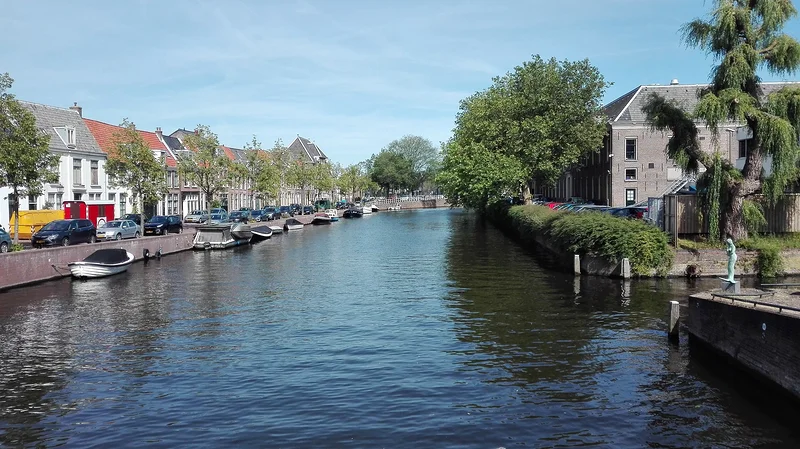
- Utrecht is Amsterdam with the volume turned down: calmer, more affordable, more lived-in. Its canals are lined with restaurant terraces at water level, the Dom Tower dominates the skyline, and bikes are everywhere. It's just 30 minutes by train from Amsterdam.
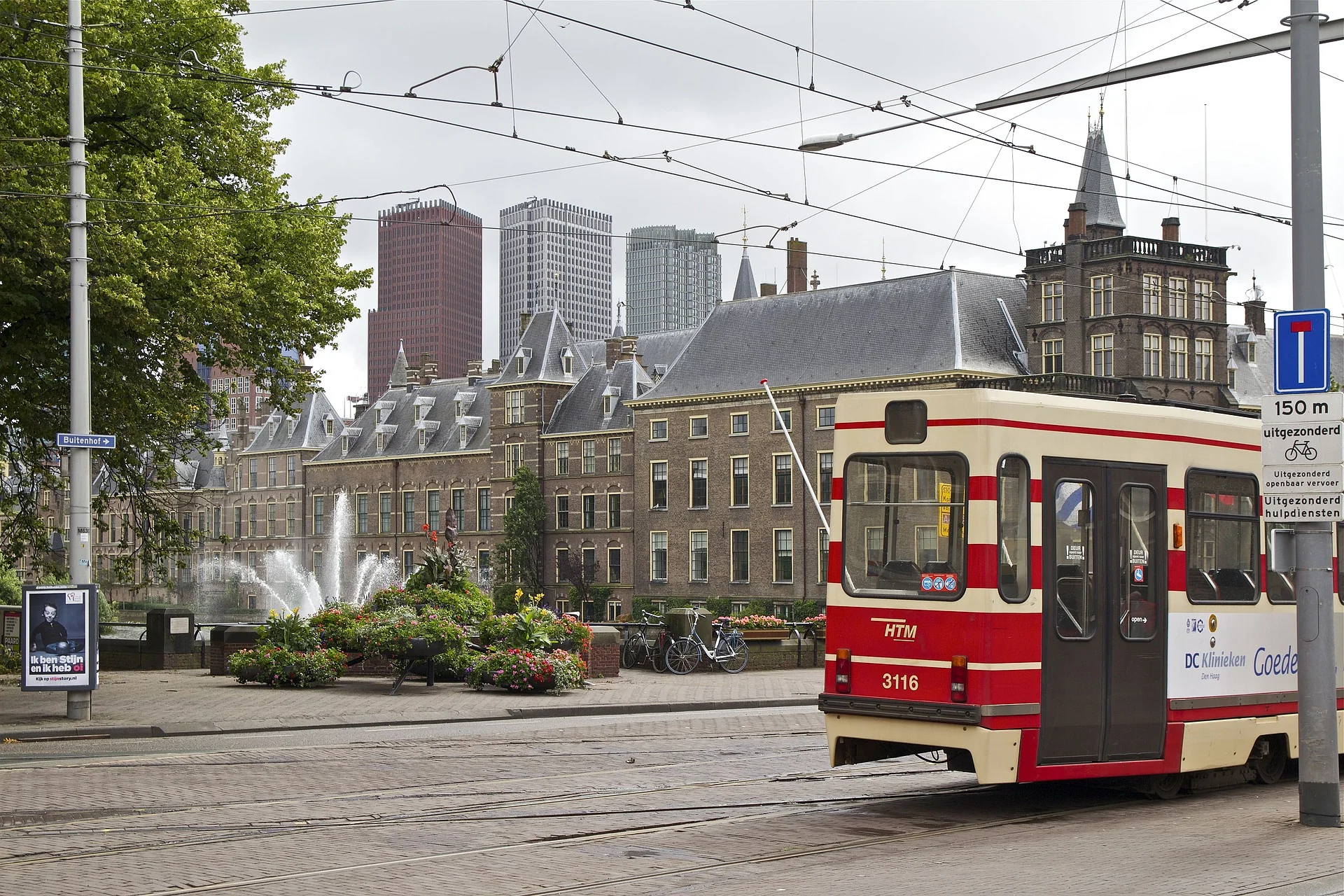
- The Hague deserves more attention than most guides give it. It's the seat of the Dutch government, the International Court of Justice, and the International Criminal Court. It also holds the Mauritshuis, a compact museum that houses Vermeer's Girl with a Pearl Earring. Ten minutes by tram, the beach at Scheveningen is the largest seaside resort in the country.
Windmills, Polders, and Villages That Look Like Paintings
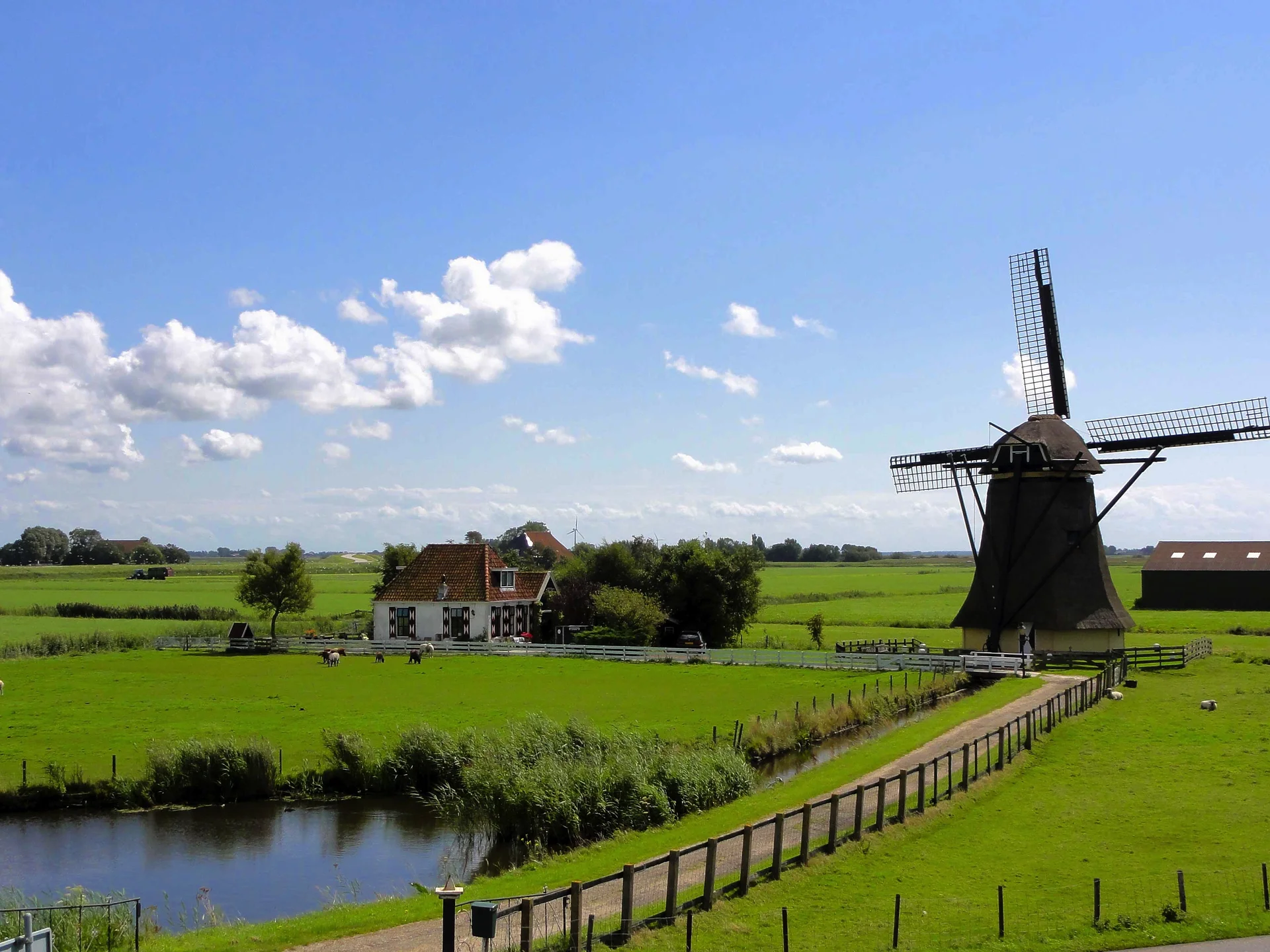
The Dutch landscape is as much a human creation as a natural one. The windmills scattered across the polders aren't decorative: they pumped water for centuries to make this land farmable. Many still operate today.
Zaanse Schans, 20 minutes northwest of Amsterdam, reconstructs a 17th-century village with working windmills, painted wooden houses, and cheese workshops. It's touristy, but done well. Even better: Kinderdijk, near Rotterdam, lines up 19 windmills across a UNESCO-listed polder landscape. The late-afternoon light there is something else.
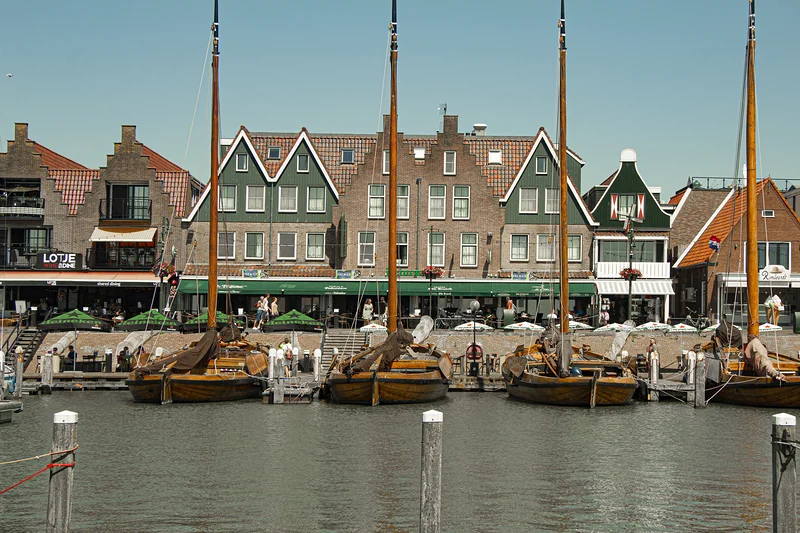
Volendam and Marken, on the shores of Lake IJmeer, preserve a maritime character with colorful houses and, on festival days, residents in traditional dress. It leans folksy, but it has genuine charm.
Tulip Fields and Dutch Nature
From April through May, the Bollenstreek (the "bulb region") between Leiden and Haarlem turns into horizontal stripes of color that stretch to the horizon. Keukenhof park, open from mid-March to mid-May, is the largest spring flower garden in the world, with 7 million bulbs planted every year. Crowds are real, but the spectacle holds up.
For nature without the tulip-season circus, Hoge Veluwe National Park (Gelderland province, about 2 hours from Amsterdam) covers 13,500 acres of sand dunes, forests, and heathland. Free white bikes are available at the entrance to explore the park. The Kröller-Müller Museum, right in the middle of the park, holds one of the largest Van Gogh collections in the world.
Insider tip: for tulip fields, don't fixate on Keukenhof alone. The bike routes between Lisse and Hillegom cut through endless fields that are far more photogenic than the crowded park. Do it on a weekday if you can.
The Frisian Islands: The Other End of the Country
Off the northern coast, the West Frisian Islands form an archipelago that most international visitors never hear about. Texel, the largest and most accessible (20-minute ferry from Den Helder), has fine-sand beaches, exceptional birdwatching reserves, and a windswept, end-of-the-world feel that's hard to find elsewhere in Western Europe.
Vlieland and Terschelling are even more remote and quieter still. Cars are banned or heavily restricted on these islands. You get around by bike, sleep in small guesthouses, and eat fresh fish. It's a side of the Netherlands that most tourists never suspect exists.
Dutch Food: Maritime Tradition Meets a Surprisingly Good Restaurant Scene
Dutch cuisine has taken unfair hits for years. It's straightforward and filling, shaped by a country of sailors and farmers, but it delivers real satisfaction when you know what to order. Haring (raw marinated herring) is eaten by hand, held by the tail, with chopped onions and pickles. It's a street ritual every visitor should try, ideally from a local fishmonger rather than a restaurant.
Stroopwafels (thin caramel-filled waffle cookies) and bitterballen (deep-fried stew croquettes served with mustard, typically as a bar snack) are two pillars of Dutch food culture. As for cheese, both Gouda and Edam are worth tasting in their aged form (oud) rather than the young versions exported everywhere.
Amsterdam and Rotterdam have serious restaurant scenes, with a strong Indonesian influence rooted in the colonial era. The rijsttafel, an Indonesian meal of many small dishes served around rice, is an institution worth trying at least once. The Fenix Food Factory market in Rotterdam is one of the best spots to sample all of this in a converted industrial space.
When to Go to the Netherlands
Spring (April to May) is peak season for an obvious reason: tulips. It's also the most pleasant weather of the year, with temperatures between 54°F and 64°F and long, bright days. Tourist crowds are at their highest, especially around Keukenhof.
Summer (June through August) is ideal for terraces, festivals (the North Sea Jazz Festival in Rotterdam in July, DGTL in Amsterdam around Easter), and beach time on the coast. Temperatures rarely push past 77°F. It's high season, so book accommodation and museum tickets well in advance.
Fall is a solid window for city visits with thinner crowds and lower rates. Winter is gray and cold, but Christmas markets and outdoor ice rinks give the cities a specific atmosphere. December also brings Sinterklaas, the national celebration on December 5.
Getting to the Netherlands
From the US, the most straightforward option is a direct flight into Amsterdam Schiphol, one of Europe's major transatlantic hubs. Direct routes operate from New York, Boston, Chicago, Los Angeles, Atlanta, and several other US cities. Carriers including KLM, Delta, and United serve the route, with round-trip fares typically starting around €500, €800 ($550, $880) booked in advance. Rotterdam The Hague Airport is a smaller alternative, sometimes cheaper for connecting itineraries.
US citizens traveling on a valid passport do not need a visa for stays up to 90 days under the Schengen agreement. No ESTA required. Your passport should be valid for at least three months beyond your planned departure date from the Schengen area.
Getting Around the Netherlands
The bike is the default mode of transport. The country has more than 35,000 miles of marked cycling paths. Rentals are available at every train station through OV-fiets (short-term rental with a transit card) or from independent shops throughout the country. In most cities, biking is genuinely the fastest way to get around.
The national rail network, NS (Nederlandse Spoorwegen), is dense and reliable. All major cities are connected multiple times per hour. The OV-chipkaart transit card covers trains, buses, trams, and metro across the entire country on a single card. Day and week passes are available for visitors.
A car makes sense for exploring rural areas, the Frisian Islands, or the polders of Zeeland province. In cities, though, parking is expensive and complicated. In Amsterdam, expect to pay up to €7 per hour (~$7.70) in the city center. For any urban stay, transit and biking are far more practical.