
The Van Gogh Museum: 200 canvases to understand a tortured genius
Morning light filters through the glass ceiling, catching the thick, textured impasto of the Sunflowers. You can see every brushstroke, every layer of paint that Vincent applied over 130 years ago. This physical proximity to the original work creates an effect that no reproduction can replicate, the unsettling feeling of standing exactly where the artist intended.
Why visit the Van Gogh Museum?
This museum houses the largest collection of works by Vincent van Gogh in the world. More than 200 paintings, 500 drawings, and 750 letters trace the journey of a man who painted for only a decade, yet revolutionized art history. The collection belonged to Vincent's brother, Theo, and then to his sister-in-law Jo, who dedicated her life to promoting this genius who was largely unrecognized during his lifetime.
The chronological layout turns your visit into an initiation. You will see the somber canvases of his Dutch period, the explosion of color that occurred in Paris after he encountered the Impressionists, and finally the creative peak in Arles and Saint-Rémy. This progression reveals an artist in perpetual search, never satisfied, always chasing the perfect light.
Masterpieces to look for
Sunflowers
This 1889 version will never leave Amsterdam again. Recent scientific studies revealed its extreme sensitivity to vibrations and humidity fluctuations. Van Gogh used only three shades of yellow to create this solar explosion, meant to decorate the bedroom of his friend Paul Gauguin in the Yellow House of Arles.
Almond Blossom
Vincent painted these delicate branches to celebrate the birth of his nephew, named Vincent in his honor. The intense blue background and the white flowers on the verge of blooming symbolize renewal and hope. The influence of Japanese woodblock prints is immediately apparent. This canvas hung above the family piano for years before entering the museum's collection.
The Potato Eaters
The first masterpiece of his Dutch period, this scene of a peasant meal is bathed in intentional darkness. The weathered faces, knotted hands, and the meager light of the kerosene lamp tell of the harsh life that Vincent knew well, as he had shared it.
The Bedroom in Arles
The blue walls, the wooden bed, and the straw-bottomed chairs create an intimate retreat where the perspectives seem slightly skewed. Van Gogh took inspiration from Japanese prints for this deliberate shift, which gives the scene a strange emotional depth.
Friendly tip: On Friday evenings, the museum stays open until 9:00 PM, and the crowds thin out significantly after 5:00 PM. This is the ideal time to view the Sunflowers without the usual midday rush.
Architecture in the service of art
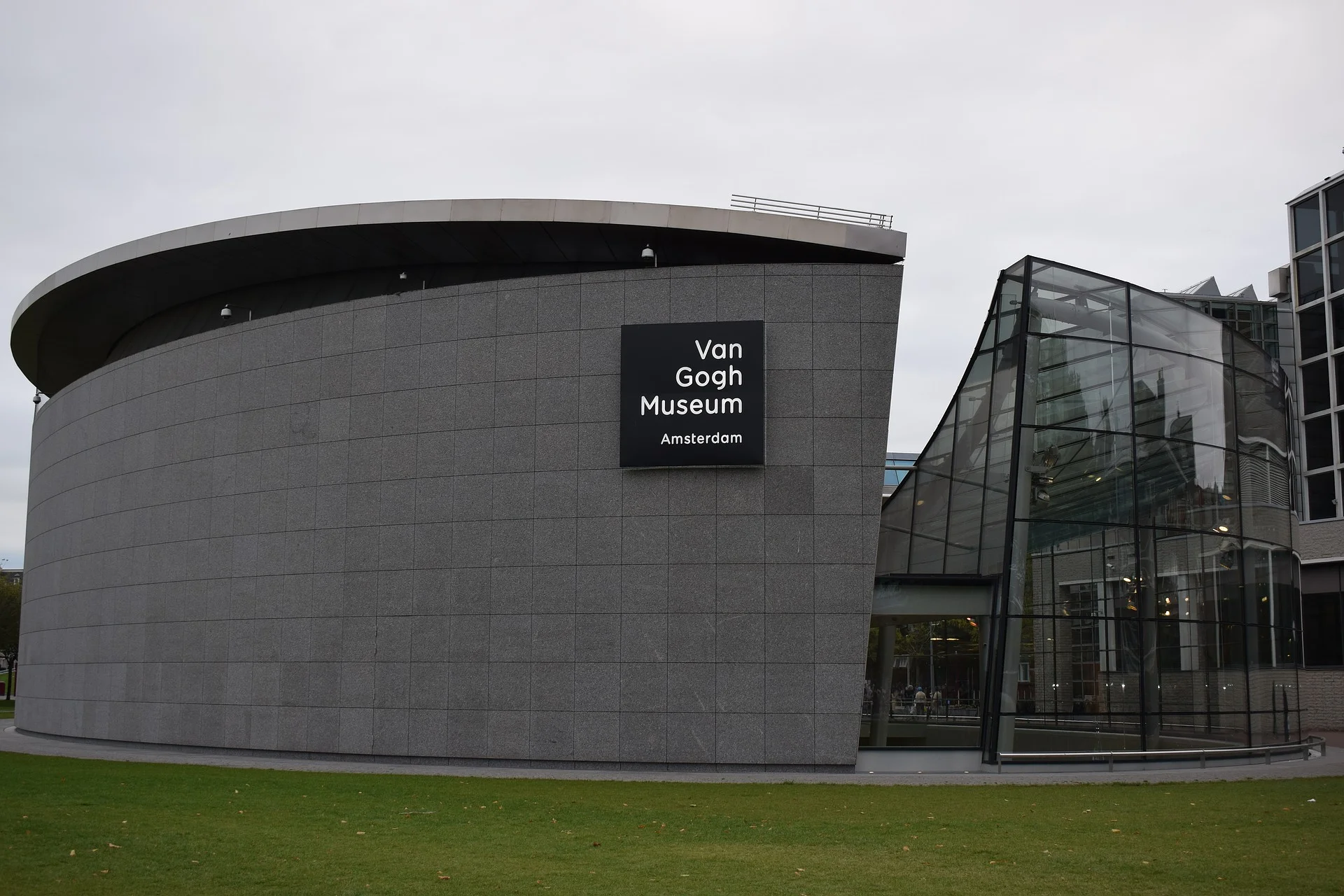
The main building, designed by Gerrit Rietveld and opened in 1973, embodies the principles of the De Stijl movement, with clean lines, light-filled spaces, and bold geometry. The central staircase allows natural light to pour in through a massive skylight.
The Japanese architect Kisho Kurokawa added an elliptical wing in 1999, creating a dialogue between European modernism and Japanese aesthetics. The glass entrance hall, completed in 2015, is the largest load-bearing glass structure in the Netherlands.
Beyond the paintings: letters and drawings
The second floor reveals a lesser-known side of Van Gogh. His hundreds of letters to Theo, filled with sketches and reflections on art, form a heartbreaking personal diary. You can read his doubts, his hopes, and his meticulous analyses of each painting in progress. These documents turn the visit into an encounter with a man, not just an artist.
Also look for:
- The self-portraits, including the one with the gray felt hat painted using the pointillist technique
- The Japanese prints collected by Vincent and Theo, a major source of inspiration
- Works by contemporaries such as Gauguin, Toulouse-Lautrec, and Monet
Opening hours
Fridays: open late until 9:00 PM (excluding select dates).
Last admission 30 minutes before closing.
Note: hours may vary by season and for special events.
*Information subject to change

I am not always a huge fan of 19th-century painters, but I have to admit I appreciate Van Gogh's work and his unique style. As for the museum itself, I found the rooms were well organized, and the explanations regarding his journey and technique were very clear. It is a true immersion into the artist's world, and I can only recommend this museum to all art lovers.