
Where to stay in Luxembourg: the 5 areas to know in 2026
Booking everything in Luxembourg City is the default move, and it is far from a mistake since most sights are walkable there. It is also where you will pay the highest rates. Yet this country spans only 82 kilometres from north to south, and all public transit is entirely free, trains included. No matter where you sleep, everything else is under 90 minutes away.
The real question is what you want right outside your door when you wake up, whether that is cobblestones, a wooded valley, vineyards, or historic blast furnaces. Five areas follow below, stretching from the capital to the Ardennes. Plan on $135 to $210* a night for a solid 3-star hotel in town, $90 to $135* elsewhere, and around $34* for a hostel bed.
Compare hotel prices in Luxembourg
In a hurry? Find the best accommodation deals in 3 clicks.
Compare live deals from Booking, Expedia, Agoda and other partners.
Wrongly overlooked, this extremely peaceful and prosperous European capital is perfect for a refreshing weekend getaway.
How many nights in each area?
The country can be crossed in an hour and a half, so changing hotels is not always necessary. Here is what works depending on the duration.
- A weekend, 2 nights: Everything in Luxembourg City, without moving. The old town, the casemates, and a museum easily fill two days, and the airport is twelve minutes away.
- Four nights: Two nights in the capital, then two in the Éislek region. This split reveals both sides of the country without spending the day on a train.
- One week: Three nights in the city, two in the Éislek, and two in the Mullerthal or along the Moselle depending on whether you prefer hiking or wine tasting. Three bases maximum, beyond that you spend more time packing and unpacking than actually exploring.
- Two nights, tight budget: Sleeping in the Minett region while spending your days in the capital means a twenty-minute train ride and savings of $45 to $68* per night.
At a glance: our picks by traveller type
Pick the profile that fits you and go straight to the recommended area.
Map of the areas in Luxembourg
See how the areas sit relative to one another before choosing your base. Click a name to jump to its description.
Luxembourg City The capital
for a first visit and easy transit connections
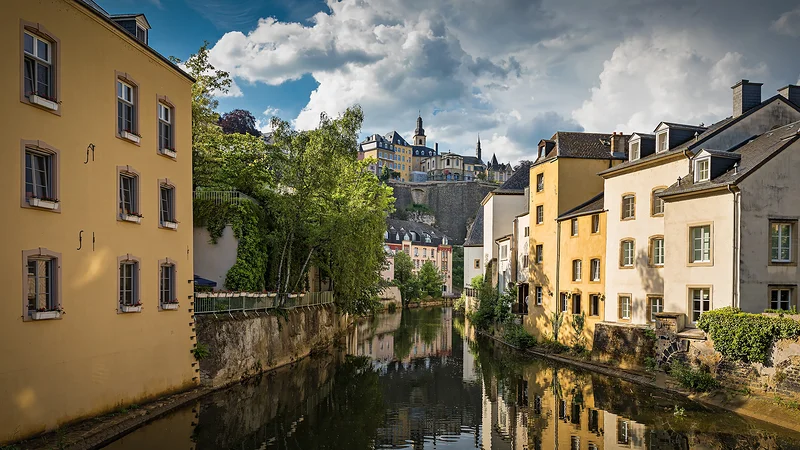
A city perched on a promontory and split by two gorges, which explains the Bock Casemates carved into the rock and the elevators connecting the upper and lower towns. The entire center is walkable. Two contrasting vibes exist side by side: the Gründ, down below along the Alzette, and the Kirchberg, the plateau housing the European institutions along with Mudam and the Philharmonie. The downsides are prices, which are the highest in the country, and a downtown that empties out on Sundays.
The Grund district, which is very picturesque, is surprising in its tranquility and contrasts with the excitement of the Kirchberg district, the impressive seat of three major European institutions.
The towns in this area
Where to stay in this area
Hotel Le Place d'Armes Luxury
A 30-room Relais & Châteaux right on place d'Armes, steps from the Grand Ducal Palace, featuring three on-site restaurants. A character property in the pedestrian downtown.
Sofitel Luxembourg Le Grand Ducal Luxury
A 128-room five-star hotel with a top-floor bar overlooking the Pétrusse Valley, a five-minute walk from the Pfaffenthal elevator that drops into the gorge.
City Hotel Mid-range
On rue de Strasbourg in the Gare neighborhood: the old town is a fifteen-minute walk across the bridge, and trains heading toward the Ardennes or the Moselle depart right outside the door.
Ibis Styles Luxembourg Centre Gare Budget
On rue Joseph Junck, two minutes from the platforms. A practical compromise in an expensive city for travelers planning to string together train trips rather than head back between sights.
Pros
- The entire historic center on foot
- Trains and buses across the entire country are free
Cons
- The highest rates in Luxembourg
- A very quiet downtown on Sundays
The Éislek and the Ardennes The north
for castles and hiking
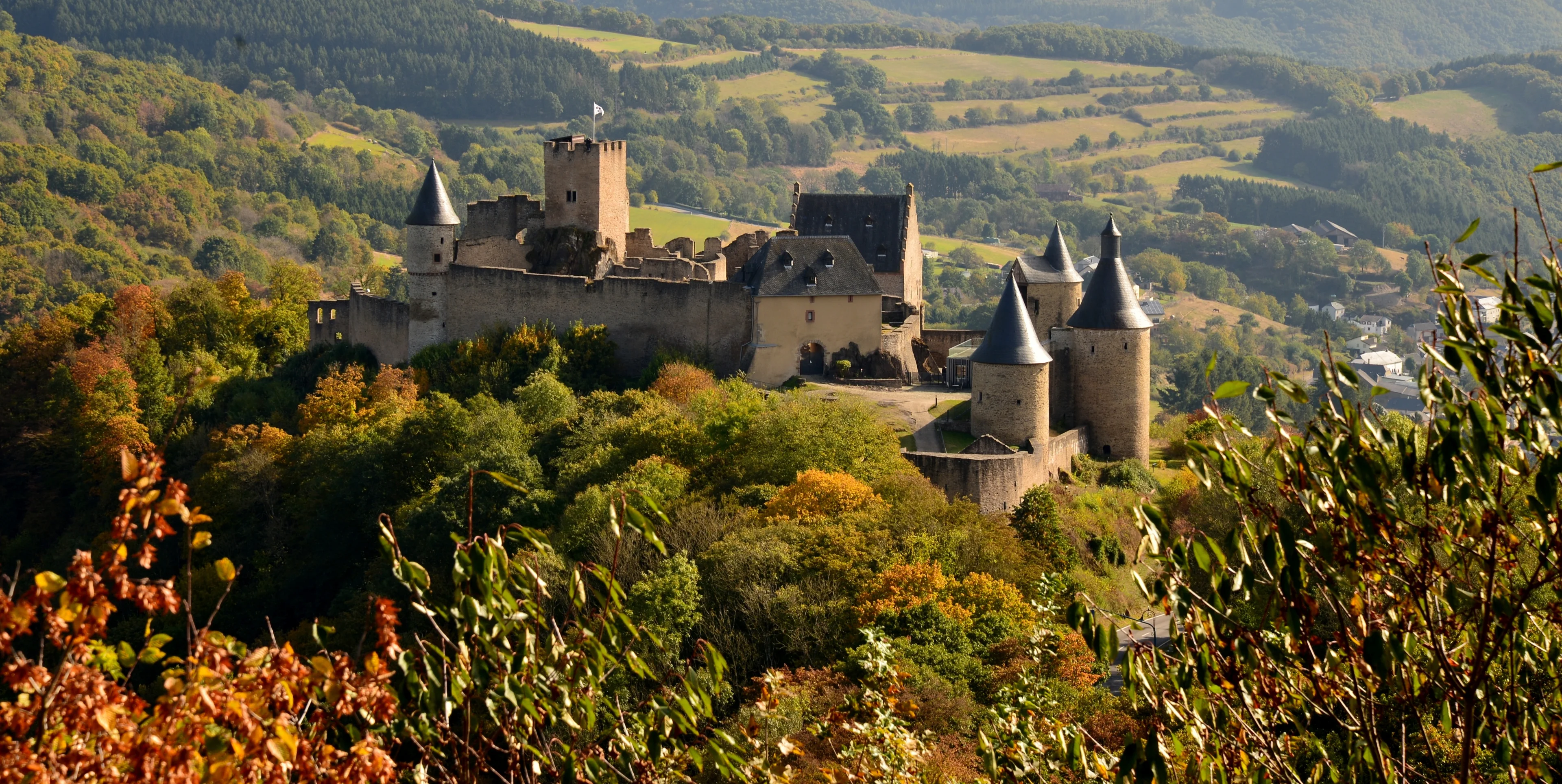
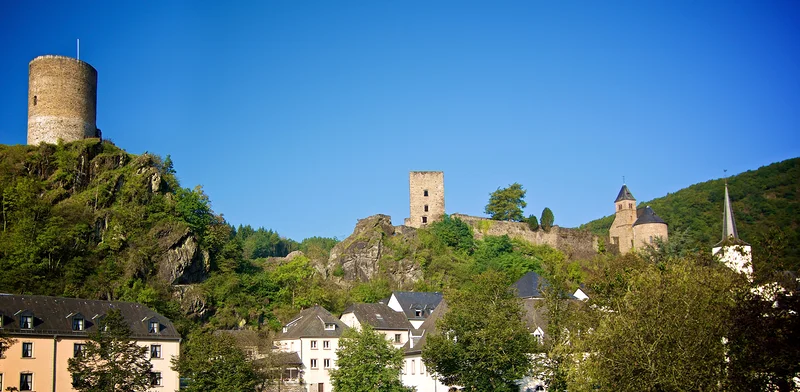
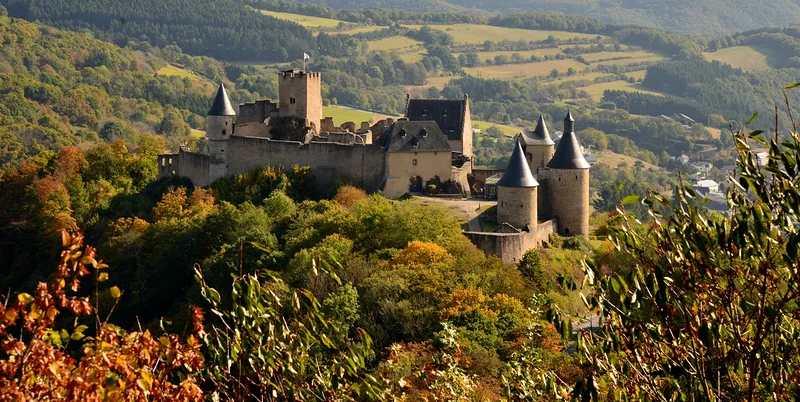
The northern part of the country is a plateau carved by deep valleys, and nearly every river bend features a castle. Vianden has the most dramatic one, clinging above the Our River, with the house where Victor Hugo lived in exile right below. Bourscheid has the largest in the country, and Clervaux houses The Family of Man photography exhibition inside its fortress. The catch: sites close early in the off-season, and the villages are quick to explore.
A pro tip, if you do not have a car, the train and bus make it pretty easy to get there from Luxembourg City, and all public transport is free.
The towns in this area
Where to stay in this area
Le Clervaux Boutique Hotel & Spa Luxury
Superior four-star hotel in the historic center of Clervaux, right below the castle and its permanent exhibition. On-site spa, which hits the spot after a day on the trails.
Hotel Belle-Vue Mid-range
On Rue de la Gare in Vianden, featuring an indoor pool, a free-access sauna, and a terrace for dinner. A ten-minute walk from the path up to the castle.
Hôtel de la Sûre Mid-range
Family-run hotel for 57 years in Esch-sur-Sûre, tucked right under the country's oldest fortress inside the river bend. Dining room affiliated with the local lake network and a small wellness area.
Auberge Aal Veinen Budget
On Grand-Rue in Vianden, set in an old house right beneath the castle with a dining room under exposed beams. The simplest and best-located spot in the village.
Pros
- Three castles within 40 km of each other
- Trailheads right outside the hotel doors
Cons
- Shorter visiting hours during the off-season
- Quiet evenings in the villages
The Moselle Valley The east, along the German border
For wine and walks by the water
Roughly forty kilometers of hillsides planted with Riesling, Pinot Gris, and primarily Crémant on the Luxembourg bank of the river. Remich serves as the hub with its esplanade and tasting cellars open to visitors, Grevenmacher has its own cellars plus a butterfly garden, and Schengen far to the south is where the historic agreement was signed aboard a boat. The downside is that the area is flat, quiet, and dead in the winter.
The towns in this area
Where to stay in this area
Hôtel Saint-Nicolas & Spa Mid-range
On the esplanade in Remich, right across from the Moselle River. It features a wellness center with indoor and outdoor pools, a sauna and steam room, and a dining room overlooking the water. Unquestionably the best spot in the valley.
Pros
- Wine cellars are within walking distance of the hotel
- The river by foot, bike, or boat
Cons
- Very little going on in the off-season
- Only one upscale address in the entire valley
The Mullerthal The eastern side, between Echternach and Berdorf
For hiking through rocky terrain and dense forest
Locals call it Luxembourg's Little Switzerland, and for once the nickname actually fits: a sandstone plateau sliced by narrow gorges, deep crevices between towering rock walls, and hidden waterfalls, all crisscrossed by the Mullerthal Trail. Echternach serves as the gateway, featuring an abbey and a basilica that make it the oldest town in the country. The downside is that away from the hiking trails, there is not much else to do, and the rocks get slick after a rain.
Where to stay in this area
Hotel Bel-Air Trail & Wellness Luxury
Thirty-eight rooms tucked into parklands on the road to Berdorf, one kilometre from Echternach, with direct access to the Mullerthal trails. Expect a spa and a fine-dining restaurant overlooking the Sûre valley.
Pros
- Trailheads right outside the hotel door
- A lake and an old town for rainy days
Cons
- Slim pickings once you step off the hiking trails
- Slick rocks after a downpour
The Minett and its red earth The south, right against the French border
For lower rates and repurposed industrial sites
The southern mining basin, where iron ore left behind red soil and blast furnaces. At Belval, these have been preserved right in the middle of the new university district, with the Rockhal, the country's main concert venue, set up right next door. Esch-sur-Alzette, Luxembourg's second-largest city, is ten minutes away, and the capital is a twenty-minute train ride. The trade-off is unique and unapologetic: this is not a postcard destination.
Where to stay in this area
ibis Esch Belval Budget
Avenue du Rock'n'Roll, three hundred metres from the Rockhal and one hundred metres from the Belval-Université station. Uncharming and unsurprising, but right next to the trains and the concert venue.
Pros
- The lowest prices in Luxembourg
- Twenty minutes by train from the capital
Cons
- Nothing picturesque, and that is entirely intentional
- Few restaurants open on Sunday
Our tips for booking the right place
- Public transit is free, and that changes the math.: Trains, trams, and buses have been entirely free nationwide since 2020, with no tickets or conditions required. Staying outside the capital no longer adds commuting costs, and the major valleys are well connected. Only first class on trains still requires a ticket. The tiny hamlets of the Éislek tucked far away from bus lines are the only real exception where renting a car makes sense.
- Book before the weeks when offices are fully staffed.: Luxembourg thrives on its financial center and EU institutions, meaning hotels in the capital and Kirchberg fill up during the workweek and empty out by Friday. For a vacation, targeting the weekend often drops rates by a third, the exact opposite of what happens in most destinations.
- Castles close earlier than you might expect.: Outside peak season, historic sites in the Éislek shut their doors by mid-afternoon. Ariane notes regarding Vianden that it is best to visit in the morning or early afternoon. For Bourscheid, she recommends the audioguide, otherwise the visit lacks context.
- Booking across the border in Trier or Thionville to save money comes with a catch. The daily commute starts costing money the moment you cross the national border, and traffic gets jammed with tens of thousands of cross-border workers during rush hour.
- Choosing Kirchberg for a leisure trip is a mismatch. It is a plateau of office towers and European institutions that turns dead quiet at night and on weekends, where finding dinner past 9 PM is a challenge. The museums are worth a visit, but staying down in the lower city is a better bet.
- Planning to do everything in an Éislek village without a car is risky. Bus frequencies drop sharply late in the day, and getting back late can turn into a logistical dead end.
FAQ: where to stay in Luxembourg
Where should you stay in Luxembourg for a first visit?
Do you need a car in Luxembourg?
Where to find budget accommodations in Luxembourg?
How many nights should you spend in Luxembourg?
Is Luxembourg good for families?
How far ahead should you book in Luxembourg?
Where to stay in Luxembourg, city by city:
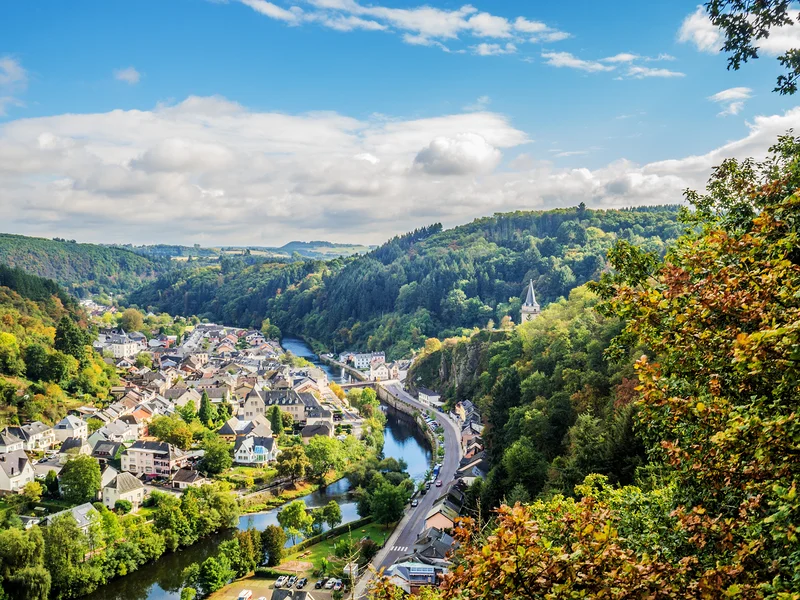
Vianden
See prices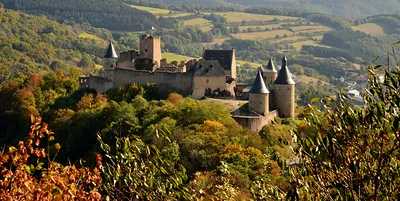 Keep exploring
What to do in Luxembourg
Keep exploring
What to do in Luxembourg
Comments (0)
No comments yet. Be the first!