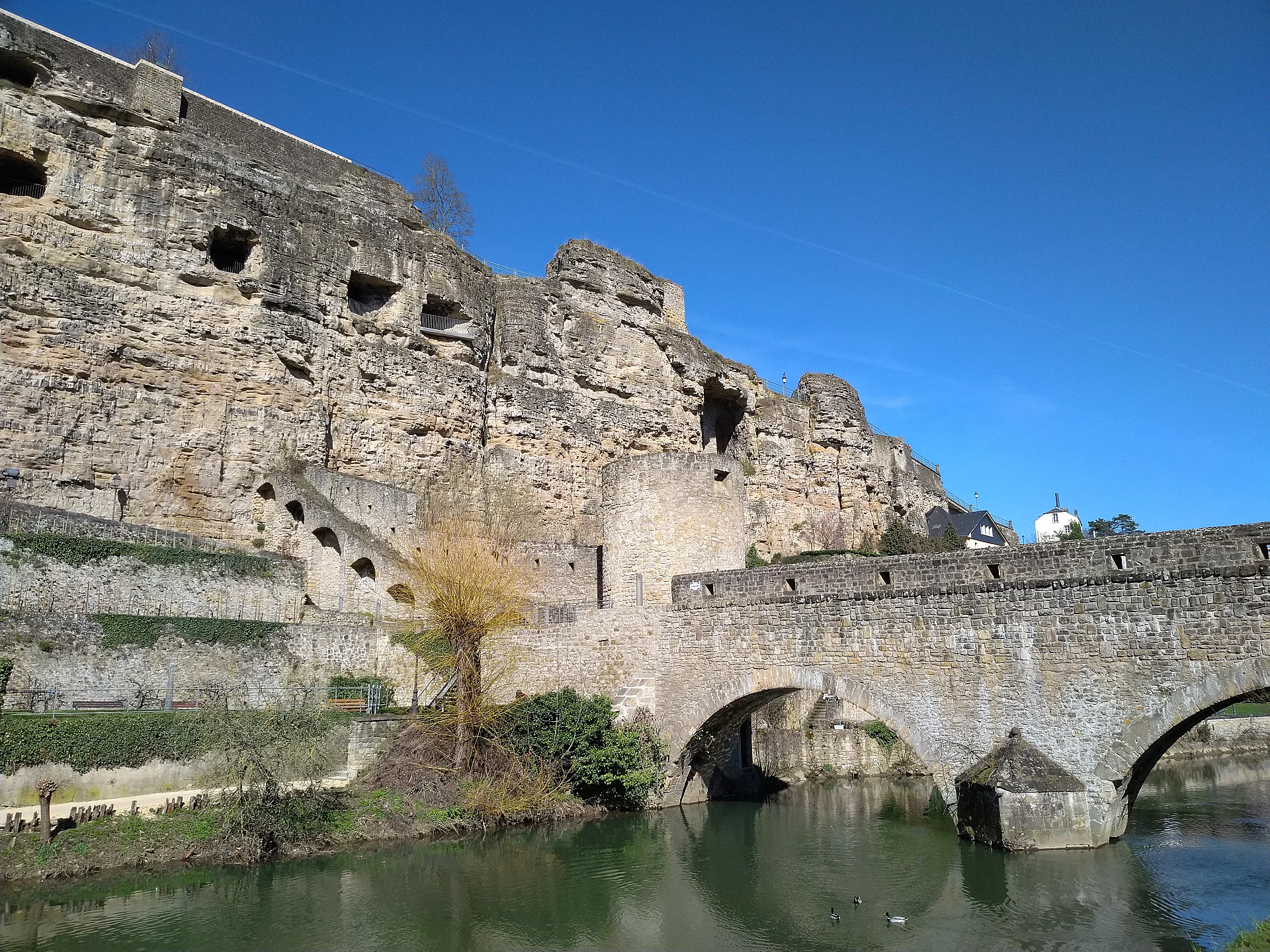
A labyrinth carved into the rock, facing the valleys of the Alzette
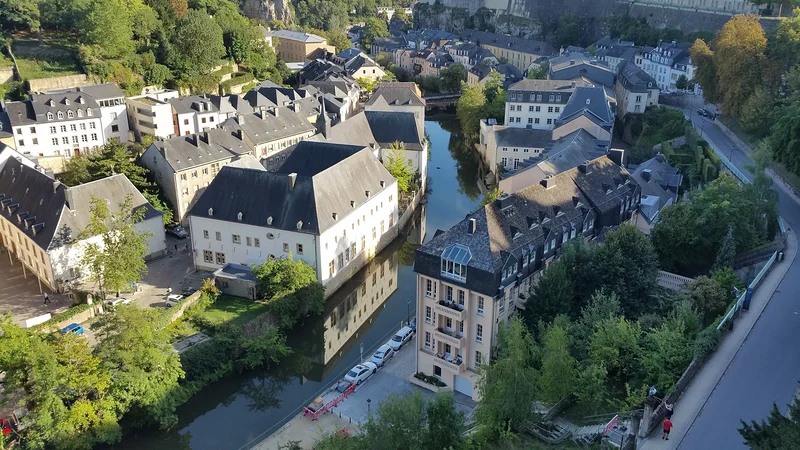
Dark corridors plunge into the Bock rock, pierced with firing chambers and arrowslits. Through these openings, the view drops over the Grund, Clausen, and Pfaffenthal neighborhoods, then stretches toward the pont Grande-Duchesse Charlotte and the Kirchberg plateau.
The promontory, surrounded by the Alzette on three sides, occupies the northeastern corner of the old town of Luxembourg City.
Why visit the Casemates du Bock
This rock is the birthplace of the city. Count Sigefroi reportedly built his castle here in 963. In the archaeological crypt, which serves as an antechamber to the tunnels, you will discover the remains of this castle, uncovered during excavations in 1993.
The Casemates du Bock belong to a network of roughly 23 km of defensive galleries. They once sheltered some 50 cannons and 1,200 soldiers. This fortified complex earned the city the nickname of the Gibraltar of the North. The Casemates du Bock, the old town, and the fortifications of Luxembourg City have been listed as a UNESCO World Heritage Site since 1994.
Inside the tunnels: prison, well, and a marshal's room
You can walk through the corridors at your own pace. The firing galleries and their arrowslits were widened during the dismantling of the fortress in 1867. A well measuring 47 metres deep is located along the route.
The path crosses the former castle prison, then an underground passage beneath the street that lets you cross the pont du Château. During the siege of 1794-1795, the Austrian field marshal von Bender occupied several rooms, and you can visit his bedroom, office, and antechamber.
The Grund battery, now the salle Tun Deutsch, once served as a stage for the Théâtre des Casemates. Guided tours are available.
Friendly tip: bring walking shoes, as the floor is uneven and occasionally damp. The tunnels stay cool year-round, so a light jacket is a good idea even in warm weather. Access is difficult for visitors with limited mobility.
An exit from the Casemates du Bock leads to the chemin de la Corniche and the old town.
Opening hours
Daily from April to October: 10:00 AM to 5:00 PM.
How long for this activity
Allow about 1 hour and 30 minutes to explore the underground tunnels and the archaeological crypt.