Palais du Parlement

Top 7 most beautiful cities in Romania to visit2026 ranking

Discover our members' favourite cities in Romania. Feel free to publish your own reviews to take part in this collaborative ranking.

Favourite cities in Romania among our members, approved by the editors

#1 Bucharest +12 recs

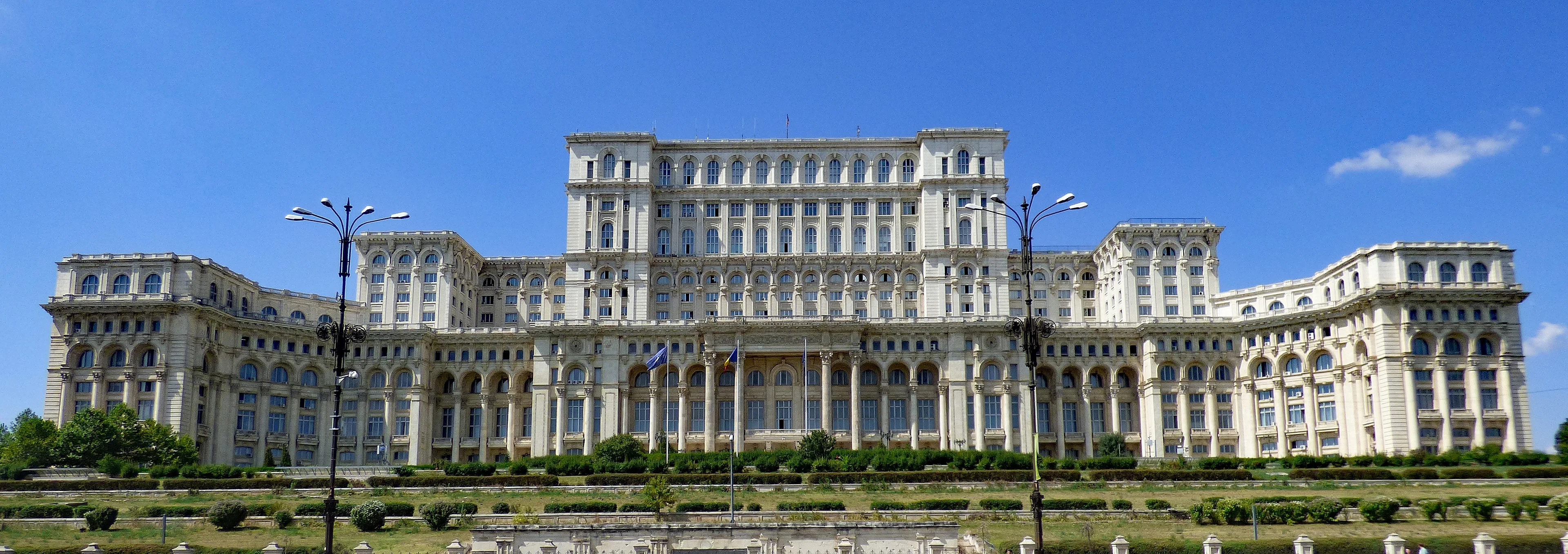
Bucharest is a city of sharp contrasts where crumbling Haussmann-style boulevards sit next to cutting-edge techno clubs and massive communist-era architecture meets bohemian sidewalk cafes. It is a place where Belle Époque elegance clashes with the remnants of totalitarianism and a creative youth scene repurposes industrial ruins for a nightlife culture that rivals Berlin. Expect a raw, unapologetic experience that rewards the curious traveler.

Must-sees

#2 Sighisoara +5 recs

Sighișoara is a medieval town in Romania, set along the banks of the Târnava Mare river and recognized as a UNESCO World Heritage site. It is widely known as the birthplace of Vlad Tepes, or Vlad the Impaler, whose brutal reputation served as the inspiration for the Dracula character created by Irish author Bram Stoker. Settled in the 12th century by German merchants known as the Transylvanian Saxons, Sighișoara grew into a prosperous trade hub during the Middle Ages. Following the Mongol invasions that swept through Eastern Europe in the 13th century, the town fortified itself with extensive defensive walls, many of which still stand today.


An impressive Transylvanian citadel

Sighișoara remains encircled by a wall stretching 930 meters long and reaching heights of 8 to 10 meters. This barrier historically separated the noble upper town from the lower town. Of the original fourteen defensive towers, nine remain, including the Furriers' Tower, the Butchers' Tower, and the Tailors' Tower. Each was named after the craftsmen's guild responsible for its construction. The most famous, the Clock Tower, serves as the main entrance to the city. Standing 64 meters tall, it houses a local history museum containing period artifacts and even an old torture chamber. Its clock features two faces, one looking toward the upper town and the other toward the lower town. The side facing the lower town is decorated with small, hand-painted wooden pagan figurines representing the days of the week, while the upper town side displays allegorical figures representing Justice, Peace, and Law.

Several significant religious buildings are worth visiting in Sighișoara, most notably the Saint-Nicolas Church. This Gothic structure sits at the highest point of the city and is only accessible after climbing the 175 steps of the Scholars' Stairs. Additionally, the Dominican Monastery Church, now a Lutheran house of worship, marks the spot where the town first began to develop.


The Dracula myth in Transylvania

Beyond its ramparts, Sighișoara is home to numerous houses that have stood for over 300 years. The Stag House, adorned with a stag head, dates back to the 17th century, while the Venetian House from the 16th century features distinctively Italian-style windows. One of the most famous residences is that of Vlad Dracul, a prince of Wallachia, a medieval European state where Romanian was the dominant language. This is the house where he is said to have fathered his son Vlad the Impaler, the historical figure who heavily influenced the Dracula legend.


When to visit?

The best time to experience Sighișoara is during the summer months to take advantage of the warm weather. Every July, a medieval festival takes over the city streets.


How to get there?

Sighișoara is well-connected by train to major cities in Romania. The trip takes about 6 hours from Bucharest or 3.5 hours from Cluj-Napoca. Other Transylvania destinations, such as Sibiu or Brașov, also have direct connections to Sighișoara.

#3 Timișoara +3 recs

Located in western Romania, within the historical Banat region, Timișoara stands as the country's fourth-largest city. Its deep, multicultural roots have left a legacy of diverse architecture and houses of worship from various faiths. The Banat region has a complex history, having been part of the Kingdom of Hungary and later the Ottoman Empire before coming under Habsburg rule and finally becoming part of Romania in 1918. By the 19th century, it was a major trading hub connected to the world via the Bega canal. Today, the city retains a blend of Romanian, Serbian, Hungarian, and German influences. It is also the site where the first protests against the communist dictatorship of Ceausescu erupted in 1989.

A cultural destination in Romania

Often called Little Vienna, Timișoara preserves a rich history shaped by the Austro-Hungarian Empire. The best place to start is the main square, Piața Unirii. This pedestrian-only area is defined by its baroque architecture, including the Art Museum. While there, you will also see the Plague Column and the brick-built Saint George's Cathedral.

Just a few hundred meters from Piața Unirii lies Victoria's Square, a tree-lined boulevard that serves as the city's social hub. Anchoring the two ends of the avenue are the city's most prominent landmarks: the Opera House, where the revolution that ended the communist regime is said to have begun, and the Orthodox Cathedral, which features an impressive 83-meter-tall bell tower.

Museums and green spaces in Timișoara

As the first free city in Romania, the destination is packed with history. Beyond the Art Museum, which displays works from local classic to contemporary artists, don't miss the Museum of the Revolution for a look at the causes and aftermath of the 1989 uprising. To dig deeper into regional culture, head to the Banat Museum, housed in the city's oldest building, the Huniade Castle. Some collections are also displayed at the Maria Theresia Bastion, a massive structure built into the old city walls that now houses shops and cultural venues. For something more unconventional, visit the Museum of Communist Consumers. It sits a bit outside the center, but it is worth the trip for its collection of everyday items from the communist era, and there is a bar on the ground floor to keep things lively.

The city center is also dotted with parks and gardens, most notably the Rosary. Founded in 1928 along the Bega river, it is home to more than 1,200 varieties of roses.

When to go

The ideal time to visit Timișoara is between May and September, when the weather is warm and the roses are in full bloom.

How to get there

By air, several flights serve Traian Vuia International Airport, located just about 10 kilometers (6 miles) from the city center. Timișoara is connected to major Romanian cities by train. There are also bus connections that link Timișoara to Budapest in Hungary, a trip that takes about five hours.

#4 Sinaia +3 recs

Sinaia sits in the Prahova Valley in Romania, right at the base of the Bucegi Mountains. The town traces its origins to 1690, when Prince Mihail Cantacuzino commissioned a monastery after returning from a pilgrimage to Mount Sinai in Egypt. The site remains intact today, protected by heavy stone walls and known for housing the first Bible ever translated into Romanian. While the town center has seen significant modern development to support the local ski industry, the higher elevations retain a quiet, old-world charm, with Saxon-style chalets that feel like a slice of the Swiss Alps.

The majestic Peleș Castle in Sinaia

The main draw here is the Peleș Castle, an imposing Neo-Renaissance structure defined by its soaring turrets and intricate wood-carved interiors. Commissioned in the 19th century by King Carol I of Romania, the residence is massive, containing 160 rooms, including an ornate Moorish salon, a private theater, a music room, and a sprawling library. The walls are decorated with roughly 2,000 paintings. For its time, the palace was a marvel of technology, featuring a central heating system and its own electricity, a feat that earned the Polish engineer Franciszek Rychnowski a gold medal from the King of Romania himself.

Sinaia is also home to other 19th-century treasures, such as the Pelișor Castle, which features distinct Art Nouveau architecture, and the villa Luminiș, where the French-Romanian classical composer Georges Enesco once stayed.

Between tradition and modernity

With its collection of royal villas and monuments, Sinaia has evolved from a quiet retreat into a hub for tourism, spa treatments, hiking, and winter sports. It serves as an ideal base for exploring the Bucegi Mountains, a protected nature park filled with dramatic rock formations like the Bucegi Sphinx, which has inspired countless local myths. During the winter, the town transforms into a full-scale ski resort, with cable cars providing quick access to the high-altitude slopes. If you are hiking in the surrounding southern Carpathians, keep an eye out for local wildlife, as bears and lynx are known to roam the area.

When to go

Sinaia is a year-round destination depending on your interests. Keep in mind that winter months like December, January, and February are intense, with temperatures frequently dropping to -20°C (-4°F).

How to get there

Reaching Sinaia is straightforward. You can drive from Bucharest via the DN1 national road, or take a train from the Romanian capital, which completes the trip in about 1 hour and 30 minutes.

Must-see

#5 Breaza +1 rec

Breaza is a small spa town in Romania, situated at the edge of the Prahova Valley. The town's name likely comes from the Slavic word Breza, meaning birch forest. The town sits in the middle of a heavily forested landscape that offers plenty of options for hiking, cycling, or horseback riding. It is known for its air quality and numerous sulfur-rich mineral springs, which paved the way for its development as a therapeutic spa destination. It was officially designated a spa town in 1928, and became a full-fledged town in 1952 after the merger of the villages Podu Vadului and Breaza de Sus. Many notable Romanians have kept vacation homes here. Recently, the town added an 18-hole golf course, Lac de Verde, which has become a draw for affluent visitors.

A spa town in Romania

Breaza is home to several spa institutes focused on treating nervous, respiratory, and cardiovascular conditions. Historically, it was frequented by figures such as Grigore Alexandrescu, Ion Ghica, and the French-Romanian poet Anna de Noailles. The princely Brâncoveanu family of Wallachia, who owned the land, drove much of its development throughout the 19th century. They commissioned several mansions and palaces, as well as an English-style garden that remains today, the Parc Brâncoveanu, filled with centuries-old trees.

Breaza is a classic example of a Prahova Valley town, characterized by houses featuring carved verandas supported by elegant wooden pillars, as seen at the maison Alexandru Bondoc. You can also visit the Sfântul Nicolae church, built in 1777 and decorated with interior frescoes. The town has maintained its traditional crafts, some of which are showcased in the small local folk art museum. The collection includes period costumes, tools, and various historical artifacts.

Castles of the Prahova Valley

From Breaza, you are well-positioned to visit the famous castles of the Prahova Valley, which sits on the historic border between Wallachia and Transylvania. You can tour Peles Castle in Sinaia, the former residence of King Carol I. Built in a German Renaissance style, it contains 160 rooms. A bit higher in elevation, near the mountain resort of Busteni, you will find the Cantacuzino Palace. It is rich in baroque ornamentation and currently serves as a museum dedicated to the classical composer George Enescu.

Heading further north, venture across the Bucegi mountain range to the village of Bran. Perched on a hilltop here is Bran Castle, which inspired the setting of Dracula in the novels of Bram Stoker.

When to visit

The best time to visit Breaza, explore the Prahova Valley, and go hiking in the Carpathians is between May and September.

How to get there

Breaza is conveniently located along the DN1 road, which links Bucharest to Brasov. It is also accessible by train, a trip that takes about 2 hours from Bucharest.

#6 Râmnicu Vâlcea +1 rec

Râmnicu Vâlcea is a city of nearly 100,000 residents tucked into the Olt river valley in south-central Romania. It holds a significant place in the country's collective memory as the birthplace of the modern Romanian nation, following a major victory in the historic region of Wallachia led by General Magheru. Local lore suggests the national anthem was first performed in what is now Zavoi Park. Today, a statue honoring independence, created by sculptor Ion Iordanescu, stands as a reminder of these events. During the communist era, the city underwent rapid industrialization, which spurred significant population growth.

A stopover on the road through the Balkans

While Râmnicu Vâlcea is well-positioned for exploring Romania, it is often overlooked by travelers who treat it as a fleeting waypoint. Because the surrounding valley is famous for its thermal spas and historic monasteries, many visitors prioritize those destinations instead. However, the city itself offers several points of interest. For church architecture, look for the Cusioasa Parasheva Orthodox church, a protected monument dating back to the 16th century. For a quiet afternoon, the grounds of the former Ramnic Monastery offer peaceful, expansive gardens alongside a collection of religious art and historical artifacts.

Râmnicu Vâlcea keeps plenty of green space within its limits, including Zavoi Park and Mircea cel Bătrân Park. Families often head to the local zoo or the Muzeul Satului Vâlcean, an open-air museum that recreates an authentic 19th-century Romanian village, complete with a schoolhouse and a chapel built in 1785.

The museums of Râmnicu Vâlcea

The city's cultural scene is more substantial than it appears. The Casa Simian Art Museum is housed in a charming villa with a lush summer garden, showcasing works by Romanian painters like Grigorescu, Ressu, and Pallady. Right across the way, you will find the Antim Ivireanul library. Completed in the early 2000s, its most striking feature is a massive stained-glass dome that you can visit by request. Finally, stop by the History Museum, located in a 19th-century building once known as the Clock School, which preserves a collection of antique weapons, stamps, and prints.

Râmnicu Vâlcea serves as the capital of Oltenia, a rugged, mountainous region worth exploring. Nearby excursions include the impressive salt mines at Ocnele Mari or a relaxing thermal soak in the spa towns of Călimănești and Căciulata.

When to visit

The best time to travel through Romania is during the warmer months, specifically between May and September.

How to get there

Râmnicu Vâlcea does not have its own airport, but it sits directly on the E81 European route and National Road 7, which connects Bucharest to Sibiu. If you are traveling by train, prepare for a slow journey with multiple transfers, even when coming from Bucharest.

#7 Cluj-Napoca +1 rec

Cluj-Napoca is the third-largest city in Romania. Located in the northwest, it serves as the capital of Transylvania, a region often associated with myths and legends. The city's heritage is a blend of Celtic, Slavic, Carpi, and Alan influences. In the 1970s, the communist dictator Ceausescu added the name "Napoca" to highlight the city's Roman roots. Furthermore, the area was long part of the Austro-Hungarian Empire. Today, the city reflects a mix of Romanian and Hungarian cultures. It is an energetic place, packed with cultural institutions and a large student population.

The capital of Transylvania

Cluj-Napoca sits in the valley of the Someșul Mic river and borders the Romanian Western Carpathians. From the city, you can see the Apuseni Mountains in the distance, known for their wildlife, including brown bears and wolves. The city is filled with religious buildings of various denominations, a result of Transylvania's 1568 Edict of Toleration, which allowed the Hungarian community to practice Protestantism.

Start your walk at the city's main square, Piata Unirii (Union Square), home to two major landmarks. First, there is Saint Michael's Church, one of the best-preserved neo-Gothic churches in the country, with its current structure dating to the 19th century. Nearby, look for the columned facade of the Bánffy Palace. Once the residence of Austro-Hungarian governors, it now houses the National Museum of Art. The square also features an impressive 1902 equestrian statue of Matei Corvin, a former ruler of Transylvania.

A historic city to see in Romania

The old town of Cluj-Napoca is full of period architecture, such as the Matthias Corvin House. As one of the city's oldest Gothic-style civil buildings, it currently serves as the University of Art and Design. While wandering the winding alleys, you will find the National Museum of Transylvanian History. Additionally, two sections of the old city walls remain standing: the Tailors' Bastion and the Firemen's Tower. To see the city from above, head to the top of Citadel Hill, where an Austro-Hungarian fortress once kept watch over the town.

Cluj-Napoca also offers plenty of green space. A must-see is the Romulus Vuia Ethnographic Park, an open-air museum that showcases Romanian folklore through scenes of local peasant life from the 17th to the 20th century. The Alexandru Borza Botanical Garden, established in 1872, contains over 11,000 varieties of plants and flowers.

When to go

The best time to visit Transylvania is in August or September, when you can avoid the rain and enjoy more pleasant temperatures.

How to get there

Cluj-Napoca sits at the intersection of major European routes like the E60 and E81, as well as Highway 13, which crosses Transylvania. You can book flights directly to Cluj-Napoca International Airport. Another option is to travel by train or bus from other major Romanian cities or from the neighboring Hungarian capital, Budapest.

Latest reviews

Transylvania, one of the most beautiful regions in Europe!

Dracula is one of my favorite novels. During my travels in Eastern Europe, I couldn't pass up the chance to go to Transylvania, specifically Sighisoara, which is said to be the birthplace of Vlad Tepe…

21 0

Worth the trip

People told me not to go, but I really liked it. The areas around the city center are a bit run-down, but not dangerous at all, and the center itself has plenty of nice restaurants, bars, and landmark…

18 0

Very cute medieval town

Sighi is the city where Vlad Dracul was born (who inspired the Dracula character). It is very cute, but you can get through it very quickly (one day is enough to walk around the entire center), and I…

14 0

Cool student town

Cluj is the most educated city in Romania (and you find a lot of French medical students here). Not much to see besides a church, a theater, and a square, but the atmosphere is really nice, Central Pa…

20 0

Bohemian life, Romanian style

Recognized as a hub for Romanian art and culture, Timisoara has a lot of charm. There is so much going on in the art scene, and it is worth the trip if you want to get a different perspective of the c…

11 0

Rankings by travellers, for travellers

Our rankings are powered by thousands of reviews from travelers like you, not the arbitrary pick of a single editor. Every positive review you publish raises the destination’s score.

1 positive review = +1 reco

Your voice matters!

Have you travelled and discovered amazing places? Share your experience and help the community rank the most beautiful destinations! Sign up for free to post reviews and make your voice heard.