Château de Peles

Things to do in Romania: 9 must-see attractions

Discover our members' favorite destinations in Romania, plus reviews, practical info, and traveler photos...

The 5 most beautiful cities to visit in Romania

Bucharest

#1 Bucharest +12

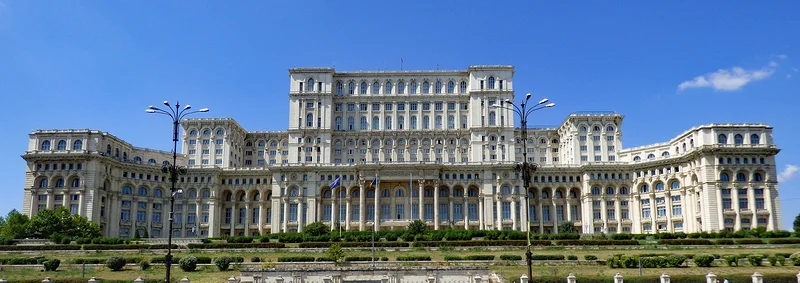
Bucharest is a city of sharp contrasts where crumbling Haussmann-style boulevards sit next to cutting-edge techno clubs and massive communist-era architecture meets bohemian sidewalk cafes. It is a place where Belle Époque elegance clashes with the remnants of totalitarianism and a creative youth scene repurposes industrial ruins for a nightlife culture that rivals Berlin. Expect a raw, unapologetic experience that rewards the curious traveler.

Sighisoara

#2 Sighisoara +5

Sighișoara is a medieval town in Romania, set along the banks of the Târnava Mare river and recognized as a UNESCO World Heritage site. It is widely known as the birthplace of Vlad Tepes, or Vlad the Impaler, whose brutal reputation served as the inspiration for the Dracula character created by Irish author Bram Stoker. Settled in the 12th century by German merchants known as the Transylvanian Saxons, Sighișoara grew into a prosperous trade hub during the Middle Ages. Following the Mongol invasions that swept through Eastern Europe in the 13th century, the town fortified itself with extensive defensive walls, many of which still stand today.


An impressive Transylvanian citadel

Sighișoara remains encircled by a wall stretching 930 meters long and reaching heights of 8 to 10 meters. This barrier historically separated the noble upper town from the lower town. Of the original fourteen defensive towers, nine remain, including the Furriers' Tower, the Butchers' Tower, and the Tailors' Tower. Each was named after the craftsmen's guild responsible for its construction. The most famous, the Clock Tower, serves as the main entrance to the city. Standing 64 meters tall, it houses a local history museum containing period artifacts and even an old torture chamber. Its clock features two faces, one looking toward the upper town and the other toward the lower town. The side facing the lower town is decorated with small, hand-painted wooden pagan figurines representing the days of the week, while the upper town side displays allegorical figures representing Justice, Peace, and Law.

Several significant religious buildings are worth visiting in Sighișoara, most notably the Saint-Nicolas Church. This Gothic structure sits at the highest point of the city and is only accessible after climbing the 175 steps of the Scholars' Stairs. Additionally, the Dominican Monastery Church, now a Lutheran house of worship, marks the spot where the town first began to develop.


The Dracula myth in Transylvania

Beyond its ramparts, Sighișoara is home to numerous houses that have stood for over 300 years. The Stag House, adorned with a stag head, dates back to the 17th century, while the Venetian House from the 16th century features distinctively Italian-style windows. One of the most famous residences is that of Vlad Dracul, a prince of Wallachia, a medieval European state where Romanian was the dominant language. This is the house where he is said to have fathered his son Vlad the Impaler, the historical figure who heavily influenced the Dracula legend.


When to visit?

The best time to experience Sighișoara is during the summer months to take advantage of the warm weather. Every July, a medieval festival takes over the city streets.


How to get there?

Sighișoara is well-connected by train to major cities in Romania. The trip takes about 6 hours from Bucharest or 3.5 hours from Cluj-Napoca. Other Transylvania destinations, such as Sibiu or Brașov, also have direct connections to Sighișoara.

Timișoara

#3 Timișoara +3

Located in western Romania, within the historical Banat region, Timișoara stands as the country's fourth-largest city. Its deep, multicultural roots have left a legacy of diverse architecture and houses of worship from various faiths. The Banat region has a complex history, having been part of the Kingdom of Hungary and later the Ottoman Empire before coming under Habsburg rule and finally becoming part of Romania in 1918. By the 19th century, it was a major trading hub connected to the world via the Bega canal. Today, the city retains a blend of Romanian, Serbian, Hungarian, and German influences. It is also the site where the first protests against the communist dictatorship of Ceausescu erupted in 1989.

A cultural destination in Romania

Often called Little Vienna, Timișoara preserves a rich history shaped by the Austro-Hungarian Empire. The best place to start is the main square, Piața Unirii. This pedestrian-only area is defined by its baroque architecture, including the Art Museum. While there, you will also see the Plague Column and the brick-built Saint George's Cathedral.

Just a few hundred meters from Piața Unirii lies Victoria's Square, a tree-lined boulevard that serves as the city's social hub. Anchoring the two ends of the avenue are the city's most prominent landmarks: the Opera House, where the revolution that ended the communist regime is said to have begun, and the Orthodox Cathedral, which features an impressive 83-meter-tall bell tower.

Museums and green spaces in Timișoara

As the first free city in Romania, the destination is packed with history. Beyond the Art Museum, which displays works from local classic to contemporary artists, don't miss the Museum of the Revolution for a look at the causes and aftermath of the 1989 uprising. To dig deeper into regional culture, head to the Banat Museum, housed in the city's oldest building, the Huniade Castle. Some collections are also displayed at the Maria Theresia Bastion, a massive structure built into the old city walls that now houses shops and cultural venues. For something more unconventional, visit the Museum of Communist Consumers. It sits a bit outside the center, but it is worth the trip for its collection of everyday items from the communist era, and there is a bar on the ground floor to keep things lively.

The city center is also dotted with parks and gardens, most notably the Rosary. Founded in 1928 along the Bega river, it is home to more than 1,200 varieties of roses.

When to go

The ideal time to visit Timișoara is between May and September, when the weather is warm and the roses are in full bloom.

How to get there

By air, several flights serve Traian Vuia International Airport, located just about 10 kilometers (6 miles) from the city center. Timișoara is connected to major Romanian cities by train. There are also bus connections that link Timișoara to Budapest in Hungary, a trip that takes about five hours.

Sinaia

#4 Sinaia +3

Sinaia sits in the Prahova Valley in Romania, right at the base of the Bucegi Mountains. The town traces its origins to 1690, when Prince Mihail Cantacuzino commissioned a monastery after returning from a pilgrimage to Mount Sinai in Egypt. The site remains intact today, protected by heavy stone walls and known for housing the first Bible ever translated into Romanian. While the town center has seen significant modern development to support the local ski industry, the higher elevations retain a quiet, old-world charm, with Saxon-style chalets that feel like a slice of the Swiss Alps.

The majestic Peleș Castle in Sinaia

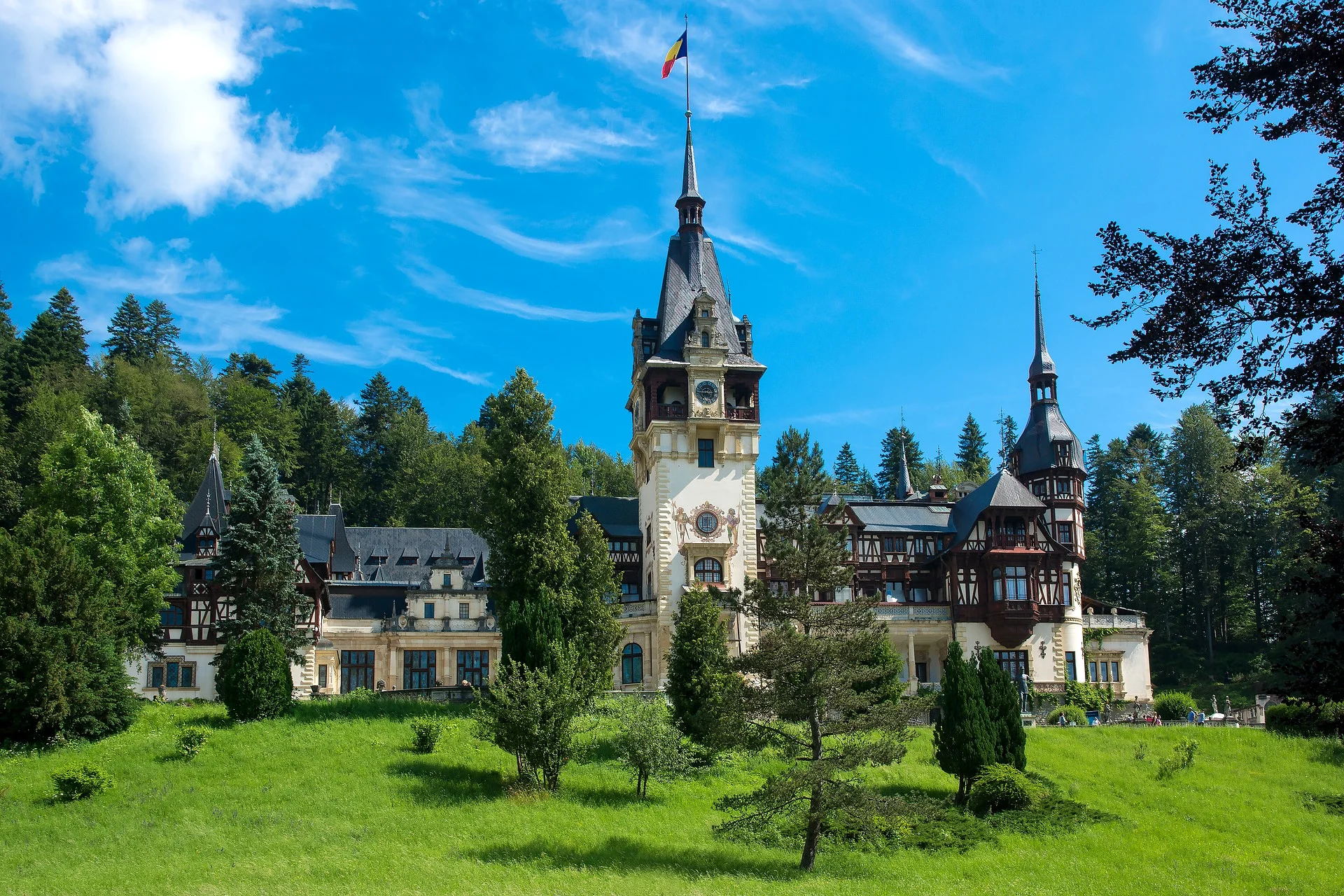
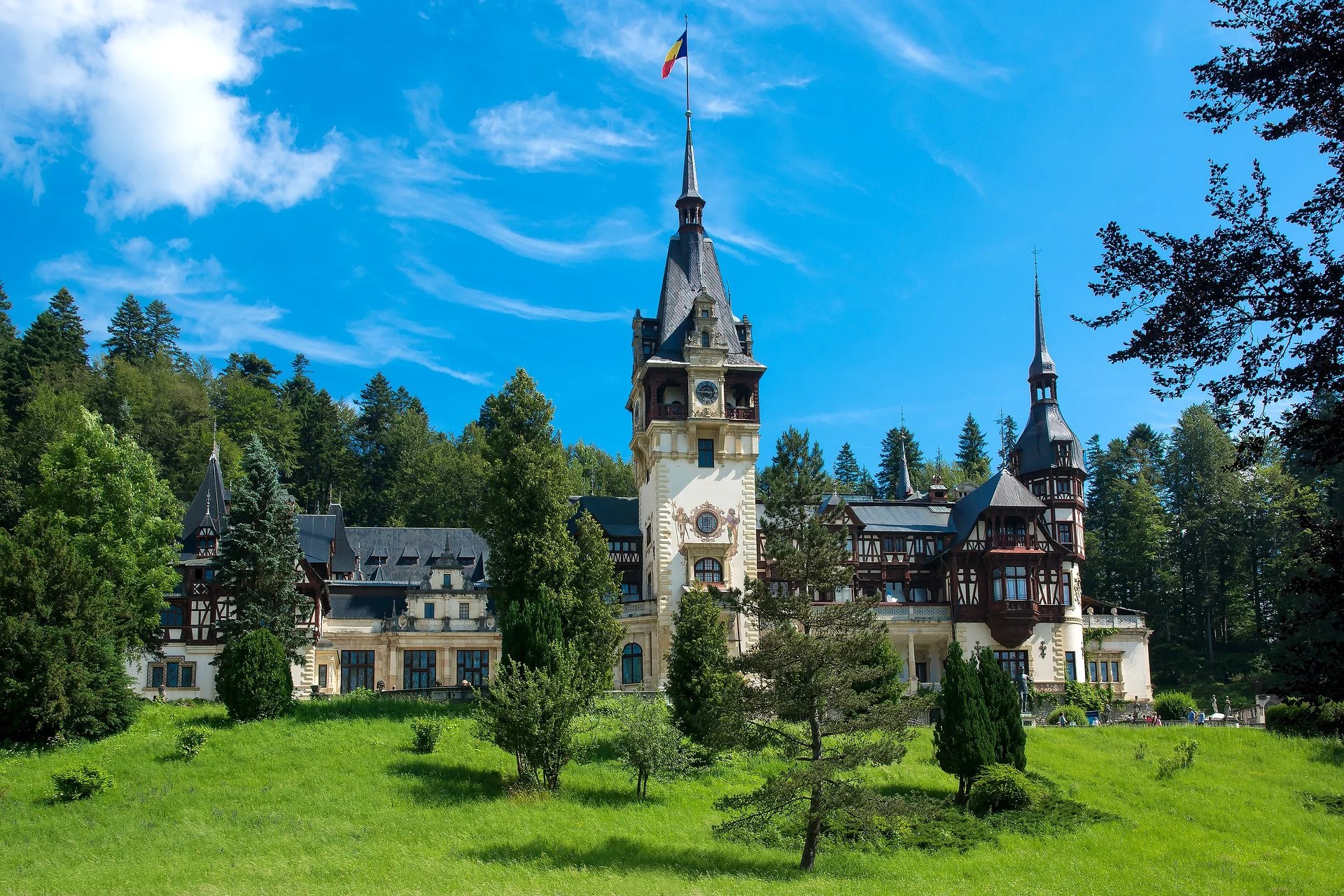
The main draw here is the Peleș Castle, an imposing Neo-Renaissance structure defined by its soaring turrets and intricate wood-carved interiors. Commissioned in the 19th century by King Carol I of Romania, the residence is massive, containing 160 rooms, including an ornate Moorish salon, a private theater, a music room, and a sprawling library. The walls are decorated with roughly 2,000 paintings. For its time, the palace was a marvel of technology, featuring a central heating system and its own electricity, a feat that earned the Polish engineer Franciszek Rychnowski a gold medal from the King of Romania himself.

Sinaia is also home to other 19th-century treasures, such as the Pelișor Castle, which features distinct Art Nouveau architecture, and the villa Luminiș, where the French-Romanian classical composer Georges Enesco once stayed.

Between tradition and modernity

With its collection of royal villas and monuments, Sinaia has evolved from a quiet retreat into a hub for tourism, spa treatments, hiking, and winter sports. It serves as an ideal base for exploring the Bucegi Mountains, a protected nature park filled with dramatic rock formations like the Bucegi Sphinx, which has inspired countless local myths. During the winter, the town transforms into a full-scale ski resort, with cable cars providing quick access to the high-altitude slopes. If you are hiking in the surrounding southern Carpathians, keep an eye out for local wildlife, as bears and lynx are known to roam the area.

When to go

Sinaia is a year-round destination depending on your interests. Keep in mind that winter months like December, January, and February are intense, with temperatures frequently dropping to -20°C (-4°F).

How to get there

Reaching Sinaia is straightforward. You can drive from Bucharest via the DN1 national road, or take a train from the Romanian capital, which completes the trip in about 1 hour and 30 minutes.

Breaza

#5 Breaza +1

Breaza is a small spa town in Romania, situated at the edge of the Prahova Valley. The town's name likely comes from the Slavic word Breza, meaning birch forest. The town sits in the middle of a heavily forested landscape that offers plenty of options for hiking, cycling, or horseback riding. It is known for its air quality and numerous sulfur-rich mineral springs, which paved the way for its development as a therapeutic spa destination. It was officially designated a spa town in 1928, and became a full-fledged town in 1952 after the merger of the villages Podu Vadului and Breaza de Sus. Many notable Romanians have kept vacation homes here. Recently, the town added an 18-hole golf course, Lac de Verde, which has become a draw for affluent visitors.

A spa town in Romania

Breaza is home to several spa institutes focused on treating nervous, respiratory, and cardiovascular conditions. Historically, it was frequented by figures such as Grigore Alexandrescu, Ion Ghica, and the French-Romanian poet Anna de Noailles. The princely Brâncoveanu family of Wallachia, who owned the land, drove much of its development throughout the 19th century. They commissioned several mansions and palaces, as well as an English-style garden that remains today, the Parc Brâncoveanu, filled with centuries-old trees.

Breaza is a classic example of a Prahova Valley town, characterized by houses featuring carved verandas supported by elegant wooden pillars, as seen at the maison Alexandru Bondoc. You can also visit the Sfântul Nicolae church, built in 1777 and decorated with interior frescoes. The town has maintained its traditional crafts, some of which are showcased in the small local folk art museum. The collection includes period costumes, tools, and various historical artifacts.

Castles of the Prahova Valley

From Breaza, you are well-positioned to visit the famous castles of the Prahova Valley, which sits on the historic border between Wallachia and Transylvania. You can tour Peles Castle in Sinaia, the former residence of King Carol I. Built in a German Renaissance style, it contains 160 rooms. A bit higher in elevation, near the mountain resort of Busteni, you will find the Cantacuzino Palace. It is rich in baroque ornamentation and currently serves as a museum dedicated to the classical composer George Enescu.

Heading further north, venture across the Bucegi mountain range to the village of Bran. Perched on a hilltop here is Bran Castle, which inspired the setting of Dracula in the novels of Bram Stoker.

When to visit

The best time to visit Breaza, explore the Prahova Valley, and go hiking in the Carpathians is between May and September.

How to get there

Breaza is conveniently located along the DN1 road, which links Bucharest to Brasov. It is also accessible by train, a trip that takes about 2 hours from Bucharest.

Ranking of the 4 activities selected by our editors in Romania

#1 Stavropoleos Church (Bucharest) +4 5

Located in the heart of the Old Town of Bucharest, Biserica Stavropoleos (Stavropoleos Church), the Eastern Orthodox church of the monastery of the same name, is the standout landmark of the Lipscani neighborhood. This small but ornate historical monument offers a sharp contrast to the stark Soviet-era facades nearby. Built in the 18th century by a Greek monk named Ioanichie Stratonikeas, it remains a prime example of architecture from the Phanariot era, a period when regional governors were appointed from Constantinople. The name Stavropoleos derives from the Greek Stravopolis, which translates to city of the cross.

Take a moment to examine the facade, which showcases the Brancovan style named after the ruler of Wallachia between 1689 and 1717. This architectural approach is defined by hat-shaped roofs, windows topped with rounded trefoils, and loggias supported by stone or wooden columns.

The paintings and gilding inside Stavropoleos Church feature elegant floral arabesques that frame portraits of saints in medallions. The interior is equally striking, filled with icons and intricate ornamentation. While the structure consists of one single room, there are three distinct areas: the entrance, the altar where priests conduct services, and the central nave where congregants stand. The wall frescoes depict scenes from the life of Christ and various miracles. Near the entrance, portraits of the ruler of the time, Nicolae Mavrocordat, and the original donors were painted as a tribute. Despite its modest size, the space offers a calm and intimate atmosphere. The adjacent cloister, with its small interior courtyard, serves as a quiet refuge. At night, the lighting provides an entirely different perspective on this unique site.

#2 Peleș Castle (Sinaia) +3 5

At the base of the Bucegi Mountains in Sinaia, Peleș Castle looks like it stepped out of a fairytale. Built between 1873 and 1914 as the summer home for King Carol I, this neo-Renaissance marvel features 160 rooms filled with 2,000 paintings. Explore an exquisite collection of glassware, silverware, clocks, and ceramics.

See the guide See deals-7%AVYGEO7

#3 Romanian Athenaeum (Bucharest) +3 5

Classical music lovers cherish the perfect acoustics here, while architecture buffs admire the neoclassical style with romantic touches. The Romanian Athenaeum in Bucharest is unforgettable. Established in 1889, this auditorium is a city icon. Home to the George Enescu Philharmonic Orchestra, its 41-meter dome and 652 seats host truly sublime performances.

#4 Arch of Triumph (Bucharest) +3 5

This monument stands as a proud symbol of the 1918 Great Union of Romania following the country's victory in World War I. Located in Sector 1 of Bucharest, the Arch of Triumph reaches 27 meters (88 feet) in height. Inaugurated for the 1922 coronation of Ferdinand I and Queen Marie, it follows the tradition of arches designed for victory parades. As the first structure of its kind built in reinforced concrete, its marble and stone facade has mirrored the political shifts of the nation and now holds a place in the capital's architectural heritage.

Visiting Romania: Past the Legends, a Country Full of Real Surprises

Romania doesn't fit neatly into any single category. The Carpathian Mountains cut through the middle of the country like a spine, medieval citadels dot the hillsides, and in the rural north, horse-drawn carts still share the road with tractors. This is a country where the 21st century and the Middle Ages exist side by side, and that tension is exactly what makes it worth the trip.

Is Romania the right destination for you?

If you want something genuinely off the beaten path without flying to Central Asia, Romania delivers. It's ideal for travelers who want sharp contrasts in a compact space: a capital city with a complicated, fascinating history; mountain villages where traditions have barely changed in a century; Black Sea beaches; and more castles than you can reasonably visit in two weeks. Locals are warm and welcoming, and the cost of travel is low by European standards, think meals for 40-80 RON (roughly $9-18) at a solid local restaurant.

That said, go in with clear expectations. Infrastructure outside the major cities can be rough. Roads in rural areas are sometimes unpaved or poorly marked, and driving here takes more focus than cruising an American interstate. Romania rewards patience. Push through the occasional inconvenience and you'll come away with experiences that simply don't exist in more polished destinations.

Beyond Dracula: Transylvania as a medieval powerhouse

Yes, Transylvania is vampire country in the pop culture sense. Get that out of your system and then pay attention to what's actually here, because it's genuinely impressive. The region is full of fortified Saxon towns that look like they were lifted straight out of a 14th-century manuscript. Sighișoara, a UNESCO World Heritage Site, is where Vlad Tepes (the historical figure behind the Dracula legend) was reportedly born. Walk the cobblestone streets, climb the Clock Tower, and take in the painted facades of the old town. It's compact enough to cover on foot in a day, but worth lingering in longer.

Brașov and the Carpathians

From Sighișoara, head to Brașov, one of Transylvania's most appealing cities, tucked into the Prahova Valley. Take the cable car up to the Tâmpa overlook for a panoramic view of the Gothic Black Church below and the medieval streets radiating out from the main square. Nearby, Bran Castle is the one marketed as "Dracula's Castle," and while the Dracula connection is mostly myth, the architecture and hilltop setting are genuinely dramatic. A short drive away, Peleș Castle in Sinaia is a former royal summer residence and one of the most ornate 19th-century palaces in Europe, think Bavarian Neuschwanstein but with a distinctly Romanian story behind it.

Insider tip: Skip the crowds at Bran and visit Corvin Castle instead. Less famous, equally impressive, and far less commercialized. You'll get a deeper sense of medieval Romanian history without fighting tour groups for a good photo.

Bucharest: communist grandeur meets a genuine urban scene

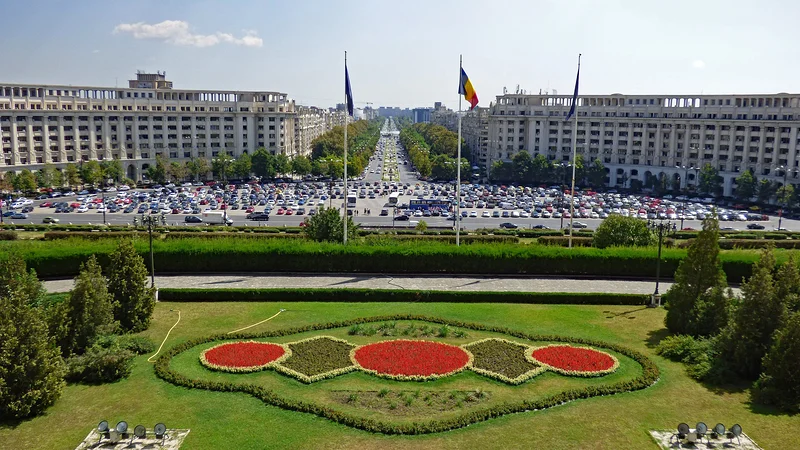
Romania's capital, Bucharest, gets underestimated. It's a city of jarring contrasts: crumbling pre-war Art Deco buildings next to Soviet-era concrete blocks, a historic old town that's been partially restored and is now full of outdoor cafes, and the Palatul Parlamentului (Palace of Parliament), the second-largest administrative building in the world after the Pentagon. Book a guided tour in advance; the scale of the place and the story behind it (Nicolae Ceaușescu ordered it built in the 1980s at enormous human cost) make it one of the more thought-provoking buildings you'll visit anywhere in Europe.

In the old town, the Muzeul de Istorie (National History Museum), housed in a neoclassical former post office, gives a solid overview of the country's past. For a look at traditional rural life, the Muzeul Țăranului Român (Museum of the Romanian Peasant) and the open-air Muzeul Satului "Dimitrie Gusti" (Village Museum) display traditional architecture and folk crafts from across the country.

Insider tip: When you need a break from the city noise, head to Cișmigiu Park. Rent a rowboat on the lake. It's a genuinely relaxing hour in the middle of a busy capital, and it costs almost nothing.

The rural north: Maramureș and Bucovina

Northern Romania is where the country shows its oldest face. In Maramureș, horse-drawn carts still work the fields, hand-carved wooden gates mark the entrances to farmhouses, and time genuinely does move at a different pace. The region is known for its UNESCO-listed wooden churches, including those in Budești and the valleys of Cosău and Iza. These aren't museum pieces; many are still active parish churches.

Bucovina, nicknamed "the land of beeches," is home to a series of Orthodox monasteries whose exterior walls are covered floor to ceiling in painted frescoes. Voroneț (famous for its deep cobalt blue), Moldovița, and Sucevița are the most celebrated. The outdoor frescoes depict biblical scenes in remarkable detail and color, and they've survived centuries of weather. Moldovița is also a center for painted egg art, a local craft tradition that goes well beyond Easter decorations.

Insider tip: In Maramureș, make time for the "Merry Cemetery" in Săpânța. Each grave is marked with a brightly painted wooden cross and a short poem describing the person buried there, often with humor and candor. It's a genuinely unique approach to death and memory, and it'll stick with you long after you leave Romania.

Getting outside: the Carpathians and what's underneath them

The Romanian Carpathians are serious hiking territory. Apuseni National Park in the northwest has green mountain ridges, deep gorges, isolated hamlets, and a real population of brown bears. The karst landscape here is also prime caving country, particularly in the area known as Țara Moților. If you've done the national parks in the American West and want something wilder and less regulated, this is a compelling alternative.

While you're in the area, don't pass up Salina Turda, a former salt mine converted into an underground thermal spa and amusement park 400 feet below the surface. There's a lake, a mini-golf course, and a Ferris wheel, all inside a massive salt cavern. It sounds absurd. It's actually one of the most memorable stops in the country.

Romanian food: hearty, flavorful, and underrated

Romanian cuisine pulls from Balkan, Turkish, Hungarian, and Austrian traditions, and the result is comfort food done with real skill. Soups called ciorbă are a staple at every meal. Ciorbă de burtă (tripe soup) is the most traditional, but if that's not your thing, there are lighter versions with vegetables or chicken. Sarmale (cabbage leaves stuffed with meat and rice, served with mămăligă, which is essentially polenta) is the dish you'll see on every family table. And mici (pronounced "meech"), grilled minced-meat rolls served with mustard and bread, are the Romanian equivalent of a backyard cookout staple.

For dessert, try papanași, fried cheese doughnuts topped with sour cream and jam. Romanian wines are worth your attention, especially reds from the Dealu Mare region, which is gaining a real international reputation. And if someone offers you țuică, the national plum brandy, accept it. It's strong (often 40-50% ABV), and saying no is considered mildly rude in a rural setting.

When to go to Romania

Spring (May-June) and fall (September-October) are the best windows. Temperatures are comfortable, the scenery is at its best, and you won't be competing with peak summer crowds. Summer gets genuinely hot in Bucharest and the lowlands, but the Carpathians and the Black Sea coast stay cooler. Winter is cold and snowy in the mountains, which makes it a legitimate ski destination, particularly at Păltiniș, the country's highest ski resort.

Getting to Romania

Most US travelers will fly into Henri Coandă International Airport in Bucharest, typically with one connection through a major European hub (London, Amsterdam, Frankfurt, Vienna). There's no direct nonstop service from the US as of now, so budget for a layover. Round-trip fares from major US cities typically run $700-1,100 depending on season and how far in advance you book. US citizens don't need a visa for stays up to 90 days; a valid US passport is all you need.

Getting around Romania

Renting a car is by far the best way to see the country. Your US driver's license is valid in Romania. Main highways are generally in decent shape, but secondary roads in rural areas can be rough, and you'll want to stay alert, especially after dark. Unmarked hazards, wandering livestock, and horse-drawn carts on the road are real considerations outside the cities. Download offline maps before you go; GPS coverage in remote areas can be patchy.

Train service exists but is slow and doesn't reach a lot of the places worth visiting. Intercity buses are a workable option for getting between major towns, but they're less flexible than having your own wheels. In Bucharest, ride-hailing apps work well and are cheap, typically 15-30 RON ($3-7) for most in-city trips.

Insider tip: If you're driving in rural areas, do it during daylight hours whenever possible. Animals on the road and unlit carts are a genuine hazard after dark, and the scenery is worth seeing anyway. Night driving in the countryside here is not the same as driving a well-lit US highway.
Find the best deals to travel to Romania

Hotels and stays Flights Car rentals Custom trips

Top photos posted by members

Château de Peles
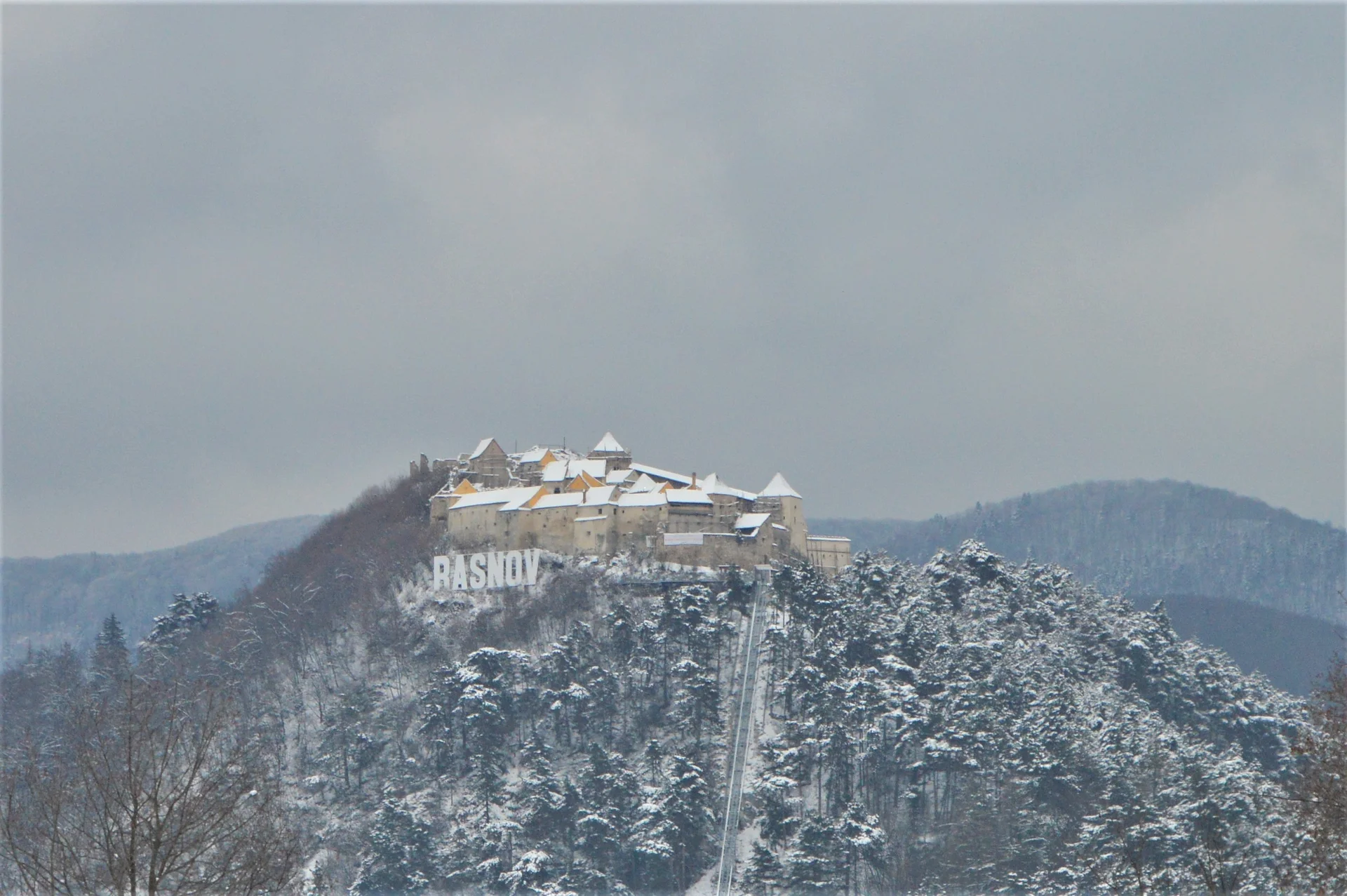
Rasnov
Biertan