
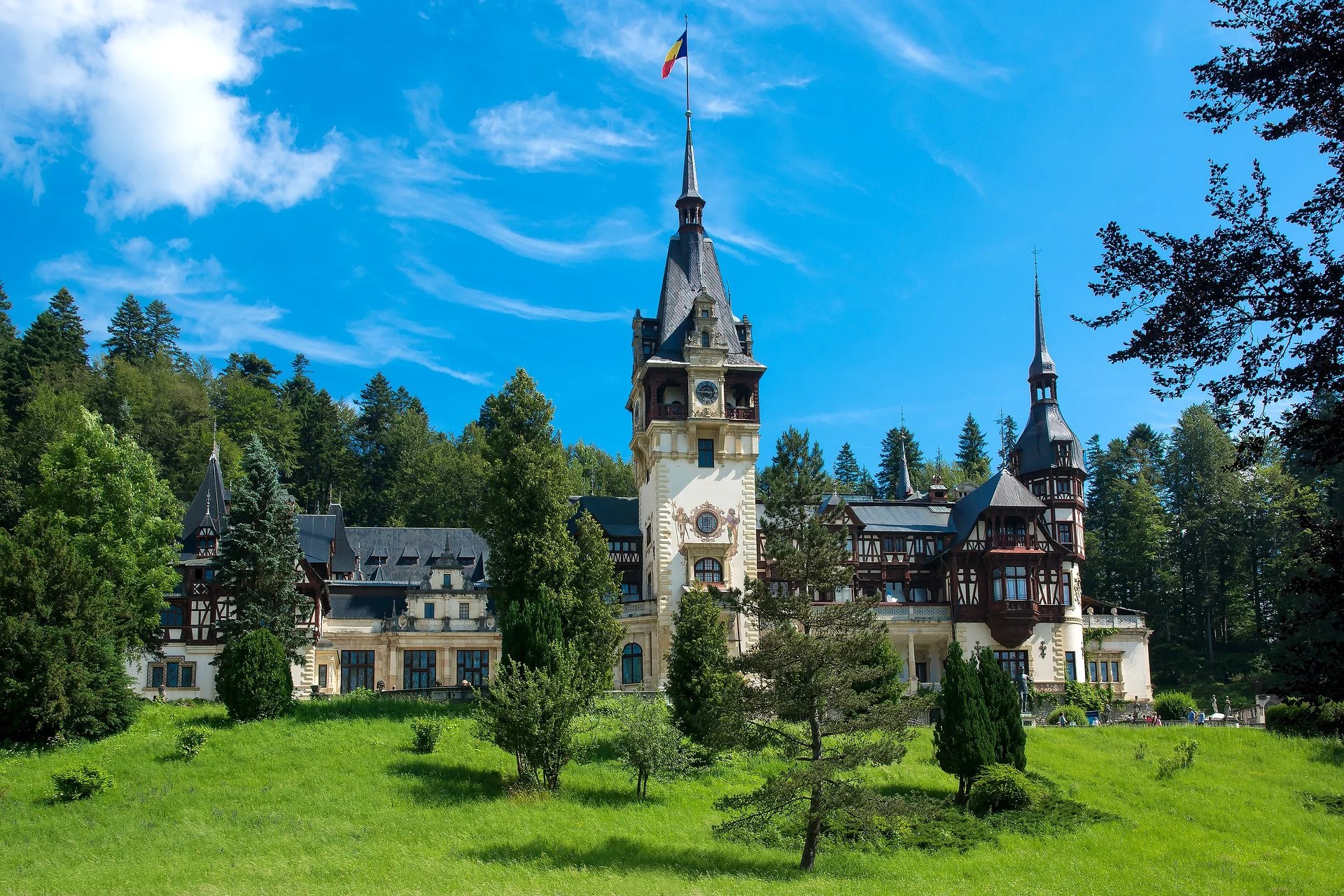
Visiting Peleș Castle
Emerging from a dense forest like a dream, its architectural influences create a fairy-tale aesthetic. Built as a summer residence for the first king of Romania, Carol I of Hohenzollern, Peleș Castle was constructed between 1873 and 1914. Now a national museum housing 2,000 paintings and impressive decorative art collections, it stands as one of the most significant sites in the country. Situated at the base of Bucegi Mountain, in the Southern Carpathians, this timeless masterpiece makes the town of Sinaia a necessary stop.
An enchanting world of rare elegance
With its numerous turrets and intricate wooden facades, Peleș Castle is a memorable monument. Initially designed in a German Neo-Renaissance style, it incorporates Neo-Ottoman touches that lend it a distinct Rococo grace. Within its walls, 160 rooms feature dazzling interiors where carved wood provides elegance and defines its character. The building survived the last century intact, preserved from Romania's tumultuous history, and following the end of the dictatorship, the public was finally able to access its beauty. As a repository of precious art, its diverse collections hold significant value. Among the 5,000 ceramics from European and Oriental workshops, visitors can see Austrian pottery, Dutch camaieu vases, German porcelain, Italian earthenware, and Persian pieces. Fifty clocks, including many once belonging to the royal family, create a unique atmosphere where works by Patek, Edmé Samson, and Samuel Marti capture the imagination. The glass collection includes 1,500 modern art objects in Bohemian crystal or crafted by artisans from Murano. Metal and silver are featured in 5,500 chiseled works. This museum, where every room reflects a studied worldly style, holds fascinating treasures between its French salons and the imperial suite.
Opening hours
| Monday | Closed |
|---|---|
| Tuesday | 09:15-18:00 |
| Wednesday | 10:00-18:00 |
| Thursday | 09:15-18:00 |
| Friday | 09:15-18:00 |
| Saturday | 09:15-18:00 |
| Sunday | 09:15-18:00 |
On Tuesdays, only the ground floor is open for tours.
*Information subject to change

Just arriving on site, on the path that leads to the entrance, you are struck by the beauty of this castle. The wonder continues inside and in the garden. The decor, the furniture, and the artwork give you a great glimpse into the history and life of the former Romanian nobility.
A small downside: I found it "petty" that you have to pay a supplement at the entrance for the right to take photos.