Naples

Top 7 most beautiful cities in Campania to visit2026 ranking

Discover the most appreciated cities in Campania by our members. Feel free to publish your own reviews to take part in this collaborative ranking.

The most beautiful cities in Campania

#1 Naples +62 recs

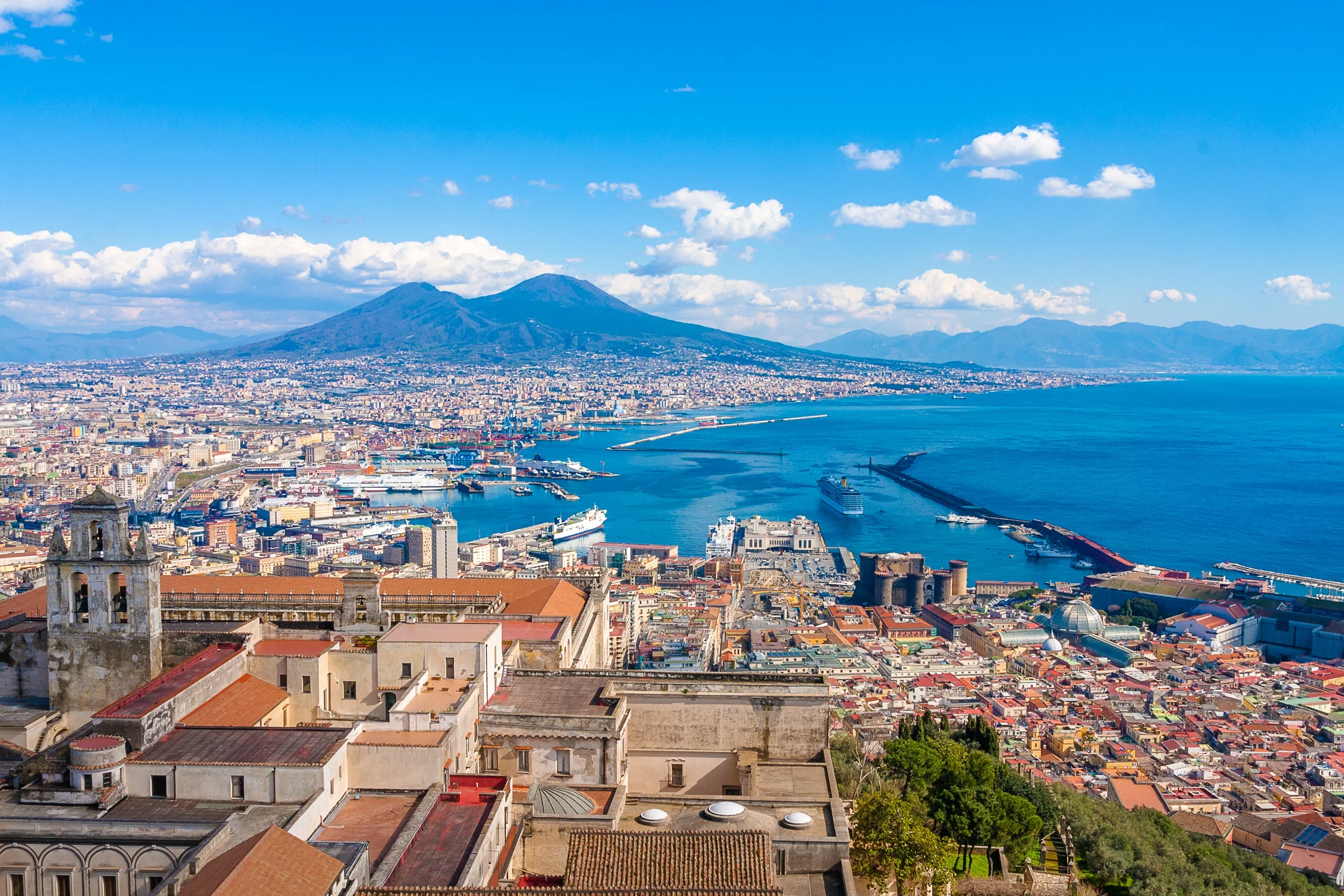
Naples is raw, loud, and unapologetic. It is a city of high-contrast energy where laundry lines crisscross narrow alleys above legendary pizzerias and UNESCO-listed historic streets. With the silhouette of Mount Vesuvius looming over the bay and the ruins of Pompeii just a short trip away, this is an Italy that refuses to sanitize itself for tourists. You will likely walk away either obsessed or overwhelmed, but you will definitely not be bored.

Must-sees

#2 Pompeii +32 recs

Buried by the Mount Vesuvius eruption in 79 AD, Pompeii serves as a life-sized time capsule. From the Forum and ancient bathhouses to preserved frescoes and taverns, you can trace the daily habits of Romans on nearly every corner. This 163-acre UNESCO World Heritage site is still revealing secrets, including charcoal drawings made by children rediscovered in 2024. It is a striking look at life two millennia ago.

Must-see

#3 Sorrento +15 recs

Sorrento stands as one of the most popular destinations in the province of Naples, in Italy. Most travelers use it as a base to explore the nearby archaeological site of Pompeii or the islands of Capri, Ischia, and Procida. That said, the town itself deserves at least a full day to soak in its Mediterranean character.

A lively historic center

Nicknamed the "city of sirens," Sorrento is a favorite for its well-preserved historic core and its perch above the Mediterranean. Located at the gateway to the Amalfi Coast, it is a primary stop for anyone touring the region. Most visits begin at Piazza Tasso, the town's social hub since 1886. It is the perfect spot to grab a drink on a terrace and look up at the statue of the poet Torquato Tasso, the square's namesake. From there, wander the narrow alleys lined with Baroque and Renaissance facades. In the summer, you will find a mix of souvenir shops, small workshops, and Italian gelato stands. Via San Cesareo is the ideal street to sample local culinary staples. Look for gnocchi alla sorrentina (prepared with tomato sauce, mozzarella, and basil) or a panino featuring pomodorini (cherry tomatoes) and prosciutto. Always finish your meal with a glass of limoncello, the lemon liqueur native to the Amalfi Coast.

Cultural treasures

Sorrento holds several architectural and historical highlights. The small medieval cloister of the Church of Saint Francis is a prime example, offering a cool, quiet retreat among its arcades and greenery when the afternoon heat peaks. The Cathedral of Saints Philip and James, dating back to the 15th century, is worth a visit for its bell tower and the intricate inlaid wood doors inside. For a better vantage point, head to the cliffs at the Villa Comunale gardens for a sweeping view over the Bay of Naples. Tucked away from the main tourist paths, Il Vallone dei Mulini (the Valley of the Mills) is a striking sight. You can peer down from the street level into the deep ravine to see the ruins of an old mill reclaimed by nature, creating a quiet, atmospheric scene. Finally, a walk down to the Marina Grande port is perfect as the sun sets, where you can watch local fishermen mending their nets after a day at sea.

When to visit

If you prefer to avoid heavy crowds, skip Sorrento in the peak of summer when the town reaches capacity. Spring and early autumn offer a much more manageable pace for exploring.

Getting there

The most practical way to reach Sorrento is via Naples. The city has an international airport and a major train station, and it sits about a 55-minute drive away. It serves as an excellent jumping-off point for the region. From Naples, you can also cross the bay by boat (a 40-minute trip) directly to the Sorrento pier.

Must-see

#4 Capri +14 recs

You have likely heard the name Capri before. While the island has long been a magnet for celebrities and travelers, its enduring appeal comes down to its dramatic topography and a laid-back lifestyle that is hard to replicate. Think of it as the Mediterranean answer to a posh cliffside retreat in Big Sur, but with a distinctly Italian soul.

The legend of Capri

The island's mythic status grew throughout the 20th century as a parade of intellectuals and icons made it their playground. Cocteau, Picasso, Gide, Brigitte Bardot, and Godard, who filmed his classic Contempt here, all helped cement its reputation. The jet set soon followed, turning the island into a global destination.

Today, the island is a high-profile spot that draws everyone from international celebrities to weekenders from the mainland. You get a sense of the scale as soon as you approach by boat. The island is essentially a massive, craggy rock measuring roughly 4 miles by 2 miles, covered in a lush mix of pine trees, strawberry trees, and vineyards. The view over the water is constant, with the sea shifting through every shade of blue as the sun moves across the sky.

It is true that Capri caters to an affluent crowd, and Capri-Ville (Capri Town) often feels like the Italian version of the Hamptons. However, the island remains a natural escape for hikers and history buffs. Do not miss the Villa Jovis, a palace built by Emperor Tiberius in the 1st century AD, or the Villa San Michele, which sits on the site of an old chapel dedicated to Saint Michael.

Caves, viewpoints, and local dining

The Blue Grotto (Grotta Azzurra) is the island's most famous landmark. Discovered by a writer in 1826, the cave is known for the way light reflects off the water to turn the walls a deep cobalt blue. The nearby white and green grottoes are also worth a look. For those who prefer being on foot, the island is crisscrossed with well-marked trails. The Arco Naturale is the most popular route, offering a spectacular vantage point from the island's heights. After a long trek, the beaches are the logical next stop.

If you prefer to move at a slower pace, there are plenty of spas and wellness centers for a recharge. For a different vibe, head away from the main town to the narrow streets of Anacapri. The historic center here is filled with colorful houses, bars, and restaurants specializing in regional Neapolitan cuisine. You will find wood-fired pizzas, lasagna, cannelloni, rockfish, cod, and glasses of chilled limoncello to end the meal. Nearby islands like Ischia and Procida are also worth a day trip.

When to go

Capri is accessible year-round thanks to its mild Mediterranean climate. That said, aim for the shoulder season between April and early October to get the most out of the island. Be aware that July and August are peak months, and the island gets very crowded.

How to get there

You can reach the island easily by a ferry from Naples, which takes about an hour, or by a hydrofoil from Sorrento, which takes roughly 20 minutes. There are also connections from Amalfi, Salerno, and Positano. Some operators even run longer routes from Sardinia, Spain, Corsica, and Tunisia.

Must-see

#5 Herculaneum +8 recs

While Pompeii draws the overwhelming majority of visitors around the Bay of Naples, skipping its neighbor Ercolano (Herculaneum) is a mistake. It houses remarkably preserved ruins that easily justify a full day of exploration.

A small Italian town that draws visitors

Ercolano is a town located in the southeastern suburbs of Naples, in the Campania region. Sitting at the foot of Mount Vesuvius, it serves as a practical base for exploring the area. It was once called Resina, but was renamed Ercolano in 1969 to reflect the ancient city ruins within its borders. Outside of the archaeological site, the town itself is fairly standard. However, the main street, Via Veneto, is a pleasant spot for a walk or some window shopping. Stop into one of the local pasticcerias (pastry shops) to try a regional specialty. The sfogliatella, a traditional pastry filled with ricotta cream, is a standout when paired with a hot drink.

Herculaneum, the little Pompeii

The real draw of Ercolano is its ancient city of Herculaneum, destroyed by the eruption of Vesuvius in 79 AD. In antiquity, it was a seaside town primarily occupied by the villas of wealthy Campanian residents. It is less famous than its neighbor Pompeii because it is significantly smaller. However, Herculaneum is better preserved because it was not buried in ash and pumice, but rather entombed under a thick layer of volcanic mud and lava until its rediscovery in the 18th century. Most of the buildings therefore resisted both the disaster and the passage of time.

Ercolano is striking at first glance, as the ruins sit in a depression twenty meters below the modern street level. The entrance to the archaeological site leads to a walkway that descends toward the buildings. From villas with walls adorned in decorative friezes to shops, Roman baths, and public structures, walking the streets of the ancient city makes it easy to visualize the residents going about their daily lives, unaware of the impending tragedy. Plan on about 2 hours for a full visit. To learn more and view the artifacts recovered during excavations, visit the National Archaeological Museum of Naples.

When to go

You can visit Ercolano year-round because the archaeological site remains open in every season. It never sees the intense tourist crowds found at Pompeii, but if you prioritize quiet, choose spring or autumn over the summer months.

How to get there

Ercolano is located very close to Naples, just a 15-minute drive via the A3 highway. If you do not have a rental car, take the train to the Ercolano Scavi station (a 20-minute trip). To reach Naples, you will find numerous flights from major US hubs with a connection in a larger European city. Note that Rome is also within reach, located about 2 hours and 15 minutes away by car.

Must-see

#6 Massa Lubrense +7 recs

Massa Lubrense sits at the tip of the Sorrento Peninsula, where the Gulf of Salerno meets the Gulf of Naples. It offers a rare mix of rugged mountains and Mediterranean coastline, with direct views of Capri that feel like a scene from a classic Italian film. Wander to the Santa Maria delle Grazie cathedral, spend an afternoon on the local beaches, and be sure to taste the regional specialty, the bright and fragrant Massa Lubrense lemon.

Must-see

#7 Amalfi -2 recs

Among the wonders that earned the Amalfi Coast its UNESCO World Heritage status, the town that gave it its name stands out. As early as the 6th century, Amalfi and its port rose to prominence, fueled by sailors who mastered the compass and expanded trade routes to the East. The golden age of Italy's first Maritime Republic thrived until 1343, when a devastating tsunami altered its path. It took the rise of tourism and the 19th century for this jewel of the Salerno province to reclaim its glory. As a charming seaside resort, its natural setting is just as captivating as its historic core, blending rugged rock, stone architecture, the sea, and lush vegetation into a unique landscape.

Below the hillside homes, the beach

Walking through Amalfi feels like stepping into a medieval urban maze. The narrow streets climb and crisscross, punctuated by passageways and staircases that often lead to unexpected corners. Saint Andrew's Cathedral, located in Piazza Duomo, serves as a magnificent landmark. Its imposing flight of 62 steps leads to a building of striking beauty. Inspired by Arab art and reworked over centuries, this 987-construction is impressive. Its Byzantine door, colorful facade, and mix of neo-Gothic, Romanesque, and Baroque influences create a dazzling stylistic ensemble. The crypt is a must-see, and adjacent to the cathedral, the 13th-century Cloister of Paradise, with its interlaced arches and columns, hides palm trees that heighten the Moorish atmosphere. A diocesan museum rounds out the site.

At the bottom of the steps, you will find restaurant terraces, the fountain also dedicated to Saint Andrew, and the historic core, including the incredible Vagliendola neighborhood. Typical of the area with its high passageways between buildings, the main street, Via Lorenzo, is lined with shops ranging from artisan crafts and pizzerias to gelato shops, souvenir stores, and boutiques. The stroll is marked by picturesque squares with fountains, most notably the Fontana de Cape E Ciucci, a miniature wonderland representing the nativity among 18th-century marble figures. The marina facing the Gulf of Salerno sits at the end of the town center. Ferries allow you to explore the surroundings, such as the island of Capri.

The beach is right at the foot of the town, overlooked by hillsides where pristine white houses seem to keep watch. It offers fine sand, transparent water, and an exceptional setting. Popular as it is, the Marina Grande is quite small at 184 meters long. Some locals prefer the beach at Atrani, which tends to be less crowded.

Lemons, nature, and exceptional paper

Amalfi is also renowned for its artisanal paper, a high-quality craft celebrated since the 12th century. The Paper Museum reveals the secrets of this history and the 16 mills that once lined the Via delle Cartiere. This former 14th-century factory remains the only one featuring original machines and mills. The remains of the ancient Arsenal, housing the museum of the compass and maritime duchy, are also unmissable. Equally famous, the lemon grown in terraced gardens is a tasty emblem that local gastronomy elevates through cremoncello, a creamy liqueur with unique fragrances, or the classic limoncello. The port naturally favors fish and seafood dishes, but the buffalo mozzarella, cannelloni, and antipasti are equally impressive.

The hinterland, with vegetation as lush as the coast, is a hiker's paradise. Between waterfalls and rare flora, the Vallone delle Ferriere is a magical playground that includes an area with historic water mills and lemon groves.

When to go

From Easter to the end of October, the tourist season is in full swing, with high density in the summer. June and September are the best months to enjoy the mild Mediterranean climate without the intense crowds, though the spring blooms of April and May are spectacular to witness. From November to February, many businesses close. As for local events, the city celebrates its festivals on June 27 and November 30.

How to get there

The nearest airport is Naples-Capodichino, located 65 km away. Buses provide connections to Sorrento and then on to Amalfi. By car, the route is straightforward via the E45 or the A30. Ferries also run between the various towns on the coast, but Amalfi is not accessible by train. The train line stops in either Sorrento or Salerno.

Must-see

Latest reviews

The quintessential Italian city

There are tons of beautiful things to see in the city and the surrounding areas. Between the ruins of Pompeii, Mount Vesuvius, and the islands (gorgeous!!), you won't be bored! Not to mention the food…

21 0

Forget the stereotypes!

Don't listen to what people say about Naples! It is the living and vibrant heart of Italy! An unfairly unpopular city, even though it is safe, the food is great (the famous rum babas and Neapolitan pi…

19 0

A very pleasant seaside town

I found the city of Pompeii just as interesting as the archaeological site. We stayed in an Airbnb on Via Roma, and it was nice to walk around as a tourist. The architectural style is really beautiful…

15 0

Spanish Quarter

Naples doesn't deserve its bad reputation as a sketchy city. Sure, it is noisy and congested, but the city center is very pleasant. Contrary to what you might imagine, there are some very chic monumen…

16 0

A two-level city

Sorrento is a very beautiful town, and really close to Pompeii by train. A half day is enough for a visit. In its narrow, shaded streets, you can find religious buildings, beautiful old houses, restau…

13 0

Rankings by travellers, for travellers

Our rankings are powered by thousands of reviews from travelers like you, not the arbitrary pick of a single editor. Every positive review you publish raises the destination’s score.

1 positive review = +1 reco

Your voice matters!

Have you travelled and discovered amazing places? Share your experience and help the community rank the most beautiful destinations! Sign up for free to post reviews and make your voice heard.