Lacs de Plitvice

Things to do in Croatia: 20 must-see attractions in 2026

Discover our members' favorite destinations in Croatia, plus reviews, practical info, and traveler photos...

The 5 most beautiful cities to visit in Croatia

Zagreb

#1 Zagreb +138

Zagreb has a low-key appeal that rewards those who linger. Between the medieval Upper Town with its cobblestone alleys, the green parks lined with Austro-Hungarian facades, and a sidewalk cafe culture that forces you to slow down, the Croatian capital feels refreshingly authentic. With quirky museums, hearty comfort food, and prices that often run 30-50 EUR (about $32-54) for a solid dinner for two, it is a smart pick for travelers looking to avoid the crushing crowds of Western Europe.

Dubrovnik

#2 Dubrovnik +102

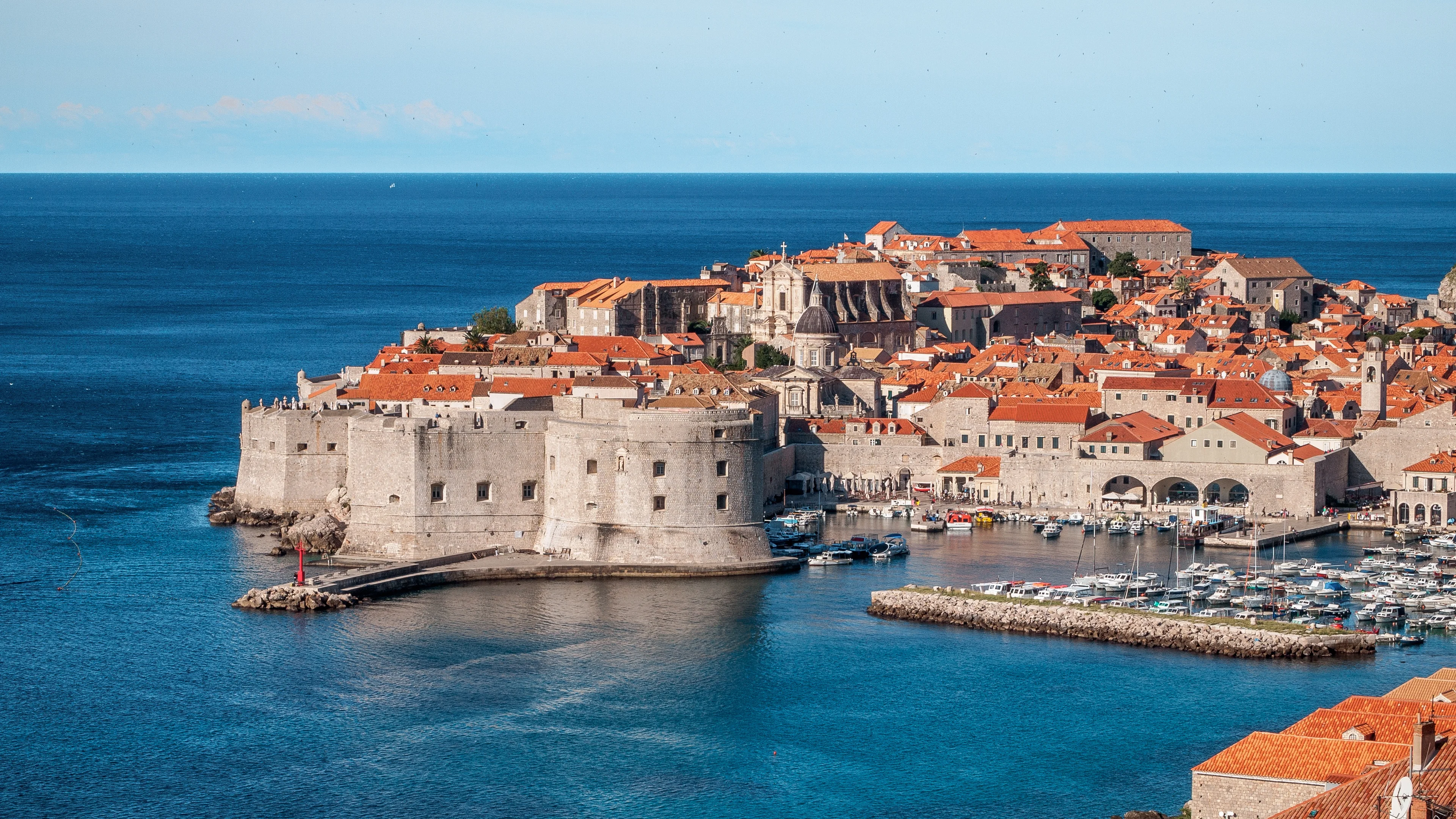
Enclosed by massive stone walls, the historic heart of this former maritime republic is a UNESCO World Heritage site where every block reflects a history of fierce independence. The contrast between deep turquoise Adriatic waters and orange-tiled rooftops is iconic, though the heavy crowds and high prices, often reaching 15 EUR (about $16) for a simple beer inside the walls, can be a reality check. Seek out quiet beaches, nearby islands, and sunset views from Mount Srđ to escape the intensity of the main thoroughfares.

Cavtat

#3 Cavtat +31

Just 12 miles south of Dubrovnik, Cavtat is a quiet coastal town defined by its Roman roots and preserved historic center. You can walk the cobblestone streets to see the Račić Mausoleum or explore the Vlaho Bukovac Museum for a deep dive into local art. The town is surrounded by accessible coves and nature trails that offer a relaxed alternative to the crowds nearby.

Mljet

#4 Mljet +27

A tangle of deep green forests and brilliant blue water, the island of Mljet is the southernmost of the major islands in Croatia. Since 1960, more than one third of the island has been protected as a national park. Its landscape is defined by five distinct forest ecosystems. According to The Odyssey, this is where the nymph Calypso lived and kept Ulysses captive for seven long years.

An island of myths and legends

Your trip begins at the docks in the villages of Pomena and Polače. You will find remnants of Illyrian fortifications here, alongside the ruins of one of the largest Roman palaces in Croatia. These villages serve as the trailheads for the Mljet National Park. During peak season, entry to the reserve costs 125 EUR (about $135). Within these woods, nature created two saltwater lakes, Veliko Jezero (the large lake) and Malo Jezero (the small lake), which are connected to each other and the open sea by narrow channels.

In the middle of the larger lake, you can explore a 12th-century Benedictine monastery perched on the islet of Saint Mary. The boat shuttle to reach the islet is included in your park entrance fee. Local lore credits the monks with the early preservation of the island's natural heritage. You can circle the lakes on foot or by bike, and swimming is permitted.

Near the village of Babino Polje, visit Ulysses' Cave. It is a natural karst formation with a collapsed ceiling, creating a deep pool filled with seawater. It is said to be the very spot where Ulysses took refuge after battling the rough currents of the Adriatic.

Immersing in nature

Mljet is well-suited for hiking. From the small village of Pristaniste, you can take a trail that climbs for about forty minutes to the top of the Montokuc viewpoint. From there, you get a clear view of the island, the surrounding coastline, and the deep blue sea.

If you have a car, head to the eastern half of the island to find sandy beaches, which are rare enough in Croatia to be notable. Sablunara beach offers several amenities, while for those seeking quiet, Blace beach is a solid spot to relax.

When to go

Mljet has a Mediterranean climate with hot, dry summers and plenty of sunshine from March through October. Be aware that July can see intense heat waves. Winters can be rainy.

How to get there

Numerous tourist boats and catamarans serve the island, docking in Pomena and Polače. You can make the crossing from Dubrovnik, the Peljesac peninsula, and the neighboring islands of Hvar and Korcula.

There are also car ferry connections from Dubrovnik to the island's largest town, Sobra, operated by Jadrolinija. These trips take about two hours and allow you to bring your own vehicle.

Split

#5 Split +25

Split is built directly into and around a 4th-century Roman palace, making ancient history a part of your daily routine. You can dine inside imperial cellars, hike the narrow lanes of the Varoš neighborhood up to the pine forests of Marjan Hill, or catch a morning ferry to the islands of Hvar, Brač, or Vis. This is where Dalmatia begins.

Ranking of the 15 activities selected by our editors in Croatia

#1 Mount Srd (Dubrovnik) +24 4.8

Mount Srd rises 412 meters above Dubrovnik, providing views of the city walls and the Adriatic Sea. Reach the summit by foot, cable car, or car to explore Fort Imperial, a site shaped by the Croatian War of Independence. It combines panoramic vistas, a history museum, and rugged trails for visitors.

See the guide See deals

#2 City Walls of Dubrovnik (Dubrovnik) +23 5

The City Walls of Dubrovnik, a medieval masterpiece, stretch nearly two kilometers around the old town. These perfectly preserved fortifications offer sweeping views of red rooftops and the Adriatic Sea. Walk past bastions and towers like Minceta to explore the defensive history of this former republic. Game of Thrones fans will recognize King's Landing here.

See the guide See deals

#3 Mljet National Park (Mljet) +19 4.8

With forests covering much of its terrain, Mljet is known as the Green Island. Over a third of its area is protected as Mljet National Park, one of the oldest nature reserves in Europe. It features two saltwater lakes connected to the sea, plus landmarks like the Monastery of Saint Mary on its islet.

See the guide See deals

#4 Museum of the City of Zagreb (Zagreb) +17 4.3

The Museum of the City of Zagreb is a premier institution in Croatia. Located in the Upper Town, it occupies the former Poor Clares Convent, a massive building featuring unique trompe l'oeil windows. Explore thousands of artifacts and archaeological finds documenting local life from prehistory to today, alongside detailed architectural models of Zagreb.

#5 Maksimir Park (Zagreb) +16 4.7

Maksimir Park is the oldest and largest public park in Zagreb. This green space covers 316 hectares of oak forests, meadows, and lakes designed in the English landscape style. It features historic monuments, walking trails, and the city's popular Zoološki vrt grada Zagreba (Zagreb Zoo), making it a top spot for nature lovers, families, and runners.

#6 Zrinjevac Park (Zagreb) +16 3.7

Located in the heart of the Lower Town in Zagreb, Zrinjevac Park is the flagship of the Green Horseshoe. This relaxing cultural hub features a music pavilion from 1891, historic fountains, and elegant architecture. With year-round events like the Advent market, it serves as a sophisticated meeting spot for locals and visitors alike.

See the guide See deals

#7 Zagreb Cathedral (Zagreb) +15 4

The tallest cathedral in Croatia has towered over Zagreb since the 11th century. Following the 2020 earthquake, it partially reopened in late 2025 for worshippers. Its neogothic spires sculpted by Hermann Bollé, an organ ranked among the world's top ten, and an Albrecht Dürer triptych make this landmark a key stop in Zagreb.

#8 Zlatni Rat Beach (Bol) +10 4

Designated a geomorphological monument, Zlatni Rat Beach extends 500 meters into the Adriatic Sea from the island of Brač. Its V-shaped tip shifts with the currents, creating a rare natural spectacle. Fine pebbles, crystal-clear water, watersports, and shaded pine groves define the landscape. Access is free, just a 20-minute walk from Bol.

See the guide See deals

#9 Diocletian's Palace (Split) +9 5

Built as a retirement villa for the Roman emperor, this 4th-century fortress now forms half of the Split old town. This UNESCO site remains home to 3,000 residents living among ancient ruins and cafes. Visit the cathedral inside an imperial mausoleum, intact cellars, and the Temple of Jupiter. Access to the palace is free, with fees only for specific monuments.

See the guide See deals

#10 Medvednica Nature Park (Zagreb) +8 5

Towering over the north of Zagreb, Medvednica Nature Park features a mountain range webbed with hiking trails for all levels, offering expansive views from the Sljeme summit. The Veternica cave captivates with prehistoric remains, while the medieval Medvedgrad fortress provides a historic look at restored ramparts overlooking the city.

#11 Dolac Market (Zagreb) +8 5

Open since 1930, Dolac Market is the main food hub in Zagreb, perched on a raised terrace just steps from Trg bana Josipa Jelačića (Ban Jelačić Square). You will find produce and flowers under red umbrellas outside, plus cheese and cured meats indoors. Visit early on a weekday morning for the best experience.

#12 Fort Lovrijenac (Dubrovnik) +7 4

Fort Lovrijenac sits 121 feet above the sea, a historic sentinel for Dubrovnik. Built in the 11th century to defend the city, it provides clear views of the walls, the Old Town, and the Adriatic. The site hosts cultural events like Shakespeare performances and served as a filming location for Game of Thrones.

See the guide See deals

#13 Rector's Palace (Dubrovnik) +6 4

An architectural gem in the Old Town of Dubrovnik, the Rector's Palace served as the seat of government for the former Republic of Ragusa. Blending Gothic, Renaissance, and Baroque styles, it now houses the Cultural History Museum. Tour the rector's apartments, council rooms, and former prisons to see how this city-state functioned.

See the guide See deals

#14 Museum of Broken Relationships (Zagreb) +6 3

The Museum of Broken Relationships began as a traveling exhibit, appearing in cities like Berlin in 2007. Since 2010, it has occupied a permanent space in downtown Zagreb. Every year, anonymous donors add new items to the collection. The museum explores a universal question: what causes a love story to end, and how do we handle the physical remnants of our past?

See the guide See deals

#15 Plitvice Lakes National Park (Jezerce) +5 4.7

Sixteen turquoise lakes connected by more than 90 waterfalls, wooden footbridges skimming the water, and a living karst ecosystem recognized as a UNESCO World Heritage site. Plitvice Lakes National Park offers 8 marked trails ranging from 2 to 8 hours, with electric boat and tram rides included. Online booking is highly recommended during peak season.

See the guide See deals

Croatia Has a Lot More Going On Than Its Coastline

Over 1,200 islands. A Dalmatian coast so jagged it looks like lacework from satellite imagery. And yet most visitors stick to Dubrovnik, Hvar, and the lakes at Plitvice. Despite its massive popularity, Croatia is still a country where you can genuinely get off the grid, as long as you know where to look.

Gorgeous, yes, but let's be honest about peak season

Croatia is a victim of its own success. In July and August, Dubrovnik functions more like an open-air theme park, with thousands of cruise passengers flooding in every morning. Prices spike, restaurant tables disappear without a reservation, and the old town feels like Times Square on New Year's Eve. Outside those peak weeks, the country is a completely different place.

thumb_up Best for:

  • Beach lovers and anyone who wants clear Adriatic water
  • Travelers who want to combine beach time with medieval history
  • Hikers and national park enthusiasts
  • Families: Croatia is safe, well-organized, and easy to navigate with kids
  • Sailors and anyone into coastal cruising
  • Food lovers looking for solid Mediterranean cooking without paying Western European prices everywhere
  • City travelers who want culture and sea in the same trip

warning Not ideal for:

  • Crowd-avoiders: major sites in July and August are genuinely overwhelmed
  • Tight-budget travelers: Dubrovnik in high season runs as expensive as Western Europe, sometimes more so in the most touristy spots
  • Sandy-beach seekers: most of the Croatian coast is rocky with pebbles, not sand
  • Travelers looking for somewhere off the beaten path: Croatia is one of the most-visited destinations in the Mediterranean

European price range, but it varies a lot depending on where you are

Overall, the cost of living in Croatia runs roughly 16% lower than in Western Europe, but that average hides wide gaps. Dubrovnik in summer charges prices comparable to Paris or Rome, and higher in the most tourist-heavy pockets. Split, Zadar, and inland areas are considerably more reasonable.

Sample Croatia trips and estimated budgets, excluding international flights
Trip Type Where Duration Budget (flights not included)
Dalmatian coast beach trip Split, Brač or Vis islands 1 week €600 to €1,200 per person (about $650, $1,300)
Coastal road trip Zagreb, Plitvice, Split, Dubrovnik 10 to 14 days €900 to €1,800 per person (about $975, $1,950)
Island hopping Hvar, Korčula, Mljet, Vis 10 days €800 to €1,500 per person (about $865, $1,625)
City break Zagreb 3, 4 days €300 to €600 per person (about $325, $650)
Nature and hiking Plitvice, Krka, Velebit range 1 week €500 to €900 per person (about $540, $975)
Food and truffle trip Istria (Rovinj, Motovun, Pula) 4, 5 days €450 to €900 per person (about $490, $975)

Getting around, the language, and a few things to know before you go

Croatia joined the eurozone in January 2023, which makes things straightforward for anyone coming from a euro country, and keeps currency exchange simple for US travelers too. English is widely spoken in tourist areas. In inland villages or on smaller islands, a few words of Croatian go a long way. The ferry network is extensive and well-run, coastal roads are in good shape, and the country is generally very safe.

One thing worth knowing before you head off-trail: parts of the Croatian interior, particularly around the Velebit mountain range and some areas of Slavonia, still contain landmines left over from the 1990s conflicts. This doesn't affect tourist areas at all, but if you're planning any backcountry routes away from marked trails, stick to signposted paths.

Dubrovnik, Split, Zadar: three cities that each earn their reputation

  • Dubrovnik lives up to the hype. Its medieval walls running along the sea, the white limestone lanes, the tiny old harbor, the city is genuinely striking. What doesn't get mentioned as often is that cruise ships unload thousands of passengers here every morning between May and September. The fix: arrive late in the evening, and walk the walls either right at opening or late afternoon once the ships have sailed. Wall admission runs around €35 (about $38).
  • Split is in a category of its own. Diocletian's Palace, built in the 4th century, isn't a museum, it's a living neighborhood where people actually live, sleep, and buy groceries. It's one of the strangest and most compelling urban experiences in the Mediterranean.

Zadar gets overlooked by travelers moving fast up and down the coast, and that's a mistake. Its Sea Organ, a public art installation that turns wave energy into sound, and the "Greeting to the Sun" solar-powered light installation on the waterfront make it one of the more genuinely surprising stops on the Dalmatian coast.

Insider tip: In Dubrovnik, spend some time in the Lapad neighborhood, a few miles from the old town. It's residential, much less touristy, and has restaurants where locals actually eat, with prices up to 40% lower than what you'll pay inside the old city walls.

The islands: pick the right one instead of following the crowd

Hvar is beautiful, and it has also become the go-to destination for British bachelor parties and luxury yachts. If you're after late-night clubs and a party scene, it delivers. For anything else, look elsewhere.

Brač is worth the trip for Zlatni Rat, a sandbar beach whose distinctive pointed shape actually shifts with the currents. Mljet, in the south, has a national park built around two saltwater lakes, with a 14th-century monastery sitting on a small island in the middle of one of them. It's one of the quieter corners of the country.

Vis was a Yugoslav military base closed to foreigners until 1989, and it has kept a preserved, low-key character since. Minimal overdevelopment, coves that you can only reach by boat, and a local wine culture that residents maintained for decades well away from mass tourism.

  • Island of Cres: one of Croatia's largest islands and one of its least developed. Wild beaches, hilltop villages, and griffon vultures nesting in the cliffs.
  • Island of Korčula: often compared to a smaller Dubrovnik, with far fewer crowds and a walled old town that's genuinely atmospheric.
  • Island of Lastovo: the most remote island from the mainland, protected as a nature reserve, with almost no mass tourism.

National parks: Plitvice is just the start

Plitvice Lakes National Park is the real deal: sixteen turquoise lakes connected by waterfalls, surrounded by dense forest. Admission runs between €10 and €40 (about $11, $43) depending on the season. In peak summer, the park pulls in thousands of visitors a day. Get there at opening time if you want any sense of what makes the place special.

Krka National Park, with its waterfalls reachable on foot from the village of Skradin, is easier to get to from Split and less crowded than Plitvice. Swimming at the base of the falls, which was allowed for years, is now regulated. Plan on a full day there.

For hikers, the Velebit mountain range delivers some of the best views in the country, with the Adriatic on one side and mountains on the other. Most travel guides barely mention it, which is exactly the point.

Istria and Zagreb: where Croatia feels like Italy and Central Europe at the same time

Rovinj, on the Istrian peninsula, was Venetian for centuries. You can hear it in the street names, taste it in the truffle and olive oil cooking, and see it in the bell towers rising above the old town. It's one of the most beautiful towns in the country and, frankly, undervisited compared to the Dalmatian coast.

In the Istrian interior, the hilltop villages of Motovun and Grožnjan have been looking out over their vineyards since the Middle Ages. The region produces both white and black truffles, local wines including Malvazija (a fruity, slightly saline white) and Istrian Teran (a robust red), and an olive oil that regularly outperforms better-known Spanish and Greek versions.

Zagreb, the capital, gets far fewer foreign visitors than Split or Dubrovnik. That's a missed opportunity. Its Dolac market, its Museum of Broken Relationships (which displays objects from ended love affairs alongside their stories, an idea that's equal parts absurd and genuinely moving), and its Austro-Hungarian architecture make it one of the better city-break options in Central Europe.

Insider tip: If you're visiting Istria, don't leave without picking up some cheese from the island of Pag. The island is connected to the mainland by bridge, and its sheep's milk cheese, aged in the salt-laden winds blowing off the Velebit mountains, is among the best in Europe. You'll find it at markets throughout the region.

Croatian Food: From the Grill to Black Risotto

On the coast, peka is the dish that best captures Dalmatian cooking: lamb, veal, or a whole octopus slow-cooked under a domed metal lid buried in embers, with potatoes and herbs. It takes time (often two hours, and you'll need to order it in advance), and it's regularly one of the best things you'll eat on the trip. Crni rižoto, a squid-ink risotto with calamari, is another coastal staple with a deep, briny intensity that's hard to find anywhere else.

Brudet, a spiced braised fish stew, varies from port to port. Inland, Slavonia goes in a different direction: paprika, smoked sausages, stuffed cabbage rolls called sarmas. Ćevapi, small grilled sausages served with flatbread and onion, show up all across the Balkans and make for a fast, cheap, satisfying meal.

On the wine side, the Pelješac peninsula produces Dingač, a dense red made from the Plavac Mali grape and widely considered one of Croatia's best. Istria's Malvazija is a light, fruity white with a slightly saline finish. And rakija, a fruit or herb brandy that functions as the national digestif, will be offered to you constantly. Say yes.

When to Go to Croatia

June and September are the sweet spot: the sea is warm, prices are reasonable, and the crowds are a fraction of what you'll encounter in peak summer. July and August bring millions of tourists, coastal accommodations book out months in advance, and major sites feel like a permanent open house.

Spring (April to May) is ideal for hiking and national parks, particularly for catching snowmelt at Plitvice and the alpine meadows of the Velebit. Fall brings the grape harvest in October, still-mild temperatures on the coast, and a noticeably local atmosphere on the islands as residents reclaim their villages after the tourist season.

Winter has its own appeal: Zagreb runs one of the best Christmas markets in Central Europe, which has won multiple international awards. The coast gets cold and is hit by the bora, a powerful wind descending from the mountains. The islands are nearly empty, which is its own kind of experience for travelers who like destinations out of season.

Getting to Croatia from the US

There are no direct flights from the US to Croatia, so you'll connect through a major European hub. Common connections run through Frankfurt, Amsterdam, London, or Vienna into Dubrovnik, Split, Zagreb, or Zadar. Croatia Airlines, easyJet, Ryanair, and Transavia all operate routes within Europe if you're combining Croatia with another European stop.

If you're already in Italy, ferry connections from Ancona or Bari to Split or Dubrovnik are a solid option, and you can bring your car. Figure around €200 to €350 (about $215, $380) for two people with a vehicle. The overnight crossing from Ancona (roughly nine hours) is a genuinely comfortable way to arrive directly on the Dalmatian coast.

US citizens do not need a visa for Croatia. Your passport needs to be valid for the duration of your stay. Croatia joined the Schengen Area in 2023, so entry follows standard Schengen rules: US passport holders can stay up to 90 days within any 180-day period across the Schengen zone without a visa.

Getting Around Croatia

The Jadrolinija ferry network is the backbone of coastal travel. Regular departures from Split, Dubrovnik, and Zadar serve the main islands. Short crossings like Split to Brač cost just a few euros; longer routes run €15 to €30 (about $16, $32). In high season, book your ferry crossings ahead of time.

Renting a car is the best way to explore the interior, Istria, and anywhere off the main tourist routes. Roads are generally in good condition, and the toll highways let you cover ground quickly. On the islands, local buses cover the main routes at low prices, though schedules can be limited off-season.

The rail network isn't built for coastal travel. Trains connect Zagreb to Split and a handful of inland cities, but don't reach coastal Dalmatia. For getting between cities, the bus is the most practical option: comfortable, reliable on major routes, and significantly cheaper than renting a car for point-to-point trips.

Find the best deals to travel to Croatia

Hotels and stays Flights Car rentals Custom trips

Top photos posted by members

Lacs de Plitvice
Place Ban Jelacic à Zagreb
Port de Dubrovnik