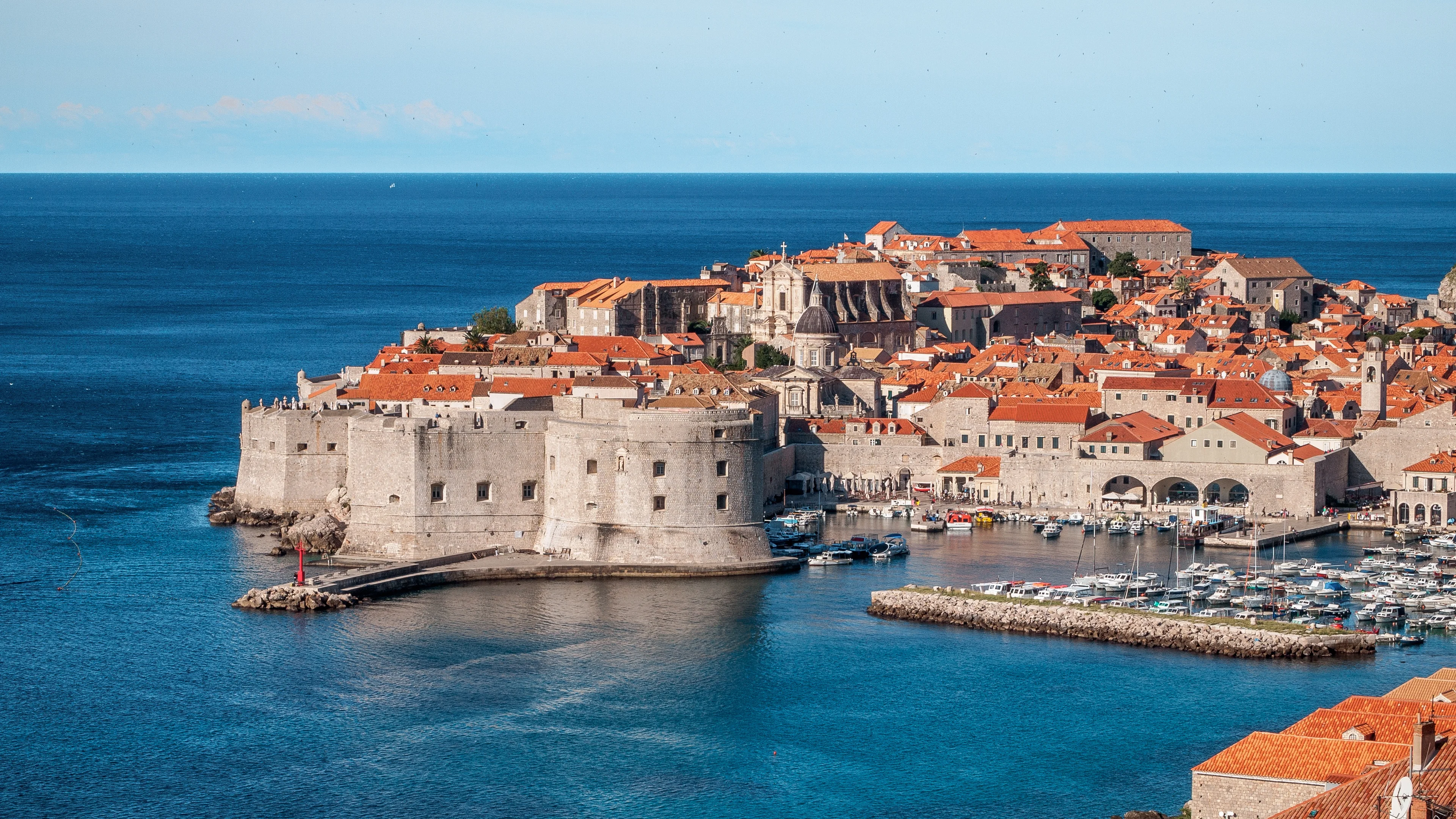
Croatia Has a Lot More Going On Than Its Coastline
Over 1,200 islands. A Dalmatian coast so jagged it looks like lacework from satellite imagery. And yet most visitors stick to Dubrovnik, Hvar, and the lakes at Plitvice. Despite its massive popularity, Croatia is still a country where you can genuinely get off the grid, as long as you know where to look.
Gorgeous, yes, but let's be honest about peak season
Croatia is a victim of its own success. In July and August, Dubrovnik functions more like an open-air theme park, with thousands of cruise passengers flooding in every morning. Prices spike, restaurant tables disappear without a reservation, and the old town feels like Times Square on New Year's Eve. Outside those peak weeks, the country is a completely different place.
thumb_up Best for:
- Beach lovers and anyone who wants clear Adriatic water
- Travelers who want to combine beach time with medieval history
- Hikers and national park enthusiasts
- Families: Croatia is safe, well-organized, and easy to navigate with kids
- Sailors and anyone into coastal cruising
- Food lovers looking for solid Mediterranean cooking without paying Western European prices everywhere
- City travelers who want culture and sea in the same trip
warning Not ideal for:
- Crowd-avoiders: major sites in July and August are genuinely overwhelmed
- Tight-budget travelers: Dubrovnik in high season runs as expensive as Western Europe, sometimes more so in the most touristy spots
- Sandy-beach seekers: most of the Croatian coast is rocky with pebbles, not sand
- Travelers looking for somewhere off the beaten path: Croatia is one of the most-visited destinations in the Mediterranean
European price range, but it varies a lot depending on where you are
Overall, the cost of living in Croatia runs roughly 16% lower than in Western Europe, but that average hides wide gaps. Dubrovnik in summer charges prices comparable to Paris or Rome, and higher in the most tourist-heavy pockets. Split, Zadar, and inland areas are considerably more reasonable.
| Trip Type | Where | Duration | Budget (flights not included) |
|---|---|---|---|
| Dalmatian coast beach trip | Split, Brač or Vis islands | 1 week | €600 to €1,200 per person (about $650, $1,300) |
| Coastal road trip | Zagreb, Plitvice, Split, Dubrovnik | 10 to 14 days | €900 to €1,800 per person (about $975, $1,950) |
| Island hopping | Hvar, Korčula, Mljet, Vis | 10 days | €800 to €1,500 per person (about $865, $1,625) |
| City break | Zagreb | 3, 4 days | €300 to €600 per person (about $325, $650) |
| Nature and hiking | Plitvice, Krka, Velebit range | 1 week | €500 to €900 per person (about $540, $975) |
| Food and truffle trip | Istria (Rovinj, Motovun, Pula) | 4, 5 days | €450 to €900 per person (about $490, $975) |
Getting around, the language, and a few things to know before you go
Croatia joined the eurozone in January 2023, which makes things straightforward for anyone coming from a euro country, and keeps currency exchange simple for US travelers too. English is widely spoken in tourist areas. In inland villages or on smaller islands, a few words of Croatian go a long way. The ferry network is extensive and well-run, coastal roads are in good shape, and the country is generally very safe.
One thing worth knowing before you head off-trail: parts of the Croatian interior, particularly around the Velebit mountain range and some areas of Slavonia, still contain landmines left over from the 1990s conflicts. This doesn't affect tourist areas at all, but if you're planning any backcountry routes away from marked trails, stick to signposted paths.
Dubrovnik, Split, Zadar: three cities that each earn their reputation
- Dubrovnik lives up to the hype. Its medieval walls running along the sea, the white limestone lanes, the tiny old harbor, the city is genuinely striking. What doesn't get mentioned as often is that cruise ships unload thousands of passengers here every morning between May and September. The fix: arrive late in the evening, and walk the walls either right at opening or late afternoon once the ships have sailed. Wall admission runs around €35 (about $38).
- Split is in a category of its own. Diocletian's Palace, built in the 4th century, isn't a museum, it's a living neighborhood where people actually live, sleep, and buy groceries. It's one of the strangest and most compelling urban experiences in the Mediterranean.
Zadar gets overlooked by travelers moving fast up and down the coast, and that's a mistake. Its Sea Organ, a public art installation that turns wave energy into sound, and the "Greeting to the Sun" solar-powered light installation on the waterfront make it one of the more genuinely surprising stops on the Dalmatian coast.
Insider tip: In Dubrovnik, spend some time in the Lapad neighborhood, a few miles from the old town. It's residential, much less touristy, and has restaurants where locals actually eat, with prices up to 40% lower than what you'll pay inside the old city walls.
The islands: pick the right one instead of following the crowd
Hvar is beautiful, and it has also become the go-to destination for British bachelor parties and luxury yachts. If you're after late-night clubs and a party scene, it delivers. For anything else, look elsewhere.
Brač is worth the trip for Zlatni Rat, a sandbar beach whose distinctive pointed shape actually shifts with the currents. Mljet, in the south, has a national park built around two saltwater lakes, with a 14th-century monastery sitting on a small island in the middle of one of them. It's one of the quieter corners of the country.
Vis was a Yugoslav military base closed to foreigners until 1989, and it has kept a preserved, low-key character since. Minimal overdevelopment, coves that you can only reach by boat, and a local wine culture that residents maintained for decades well away from mass tourism.
- Island of Cres: one of Croatia's largest islands and one of its least developed. Wild beaches, hilltop villages, and griffon vultures nesting in the cliffs.
- Island of Korčula: often compared to a smaller Dubrovnik, with far fewer crowds and a walled old town that's genuinely atmospheric.
- Island of Lastovo: the most remote island from the mainland, protected as a nature reserve, with almost no mass tourism.
National parks: Plitvice is just the start
Plitvice Lakes National Park is the real deal: sixteen turquoise lakes connected by waterfalls, surrounded by dense forest. Admission runs between €10 and €40 (about $11, $43) depending on the season. In peak summer, the park pulls in thousands of visitors a day. Get there at opening time if you want any sense of what makes the place special.
Krka National Park, with its waterfalls reachable on foot from the village of Skradin, is easier to get to from Split and less crowded than Plitvice. Swimming at the base of the falls, which was allowed for years, is now regulated. Plan on a full day there.
For hikers, the Velebit mountain range delivers some of the best views in the country, with the Adriatic on one side and mountains on the other. Most travel guides barely mention it, which is exactly the point.
Istria and Zagreb: where Croatia feels like Italy and Central Europe at the same time
Rovinj, on the Istrian peninsula, was Venetian for centuries. You can hear it in the street names, taste it in the truffle and olive oil cooking, and see it in the bell towers rising above the old town. It's one of the most beautiful towns in the country and, frankly, undervisited compared to the Dalmatian coast.
In the Istrian interior, the hilltop villages of Motovun and Grožnjan have been looking out over their vineyards since the Middle Ages. The region produces both white and black truffles, local wines including Malvazija (a fruity, slightly saline white) and Istrian Teran (a robust red), and an olive oil that regularly outperforms better-known Spanish and Greek versions.
Zagreb, the capital, gets far fewer foreign visitors than Split or Dubrovnik. That's a missed opportunity. Its Dolac market, its Museum of Broken Relationships (which displays objects from ended love affairs alongside their stories, an idea that's equal parts absurd and genuinely moving), and its Austro-Hungarian architecture make it one of the better city-break options in Central Europe.
Insider tip: If you're visiting Istria, don't leave without picking up some cheese from the island of Pag. The island is connected to the mainland by bridge, and its sheep's milk cheese, aged in the salt-laden winds blowing off the Velebit mountains, is among the best in Europe. You'll find it at markets throughout the region.
Croatian Food: From the Grill to Black Risotto
On the coast, peka is the dish that best captures Dalmatian cooking: lamb, veal, or a whole octopus slow-cooked under a domed metal lid buried in embers, with potatoes and herbs. It takes time (often two hours, and you'll need to order it in advance), and it's regularly one of the best things you'll eat on the trip. Crni rižoto, a squid-ink risotto with calamari, is another coastal staple with a deep, briny intensity that's hard to find anywhere else.
Brudet, a spiced braised fish stew, varies from port to port. Inland, Slavonia goes in a different direction: paprika, smoked sausages, stuffed cabbage rolls called sarmas. Ćevapi, small grilled sausages served with flatbread and onion, show up all across the Balkans and make for a fast, cheap, satisfying meal.
On the wine side, the Pelješac peninsula produces Dingač, a dense red made from the Plavac Mali grape and widely considered one of Croatia's best. Istria's Malvazija is a light, fruity white with a slightly saline finish. And rakija, a fruit or herb brandy that functions as the national digestif, will be offered to you constantly. Say yes.
When to Go to Croatia
June and September are the sweet spot: the sea is warm, prices are reasonable, and the crowds are a fraction of what you'll encounter in peak summer. July and August bring millions of tourists, coastal accommodations book out months in advance, and major sites feel like a permanent open house.
Spring (April to May) is ideal for hiking and national parks, particularly for catching snowmelt at Plitvice and the alpine meadows of the Velebit. Fall brings the grape harvest in October, still-mild temperatures on the coast, and a noticeably local atmosphere on the islands as residents reclaim their villages after the tourist season.
Winter has its own appeal: Zagreb runs one of the best Christmas markets in Central Europe, which has won multiple international awards. The coast gets cold and is hit by the bora, a powerful wind descending from the mountains. The islands are nearly empty, which is its own kind of experience for travelers who like destinations out of season.
Getting to Croatia from the US
There are no direct flights from the US to Croatia, so you'll connect through a major European hub. Common connections run through Frankfurt, Amsterdam, London, or Vienna into Dubrovnik, Split, Zagreb, or Zadar. Croatia Airlines, easyJet, Ryanair, and Transavia all operate routes within Europe if you're combining Croatia with another European stop.
If you're already in Italy, ferry connections from Ancona or Bari to Split or Dubrovnik are a solid option, and you can bring your car. Figure around €200 to €350 (about $215, $380) for two people with a vehicle. The overnight crossing from Ancona (roughly nine hours) is a genuinely comfortable way to arrive directly on the Dalmatian coast.
US citizens do not need a visa for Croatia. Your passport needs to be valid for the duration of your stay. Croatia joined the Schengen Area in 2023, so entry follows standard Schengen rules: US passport holders can stay up to 90 days within any 180-day period across the Schengen zone without a visa.
Getting Around Croatia
The Jadrolinija ferry network is the backbone of coastal travel. Regular departures from Split, Dubrovnik, and Zadar serve the main islands. Short crossings like Split to Brač cost just a few euros; longer routes run €15 to €30 (about $16, $32). In high season, book your ferry crossings ahead of time.
Renting a car is the best way to explore the interior, Istria, and anywhere off the main tourist routes. Roads are generally in good condition, and the toll highways let you cover ground quickly. On the islands, local buses cover the main routes at low prices, though schedules can be limited off-season.
The rail network isn't built for coastal travel. Trains connect Zagreb to Split and a handful of inland cities, but don't reach coastal Dalmatia. For getting between cities, the bus is the most practical option: comfortable, reliable on major routes, and significantly cheaper than renting a car for point-to-point trips.