Visiting the Val d'Orcia
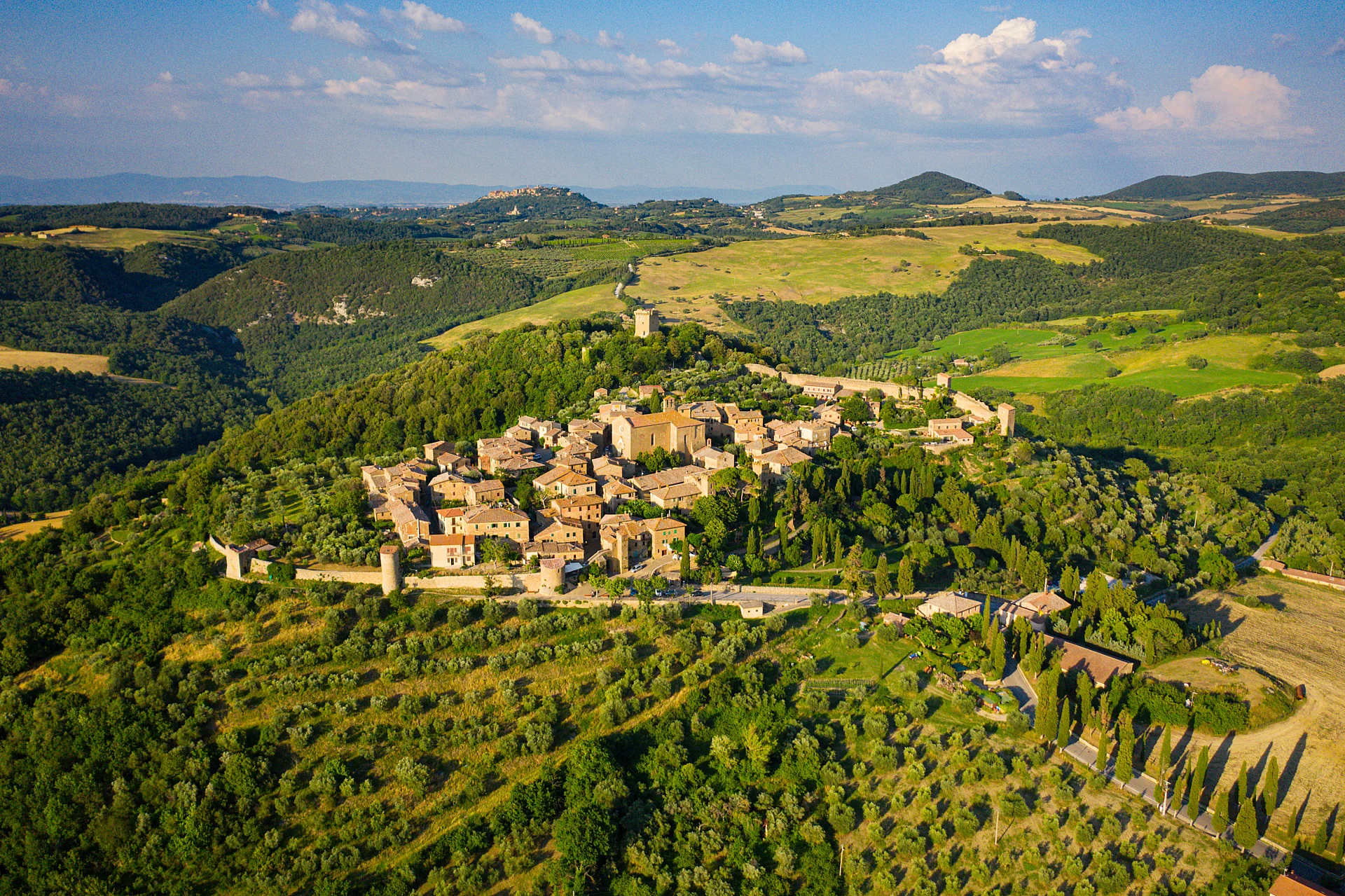
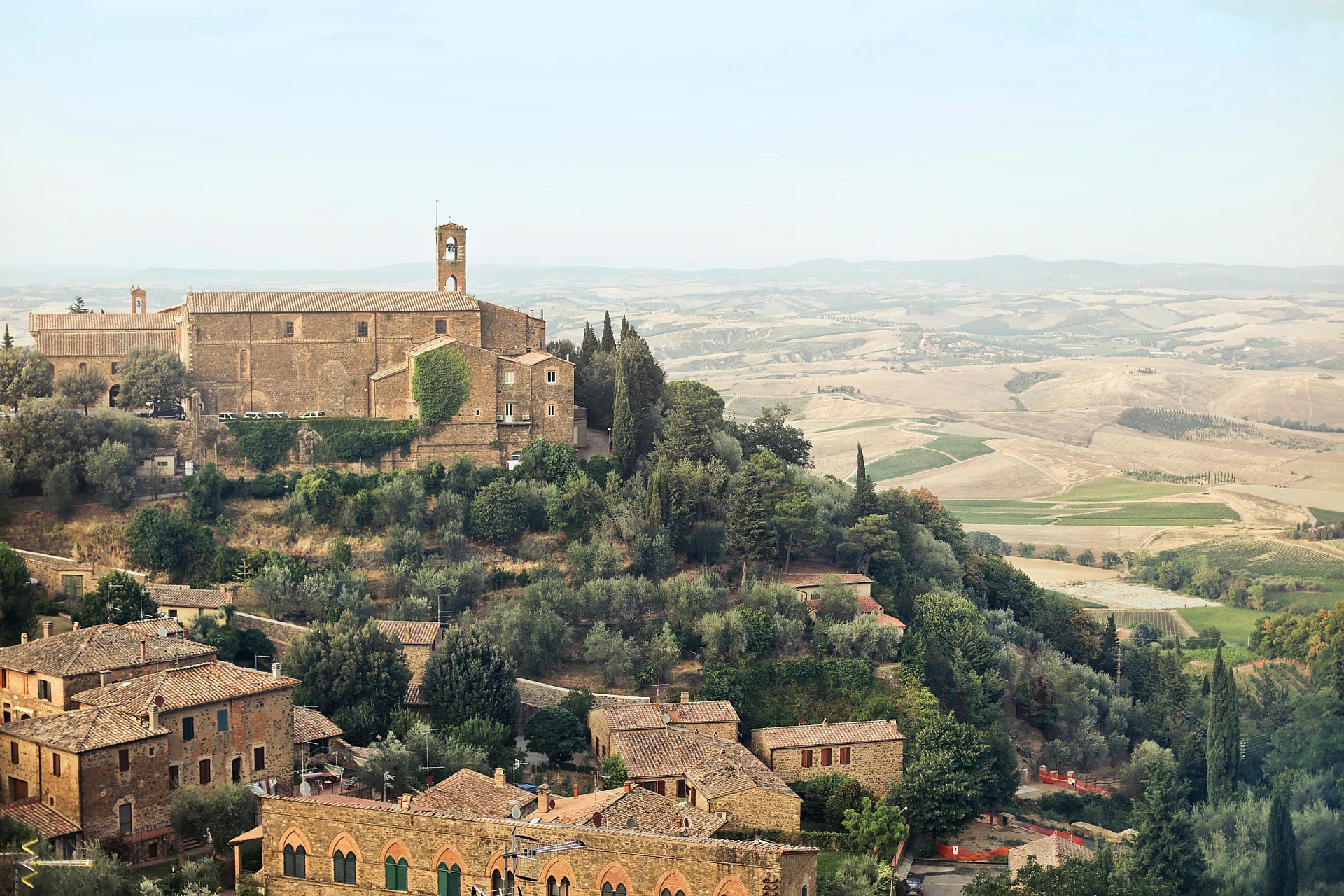
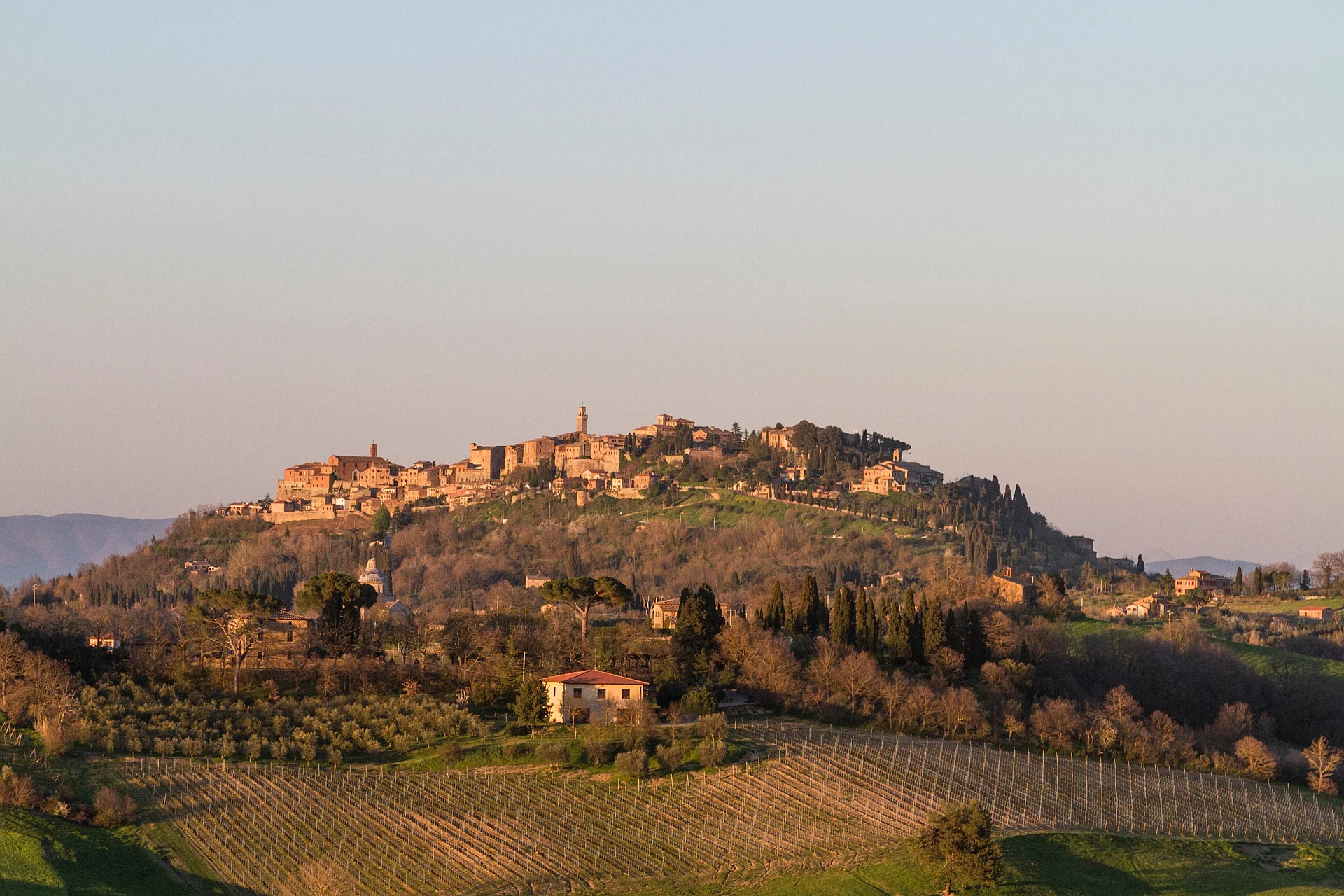
A Tuscan valley south of Siena, between the ridges of Montalcino and the cone of Monte Amiata, listed as a World Heritage Site for its landscape. Here the Renaissance shaped the countryside as much as the towns: lonely farmhouses at the end of cypress-lined tracks, hills bare in winter, green in spring, golden in summer. Pienza, a village rebuilt by a pope as an ideal town, is its balcony.
Around it, Montalcino makes Brunello on its fortified hill, Montepulciano its Vino Nobile in cellars dug beneath the palaces, and Bagno Vignoni has a pool of hot water for a main square. You come for landscapes at sunrise, wine and country cooking, not for museums.
You'll love it if
- You dream of postcard Tuscany, cypresses and hills
- You love wine and want to visit Brunello cellars
- You want the peace of an agriturismo with a view
Look elsewhere if
- You're travelling without a car: the villages are poorly connected
- You want a beach: the sea is an hour and a half away
- You want nightlife: everything goes to sleep early
The must-sees
-
In the mid-15th century, Pope Pius II had his home village rebuilt as a perfect Renaissance town. Its square, cathedral and Palazzo Piccolomini fit into a pocket handkerchief. Walk the ramparts at sunset: the whole valley spreads out below you.
-
2 The hot springs of Bagno Vignoni and Bagni San Filippo
In Bagno Vignoni, the village square is a large pool of thermal water where no one bathes any more, but which steams on winter mornings. Twenty minutes away, in Bagni San Filippo, hot water flows over white limestone formations in the woods: there, you can soak freely.
-
3 The cypress road Landscape
Between San Quirico and Pienza, the little Vitaleta chapel stands alone between two rows of cypresses, and a round grove of cypresses crowns the next hill. Come at dawn: mist fills the hollows of the valley and the ridges emerge one by one.
-
4 Montalcino and Sant'Antimo abbey Vineyards
Montalcino looks down on its vines from its fortress, and Brunello cellars can be visited all over the village and around it. Ten minutes away, the Romanesque abbey of Sant'Antimo stands alone among olive trees and vines.
-
5 The Bravio delle Botti Festival
On the last Sunday of August, Montepulciano holds an astonishing race: the town's districts push eighty-kilo barrels up the steep streets to Piazza Grande. The day before, banquets and costumed parades fill the centre.
The classic trap
Planning a single day trip from Florence or Rome. You'll spend four hours driving to see the villages at midday, in full sun, with the coach crowds. Stay at least two nights: the valley reveals itself at dawn and late in the day.
Our itineraries in the Val d'Orcia
| Length | Route | What you see |
|---|---|---|
| 3 days | Pienza › San Quirico d'Orcia › Bagno Vignoni | The ideal town, cypresses at sunrise and the hot-water pool |
| 5 days | Montepulciano › Pienza › Montalcino › Sant'Antimo › Bagno Vignoni | Both great wines, the abbey and the hot springs |
| 1 week | From Montepulciano to Radicofani, with Bagni San Filippo and Siena | The whole valley, its fortresses and the big city nearby |
Start in Pienza: the ramparts at sunset and a plate of pecorino. The next morning at dawn, the cypress road to San Quirico, then a soak at Bagni San Filippo. Got a week? Add the cellars of Montalcino and Montepulciano, Sant'Antimo abbey and the fortress of Radicofani.
When to visit the Val d'Orcia
| Appeal | Season | Temperatures | Highlight | Crowds and prices |
|---|---|---|---|---|
| WinterNov. to March | 2 to 12 °C | Mist in the valley and steaming springs | Low | |
| SpringApril to June | 8 to 25 °C | Green wheat and poppies | Medium | |
| SummerJuly and Aug. | 16 to 31 °C | Golden fields and village festivals | High | |
| AutumnSept. and Oct. | 9 to 25 °C | The grape harvest and low golden light | Medium |
Our advice
Come in May for the green wheat and poppies, or in October for the harvest and golden light. In summer the hills turn yellow and the afternoon heat is crushing: sightsee early and keep the middle of the day for the pool.
Getting to the Val d'Orcia
-
By plane to Florence, Pisa or Rome The fastest
Direct flights link London, Manchester, Dublin and many other cities to Florence, Pisa and Rome. From Florence it's about an hour and a half's drive, two hours from Rome.
-
By train to Chiusi Without a car at first
From Florence or Rome, trains on the main line stop at Chiusi, the closest station to Montepulciano, in about an hour and a half. Pick up a hire car on arrival.
-
By car from Florence or Rome The most flexible
From Florence take the motorway south, from Rome the motorway north, then country roads for the last half hour. A car is the only way to really explore once there.
Once there, a car is essential: buses link the villages poorly, and the finest viewpoints are by the side of country roads. Book it early for summer, and choose a small car, easier in narrow lanes and on gravel tracks.
Getting around the Val d'Orcia
By car, you can cross the valley in under an hour, from Montepulciano to Montalcino. The villages are pedestrian: park in the paid car parks by the gates and walk up. Buses exist but are infrequent, and the loveliest farms are reached by white roads, unpaved tracks that also make wonderful walks.
Good to know
Historic centres are limited traffic zones: don't drive in, the cameras send fines all the way home. A UK or EU licence is all you need to drive in Italy.
What to eat in the Val d'Orcia
- Pici: thick hand-rolled spaghetti, served with a garlic and tomato sauce or with ragù.
- Pecorino di Pienza: the village's sheep's cheese, fresh, aged or matured in walnut leaves.
- Brunello di Montalcino: a great sangiovese red, aged for years before it's sold.
- Vino Nobile di Montepulciano: the valley's other great red, which you can taste in the cellars beneath the palaces.
- Cinta senese: the black, white-belted pig of the hills, as cured meats or grilled.
- Ribollita: thick soup of bread, black cabbage and beans, reheated the next day.
To eat like the locals, book a table at a village trattoria or at an agriturismo that serves dinner: handmade pasta, grilled meat and house wine. Restaurants often close one day a week, and early in the evening out of season: call before you set off.
Where to stay in the Val d'Orcia
| Area | What for | Good to know |
|---|---|---|
| Pienza | The ideal town, the view over the valley | The most central |
| Montepulciano | Vino Nobile, a real small town, Chiusi station | The liveliest |
| Montalcino | Brunello, Sant'Antimo abbey | The most wine-focused |
| San Quirico and Bagno Vignoni | Cypresses, hot springs | The most restful |
| Agriturismo in the countryside | Views, a pool, farm dinners | The most memorable |
How much does a trip in the Val d'Orcia cost?
| Trip | Length | Budget per person |
|---|---|---|
| Budget (simple agriturismo, shared car, picnics) | 5 days | €400 to €650 |
| Comfort (village hotel or agriturismo with pool, trattorias) | 5 days | €900 to €1,500 |
| Luxury (luxury wine estate, fine dining, tastings) | 5 days | €2,500 to €5,000 |
- The season: in November and March, you often pay far less than in May or September.
- Tastings: many cellars charge for them, others are free if you buy a bottle.
- Hot springs: Bagni San Filippo is free; the spa centres charge an entry fee.
- Meals: the village trattoria's menu costs far less than restaurants on the main squares.
- Parking: the car parks by the village gates charge a few euros a day.
Traditions and way of life in the Val d'Orcia
In the Middle Ages the Via Francigena, the pilgrims' road to Rome, crossed the valley through San Quirico, Bagno Vignoni and Radicofani, and the hot springs healed travellers. The great families of Siena built fortresses here, and a big-hearted bandit, Ghino di Tacco, held the Rocca of Radicofani, sung by Dante and Boccaccio.
In 1459, Pius II turned his home village, Corsignano, into the ideal town of Pienza. The farms shaped the landscape for centuries, so much so that UNESCO listed it in 2004 as the work of people as much as of nature. Stopped in front of a wheat field edged with cypresses? You've probably already seen that scene at the cinema.