
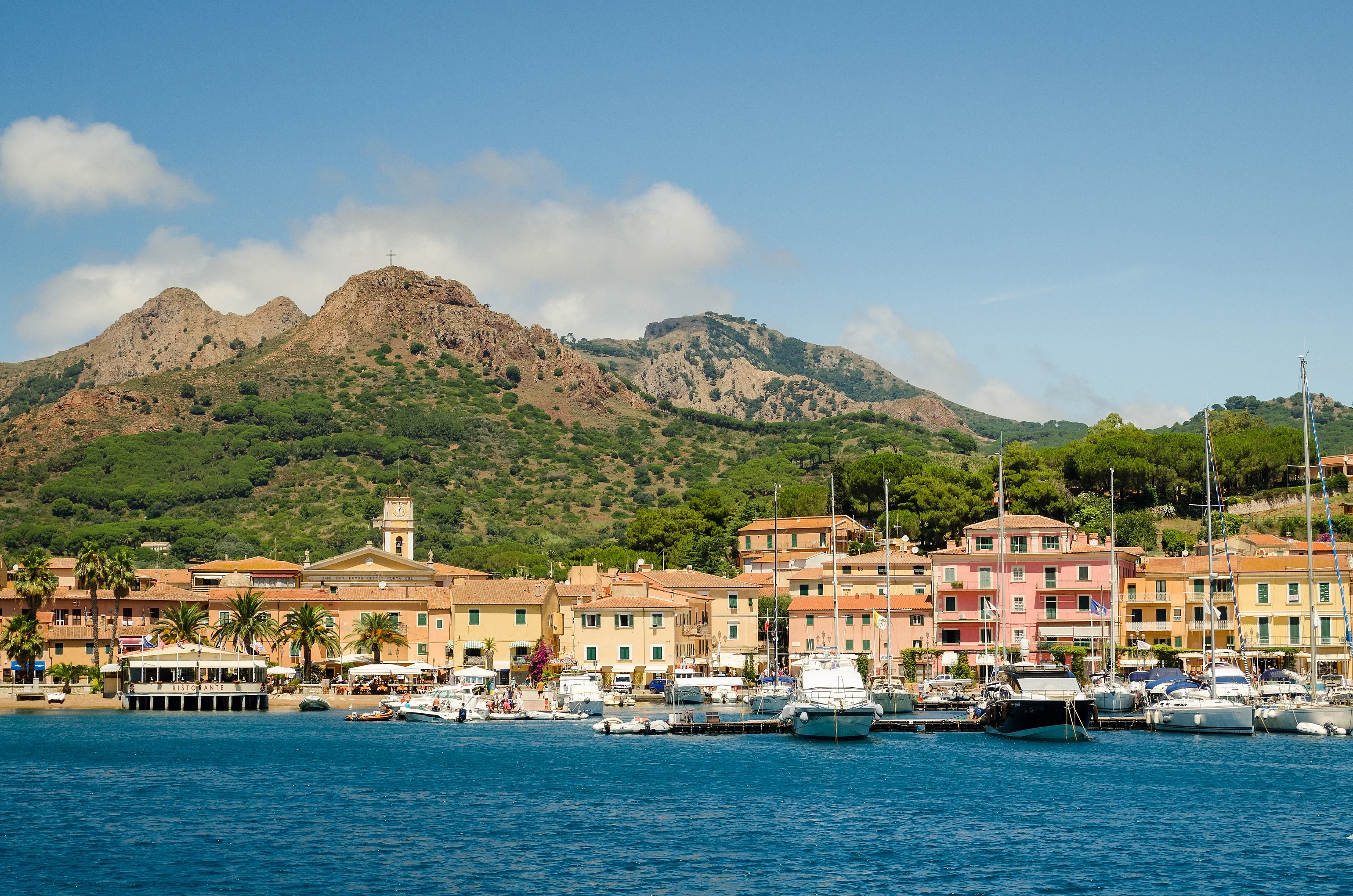
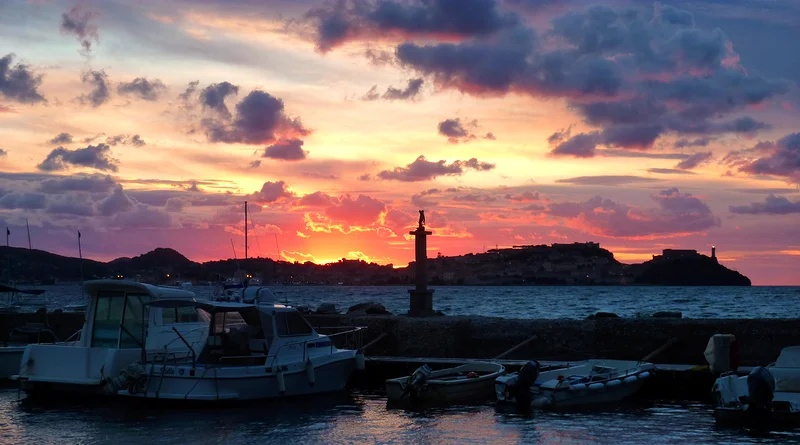
Porto Azzurro, the port looking inward at the island
A Spanish fortress has kept watch over the harbor since 1603, and it still houses an active prison today. That single detail pretty much sums up the vibe of this small town on the eastern coast of Elba: plenty of sunshine, boats moored stern-to-stern, and a history that never quite got buried under the tourist polish.
The village has around 3,000 residents, but summer multiplies that number tenfold along the docks. The air smells of salt, espresso from the café terraces, and the occasional rumble of a boat engine waiting its turn to pull in.
A destination made for you?
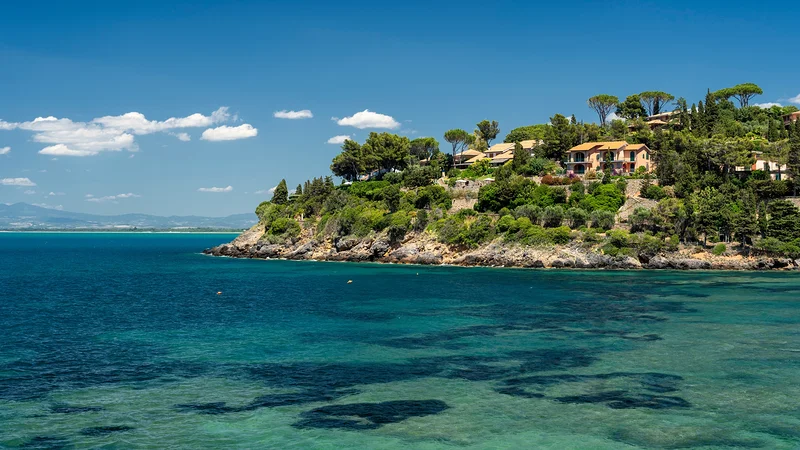
Do you love lively harbors at night, easy swimming, and no-nonsense Italian charm? Porto Azzurro checks those boxes naturally. People come for the turquoise water of the bay and stay for the aperitivo that stretches out until the harbor lights flicker on.
If you are looking for absolute quiet or empty beaches in August, look elsewhere on the island. Here, life revolves around the waterfront promenade and the outdoor tables, and the summer crowds are just part of the scenery.
Great for:
- Fans of calm, shallow water swimming
- Travelers who love lively evening ports
- Families looking for a practical base to explore the island
Not ideal for:
- Fans of wild, isolated beaches
- Anyone running away from summer crowds
- Travelers without a car wanting to roam far
A budget that stays reasonable outside peak season
Prices jump noticeably in July and August, when rates can double compared to June or September. Here is an estimate for one person, outside the summer peak.
| Expense | Range |
|---|---|
| Night in a simple guesthouse | 50 to 80 € |
| Night in a comfortable hotel | 100 to 150 € |
| Quick bite (focaccia, panino) | 5 to 8 € |
| Fish dinner at a restaurant | 25 to 40 € |
| Transportation and activities per day | 15 to 30 € |
Estimated rates subject to change by season
Practical realities on the ground
The town is entirely walkable, but to explore the rest of Elba, a car or a scooter quickly becomes essential. A bus network does exist, but its schedules are limited off-season.
Italian dominates conversations, even if tourist staff usually manage well in English. The pace of life slows way down in the off-season, when many shops cut their hours or shut their doors completely between November and March.
The fortress and the port, the beating heart of town
Forte San Giacomo, the prison overlooking the bay
Built by the Spanish in the early 17th century, this star fortress towers over the harbor and still serves as a correctional facility today. You cannot tour the interior, but its massive silhouette frames the entire view from the docks and makes for a great photo from the jetty.
The waterfront and its alleys
The seaside promenade packs in most of the terraces, gelato shops, and boutiques. Just behind it, a maze of pastel-colored alleys climbs gently inland, offering welcome patches of shade during hot afternoon hours.
Friendly tip: save your harbor stroll for the late afternoon, around 7pm, when the low light rakes across the facades and the fishing boats come back in. That is when the local atmosphere truly takes over from the tourist bustle.
The beaches around the bay
Naregno beach, a few kilometers to the south, offers fine sand and shallow water that is ideal for families. Closer to the center, small rocky coves let you swim without waiting in line, provided you bring water shoes.
For a wilder setting, the coast between Porto Azzurro and Capoliveri hides several water accesses reachable only on foot or by boat, far from the lined-up beach umbrellas.
Where to eat and drink in Porto Azzurro?
Fresh fish dominates the menus, often served as spaghetti alle vongole or simple grilled catches drizzled with local olive oil. Cantuccini cookies paired with a sweet dessert wine make for a classic end to a meal in the port trattorias.
For a quick meal, the downtown focaccerias sell generous slices to go, perfect for a picnic on the rocks instead of sitting at a crowded terrace.
Where to stay in Porto Azzurro and nearby?
Downtown clusters hotels and guesthouses just a few minutes walk from the harbor, which is handy for enjoying the evenings without a car. Campgrounds and apartment complexes around Naregno suit families better if they want quiet and direct beach access.
How to get to Porto Azzurro?
Access is via ferries from Piombino on the mainland, with a crossing of about an hour. The Marina di Campo airport on the island itself has limited seasonal flights, so most travelers arrive by boat after reaching Piombino by train or car from Pisa or Florence, roughly a two-hour drive away.
How to get around Porto Azzurro?
The historic center is entirely explored on foot since distances between the port and the residential lanes are short. To venture out to neighboring beaches or other villages on the island, renting a scooter or a small car is the most flexible option, as local buses mainly serve the main routes.
When to go?
June and September strike the best balance between warm sea temperatures, manageable crowds, and open businesses. July and August turn the port into a buzzing hive, great for the energy but skip it if you want peace and quiet.
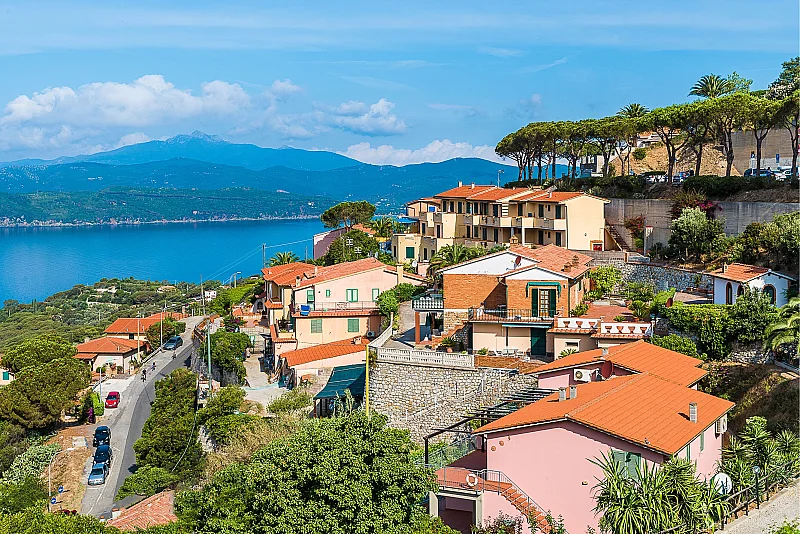
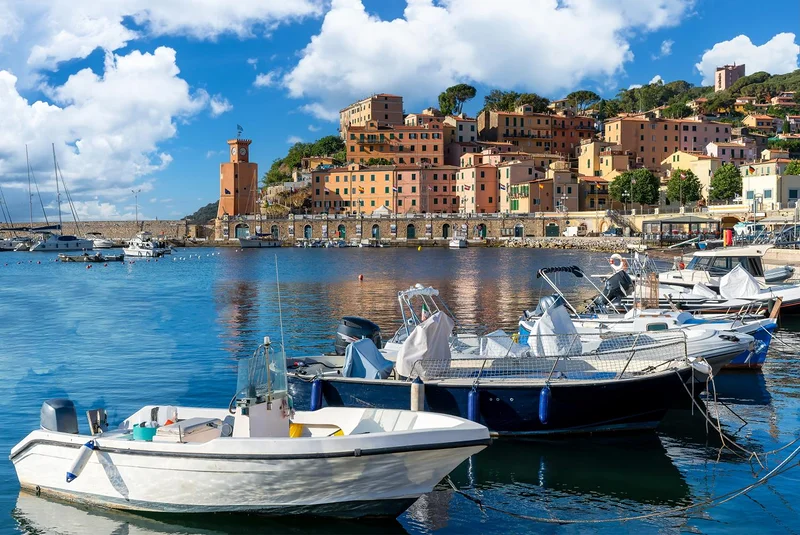
Of all the villages on Elba Island, this isn't my favorite, but I appreciated the authentic vibe. You can really feel the fishing village side of things here. Wandering through the streets is still very pleasant. I recommend seeing the fort, but also the church.
If you are looking for a place that is livelier at night, you will definitely find what you are looking for in terms of entertainment!