
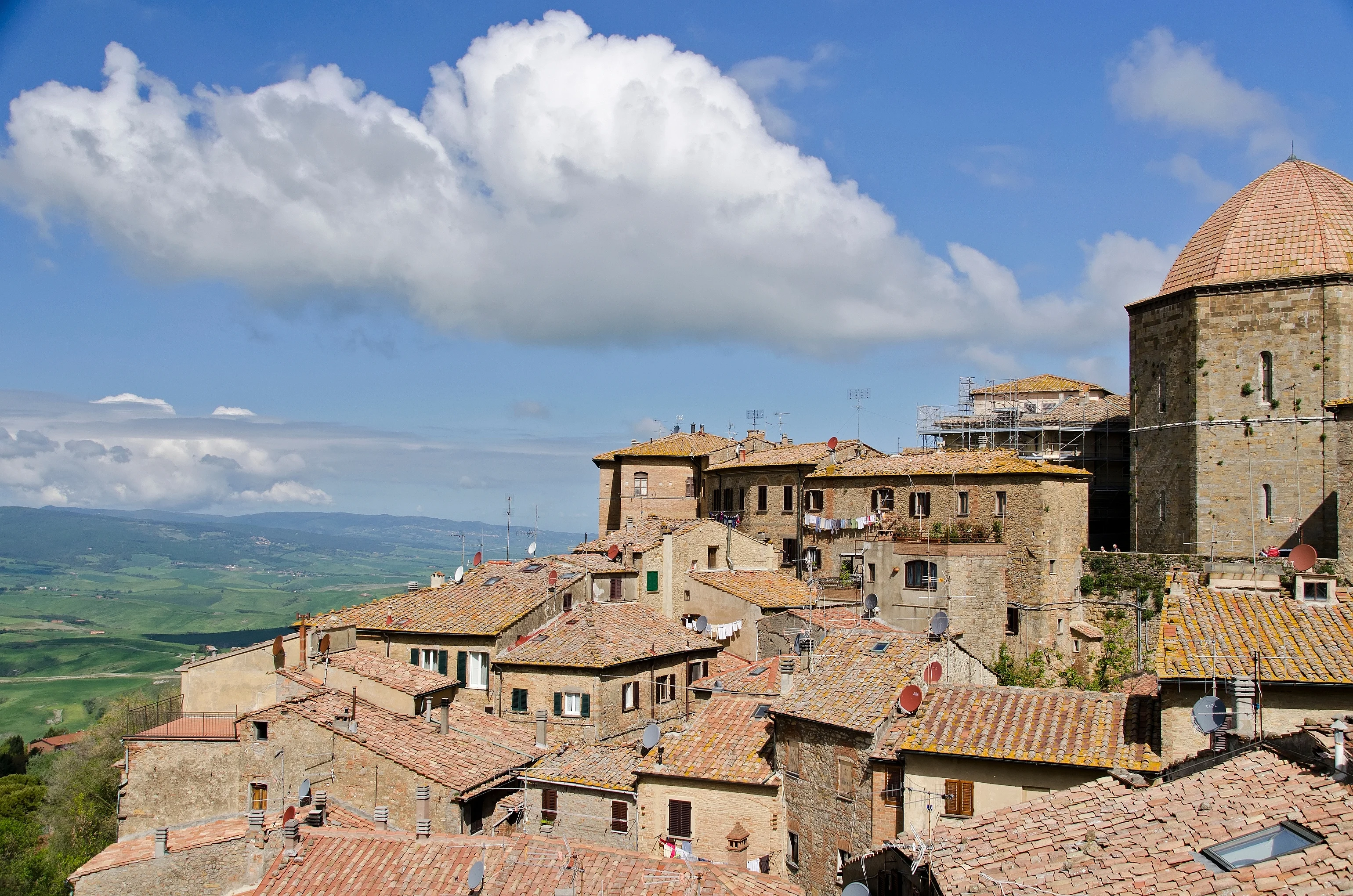
Volterra, the town that smells of alabaster and sulfur
The wind hits the ramparts hard, even in the middle of August. Volterra sits proudly on its rocky spur at 531 meters above sea level, exposed to every draft sweeping across the Val di Cecina. This commanding position explains everything: the Etruscans chose it for defense, the Medicis for territorial control, and today's travelers for views that stretch all the way to the Tyrrhenian Sea on a clear day.
You can still catch a distinct, slightly sulfurous scent hanging in the air, coming from the soffioni, the volcanic fumaroles that have shaped the local economy for centuries. It is a detail few guidebooks mention, giving the town an almost mineral character.
Is this destination right for you?
Volterra suits travelers looking for a Tuscany less photographed than Siena or San Gimignano, with genuine historical depth. Fans of Etruscan studies, artisan crafts, and ridge hikes will find plenty to love.
On the other hand, if you are after a buzzing nightlife scene or Michelin-starred dining, skip it. The town shuts down early and moves at a slow, almost austere pace off-season.
Great for:
- Etruscan and medieval history enthusiasts
- Fans of artisan crafts and alabaster carving
- Travelers looking to dodge the crowds of Florence or Siena
- Hikers interested in badland landscapes (Le Balze)
Not ideal for:
- Nightlife seekers or fine dining enthusiasts
- Travelers without a vehicle wanting to explore the surrounding area
- Beach lovers (the sea is over 30 minutes away)
A reasonable budget compared to the rest of Tuscany
| Expense | Range |
|---|---|
| Night in a simple B&B | $55 to $77* |
| Night in a comfortable agriturismo | $110 to $165* |
| Quick bite (panino, focaccia) | $6.60 to $11* |
| Restaurant meal (local trattoria) | $28 to $39* |
| Total budget daily total | around $77* |
| Total comfort daily total | $165 to $220* |
Estimated rates subject to change depending on the season
Practical realities
Volterra is easy to explore entirely on foot, but expect steep cobblestone streets. Cars are banned from a large part of the historic center, which keeps it quiet but makes arriving with heavy luggage tricky.
The town remains very safe, like most Tuscan villages. English is spoken in tourist shops, but a bit of Italian helps when chatting with artisans and restaurateurs who are less accustomed to mass tourism.
Exploring the historic heart
Piazza dei Priori and medieval power
The Palazzo dei Priori, completed in 1257, is considered one of the oldest municipal palaces in Tuscany, predating the one in Florence. Its crenellated tower overlooks a paved square where the market and municipal events still take place.
Right next door, the cathedral of Santa Maria Assunta hides a gilded 16th-century coffered ceiling and a painted wooden Deposition dating from 1228, one of the oldest in Italy.
The Roman theater and Etruscan ruins
Just below the northern ramparts, the Roman theater of Vallebuona dates back to the 1st century BC and remains visible for free from the Via Lungo le Mura belvedere. It is one of the best preserved in the region, still used for summer performances.
The Museo Etrusco Guarnacci houses over 600 alabaster and tufa Etruscan funeral urns, including the famous "Ombra della Sera", an enigmatic thread-like statuette from the 3rd century BC.
Friendly tip: avoid visiting the Guarnacci Museum between 11am and 1pm, when organized tour groups arrive. The top-floor rooms, though frequently deserted, hold the most fascinating pieces.
Alabaster, art, and craft
Volterra has been working with alabaster since the Etruscan era, and the tradition remains alive today. Several downtown workshops, particularly around Via Porta all'Arco, open their doors to show hand-sculpting in action.
The Ecomuseo dell'Alabastro, housed in the former Medici prison, traces the history of this local industry through tools, videos, and ancient pieces rarely exhibited elsewhere.
Hiking toward Le Balze
A fifteen-minute walk from downtown, Le Balze offer a striking geological sight: clay and sand cliffs that have been slowly collapsing for centuries, gradually swallowing Etruscan ruins and even part of a medieval abbey.
The trail running along this lunar landscape is free and accessible year-round, but exercise caution after heavy rains as the ground remains unstable.
Where to eat and drink in Volterra
Voltean cuisine relies on simple, hearty ingredients. Look for zuppa alla volterrana, a typical winter bread and vegetable soup, or cinghiale (wild boar) stew, which frequently appears on local menus in the autumn.
The Saturday morning market in the Piazza dei Priori remains the best way to sample local pecorino cheese and artisanal cured meats without sitting down at a tourist trap.
Where to stay in and around Volterra
The historic center concentrates B&Bs and charming small hotels, often set in 15th-century buildings. For more quiet and sweeping views of the countryside, the surrounding agriturismi, particularly toward Mazzolla or Villamagna, offer excellent value.
How to get to Volterra
No airport serves Volterra directly. The closest airports are in Pisa (about a 1-hour drive) and Florence (about 1 hour and 20 minutes). From Pisa, expect $55 to $88* for a day car rental, an option far preferable to public transit, which runs infrequently to the town.
How to get around Volterra
You can easily explore the entire historic center on foot in half a day. For the surrounding area (Le Balze, agriturismi, and neighboring villages like San Gimignano 30 minutes away), a car remains essential due to the lack of a dense bus network.
When to go to Volterra
Spring (April-May) and early autumn (September) offer the best conditions: mild temperatures, a green countryside, and manageable crowds.
Avoid August, when the heat and tour groups on day trips from the coast crowd the main alleys in the middle of the day.
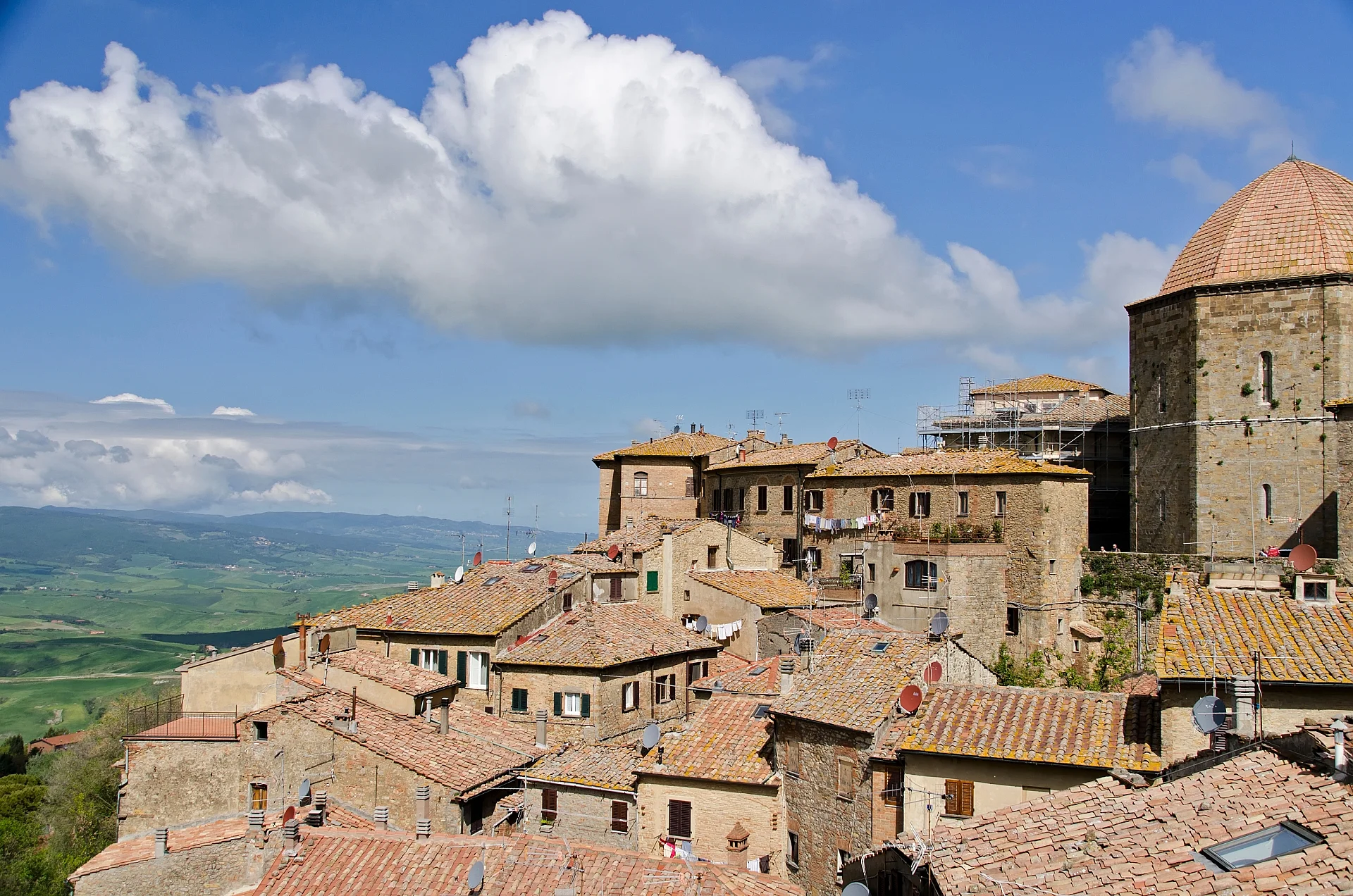
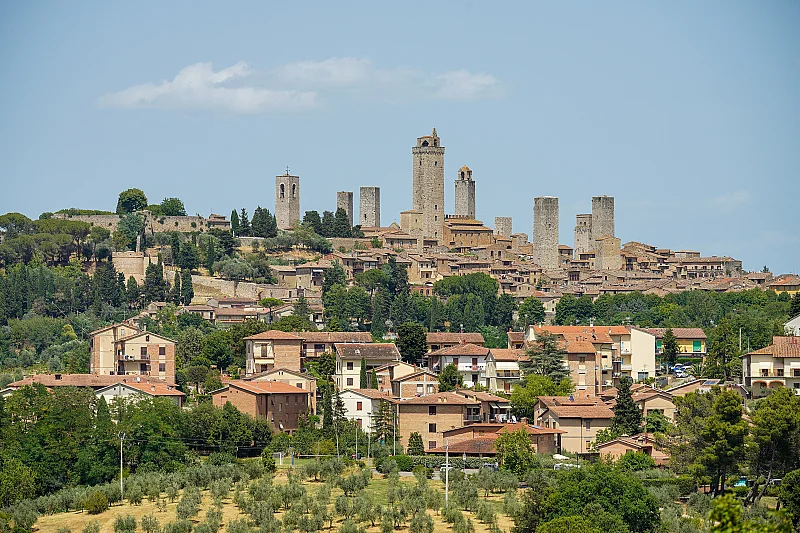
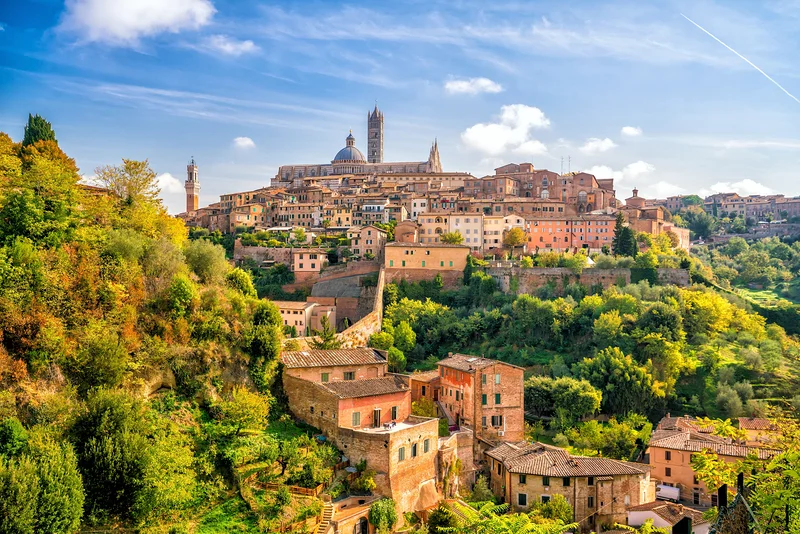
Perched on a hill, Volterra looks like San Gimignano with its medieval stone architecture and its elevated position above the countryside. It has the advantage of being less crowded and having a richer cultural heritage. I loved the big Guarnacci Etruscan Museum, which houses magnificent statues, and the cathedral with its sublime frescoes. The Piazza dei Priori, the heart of the city, is dominated by two beautiful palaces you can visit for a few euros.
I also loved walking along the Etruscan walls, which are very well preserved. The Porta all’Arco is the most impressive entrance. I recommend spending a short day there. It is perfect for a getaway away from the crowds of Florence.