Visiting Baie de Somme
The Baie de Somme is the largest estuary in northern France, and its particularity comes down to one figure: at low tide the sea withdraws fourteen kilometres. What you are looking at therefore changes every six hours, and the same viewpoint never gives the same picture twice.
Saint-Valery-sur-Somme holds the south shore with its medieval upper town, Le Crotoy the north shore and the only Channel beach that faces south, and Saint-Quentin-en-Tourmont the birds.
You will love it if
- You will set your day by a tide table
- Birds and seals interest you as much as a monument
- You come in April, May, September or October, mid-migration
Look elsewhere if
- You want a swimming beach: the water is 17 °C and goes out a long way
- You come in August: the three villages double in population
- You want nightlife: everything shuts at ten, even in season
The must-sees
The highlights
-
1 Marquenterre Park +11 recs
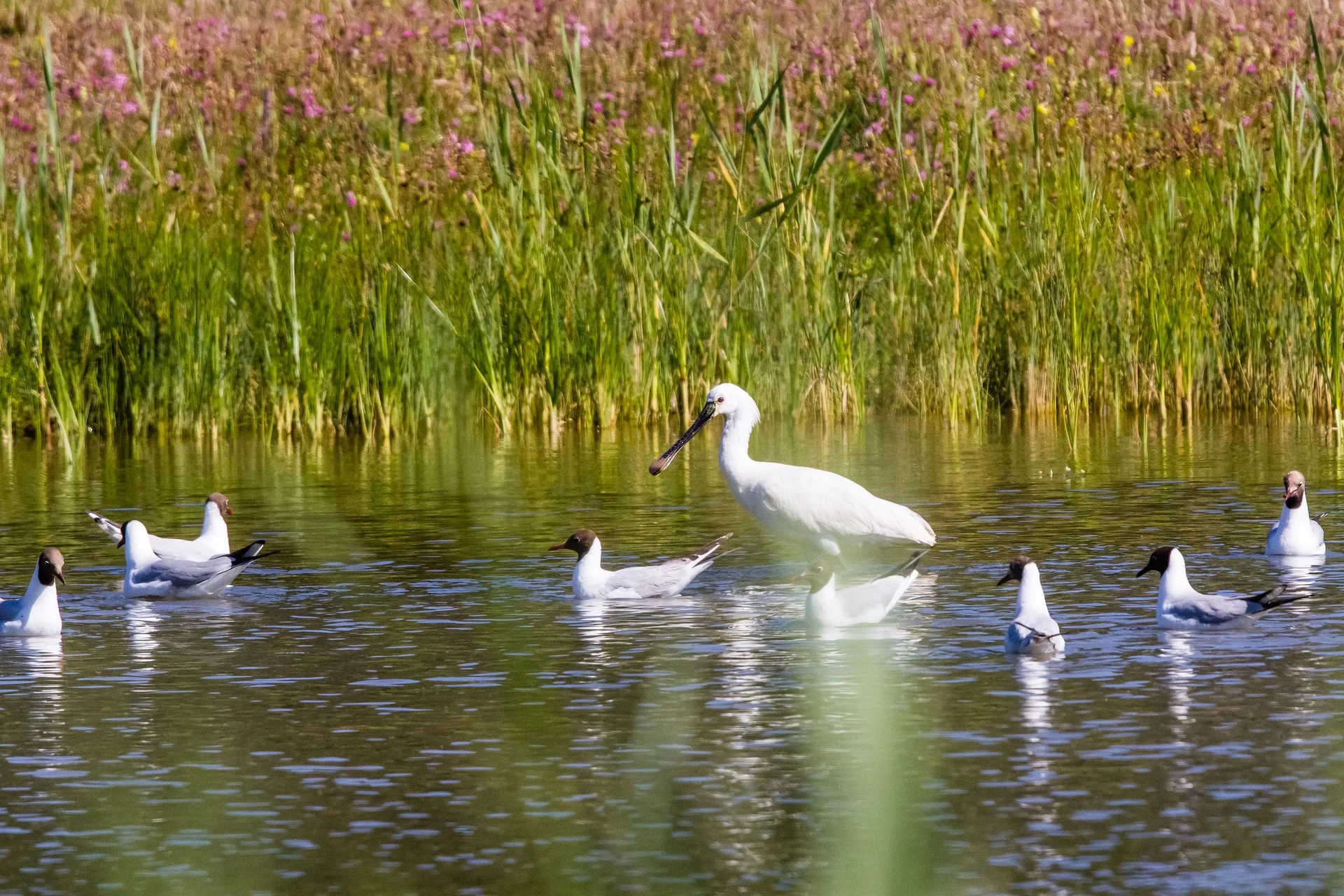
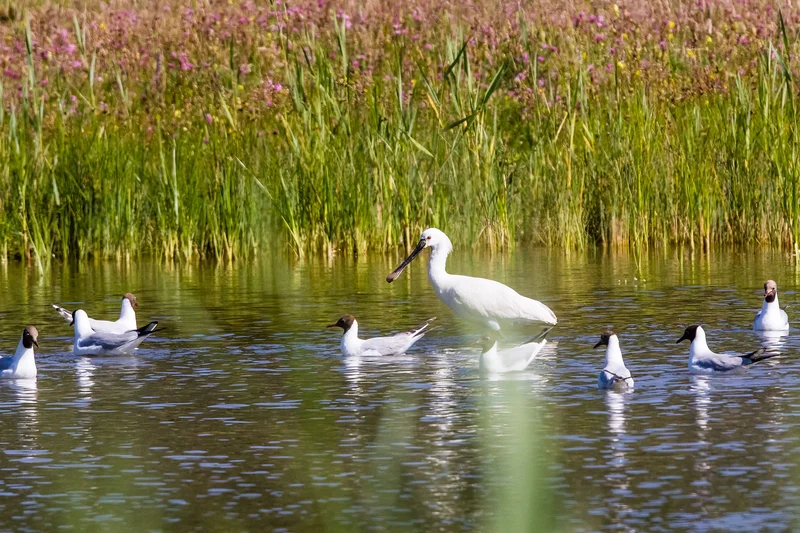
Two hundred hectares of dunes, marsh and pine wood, with thirteen wooden hides along three trails. It is a stop on the Atlantic flyway: what you see in April bears no relation to October, and the park's guides post the week's arrivals at the gate.
-
2 The Baie de Somme Nature Reserve +15 recs
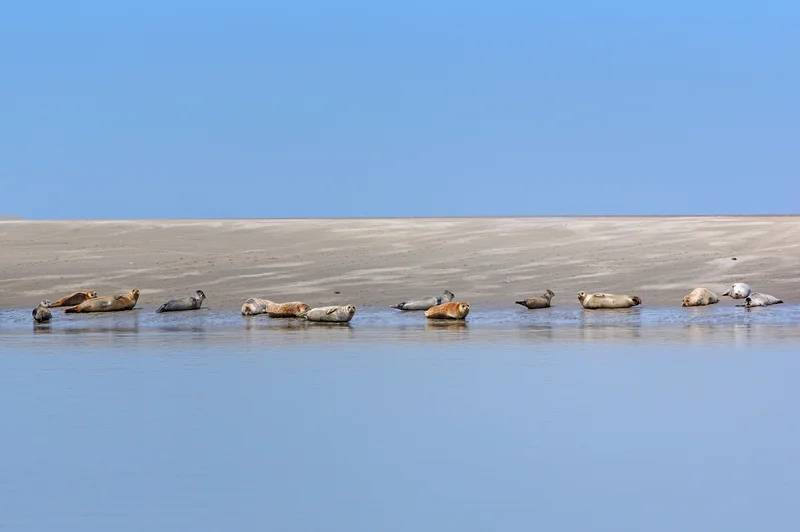
Nearly three thousand hectares of estuary where the tide commands everything. The mudflats turn into sheets of water within hours, and it is that movement, not a fixed landscape, that has drawn birdwatchers here for fifty years.
-
3 The Maison de la Baie de Somme +15 recs
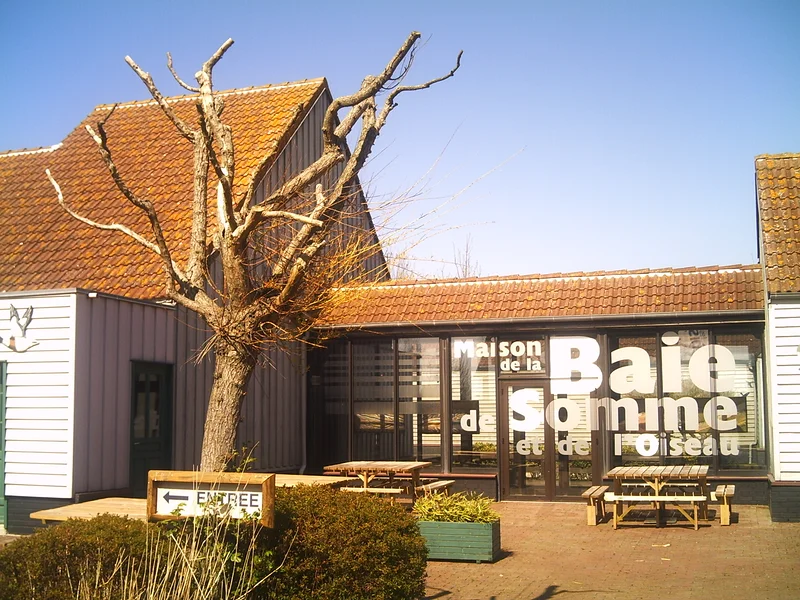
At Lanchères, three hundred mounted birds and dioramas that reconstruct the mollières, the salt meadows flooded at spring tides. It is where you understand what you are about to look at, and it is better seen before the reserve than after.
-
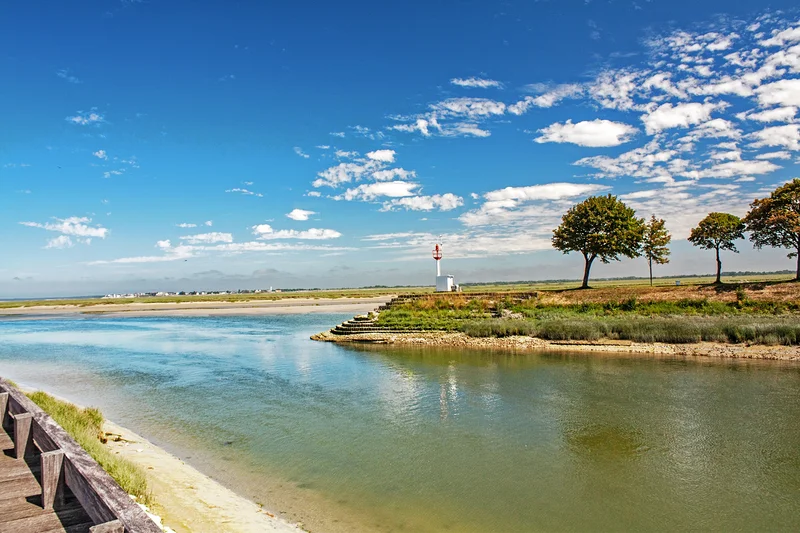
4 Saint-Valery-sur-Somme +15 recs
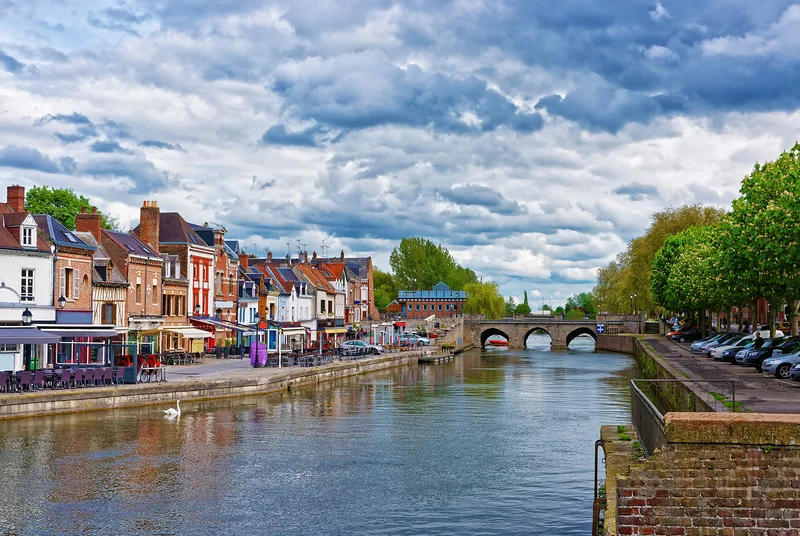
It was from here that William the Conqueror sailed for England in 1066, after waiting weeks for the wind. The upper town has kept its fortified gates, and hollyhocks spill out of the cobbled lanes all summer.
-
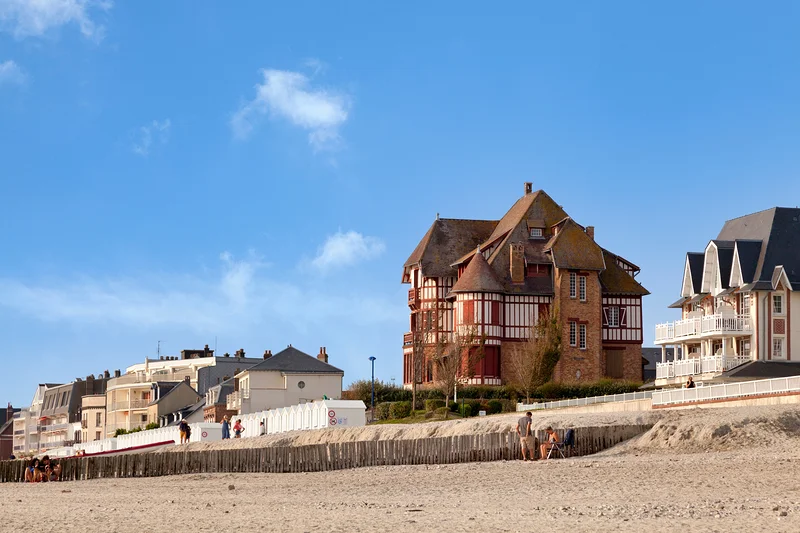
5 Le Crotoy +1 rec
The only beach on the Channel coast to face due south, which changes the light from morning to evening. Jules Verne wrote here, Colette and Toulouse-Lautrec stayed, and the fishing port still works.
The classic mistake
Crossing the bay on foot without a guide. The channels shift, quicksand exists, and the incoming tide moves faster than a walker in mud. Guided crossings run daily in season, last three hours and cost almost nothing: it is the only way to stand in the middle of the estuary.
Our itineraries in Baie de Somme
| Length | Itinerary | What you see |
|---|---|---|
| 1 day | Saint-Valery-sur-Somme | Upper town, quay, the heritage railway |
| Weekend (2 days) | Saint-Valery + Marquenterre | Both shores, the birds, one high tide |
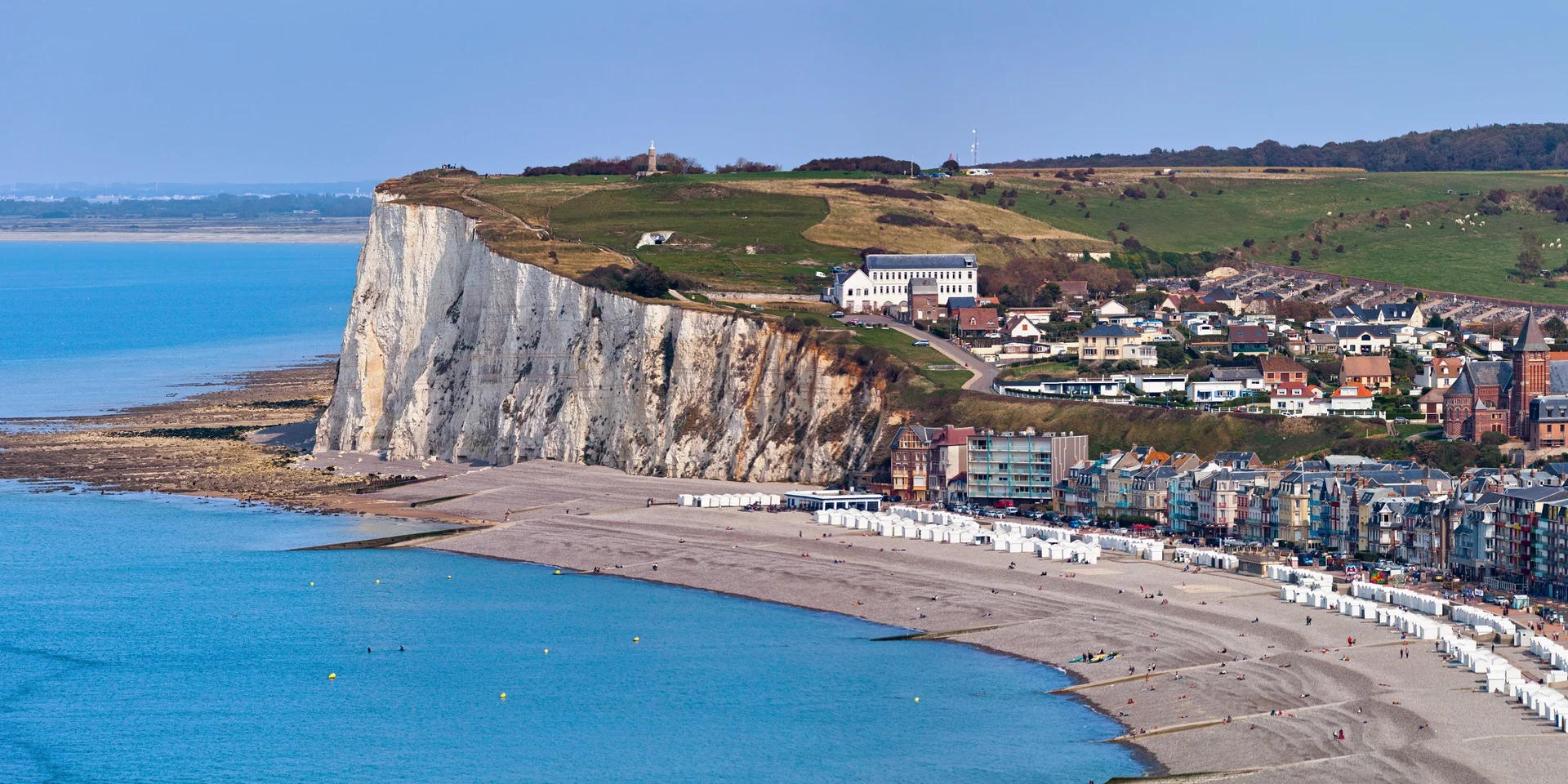
| 4 days | The three villages and the Hourdel point | Reserve, seals, the cliffs at Ault |
Everything sits within twenty-five kilometres, but the bay gets in the way: going from Le Crotoy to Saint-Valery-sur-Somme, five kilometres apart and facing each other, takes half an hour by road inland.
The Baie de Somme railway links the two shores by steam train, via Noyelles: slower than the car, and the journey you remember.
When to visit Baie de Somme
| Rating | Season | Weather | Crowds and prices |
|---|---|---|---|
| April, May, September | 14 to 21 °C, low raking light | Migration, moderate on weekdays | |
| June and October | 16 to 23 °C, westerly wind | Light, the best season for walking | |
| July and August | 20 to 25 °C, sea at 18 | Saturated, book two months ahead | |
| November to March | 3 to 9 °C, grey and windy | Deserted, seals and geese in numbers |
Our advice
Check the tidal coefficient before choosing your day, not just the time. Above 100 the sea floods the salt meadows and the spectacle is total; below 50 it stays far out and the bay looks like a plain of mud. The tables are posted everywhere and the reserve gate repeats them each morning.
Getting to Baie de Somme
-
1 By ferry The shortest way
the crossings to Calais or Dieppe put you an hour to an hour and a half from the bay with your own car. For a British visitor this is the closest stretch of French coast worth several days.
-
2 By train Without a car
Eurostar to Lille in ninety minutes, then a regional train to Abbeville and a short taxi. In season the heritage railway from Noyelles reaches both shores, so the trip works without a car.
-
3 By bike On the ground
the Vélomaritime runs along the bay on a flat route sheltered from the wind by the dunes. It is the truest way to cover it, and the three villages are under an hour's pedalling apart.
The bay is a weekend destination rather than a fortnight's holiday: two to four hours from London, Lille or Brussels, with no airport transfer at either end. That proximity is the whole point of it.
Getting around Baie de Somme
Each of the three villages is walked in an hour. Between them, the car or the bike: Saint-Quentin-en-Tourmont and Marquenterre are a quarter of an hour from Le Crotoy.
Worth knowing
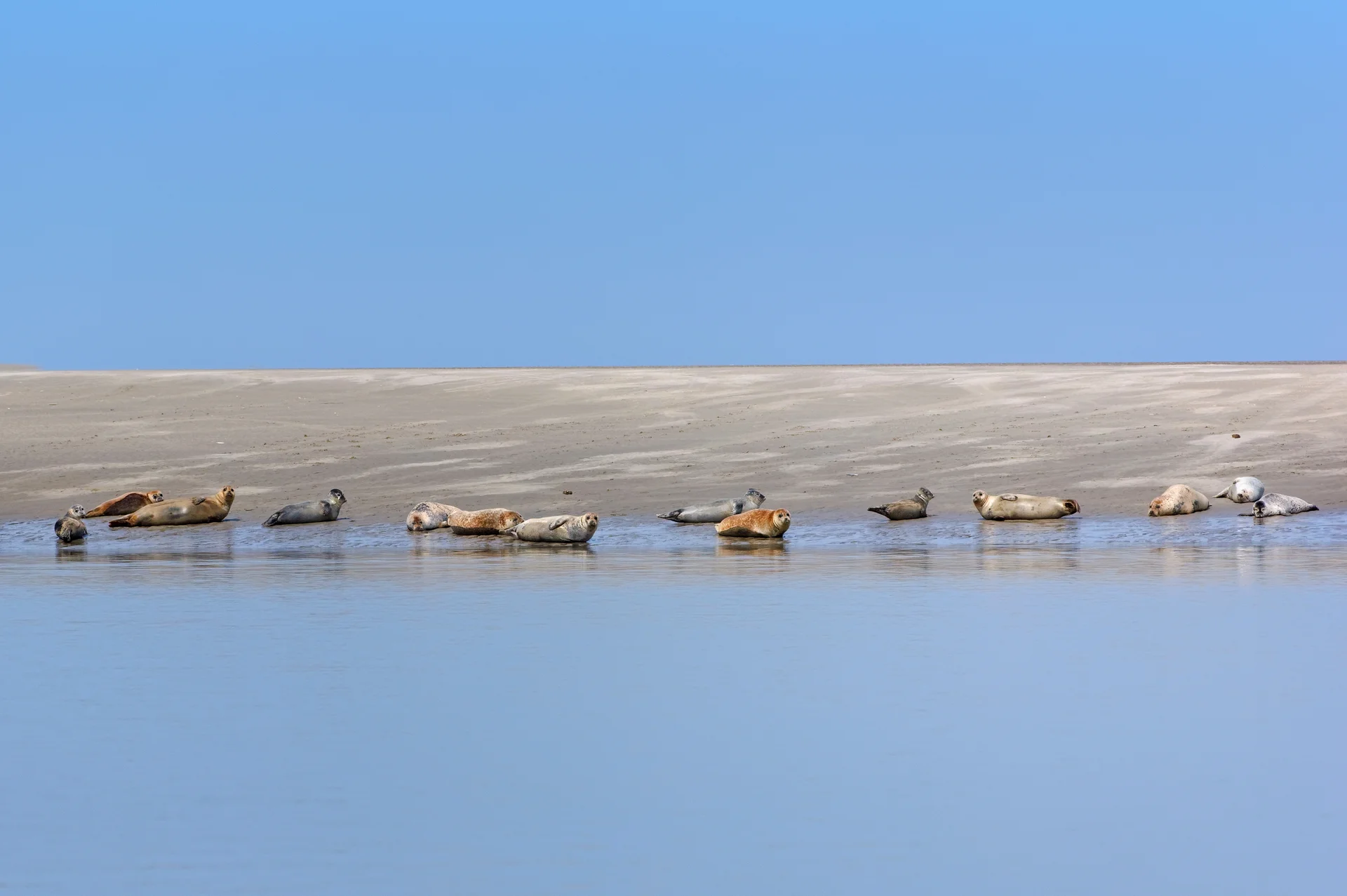
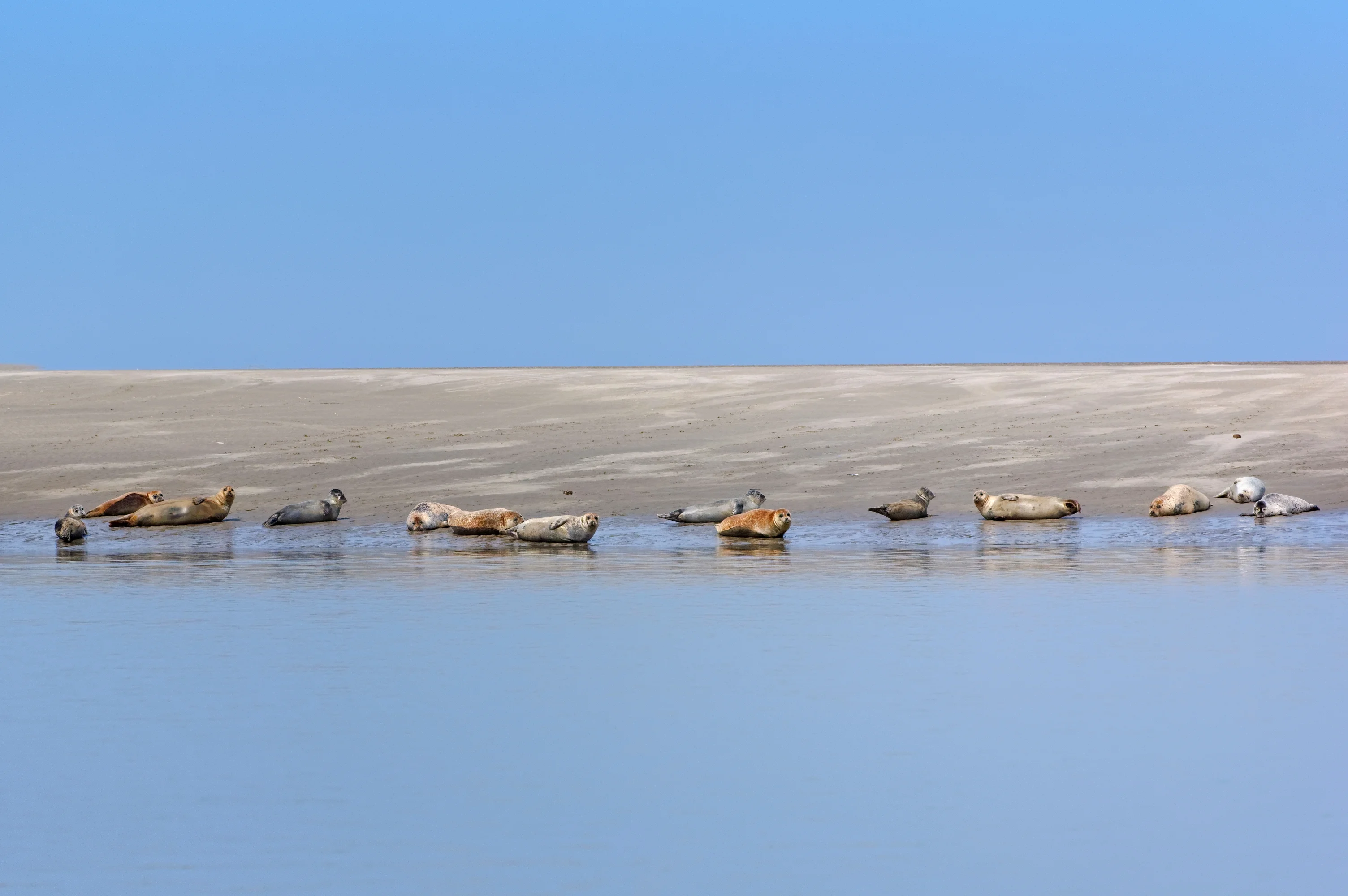
The seals are watched from the Hourdel point, twenty minutes from Saint-Valery-sur-Somme, and from two hundred metres minimum: approaching them drives the mothers off and separates the pups, which kills them. Volunteers set up telescopes there at low tide, free of charge.
What to eat in Baie de Somme
- Salicorne: samphire from the salt meadows, picked from June to August, served as a salad or pickled. It grows in the mollières and is gathered under quota, never pulled up by the root.
- Salt-marsh lamb: the sheep graze the flats flooded at spring tides, which makes the meat naturally salty. A protected appellation, and served mostly from July to November.
- Ficelle picarde: a pancake rolled around ham and mushrooms, baked under cream. The winter dish of the whole region, and the default starter here.
- Cockles and rope-grown mussels: gathered at low tide on the sandbanks, with legal sizes and permitted zones posted at the town hall.
- Gâteau battu: a tall brioche baked in a fluted mould, heavy with butter and egg yolks. Sold at the bakery, eaten in the morning.
- Tarte au sucre: risen dough, brown sugar and cream, baked until it caramelises. Nothing refined about it, and it is the dessert you find everywhere.
- Bière de garde: the breweries of the Somme and the Ponthieu have revived over twenty years a tradition that had nearly vanished, and the cafés on the quay show it.
On the quay at Saint-Valery-sur-Somme and at the harbour in Le Crotoy, the fishermen's huts sell the day's catch directly at high tide. That is where the brown shrimp are, boiled within the hour, and they do not travel.
Where to stay in Baie de Somme
| Area | What it is for | Worth knowing |
|---|---|---|
| Saint-Valery-sur-Somme | Upper town, quay, restaurants | The most choice, full in August |
| Le Crotoy | South-facing beach, port, families | A lively seafront, gentler prices |
| Saint-Quentin-en-Tourmont | Marquenterre at opening | A few guest rooms, nothing else |
| Cayeux-sur-Mer | Shingle, beach huts, quiet | Four hundred huts in a row, empty out of season |
| Mers-les-Bains or Ault | Cliffs, 1900 villas, budget | At the far end of the bay, cheaper and very fine |
Three villages, few beds: the bay has fewer places to stay than an average seaside resort, and July and August are booked two months ahead. Out of season the opposite holds and rates halve.
Guest rooms in the old fishermen's houses are the best value here, and many lend bicycles, which settles the question of getting about.
How much does a trip in Baie de Somme cost?
| Style | Length | Budget per person |
|---|---|---|
| Budget (campsite, bike, shellfish gathering) | 3 days | 120 to 200 € |
| Comfortable (guest room, restaurants, the park) | 3 days | 350 to 500 € |
| High end (boutique hotel, quayside tables, guided outings) | 3 days | 700 to 1,100 € |
- The volunteers' telescopes: free at the Hourdel point at low tide, and better placed than any paid outing for seeing the seals.
- The guided crossing: around fifteen euros for three hours out in the estuary, supervised. It is the best value in the bay and the only safe access.
- The combined Marquenterre and Maison de la Baie ticket: both sites belong to the same network and share a reduced admission.
- Out of season: the same room costs half as much from November to March, and that is when seals and geese are most numerous.
- The bike rather than the car: a day's hire costs less than a day's parking in August in either village.
Traditions and way of life in Baie de Somme
In 1066 William, Duke of Normandy, gathered his fleet at Saint-Valery-sur-Somme and waited weeks for a favourable wind before crossing to Hastings. Seven centuries later, Joan of Arc was taken through that same port on her way to prison in Rouen.
The bay silts up by one to two centimetres a year, and it will eventually close: the channels are dredged to keep both ports reachable. What you are looking at is a landscape in the process of disappearing, on a scale of a few centuries.
Two useful habits. Birds are watched without putting them up: you stay on the paths, you speak low in the hides, and a mass take-off means you came too close. It is also the difference between seeing ten species and seeing forty.
And the tide is not negotiable. It comes in as a sheet, through the channels, and cuts off the way back before it reaches the walker: no local goes out into the bay without having read the day's timetable.