Visiting Auvergne
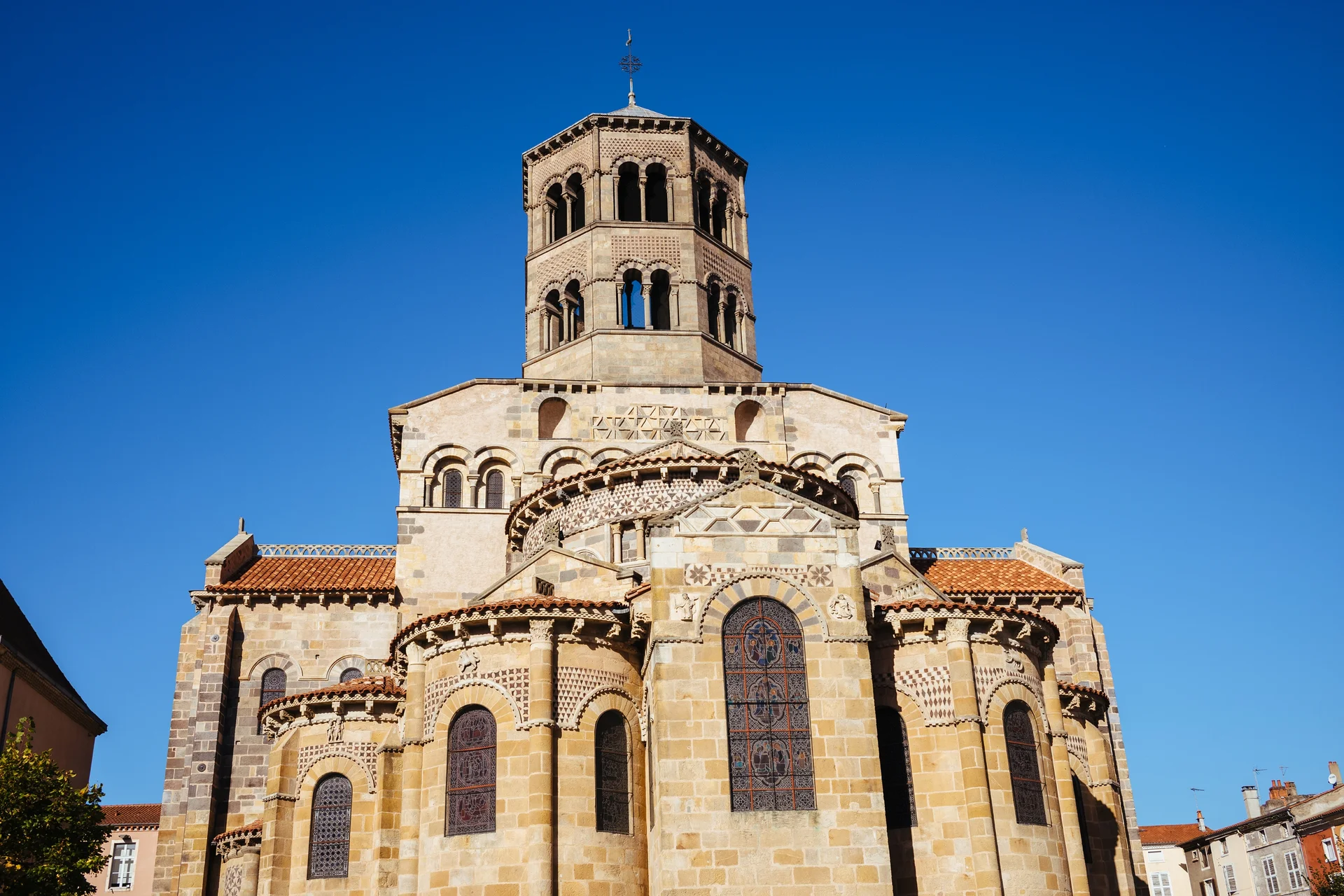
Clermont-Ferrand is black, and it is not pollution: its cathedral and its old streets are built of Volvic stone, a grey lava that time darkens. The city sits under a line of volcanic domes you can see from the centre.
To the south the volcanoes spread out and sink into crater lakes. Further still, Le Puy-en-Velay grew up among basalt pinnacles, with a chapel set on the top of one of them.
You will love it if
- You walk: volcanoes are understood on foot, not from a car park
- Romanesque building and volcanic stone interest you
- You come in June or September, when the ridges are clear and empty
Look elsewhere if
- You want the sea: it is four hours away by road in every direction
- You want to do it all by train: outside the two cities there is almost nothing
- You come in November: the summits are in cloud and the sites close
The must-sees
The highlights
-
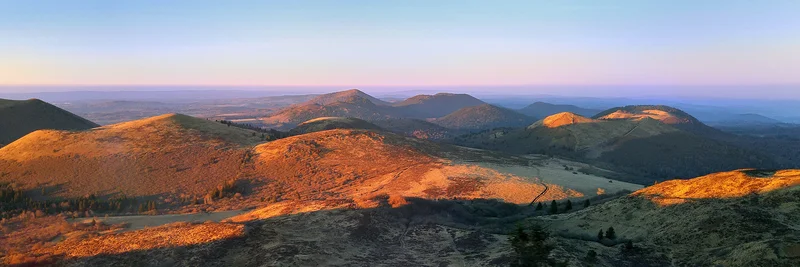
1 The Puy de Dôme +46 recs
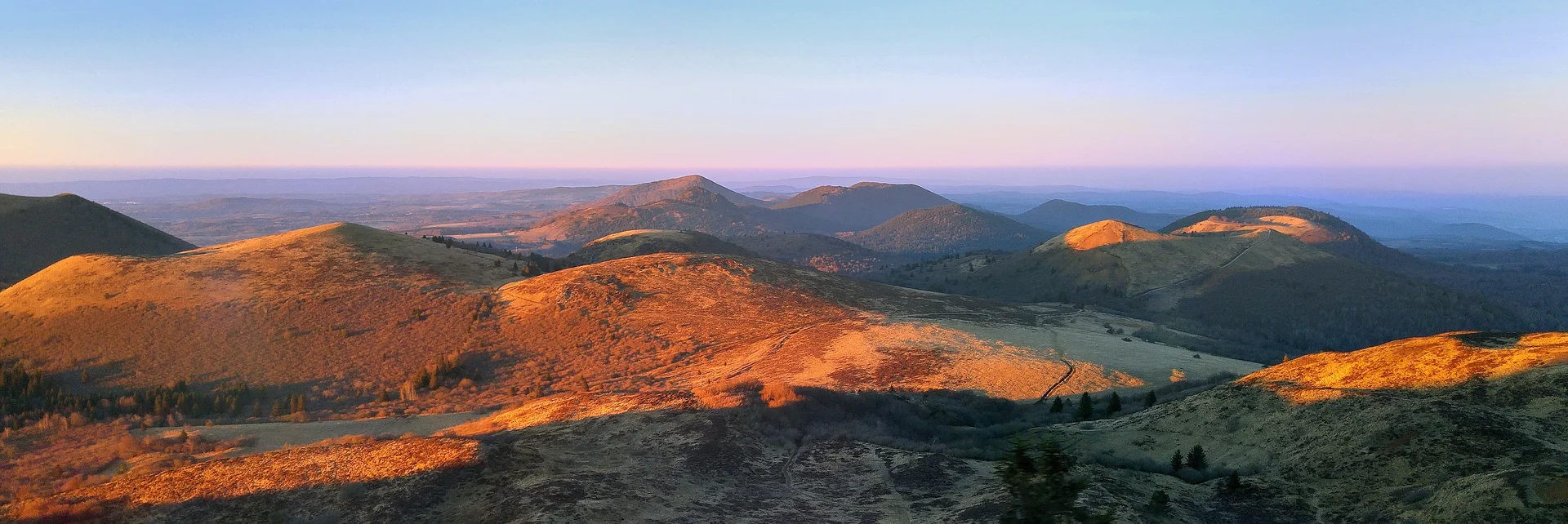
One thousand four hundred and sixty-five metres, a dome of thick lava in the middle of a chain of eighty volcanoes on the World Heritage list. A rack railway climbs to the top, where the foundations of a Gallo-Roman temple of Mercury survive.
-
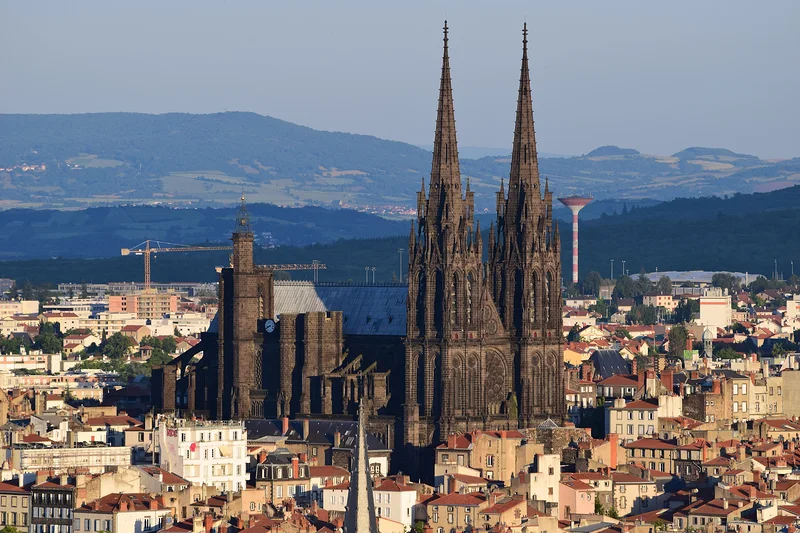
2 Clermont-Ferrand Cathedral +20 recs
Built entirely of Volvic lava, a stone so strong that it allowed thin pillars and wide glass. Its two spires are nineteenth century, added by Viollet-le-Duc, and they can be seen from across the plain.
-
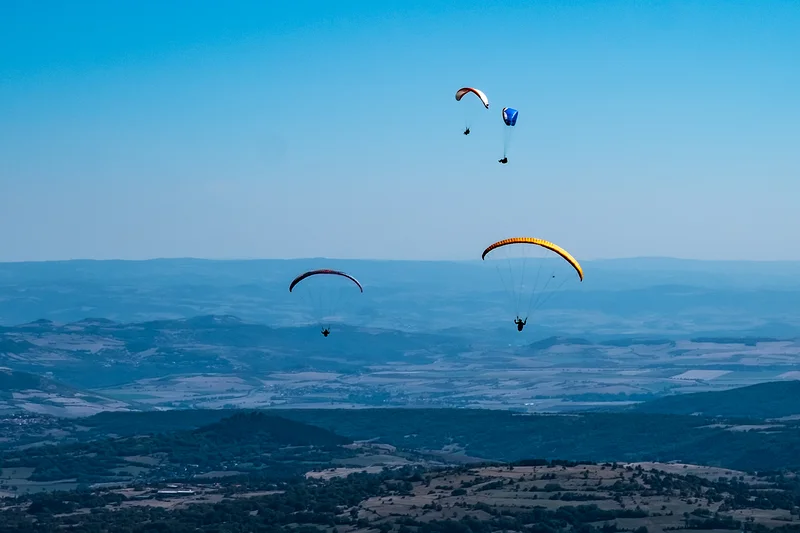
3 Paragliding at the Puy de Dôme +15 recs
The dome is one of the most reliable flying sites in France, with slopes usable in almost any wind direction. Tandem flights take off from the summit and land below, and last around twenty minutes.
-
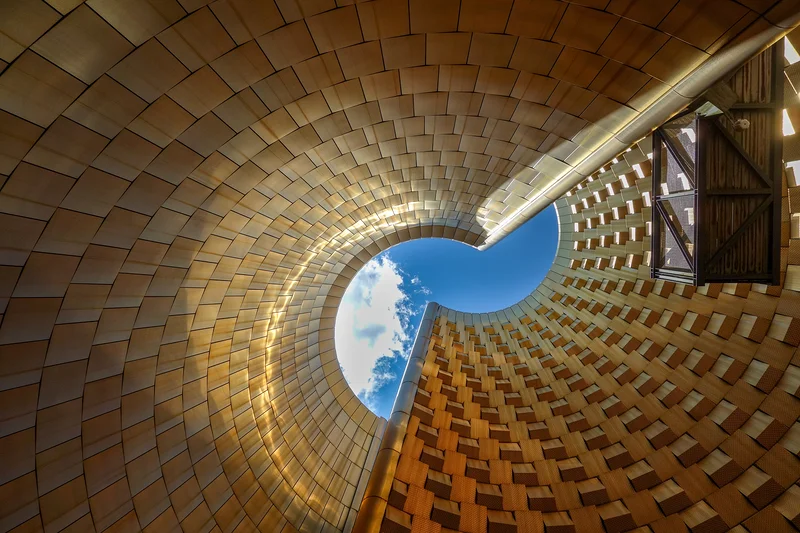
4 Vulcania +4 recs
A park devoted to volcanoes, partly buried in a former quarry, opened in 2002. The scientific part is better than the rides, and the visit takes a full day with children.
-
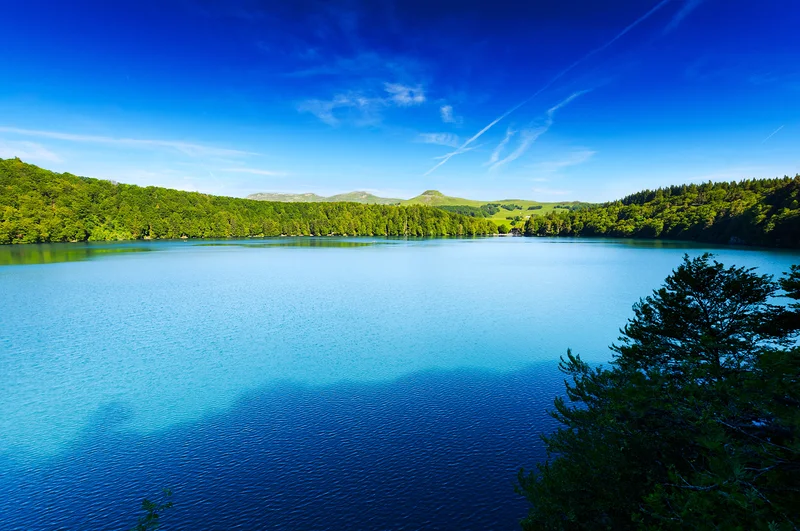
5 Lac Pavin +7 recs
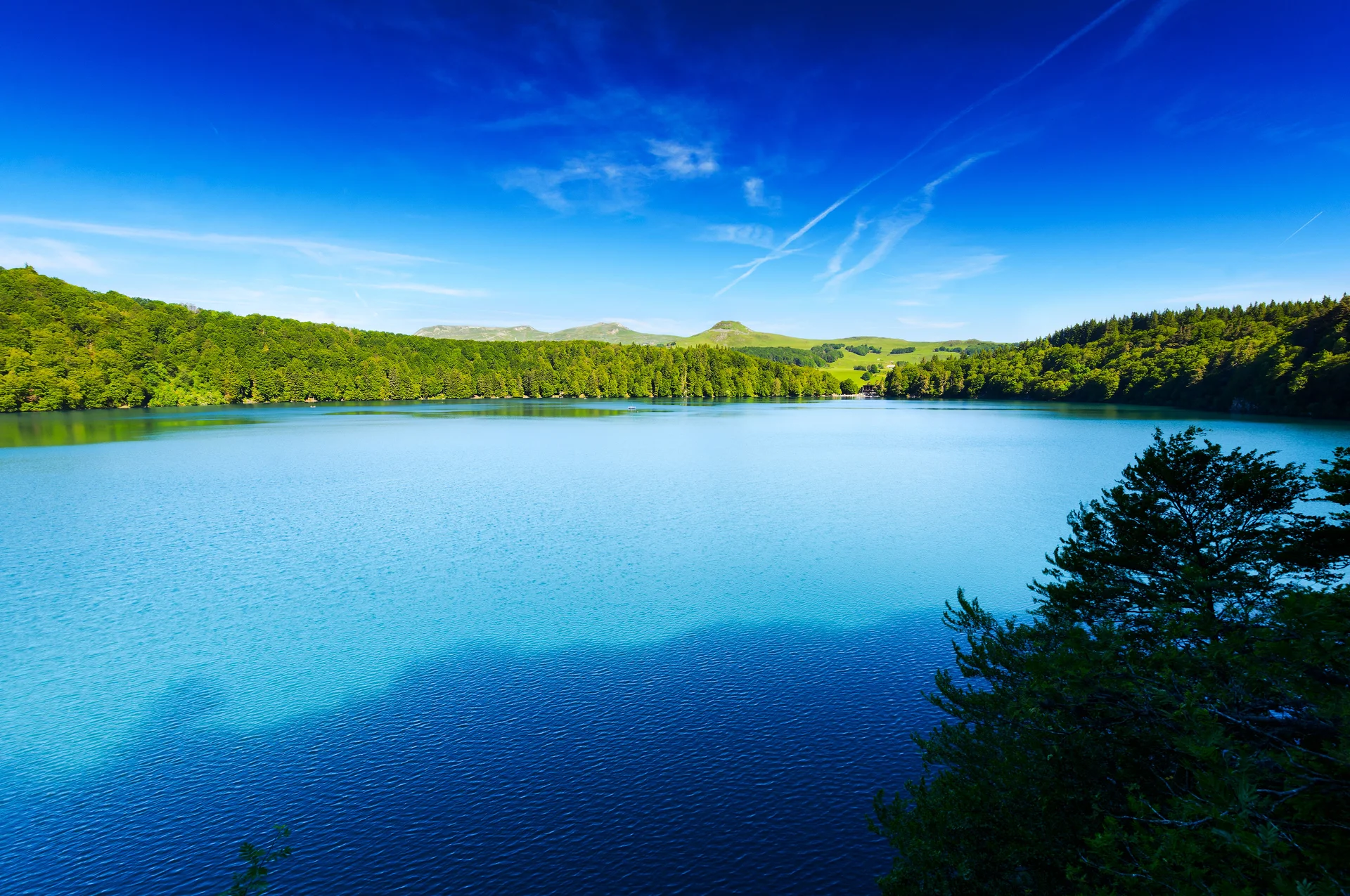
A perfectly circular explosion crater, ninety-two metres deep, and the youngest volcano in mainland France. A flat path circles it in an hour, under beech trees.
The classic mistake
Going up the Puy de Dôme without checking the summit webcam. The dome is in cloud one day in three, and the view is the whole point: there is nothing else up there but a windy plateau. The train runs from April to November only.
Our itineraries in Auvergne
| Length | Itinerary | What you see |
|---|---|---|
| Weekend (2 days) | Clermont-Ferrand › Puy de Dôme | Black city, chain of domes, summit |
| 4 days | Clermont-Ferrand › Lac Pavin › Le Puy-en-Velay | Volcanoes, crater lakes, Velay pinnacles |
| 1 week | Clermont › Issoire › Lac Pavin › Le Puy-en-Velay | Romanesque, Monts Dore, Velay and its lentils |
The train puts Clermont-Ferrand three and a half hours from Paris, and a tram links the station to the centre. Once there, the Puy de Dôme rack railway leaves from a terminus reachable by bus from town.
For the rest, a car is compulsory. The Monts Dore roads are beautiful but slow, and you should allow an hour forty between Clermont and Le Puy-en-Velay.
When to visit Auvergne
| Rating | Season | Weather | Crowds and prices |
|---|---|---|---|
| June and September | 16 to 25 °C, clear ridges | Moderate, good prices | |
| July and August | 20 to 29 °C, afternoon storms | Peak, busy summits | |
| December to March | minus 5 to 5 °C, snow | Moderate, ski areas open | |
| April, May and November | 6 to 15 °C, low cloud | Quiet, many closures |
Our advice
In summer, set off early: storms build over the summits in the early afternoon, and the chain of domes is a poor place to be caught by lightning. Local guides come down before two, and that is not over-caution.
Getting to Auvergne
-
1 By plane to Lyon Fastest
Clermont-Ferrand has no scheduled international service, so the gateway is Lyon, reached from across Britain by easyJet and Ryanair. From there it is an hour forty-five by road or two and a half hours by train.
-
2 By train via Paris Simplest
Eurostar to Paris, then three and a half hours from Gare de Bercy to Clermont-Ferrand with no change. The station is fifteen minutes from the centre by tram.
-
3 By car Most flexible
essential as soon as you leave Clermont: the volcanoes and the lakes have no other access. The A75 south of the city is free for most of its length.
The most efficient combination: fly or train to Clermont-Ferrand, two days in the city and on the Puy de Dôme without a car, then a hire car for the volcano and lake days.
Getting around Auvergne
Clermont-Ferrand has a rubber-tyred tram crossing the city north to south, with Place de Jaude at its centre. Le Puy-en-Velay is walkable, with a great deal of climbing.
Worth knowing
The ridge roads close in winter, sometimes overnight, and the signage is local: a pass shown open when you set off can be barred an hour later. Town halls and ski areas publish road conditions each morning.
What to eat in Auvergne
- Truffade: potatoes crushed in the pan with fresh Cantal tomme until the cheese pulls into strands. Eaten as a main, with salad and dry-cured ham.
- Potée auvergnate: cabbage, potatoes, carrots and salt pork simmered together for hours. A winter dish served in two courses, the broth then the rest.
- Saint-Nectaire: a pressed uncooked cheese matured on rye straw, with a bloomy rind. The farm version, marked with a green plaque, is distinguished from the dairy one by a square plaque.
- Bleu d'Auvergne and fourme d'Ambert: two neighbouring and different blues, one sharp and salty, the other milder and cylindrical. The region has five appellation cheeses.
- Le Puy green lentil: grown on the volcanic plateaux of the Velay, the first pulse in France to get an appellation. It cooks without soaking and keeps its skin.
- Pounti: a terrine of batter, chard and prunes with sausage meat, baked in the oven. Sweet and savoury, served warm.
- Verveine du Velay: a herb liqueur distilled near Le Puy-en-Velay since 1859. The distillery opens to visitors, and the green is stronger than the yellow.
The market in Clermont-Ferrand is held on Place Saint-Pierre from Tuesday to Saturday, with the region's five cheeses side by side. Mountain kitchens close early and often out of season: check before driving up.
Where to stay in Auvergne
| Area | What it is for | Worth knowing |
|---|---|---|
| Clermont-Ferrand, centre | Cathedral, Place de Jaude, tram | All on foot, the best connected base |
| Around the Puy de Dôme | Summit, Vulcania, paths | Fifteen minutes from town, cool nights |
| Monts Dore and Lac Pavin | Crater lakes, walking, skiing | Seasonal, open in summer and winter |
| Le Puy-en-Velay | Pinnacles, chapel, start of the pilgrim road | An hour forty from Clermont |
| Issoire | Romanesque church, valley, quiet | The cheapest, on the motorway axis |
Two bases are enough: Clermont-Ferrand for the city and the chain of domes, a Monts Dore village for the lakes and the walking.
Sleeping at altitude changes the days: the trailheads are at the door, and the morning light on the domes cannot be seen from the plain.
How much does a trip in Auvergne cost?
| Style | Length | Budget per person |
|---|---|---|
| Budget (campsite or hostel, markets, hiking) | 5 days | 200 to 320 € |
| Comfortable (hotel, restaurants, summit train and Vulcania) | 5 days | 500 to 750 € |
| High end (spa hotel, well-known tables) | 5 days | 1,200 to 1,800 € |
- Walking: the paths of the chain of domes are free and waymarked, and the Puy de Dôme can be climbed on the old muleteers' track with no ticket.
- The summit train: dearer than walking up, obviously, but it runs April to November and the ticket books online for a time slot.
- Cheese at the market: the five appellations on one stall cost half what a restaurant cheeseboard charges, and the seller lets you taste.
- The thermal waters: several spa towns sell pool access without a course of treatment, by the half day, for the price of a meal.
- The lunch menu: in good houses in Clermont it is half the evening card, from the same kitchen.
Traditions and way of life in Auvergne
The chain of domes has been World Heritage listed since 2018, not for its beauty but for its legibility: eighty volcanoes of three different types, lined up along a fault, young enough to be intact. It is a geology textbook in the open air.
Clermont-Ferrand owes its other face to rubber: a manufacturer was born here in 1889 and built the modern city, its stadium, its workers' districts and its best-known travel guide.
Two useful habits. On high pasture you close gates behind you and keep dogs in: the herds are watched by working guardian dogs. And in the mountains you greet the people you pass on a path, always: not doing so is noticed.