
Planning your stay in Guadeloupe

Practical info
Bathed by the Caribbean Sea, several hundred kilometres north of Venezuela, Guadeloupe is accessible mainly by plane. Arrivals and departures take place at the Pointe-à-Pitre international airport, right in the center of the archipelago. Expect to pay at least 400€ for a round-trip ticket from Paris.
As it is a French overseas department, French is the official language here. Knowing that 95% of the tourists who visit this place are French or from Quebec, Francophones will have no trouble communicating. The Euro is the only currency used. Most restaurants and shops accept credit card payments.
Getting around
Shaped like butterfly wings, Basse-Terre and Grand-Terre are the 2 main islands of the Guadeloupean archipelago. Connected to each other by the Pont de la Gabarre, near the capital, Pointe-à-Pitre, these 2 parts can be explored by car. To access the other islands, like Marie-Galante or les Saintes, you will need to take a boat instead.
To get around by car, the simplest and most economical solution is to rent a vehicle as soon as you arrive at the airport. Using taxis is possible, but quickly becomes expensive if you want to see the countryside. A one-way taxi ride between Pointe-à-Pitre and other towns can easily cost 50 to 100 euros. A tip for your car rental: even though there are many agencies located near the airport, book in advance! Rental rates are quite reasonable. There are three main roads connecting the two sides of the island.

Things to do in Guadeloupe
Food and local specialties
Guadeloupean gastronomy, which is very specific, represents one of the highlights of this destination. Much like the blended cuisines of most Caribbean countries, Guadeloupe combines flavors from its African and French roots while drawing inspiration from Amerindian cultures. With large amounts of seafood, fruits, and spices, creole cuisine is flavorful and surprising.
Since the territory is part of the European Union, the cost of goods is not cheap. Food is generally expensive, but probably no more so than in other European-administered Caribbean islands. A modest lunch costs 12-15 euros. However, there are plenty of upscale restaurants where the bill climbs much higher, especially in the Grand-Terre region.
Rum, the iconic spirit
Rum is the iconic drink in Guadeloupe and the West Indies. It is mainly served as a "Ti-Punch", a simple rum with sugar and lime juice. I recommend taking advantage of your stay to discover the various local varieties, as each distillery and each farm has its own recipes and manufacturing processes. Of course, these tastings should be done in moderation!
You have the opportunity to discover the distilleries of Guadeloupe either by heading directly to one of the 9 estates on the archipelago or by visiting the famous Rum Museum in Sainte-Rose.
Coconut sorbet
For ice cream lovers, the local production of artisanal coconut ice cream is just waiting to be discovered. At certain ice cream shops, everything is done the old-fashioned way, using a manual wooden barrel equipped with a crank. Outside the West Indies, it is rare to taste a frozen dessert still made this way, and it is a delight... For 2 euros a cup, you can treat your taste buds.

Must-see places to visit
Guadeloupe is much larger than you might expect. To fully visit the archipelago and explore its tourist sites, opting for a 15-day stay would not be too much. Having just one week would barely be enough to cover all of Basse-Terre, let alone the rest.
Basse-Terre and Grand-Terre
The two sides differ in their landscapes, population, and atmosphere. The eastern side, which is Grande Terre, is home to all the hotels, resorts, and most popular beaches.
The Basse Terre region is the area encompassing the national natural park and the Soufrière volcano.
La Soufrière Volcano
For sports enthusiasts and nature lovers, one of the main attractions of Guadeloupe is undoubtedly hiking its largest volcano, La Soufrière. Located on the Basse-Terre side, this still-active volcano peaks at 1500m of altitude. From its slopes and heights, the views over Basse-Terre as well as the surrounding islands are magnificent.
Depending on your route, the hikes take 2 to 3 hours or 1 to 2 hours. To make the most of the experience, the secret is to start as early as possible to escape the afternoon heat and the rain showers that frequently happen late in the day. Most tour buses arrive here in the morning, but not before 8 o'clock. Starting before then will therefore allow you to climb while avoiding the crowds.

The most beautiful beaches
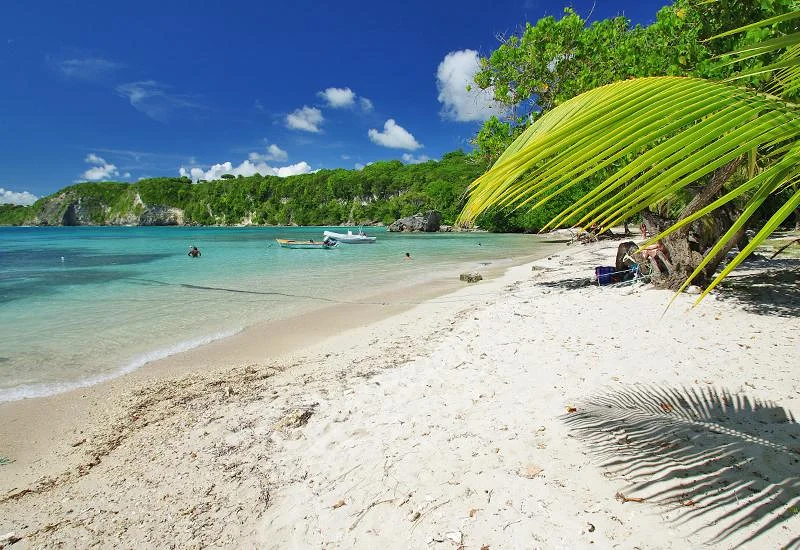
Guadeloupe's coastline is packed with idyllic beaches. The most famous, but also the most visited, are located in the Grand-Terre region, between the towns of Gosier and Saint-François, passing through Sainte Anne. They face the Caribbean Sea. To the west, the shores of Basse-Terre also hold their share of pretty beaches. These are less crowded, because the large resort hotels are only located in Grande-Terre.
The town of Deshaies includes many magnificent, uncrowded beaches, which is perfect for those looking for a quieter, more authentic environment. You can also appreciate some extremely picturesque beaches, like those of Grand Anse and Plage de la Perle.
Malendure Beach on the west coast of Basse-Terre, although touristy, is an ideal spot for snorkeling. Accessible right from the shoreline, there are numerous reefs inhabited by a wide variety of flora and fauna. Sea turtles are abundant in these waters. Finally, the Vieux Fort region on Basse-Terre has superb black sand beaches due to the adjacent La Soufrière volcano.

Pointe des Chateaux
Located at the eastern tip of Guadeloupe, Pointe des Châteaux is well worth the trip. Contrary to what its name suggests, this place does not house a castle. On the other hand, you will find a giant cross-shaped statue that you can walk up to. From the top of this statue, the panorama extends out past the coast, all the way to the other islands of the archipelago, La Désirade, Petite Terre... The scenery changes radically from the tropical beaches located barely a few kilometres away, but it is well worth the journey.
Go diving
Most dive spots are located on the west coast of Basse-Terre, from Pointe Noire to Bouillante. Many dive shops offer their services all around this area.
Diving conditions in Guadeloupe
Diving in the Caribbean Sea is impressive, especially in the Cousteau reserve. Visibility there is excellent (up to 25 metres), the water temperature generally hovers around 27°C and the currents are weak, making it an ideal dive spot. We did all our dives in the Jacques Cousteau marine park around Îlet Pigeon. You will easily find dive centres providing boat transport, equipment rental and professional guide accompaniment. The corals are in good condition and there is also abundant biodiversity to observe.
For the more adventurous, wreck diving is worth a try. Augustin Fresnel is a massive ship over 50 metres long that sank a few decades ago. By penetrating the wreck, you can walk around in the gloom near the captain's quarters. Marine life has thrived around the vessel, including schools of reef fish, vibrant corals...
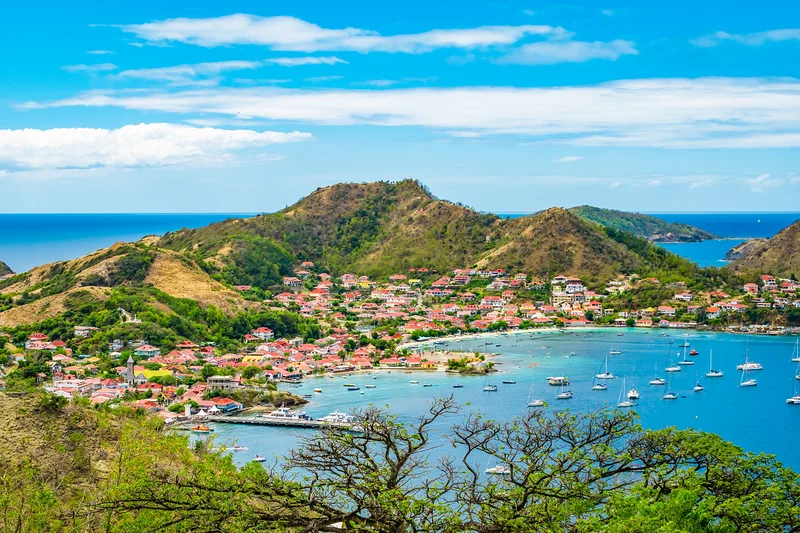
Of course, there are plenty of other activities to discover in Guadeloupe. You can get a bit off the beaten path by taking a boat to the smaller outlying islands, such as Les Saintes (home to one of the most beautiful bays in the world), Marie Galante to the south with its windmills, and La Désirade. All this information will be shared in an upcoming post :)
Comments (0)
No comments yet. Be the first!