Guadeloupe: The Butterfly Island with Two Faces
A crispy fried pastry overflows with spiced salt cod and fresh raw vegetables. Around you, Creole blends with French while a scent of agricultural rum drifts in the humid air. You are not in mainland France, yet you are paying in euros. Guadeloupe scrambles your expectations: a French territory planted right in the middle of the Caribbean, it offers a total change of scenery without the administrative hassles of a distant destination.
Is this destination for you?
Guadeloupe is aimed at travelers who want the Caribbean without all-inclusive packages, for those who prefer handlebars over lounge chairs. The archipelago has not given in to mass tourism: here, you will find few large resorts, but rather family guesthouses and Creole eateries where you are served like family. This authenticity comes with a catch: do not count on English. Outside of rare tourist zones, almost no one speaks it. Creole and French reign supreme. Another reality to factor in: prices match mainland France, sometimes running higher on imported goods. A restaurant meal hovers around $40 to $57* for two.
Public transportation is virtually nonexistent on weekends and unreliable during the week. Renting a car is therefore essential, with a budget of $34 to $57* per day. Roads are decent but winding on Basse-Terre, and traffic jams around Pointe-à-Pitre can catch you off guard. If you are looking for organized leisure, look elsewhere. But if you love accessible adventure, jungle hikes, and deserted beaches, this island is for you.
Two islands, two vibes
Seen from the sky, Guadeloupe looks like a butterfly resting on the water. Its two wings bear deceptive names: Basse-Terre, to the west, peaks at nearly 1500 meters with the volcano of La Soufrière. Grande-Terre, to the east, is actually lower and drier, dotted with white sand beaches and sugarcane fields. These two territories are joined by a narrow isthmus crossed by the Rivière Salée.
Basse-Terre: The green realm
The Parc National de la Guadeloupe covers a large part of this mountainous island. People come here to climb La Soufrière, the active volcano that locals affectionately nickname "The Old Lady". The climb takes about 2 to 3 hours from the Pas du Roy parking lot. Get ready for mud, sudden rain, and sulfur clouds: nature here does not mess around. The Chutes du Carbet, accessible via marked trails, offer three waterfalls, the second of which is reached in just a 25-minute walk. The first one, more spectacular, requires a 3-hour round-trip effort.
The west coast shelters the Réserve Cousteau, named after the explorer who conducted his research there. Off the beach of Malendure, the Pigeon Islands offer diving accessible to beginners. Local dive shops offer introductory dives starting at $57 to $79*. Sea turtles regularly cruise through, and visibility often reaches 20 meters.
Friendly tip: rent a kayak from Gwada Pagaie in Malendure to reach the Pigeon Islands on your own. Budget $51* for three people, snorkeling gear included. Head out early to avoid the crowds from organized excursions.
Grande-Terre: The beach side
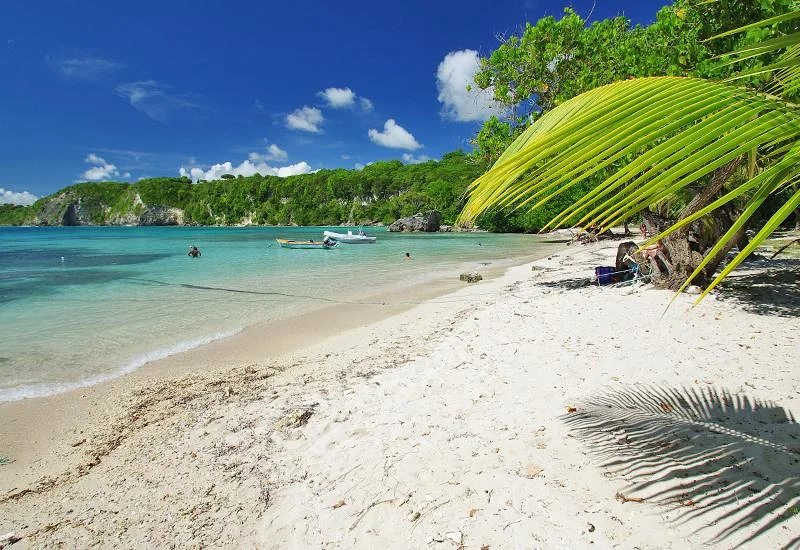
Fans of white sand and turquoise water will find what they are looking for on this eastern wing. The beach of Sainte-Anne remains the most famous, with its calm lagoon ideal for families. The Caravelle beach, adjacent to the Club Med but public, offers a postcard setting. The downside: heavy crowds in high season. For more tranquility, head all the way to l'Anse à la Gourde, near Saint-François, a preserved cove where tourists are rare.
The Pointe des Châteaux, at the far east, is worth the detour for its wind-sculpted cliffs and views of the churning Atlantic. The trail up to the summit cross takes about fifteen minutes. On a clear day, you can spot La Désirade and Marie-Galante in the distance. The less-frequented north of Grande-Terre hides the Porte d'Enfer, an impressive marine chasm, and the Pointe de la Grande Vigie, where cliffs plunge straight into the ocean.
The satellite islands: Timeless escapes
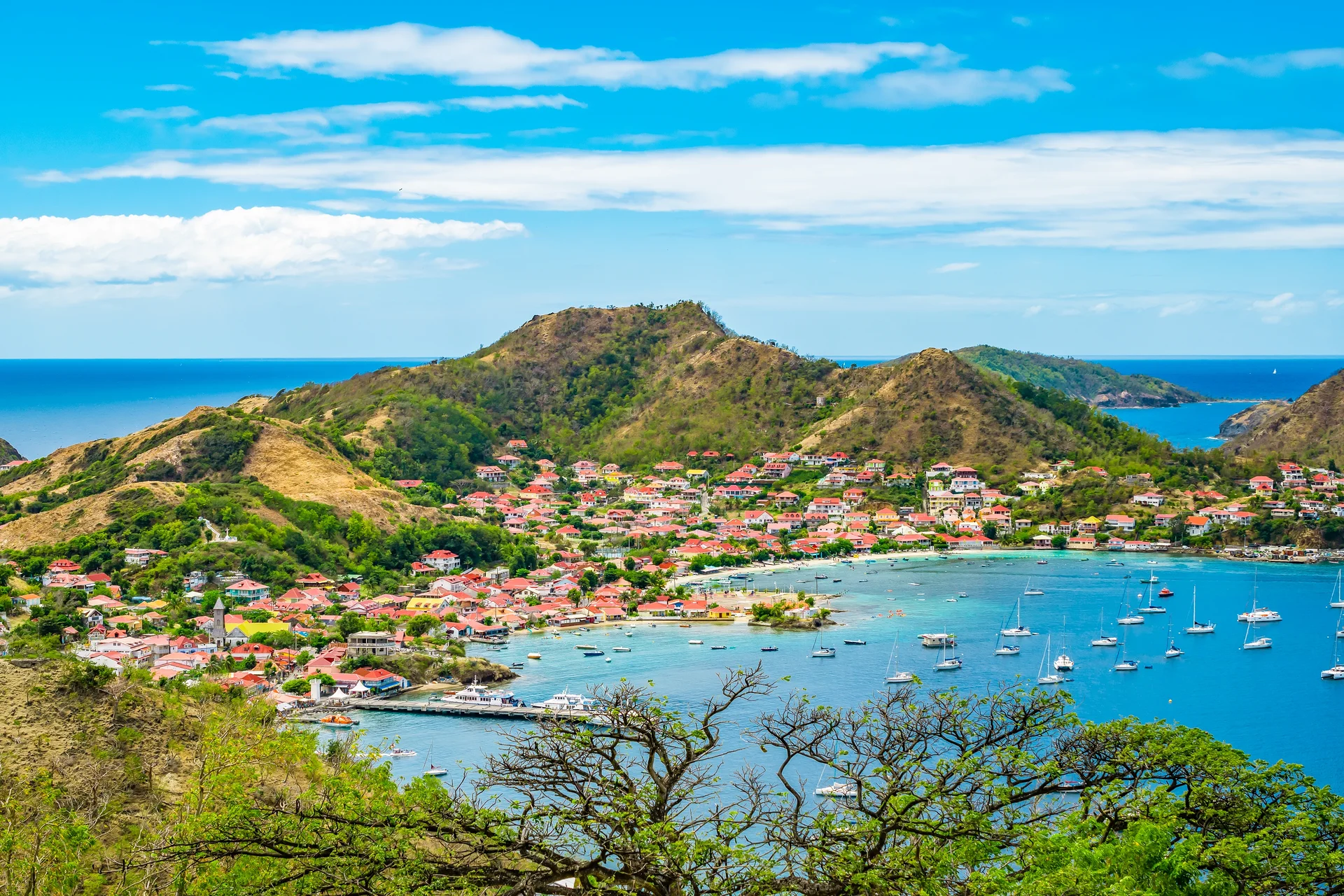
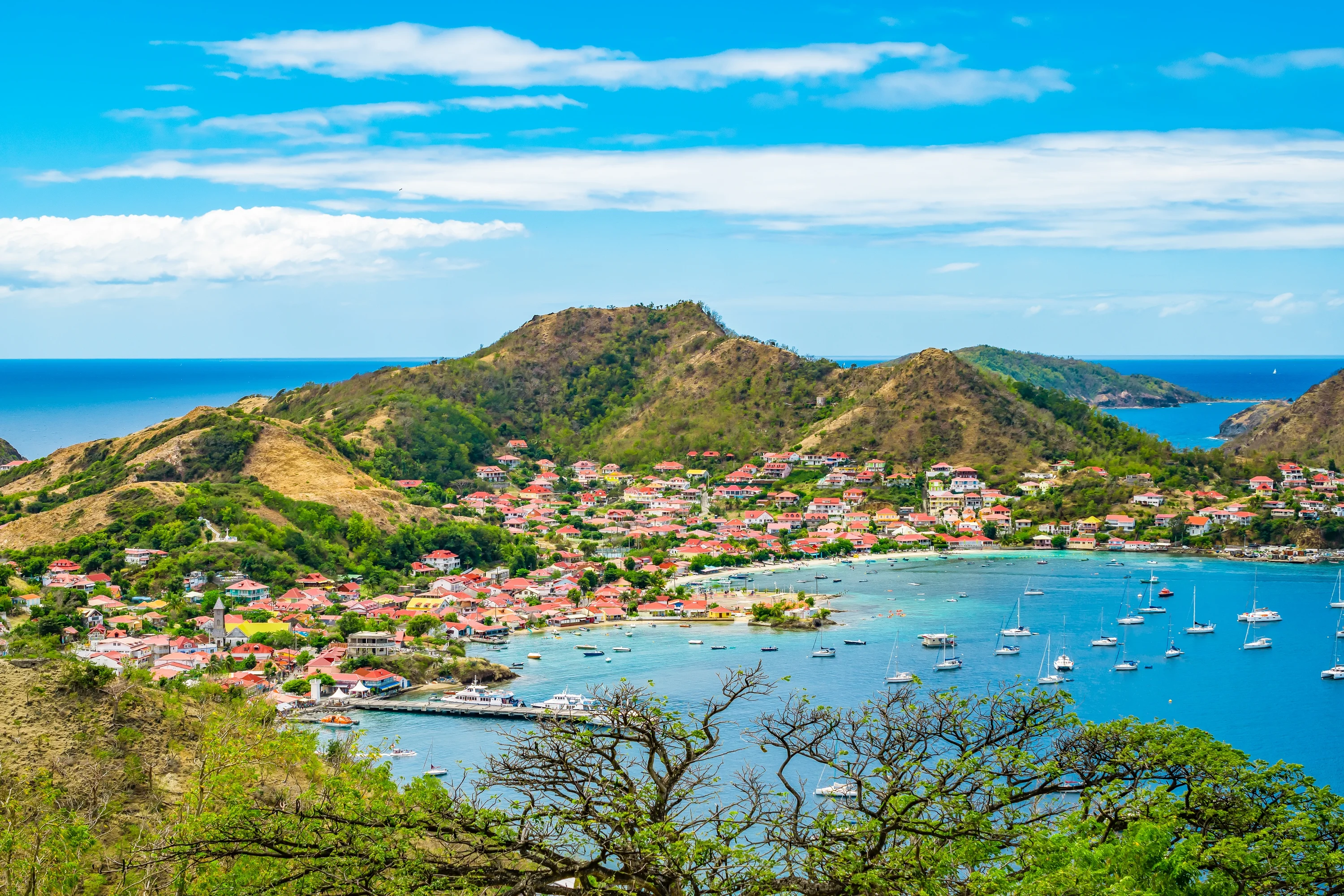
The Guadeloupean archipelago counts several islands accessible by ferry, each with its own personality. Les Saintes, a 20-minute boat ride from Trois-Rivières, shelters one of the most beautiful bays in the world according to certain rankings. Terre-de-Haut, the main one, is best explored by scooter: cars are rare and hardly useful here. Fort Napoléon offers an exceptional panorama over the archipelago. Do not leave without tasting the tourments d'amour, those coconut tarts sold right on the dock.
Marie-Galante, the "big pancake", preserves a pace of life from another era. You will find three agricultural rum distilleries there, including Bielle and Père Labat, alongside nearly deserted beaches like l'Anse Canot. Plan for a one-hour ferry ride from Pointe-à-Pitre or Saint-François. La Désirade, even more discreet, attracts travelers seeking solitude and wild hikes. As for Petite-Terre, a protected nature reserve, it can only be visited via organized excursions to observe iguanas and coral reefs.
Friendly tip: on Les Saintes, spend a night on the island. The magic happens after 4:30 PM, when the last ferry takes the day-trippers back. The island regains its calm and you will have the beaches to yourself the next morning.
Pointe-à-Pitre and the weight of history
The economic capital of the archipelago divides travelers. Some find it run-down, while others perceive a fading colonial charm. The city has seen better days, but it concentrates important sites. The Mémorial ACTe, opened in 2015, is a slavery memorial center of rare quality. Its contemporary architecture, a metal and glass building set right on the waterfront, is worth the detour. Budget 2 to 3 hours of visiting time to go through its permanent exhibitions.
The central market of Pointe-à-Pitre, and more specifically the Saint-Antoine market, remains the best place to buy local spices: colombo powder, West Indian bay leaf, annatto. Prices here are much softer than on the mainland. Place de la Victoire, lined with colonial houses and palm trees, offers a glimpse of what the city was like at its peak.
Nature and hiking: In the heart of the tropical forest
The Route de la Traversée connects the two coasts of Basse-Terre by winding through the tropical rainforest. This 17-kilometer ribbon of asphalt gives access to several trails and points of interest. Cascade aux Écrevisses, a five-minute walk from the parking lot, allows for a refreshing swim in a natural pool. Arrive early to miss the crowds. Parc des Mamelles, a tropical zoo, will please families with its suspension bridges in the canopy and local raccoons, which were brought to the island by ship, most likely in the 18th century.
Saut de la Lézarde, in Petit-Bourg, offers a 12-meter waterfall accessible after a pleasant forest walk. The Botanical Garden of Deshaies, on the northwest coast, earns its $18* admission fee for its tropical plant collections, hummingbirds, and parrots. The village of Deshaies itself, with its horseshoe-shaped bay, remains one of the most photogenic on the island.
Guadeloupe on your plate: Creole in all its generosity
Guadeloupean cuisine does not bother with lightness. The bokit, the island's star sandwich, consists of a fried dough pocket stuffed with salt cod, jerk chicken, or vegetables, drizzled with hot sauce. You can find it at roadside snack shacks for $4.50 to $9*. Colombo, inherited from Indian laborers who arrived in the 19th century, simmers chicken, goat, or pork in a curry-like spice blend. Salt cod fritters (accras), small crispy beignets, accompany the aperitif just like Creole blood sausage (boudin), which packs more spice than its mainland cousin.
The ti-punch stands out as the local ritual: white rum, cane sugar, and lime, mixed right at your table to suit your taste. Guadeloupean rum, labeled "agricultural", stands out because it is crafted directly from fresh sugarcane juice. The distilleries of Damoiseau in Le Moule and Bologne in Basse-Terre offer free tours with tastings. For dessert, the tourments d'amour of Les Saintes or the coconut flan wrap up the meal on a sweet note.
Friendly tip: artisanal ice cream vendors, recognizable by their wooden carts, prepare their sorbets the old-fashioned way using a hand crank. Coconut, guava, soursop: at $2.30* a scoop, it is a refreshing pause you should not miss.
When to visit Guadeloupe?
The dry season, from December to May, offers the best conditions. Temperatures hover between 75 and 86°F, rainfall stays moderate, and sunshine is generous. This period coincides with the North American and European winter, making it peak tourist season. Prices climb, especially during the Christmas and February holidays. Carnaval, in January and February, animates the island with colorful parades and gwoka rhythms.
The wet season runs from June to November, with a peak hurricane risk in August and September. Showers are frequent but brief, and the atmosphere turns heavy. On the flip side, rates drop noticeably and tourist spots empty out. Some restaurants and lodgings close during this period. Basse-Terre receives more rain than Grande-Terre year-round: pack a raincoat for hikes, even in the dry season.
How to get to Guadeloupe?
Pôle Caraïbes airport, located in Les Abymes near Pointe-à-Pitre, is reached from North America through Miami, San Juan, or Montreal, and directly from mainland France. Three airlines run the route: Air France from Paris-Orly and Roissy, Air Caraïbes, and Corsair from Orly. The flight lasts about 8h30 to 9h nonstop. Fares range from $450 to $1,020* round-trip depending on the season and how early you book. Avoid school vacations to score the best prices.
Since Guadeloupe is a French department, US and Canadian citizens need no visa for stays under 90 days, but a valid passport is required. Check your carrier before you land: most US plans treat France as international roaming. Guadeloupe stays on Atlantic Standard Time all year, one hour ahead of New York in winter and on the same clock in summer. To minimize fatigue, pick overnight flights.
How to get around Guadeloupe?
Renting a car remains the only reasonable option to explore the archipelago. Rental agencies are right at the airport: book ahead in high season, especially if you need an automatic transmission, which is less common. Budget $34 to $57* per day depending on the model. Roads are in good condition but narrow on Basse-Terre, and locals drive fast. Watch out for the numerous roundabouts and morning traffic jams around Pointe-à-Pitre.
To reach the islands, ferries depart from Pointe-à-Pitre, Saint-François, and Trois-Rivières. Two main companies, L'Express des Îles and Val Ferry, handle crossings to Les Saintes, Marie-Galante, and La Désirade. Expect $17 to $29* one-way depending on the destination. Crossings take from 20 minutes to an hour depending on the island. Once you arrive, a scooter becomes the preferred way to get around, particularly on Terre-de-Haut where cars are practically nonexistent.