
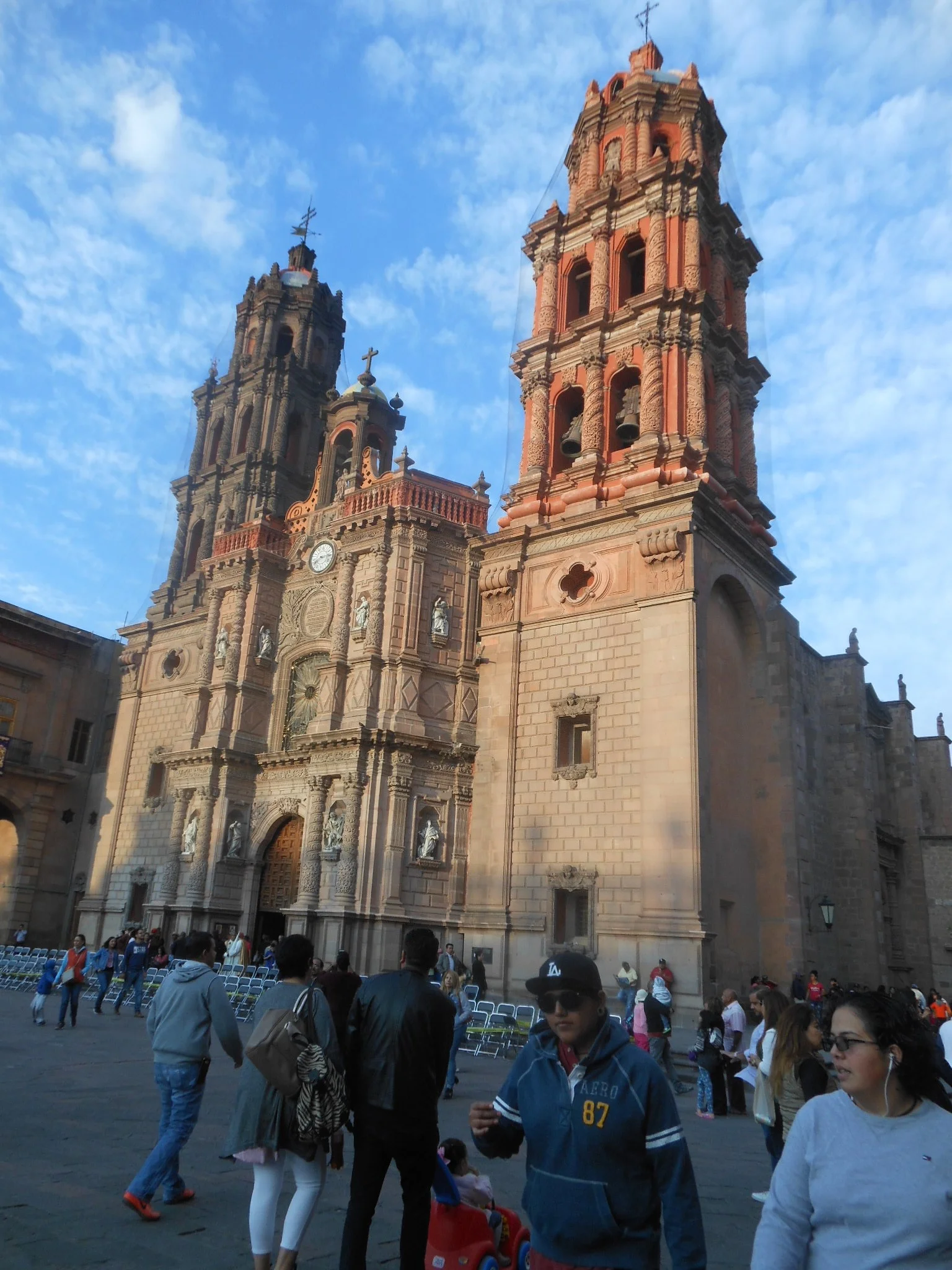

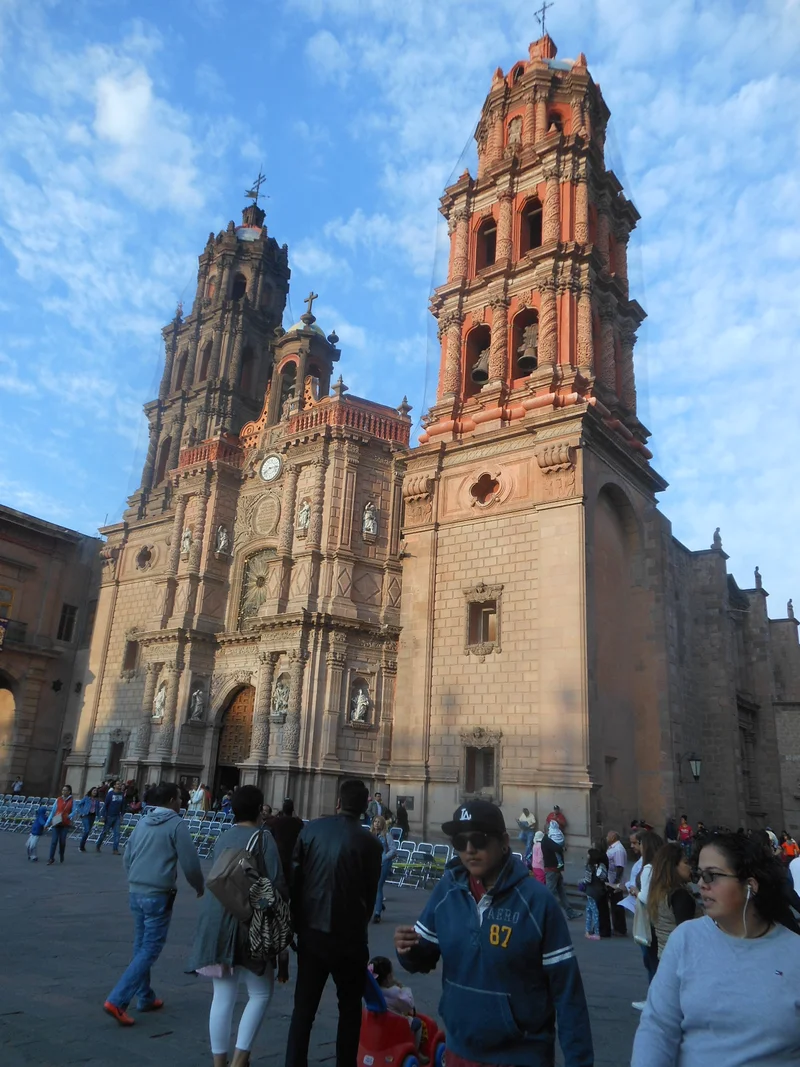
The Cathedral of San Luís Potosí, built in the 17th century by the Franciscans
San Luís Potosí, where does the name come from? First, "San Luís" is a nod to the French King Saint Louis, as the city was founded in 1589 by the Franciscan order. Then, "Potosí" was added by the Spanish in 1792, referencing the Bolivian mines, because it turns out the state of San Luís Potosí is rich in silver and gold deposits. It was these very riches that fueled the city's growth.
The arid landscapes of the San Luís Potosí plains

The water reservoir, the only remaining vestige of the aqueduct that brought water to the city center
Built in the middle of the desert, the architects showed great ingenuity in bringing fresh water to the city by constructing a massive aqueduct. Today, only the main water reservoir remains. The city was originally built by the indigenous Chichimeca people, whose descendants are known today as the Huichol. Some neighborhoods still feel incredibly authentic, such as San Miguel or San Sebastian, which are separated by the Calzada de la Guadalupe.

Traditional female Huichol attire

Traditional male Huichol attire

Traditional Huichol dances
Today, San Luís is a city of colonial style, filled with numerous churches like the Templo del Carmen, the Templo San Agustin, the Templo de San Francisco, and the Basilica de la Guadalupe. During Holy Week, specifically on Good Friday, the city hosts one of the most significant Processions of Silence in Mexico. Thousands of participants from various neighborhoods and surrounding villages take part in a pilgrimage through the city streets, retracing the different stations of Jesus's life.

Templo del Carmen
The Procession of Silence doesn't begin until nightfall, but crowds already gather early to claim their spots in the chairs lined up along the streets. The procession starts at the Templo del Carmen and follows a long route through the city. The pace is very slow, and with thousands of penitents involved, the religious event lasts for several hours!

Preparing for the procession with the various altars that will be carried
Many of the processions are made up of penitents, some with hoods covering their entire faces, some barefoot, some with chains around their ankles, and they represent every generation!

The processions of penitents, who sometimes carry bibles, rosaries, or lanterns, or play trumpets and drums at a very slow, somber rhythm

Processions sometimes include young children who must walk for hours in the cold to the rhythm of the funeral-like orchestras
There are 14 altars carried around the city center, symbolizing the different stations of the life of Jesus. The altars are made of solid wood and are covered in intricate carvings and ornaments. But the most impressive part is the sheer number of people required to carry them! The men take turns throughout the route, occasionally switching shoulders or taking a break to ease their aching backs.

One of the final altars representing the Virgin Mary, carried by several men
The procession also features some unique groups, such as the parade of Romans (who persecuted the Christian community at the time), people in traditional colonial dress, and the evangelized Huichol people.

The Roman procession, a surprising sight here in Mexico!

The evangelized Huichol people, who still maintain their traditional clothing, a true example of religious syncretism

The Spanish colonists who participated in the evangelization of the region's indigenous peoples
Today, Holy Week is not only a religious holiday across the country but also the only week of vacation for most Mexicans. As a result, there are many tourist events promoting local culture and gastronomy, such as the Feria del Taco in San Luís. It’s the perfect opportunity to taste regional tacos and see how they’re made, from the tortilla to the plate!

The "tortillería," which mass-produces tortillas from "masa," or nixtamalized corn dough. You can buy your bag of piping-hot tortillas by the quarter-kilo, half-kilo, or full kilo!

But the best tacos are enjoyed with handmade tortillas! A small ball of masa is kneaded and then shaped (by hand or with a "maricona," a manual press) before being cooked on both sides, flipped without burning fingers on a "comal" (griddle).

On the cooked tortilla, you can then spread all sorts of "guisos," which are generally meat dishes in sauce. You can add cooked or raw white onions, cilantro, lime juice, and of course, spicy green or red salsa.

Tacos can also be "dorados," meaning they are folded and fried until golden in oil. It’s definitely greasy, but it’s the number one Mexican fast food! You can find them everywhere, on the street or in restaurants, at any time of day. The taco has even made its way into everyday vocabulary: for example, "to eat" can be called "echarse un taco" (literally, "to throw yourself a taco").
Comments (0)
No comments yet. Be the first!