
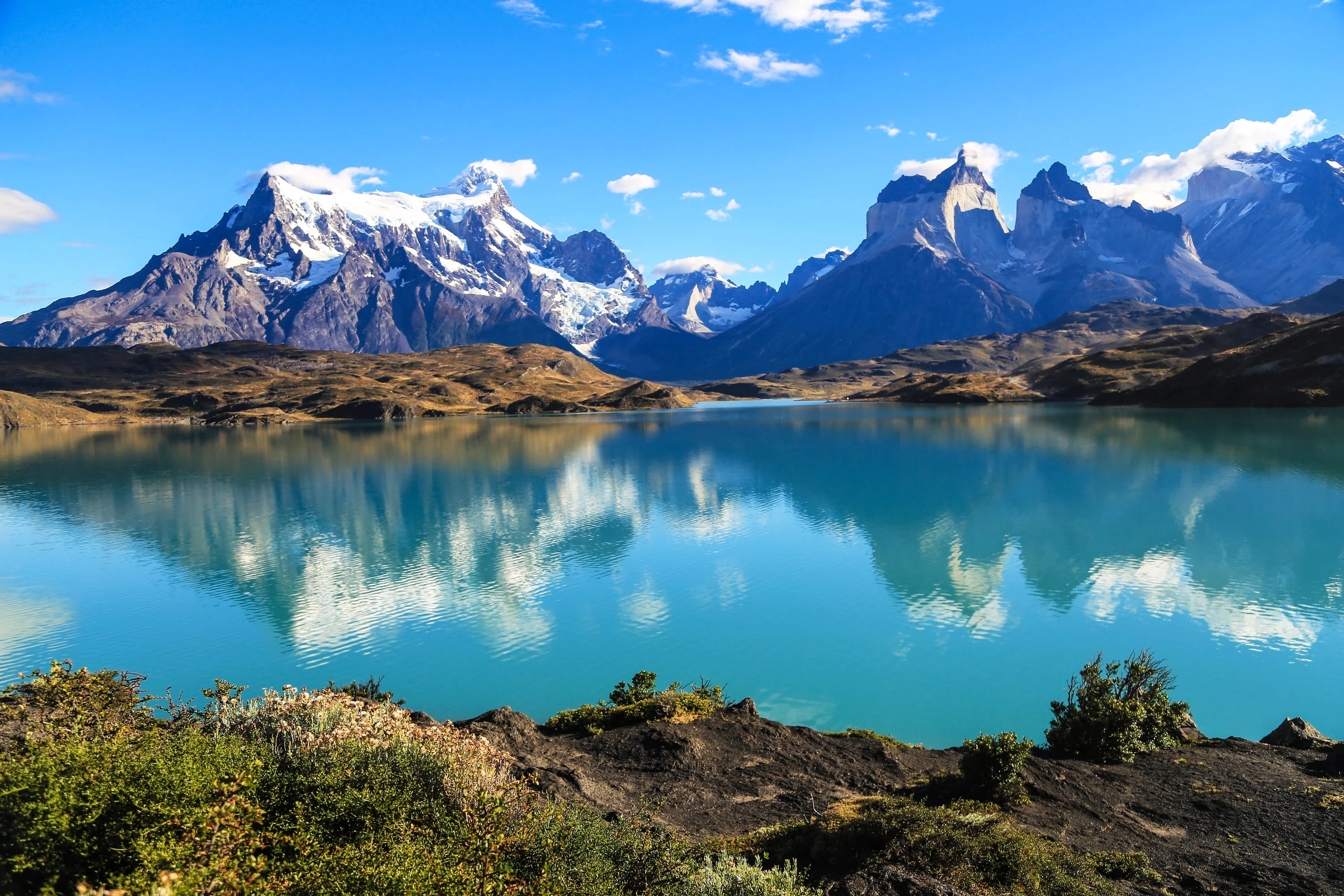
An icy wind whipping your face, granite towers piercing the clouds, a puma sunbathing 10 metres away from us... Patagonia gave me the wildest images of my life as a traveller. With a friend, we backpacked across this land at the end of the earth, and I'm going to share our tested-and-approved 15-day itinerary, step by step.
This guide isn't a copy-paste from a travel agency. It's the result of our struggles, our favourites and our discoveries on the ground. If you dream of the Torres del Paine, the Fitz Roy and the Perito Moreno glacier, you've come to the right place.

Why 15 days is the ideal duration for Patagonia?
Three weeks is comfortable. Two weeks is tight but entirely doable with an itinerary designed to live an intense adventure without spending your days on buses. You'll have time to hike, gaze at glaciers and sample local life.
⚠️ Important: The weather in Patagonia is completely unpredictable. Allow at least 1 to 2 days of margin in your schedule to absorb delays caused by bad weather. They say here that you can experience all four seasons in a single day!
The day-by-day itinerary: from northern to southern Patagonia
Days 1-2: Santiago and Valparaíso, warming up

We spent two days in the capital, Santiago del Chile, to recover from jet lag and start soaking up Chilean Spanish, with its very different expressions from European Castilian.
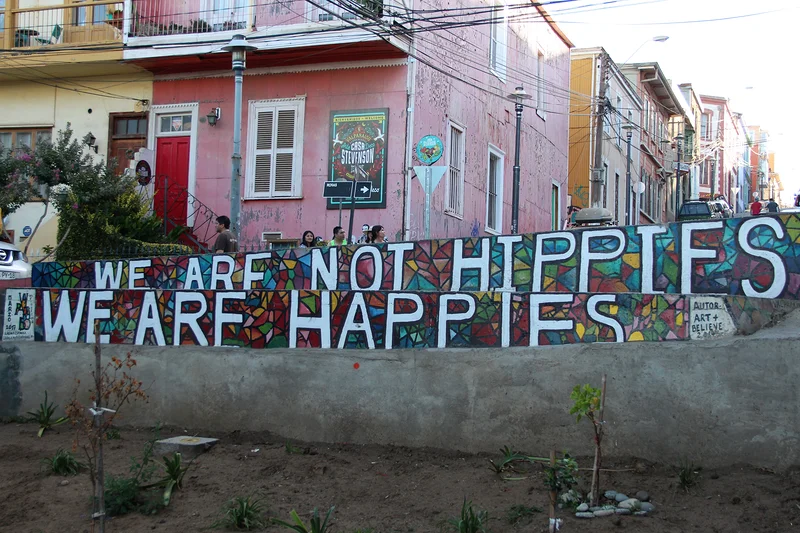
The next day, we headed west to Valparaíso. This port city with its 44 coloured hills is an open-air museum. The intimate jazz concerts in bars with a South American atmosphere are well worth the detour. It's also an opportunity to wave to the Pacific before heading deep into the far south.
- Transport: Bus from Santiago airport to the centre (1h), then bus to Valparaíso (1h30)
- Recommended accommodation: Cerro Alegre or Cerro Concepción neighbourhood for the bohemian vibe
Days 3-4: The big leap to Puerto Natales

This is where the adventure truly begins. Santiago → Punta Arenas flight (about 3h), then bus to Puerto Natales (3h drive). This quiet little town nestled in the Patagonian fjords is the base camp for Torres del Paine.
Make the most of these two days to:
- Get your final gear purchases (tent rental, stoves if needed)
- Confirm your campsite and refuge bookings
- Visit the small Museo Histórico to understand the history of the first inhabitants
- Acclimatise to the altitude and temperatures
💡 Budget tip: The grocery stores in Puerto Natales are cheaper than those in the park. Do your shopping here to save money.
Days 5-9: The W Trek in Torres del Paine, the heart of the adventure

The highlight of our trip: five days in the Torres del Paine park. The famous W Trek gets its name from the shape of the trail winding between the mountains. It's THE iconic hike of Patagonia, and frankly, it earns its reputation.
Why choose the W Trek rather than the O Trek?
The O Circuit goes all the way around the massif in 7-8 days and 127 km. Magnificent, but more demanding. The W Trek concentrates the highlights in 4-5 days and around 80 km. For a 15-day trip, it's the optimal choice.
| Criterion | W Trek | O Circuit |
|---|---|---|
| Duration | 4-5 days | 7-8 days |
| Distance | ~80 km | ~127 km |
| Difficulty | Moderate | Difficult |
| Highlights | Base Torres, French Valley, Grey Glacier | All W highlights + wild northern section |
| Booking | Essential, 2-3 months in advance | Even more crucial |
Our W Trek Itinerary (East-West Direction)

Day 1: From Puerto Natales, take the morning bus (7 AM) to Laguna Amarga. Transfer to the trailhead and hike up to Torres Central campsite. 15 km, about 5 hours of walking.
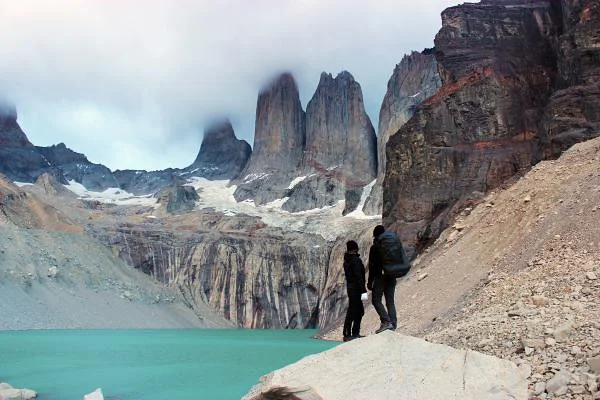
Day 2: Wake up before dawn to hike up to the Mirador Base Torres. Those three granite towers mirroring in the lake at sunrise... It still gives me chills. Head back down and take a transfer to Francés refuge. An intense day!
Day 3: Explore the French Valley all the way up to the Mirador Británico. It is considered one of the finest viewpoints in all of Chilean Patagonia. Los Cuernos del Paine, those granite "horns," are absolutely breathtaking.
Day 4: Head towards Paine Grande refuge, then hike out to Grey Glacier. That immense tongue of bluish ice advancing over the lake... Watching the drifting icebergs is hypnotic.
Day 5: Head back to Paine Grande and catch the ferry across Lake Pehoé. Return bus to Puerto Natales.
⚠️ Mandatory Booking: For the past few years, ALL campsites and refuges must be booked in advance via the park's official website. Spots fill up very fast in high season. We booked 3 months ahead and had to adjust our itinerary based on availability. Park admission costs around 30€ per person.
Unforgettable Encounters
This park is breathtakingly beautiful, and spotting wildlife is a regular occurrence. We were lucky enough to watch a puma sunbathing just 10 meters away from us! In the evening at the campsite, it's easy to share pasta and sausage with fellow hikers from all over the world. These moments of camaraderie are an integral part of the experience.
Days 10-11: El Calafate and the Perito Moreno Glacier

From Puerto Natales, take the bus to El Calafate in Argentina (about 5 hours including the border crossing). This town on the shores of Lake Argentino feels like a ski resort and serves as a base to explore Los Glaciares National Park.
The Perito Moreno Glacier is not just a pile of ice: it is a living giant that breathes, cracks, and sculpts the landscape. This monster, measuring 30 km long and 5 km wide, is one of the few glaciers in the world that is still advancing. Every day, it moves forward by 2 meters!
Ways to Experience Perito Moreno
- The panoramic walkways: Multiple tiers of balconies offer stunning views of the glacier face. Allow 2-3 hours on site. This is the most budget-friendly option.
- Lake Argentino boat cruise: A one-hour boat ride coming within 300 meters of the glacial wall. The cracking sounds are impressive!
- Mini-trek on the glacier: 1.5 hours of walking on the ice with crampons. Around 100€ per person.
- Big Ice: 3.5 hours of glacier hiking for the more adventurous. Between 250 and 300€.
| Service | Estimated Price |
|---|---|
| Los Glaciares Park Entrance | ~45,000 Argentine pesos (~41€) |
| Round-trip bus from El Calafate | ~26€ |
| 1-hour boat cruise | ~80€ |
| Complete guided excursion | 70-90€ |
💡 Tip: Arrive right when the site opens in the morning to enjoy the glacier with fewer crowds. The breaking off of ice chunks (known as "calving") is more frequent in the afternoon when the sun warms up the wall.
Days 12, 14: El Chaltén and Mount Fitz Roy, the cherry on top

Take a bus from El Calafate to El Chaltén (about 3 hours across the Patagonian steppe). This small village of fewer than 2,000 residents is nicknamed the "Argentine capital of hiking." And for good reason: the trails start right from the village and head straight toward the legendary Mount Fitz Roy.
Must-do hikes
Laguna de los Tres (Fitz Roy)
This is THE hike you cannot miss. 20 km round trip, 750 m of elevation gain, 8 to 10 hours of walking. Arriving at the foot of Fitz Roy as it reflects in the turquoise waters of the lagoon... Some say it's even more stunning than Torres del Paine. I won't take sides, both completely blew me away.
Laguna Torre
More accessible: 18 km, 250 m of elevation gain, 6 hours of walking. You'll discover Cerro Torre, another star of the mountain range, complete with its hanging glacier.
Loma del Pliegue Tumbado
For those with legs of steel: 22 km, 1,100 m of elevation gain. But the 360-degree panorama of both Fitz Roy AND Cerro Torre is worth every single drop of sweat.
Pros of El Chaltén
- Free access to most trails (unlike Torres del Paine)
- No advance booking required for the free campsites within the park
- Relaxed mountain village vibe
- Restaurants and craft breweries to recover after your hikes
Cons & Things to Watch Out For
- Weather is even more unpredictable than in Torres del Paine
- Internet is practically nonexistent (make sure to download offline maps)
- Groceries and supplies are more expensive than in El Calafate
- Fitz Roy can remain hidden behind clouds for several days
💡 Weather tip: When you arrive in El Chaltén, the bus stops at the ranger station, where staff explain trail conditions and hand out a free map. Listen to their advice! We planned for 3 days on-site to give ourselves at least one favorable weather window.
Day 15: Return to civilization
Bus from El Chaltén → El Calafate (3h), followed by a flight to Buenos Aires or Santiago for your journey home. If you have a bit of spare time, spending a night in Buenos Aires to experience tango and Argentine steaks makes for a wonderful finale to the trip.
What gear should you pack for trekking in Patagonia?
Patagonia is not a place to improvise. I've seen hikers in sneakers and cheap plastic ponchos turn into walking icicles. Here is what made all the difference for us:
The 3-layer system: essential here
- Layer 1 (breathable): Merino wool t-shirt and leggings. Avoid cotton, which traps moisture.
- Layer 2 (insulating): Fleece or a lightweight micropuff-style down jacket.
- Layer 3 (protection): A windproof AND waterproof jacket. This is THE most important piece of gear. Gusts can exceed 100 km/h.
Basic equipment
- High-top hiking boots: waterproof and already broken in. Getting blisters in Patagonia is a guaranteed nightmare.
- Trekking poles: essential for the descents, especially toward Laguna de los Tres.
- 35, 45L backpack: the ideal volume for a multi-day trek. Opt for a comfortable model with a hip belt. You can find the best backpacks on Cimalp.fr, tailored to demanding mountain conditions.
- Sleeping bag: comfort rating of 0°C minimum, or even -5°C to be on the safe side.
- Filtering water bottle: river water is generally safe to drink, but it's better to be safe than sorry.
⚠️ Important reminder: Your backpack shouldn't weigh more than 10% of your body weight for long days of hiking. Every single gram counts when you're walking for 8 hours!
When to visit Patagonia?
The question everyone asks. Here's the short answer: between November and March, during the austral summer. But there are a few nuances.
| Time of year | Conditions | Our take |
|---|---|---|
| October, November | Spring, nature waking up, strong winds | Fewer crowds, blooming landscapes, unsettled weather |
| December, February | Austral summer, 17-18 hours of daylight, 10-20°C | High season, optimal conditions but more tourists |
| March, April | Autumn, golden colors, dropping temperatures | Our preference: fewer crowds, magical light |
| May, September | Winter, intense cold, closed trails | To be avoided for trekking (skiing is possible in Ushuaia) |
Budget: how much does a 15-day trek in Patagonia cost?
Let's be honest: Patagonia isn't a budget destination. But with a bit of planning, you can keep expenses under control.
Estimate for 15 days backpacker-style
| Expense | Estimate |
|---|---|
| International flights (from Paris) | 800-1200€ |
| Domestic flight Santiago-Punta Arenas | 100-200€ |
| Buses and local transport | 150-200€ |
| Park entrance fees (Torres del Paine + Los Glaciares) | 70-100€ |
| Accommodation (mix of camping/hostels/refuges) | 300-500€ |
| Food | 250-400€ |
| Optional excursions | 100-300€ |
| TOTAL | 1770-2900€ |
💡 Money-saving tips: Book your flights 3, 4 months in advance. Bring your own camping gear rather than renting on-site. Cook with a camp stove during treks. Travel in the shoulder season (November or March).
Mistakes to avoid at all costs
After running into dozens of travelers in over their heads, here are the classic traps:
- Not booking Torres del Paine campsites in advance: you'll be turned away at the park entrance, end of story.
- Underestimating the weather: even in summer, temperatures can plummet abruptly. A 100 km/h wind with 5°C feels closer to -10°C.
- Planning too tight an itinerary: buses are sometimes canceled, and trails closed. Keep some flexibility.
- Starting with brand-new shoes: break them in at least a month beforehand.
- Forgetting cash: many places don't accept cards, especially in Argentina given the peso's fluctuations.
Our verdict after a 15-day trek in Patagonia
As the trip drew to a close, we had to make our way back to Santiago, with a burning desire to return to explore the north of the country, the Atacama Desert, and its lunar landscapes.
These 15 days in Patagonia were the most intense of our traveling lives. The landscapes live up to every superlative. But what really sticks with us are the encounters: the German hiker who shared his hot chocolate at the campsite, the Chilean family who explained the secrets of mate to us, that surreal moment face-to-face with a puma...
Patagonia confronts you with sheer immensity, and with yourself. It reminds you that the planet still holds wild, untouched spaces where humanity feels very small.
Une remarque tout de même : il me semblait que la ville la plus australe d'Amérique, et même du monde, était Ushuaia, en Argentine ?