
Taking a little break from my routine and, following a wonderful gift for a happy occasion, here I am on a plane bound for Ireland for a week-long road trip featuring homestay accommodations.

Homestay Road Trip
I was given an 8-day, 7-night trip traveling from Dublin to Dublin, passing through the Connemara and Kerry regions as well as the town of Kilkenny. The concept was simple: we had a car at our disposal, and every evening, local Irish hosts were waiting to put us up for the night (in a Bed & Breakfast style).
If you want information on how to organize this type of trip, you can take a look at the agency's website. It was Evaneos, and their Ireland section is available via this link. The Evaneos concept is unique in that the site allows you to choose a local agency or guide and chat directly with that professional to put together a completely custom itinerary.
This company is well-known among travel enthusiasts in Ireland and around the world because they organize many trips that encourage interaction with locals. Another major advantage: you get insurance and guarantees to secure your travel plans! Personally, I didn't need this assistance and therefore didn't test it, but it seems pretty reliable. Plus, it's quite reassuring for those who aren't familiar with the destination country or don't speak the language well.
While chatting with the local agency that took care of us, we realized that the possibilities are endless. For example, we could have set off from France with our own car by taking a car ferry. We could also have alternated between staying with locals, traditional hotels, or charming boutique accommodations... Anyway, I'm explaining all this to show you that it's entirely possible, but we loved every part of our gift, so we wouldn't have changed a thing :)
Transportation and Getting Around
According to the friends who gave us this gift, the price of the plane ticket wasn't included in the package. In any case, we flew with Aer Lingus. I don't know how much it cost. The best approach is to use a flight comparison tool before booking.
Administrative formalities are streamlined thanks to EU membership: you only need a valid national ID card or passport, as a visa is only required for non-EU nationals. To drive there, you will need to bring your valid driver's license and be able to present all vehicle documents in the event of a police check (insurance, vehicle registration).
As for driving, it's no myth: local national roads aren't always well signposted, to say the least... We ended up on a road twice that wasn't on any road map and without finding any directional signs. Fortunately, the kindness of the locals helped us figure it out and get back on the right track. At worst, telephone assistance is there for that. Just a heads-up: driving in Ireland is on the left. Expect a few minutes of adjustment, but you should get the hang of it quickly.
To tell you a bit about my trip, I'll keep it simple and walk you through what I did, day by day:
Dublin
As for the car, no need to worry: you pick it up right as you step off the plane, no need to leave the airport. All the information is provided before departure, so you won't get it wrong, at least if you travel with this tour operator like I did.
For those who love city life, make the most of it: Dublin is Ireland's only truly major city. As the historical and cultural heart, it is the country's economic engine. Built around the River Liffey, which cuts through it and opens it up to the sea, it offers a total change of scenery right from the start of your stay, particularly through its stunning Georgian houses with colorful doors and facades.
It lived up to its reputation: this cosmopolitan city is in constant motion. All the shops open on Sundays, people are always out and about, and there is almost always something going on.

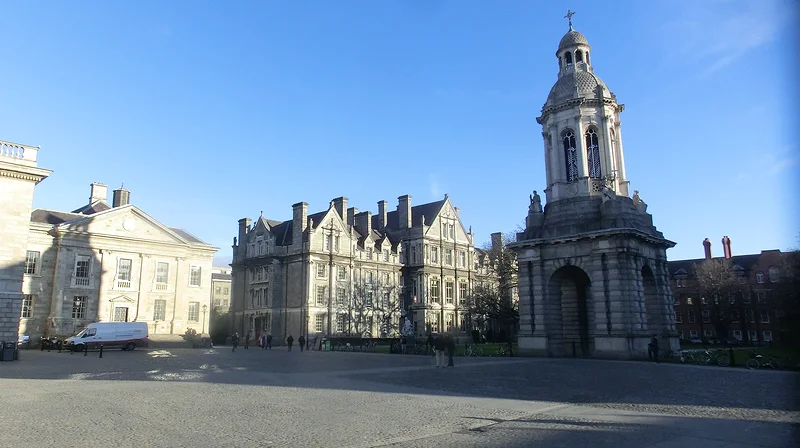
Among the must-sees, I'd strongly suggest going to admire Trinity College, the oldest university in Ireland. Founded in the 16th century, it has seen several illustrious students pass through its doors: Bram Stoker, Isaac Newton, Oscar Wilde, and even Samuel Beckett. The feeling of calm that washes over you as you step inside is intense and almost jarring compared to the frantic pace of the city. The old buildings give the place a slightly austere feel, though this is softened by the red brick covering some of the walls.
Aside from the chapel and the bell tower, don't miss the world-famous Old Library, which houses the equally famous Book of Kells, considered the most stunning illuminated manuscript in the world, no less! Other equally fabulous works are on display. And if you want your head to spin, take a peek inside the Long Room, where more than 200,000 books are archived, including an original copy of the Proclamation of the Irish Republic. Just so you know, entry to the Old Library isn't free, but it's open year-round except during the Christmas holidays.
Another stop to add to your list: Dublin Castle, whose Round Tower is the only part remaining from its original construction in the early 13th century. Subsequent renovations over the years did away with the rest of the original building. The castle has always played a major role in Dublin's history, serving as the official residence of the British monarchs until 1922. Today, the castle no longer displays the severed heads of its enemies. Instead, it hosted the signing of the peace accords with Northern Ireland in 1998 and is the venue for the inauguration of the President of Ireland. It's open to the public daily, though hours vary on Sundays and public holidays. Exploring the state apartments is also well worth the detour.

You also won't want to miss St. Patrick's Cathedral, located not far from Christ Church Cathedral. This gray-stone building stands facing red-brick houses, creating a striking contrast, especially if, like me, you visit on a rainy day. Built starting in the 12th century, it is said to stand on the site of the church where St. Patrick baptized the first converts. You might be quite surprised to find several references to Jonathan Swift here; the author of Gulliver's Travels actually served as dean of this major Protestant place of worship and is buried there.
If you want to soak up some Celtic culture, head over to the National Museum (the one on Kildare Street, not the one at Collins Barracks, which focuses on decorative arts and Ireland's economic history). Alongside impressive prehistoric collections and a section dedicated to the Vikings, you'll find superb Celtic jewelry. The museum offers a trip back in time, as it also features an exhibition on the struggle for independence.
And speaking of museums, you can wander down to the banks of the Liffey and check out the Guinness Storehouse. Housed in the company's former fermentation plant, it traces the history of Arthur Guinness and his famous beer. You'll also learn that he did a lot for the city, notably funding the restoration of St. Patrick's Cathedral and building housing for the poor. Be warned, though, admission is pricey (around 15 euros), even if a pint of Guinness is included.
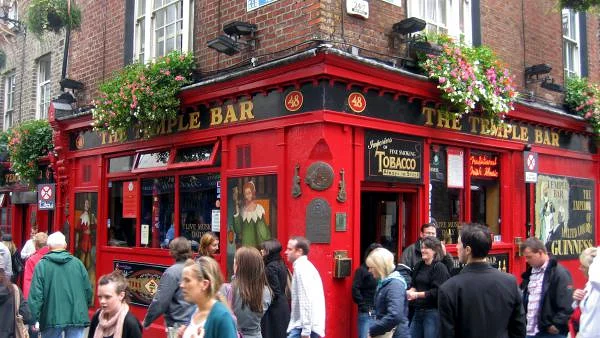
For the rest, and keeping with the beer theme, drop into one of the many pubs in Temple Bar, the city's liveliest neighborhood. You'll have plenty of options for a good time: grab a drink at the Brazen Head, Dublin's oldest pub, or the Temple Bar itself.
The city is also rich in other architectural gems, such as the Dublin Market (covered market), the Four Courts, and more...
You won't have to walk far to see it all!
The Connemara Region

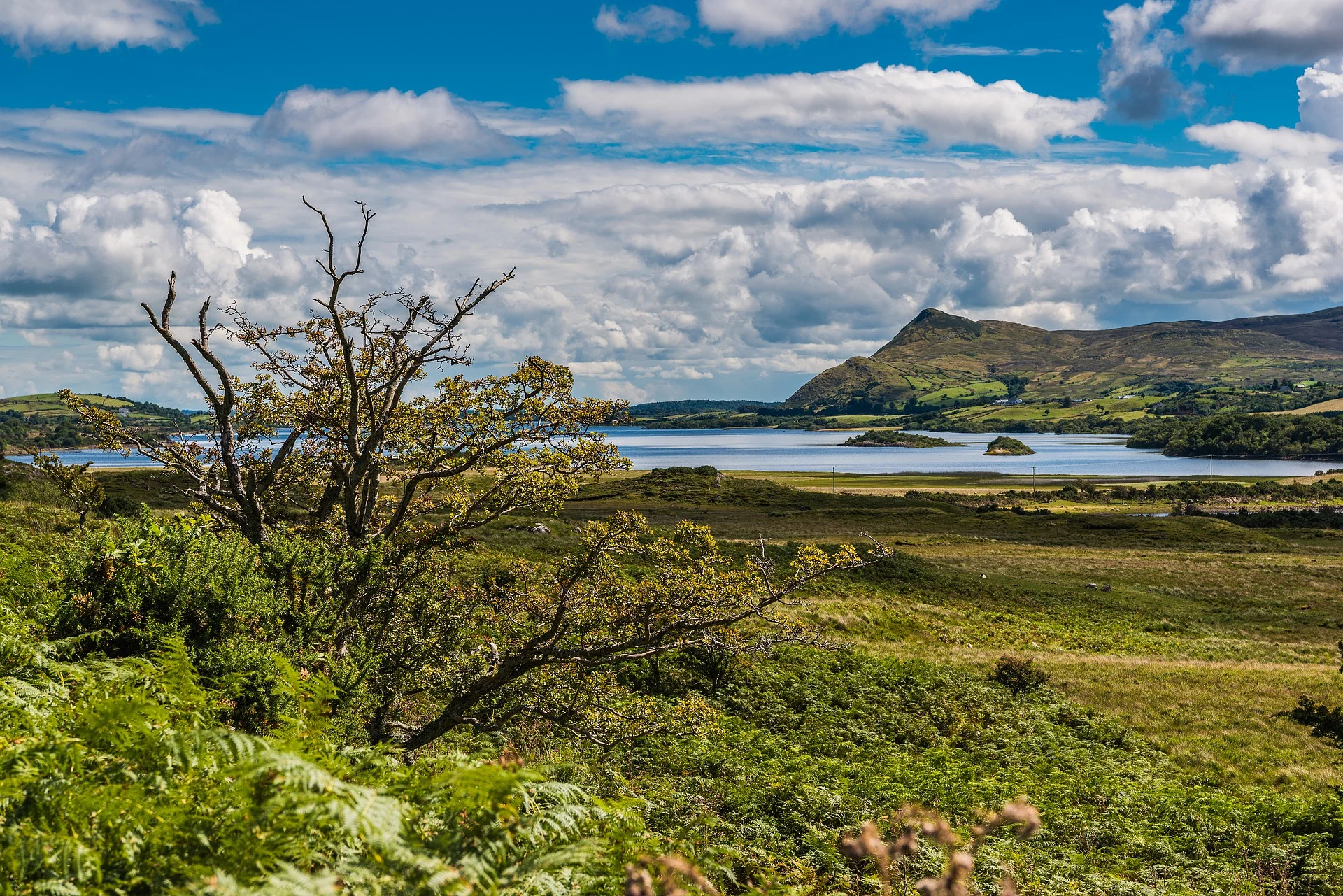
Heading toward Galway on Ireland's western coast, you enter a wild region of endless moorland. The feeling of being frozen in time is very strong here, largely because it's the largest area where Gaelic is still spoken daily (or Irish, as the locals call it).
The untamed beauty of the landscape is truly breathtaking, and the wind sweeping across the moors is invigorating. Small pastures enclosed by dry-stone walls are home to the famous Connemara ponies, the only ones hardy enough to adapt to the harsh local climate.
The landscape is truly surprising: near the coast, you first discover rugged terrain where the mountains and the sea seem to become one. The deeper you venture inland, the stronger the feeling that nature has reclaimed its rights, as everything feels hostile, harsh, and hardly suited for civilization. In any case, it invites quiet reflection…
Naturally, if you can, swing by Lough Corrib or the “Twelve Bens“ (the twelve peaks) right in the heart of the region. The torrents flowing down from them eventually form the lakes that you can then admire just about everywhere.
The Kerry Region

If I was already impressed by the landscapes of Connemara, I was completely dazzled by those of Kerry.
By following the route nicknamed the “Ring of Kerry“, you will drive about 200 km through breathtaking sights. This journey takes you all the way around the Iveragh Peninsula.
During our evening stay, our hosts explained that there are plenty of hiking opportunities in Ireland, especially in their region. For hiking enthusiasts and seasoned walkers, 200 km of trails (just as many as by car) await you on the Kerry Way!!
Mountains plunge into the ocean, moors are dotted with thistles, pine trees blanket entire valleys, and you will also stumble upon sandy beaches… In short, you will find every postcard-worthy landscape and all the romantic imagery you associate with Ireland. It is simply fantastic.
Just don't expect to enjoy it all by yourself: tourists are very numerous here, particularly at the scenic parking areas set up all along the road for stopping and taking photos.
The places are so stunning that I wouldn't even know what to recommend: around every bend, you discover a spot even more gorgeous than the last! If you have the time, head through the Dingle Peninsula and take the time to thoroughly explore Killarney National Park.
Kilkenny

Located southwest of Dublin, the medieval town of Kilkenny is famous for its red ale, its cathedral, and its castle.
Take a stroll over toward Ireland's oldest brewery on the site of St. Francis Abbey. The town is truly wonderful to explore on foot: the 12th-century fortified castle is very impressive, and the overall atmosphere plunges you right into medieval Ireland. Yet you will also find plenty of Celtic traces and runic stones scattered about. The cemeteries, in particular, pull you straight into the past with their distinctively shaped cross headstones.
This town allowed us to fill up on a final wave of memories before heading back toward Dublin and France. An incredible festive atmosphere fills the air here, giving us the feeling of getting a bit closer to the true Irish spirit.
In any case, I truly recommend this kind of trip: it offers a genuine taste of authenticity, personal encounters with locals, and leaves you feeling like you've learned so much about the country. And purely for the beauty of the landscapes and the country's rich history, I really encourage you to go take a trip there.

Comments (0)
No comments yet. Be the first!