
Hello everyone!
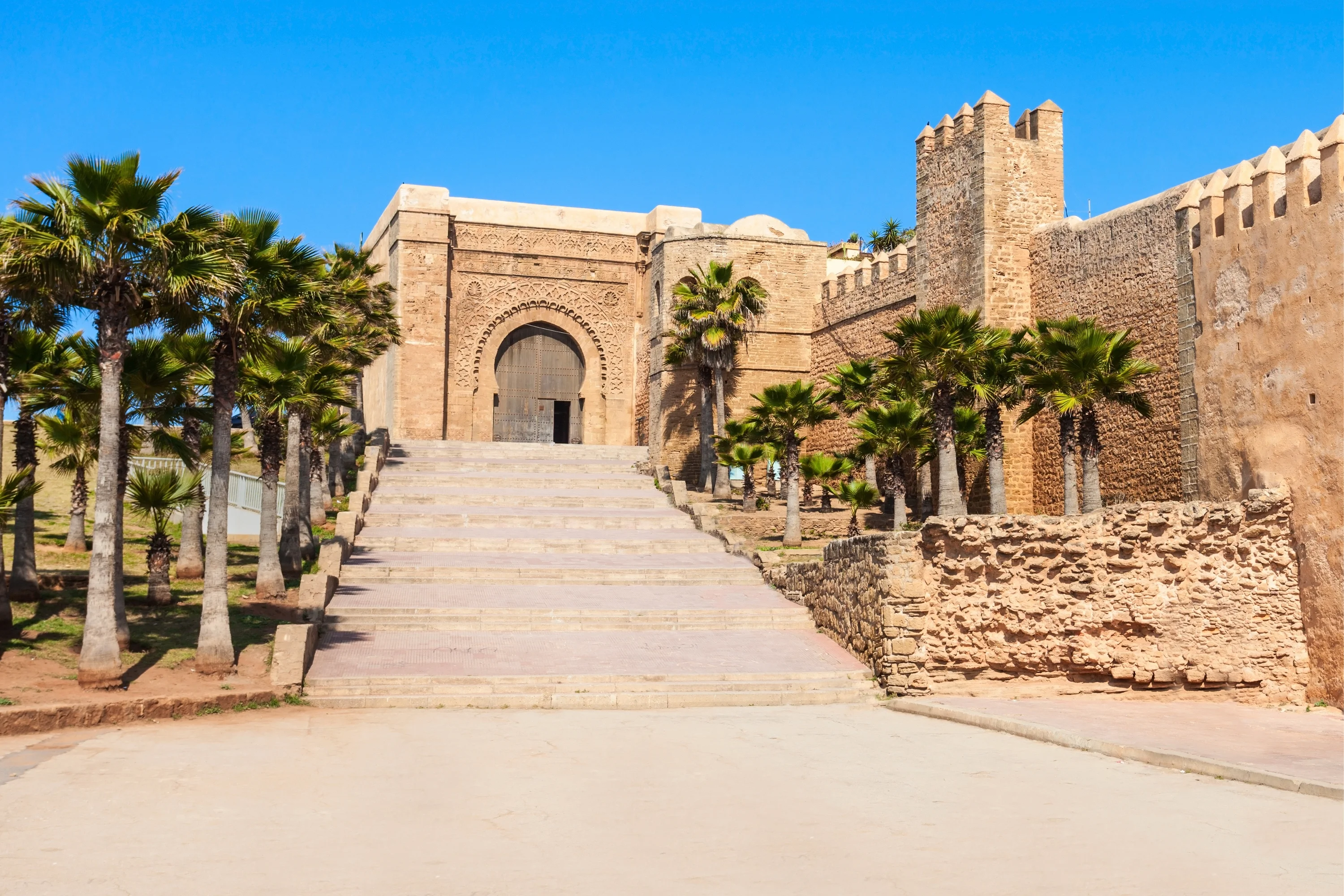
For work, I recently spent five days in Morocco, specifically in Rabat.
I wanted to share my experience with you, especially for those who might be planning a trip and want to get a feel for what to expect.
Pre-trip formalities
First off, as a reminder, I was there for business. We were well-supported and hosted, which helped minimize any risks. It’s worth remembering that the winds of revolution had only recently swept through the region.
Before you head out, do yourself a favor: check your government’s foreign travel advisory website to ensure travel is feasible and to see if there are any specific restrictions or warnings. You can check the official French site here (though you should look for your own country's equivalent):
http://www.diplomatie.gouv.fr/fr/conseils-aux-voyageurs_909/pays_12191/maroc_12289/index.html
In our case, we traveled just a few weeks before the unrest that would become known as the Arab Spring.
The site is a goldmine for information, especially regarding entry requirements. For instance, if you are traveling as part of an organized group with a professional travel agency, you might only need a valid national ID card. Even so, I highly recommend bringing your passport; it makes everything smoother, and it’s where the border authorities will stamp your visa.
Health
As for health precautions, there aren't many hurdles. I didn't need any preventative malaria treatment, which the foreign affairs website confirms, it’s not considered a high-risk area. Still, it never hurts to be cautious.
The usual common-sense rules apply, especially regarding drinking water.
Getting to Rabat
For our flights, we flew Royal Air Maroc on the way there and Air France on the way back. There are other carriers serving the region, such as Iberia, Jet4you, and Aigle Azur.
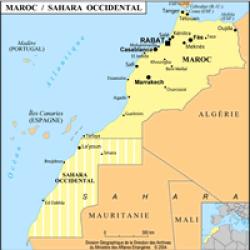
Once we landed in Rabat, we were taken to the city center (it’s just over 10 kilometers away, and I saw several transport options: taxis, expect to pay around 100 Dh, buses, or trains).
The currency is the Moroccan Dirham. As of today, 1 euro is worth 11.327 Dh.
Upon arrival, we were welcomed properly by our hosts. After picking us up at the airport, they brought us to a private room at their company office. We took off our shoes, sat on a rug, and were served tea, just like our colleagues.
There were dates, too. I didn't realize this was just the beginning of a long series of moments where we would share food and tea before getting down to business.
Local culture
When work allowed, we ventured out to enjoy the city. I was a bit surprised to see young men walking hand-in-hand, and I mentioned to one of our Moroccan colleagues that I was surprised, as I thought homosexuality was punishable by imprisonment. He laughed heartily, and I felt quite embarrassed when he explained that I was falling for stereotypes, for two men, walking hand-in-hand is simply a sign of friendship, or even esteem and respect. Later, during a formal visit, when I saw one of the Moroccan officials take the hand of one of our French delegates, I wasn't surprised at all and made sure not to crack a smile.
Otherwise, as is customary in Muslim countries, remember to always eat with your right hand, as the left is reserved for hygiene, particularly after using the restroom.
Conversations were always polite and courteous, mostly revolving around travel, France, and Morocco. It’s best, of course, to avoid controversial topics like religion, the King, or politics in general.
We eventually headed back to our hotel, our clothes still carrying the scent of the incense that had been burning nearby.
Exploring the city
The city is incredibly immersive: it’s bustling, vibrant, and colorful (while white buildings dominate the skyline, I have vivid memories of the colorful market stalls and the people). We had the chance to do some sightseeing, some of it official and polished, some a bit more authentic.
The Hammams
We took advantage of the hammams. I had been to them in France and enjoyed them, but here, I found a unique serenity in this highly structured practice. For men, bathing is usually in the morning, while women go in the afternoon. Generally, when women are inside, a towel is hung on the door. Don't try to test this separation rule, you’ll find yourself in a lot of trouble. One of my best memories (the massages were excellent!) was at a place located at 33, Avenue El Mehdi Ben Barka.
The Medina
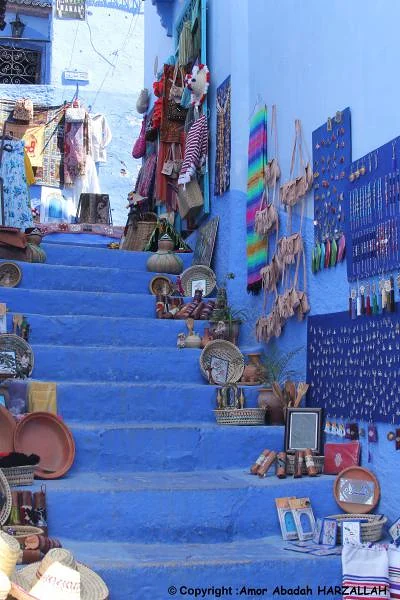
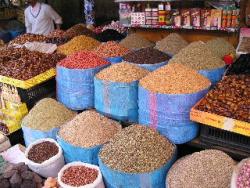 We also paid homage to tradition by visiting the souks. It’s the perfect place to find just about anything you want, like souvenirs for friends and family. To visit the souk, you need to head into the "old city," the medina. It feels very traditional, even if it isn't as sprawling as the ones in Marrakech or Fez, it’s "only" 50 hectares.
The Rabat medina was created by the Moriscos, Andalusians who were expelled from Spain in the 17th century and sought refuge in places like Rabat. Already protected by the Oudaya Kasbah and older walls, they built the Andalusian Wall, enclosing the entire area. The wall runs along what is now Avenue Hassan II, marked by several monumental gates.
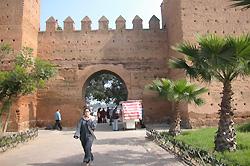
This medina remained largely untouched, even when Lyautey arrived to establish the French protectorate.
Kasbahs around Rabat
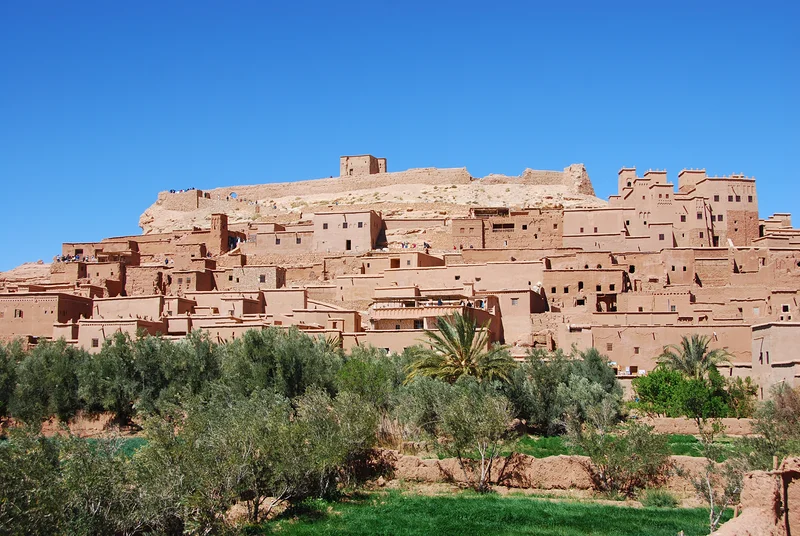
Speaking of kasbahs, I was lucky enough to get out of Rabat a bit and, during our 4x4 trips, stumble upon kasbahs built in the middle of palm groves. These were seats of power for local lords and served as shelters for nearby farmers in times of danger.
A kasbah is a massive fortress entirely dedicated to defense. You see them often; the Oudaya (or Oudaia) Kasbah in Rabat, which I mentioned earlier, is a beautiful example.
It’s worth a look. It actually gave the city its current name, it was a monastery (ribat) from which "soldier-monks" would set out to conquer the Christians.
Getting lost in the Medina
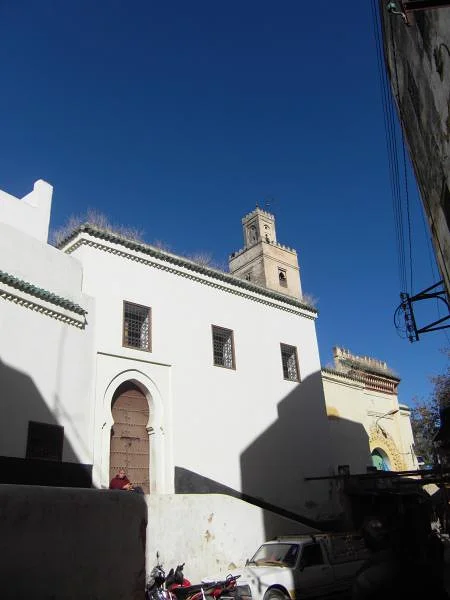
Without really meaning to, I got a bit lost in the medina, mostly because I let myself be drawn in by the market stalls (you don't really get lost in those "small" 50 hectares). Regardless, you can make some lovely discoveries there, like splendid doors and beautifully restored facades.
While in the medina, you’ll likely see the entrance to the Mekki Mosque with its octagonal minaret. Just a heads-up: you cannot enter mosques unless they are designated tourist sites.
Also, be careful when taking photos, especially of women, even if there’s a greater sense of freedom there than in other countries. A persistent camera could still make people uncomfortable.
The Riads
Of course, I couldn't talk about Morocco without mentioning the famous Riads. And honestly, some of them are simply stunning. I’m well aware that our hosts took us to particularly well-renovated and maintained spots, but I was still dazzled by the luxury and beauty of these places.
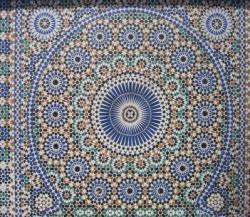
One memory comes back to me quite often. It’s a kaleidoscope of colors when I think of the mosaics or the zelliges (those geometric ceramic tiles you see everywhere). I recall the feeling of coolness while sitting around a fountain. I also remember the intricate woodwork on the doors, the moucharabieh screens, and the furniture. I still remember the bronze of a sharp, round shield and a saber (kilidj). I also remember the marvelous sky when I looked up. This country truly has something magical about it!
We even had the privilege of witnessing a drum and saber dance. It was very impressive. Men dressed in white, each carrying a square drum, sang while beating out hypnotic rhythms. Then, four other men appeared, took up sabers, and danced, sometimes miming combat scenes. The music intensified, and a flute added a trance-like quality. Honestly, it remains a memorable souvenir, I felt transported back centuries, imagining what Marshal Lyautey might have felt when he first discovered this country and its people.
The Triangle Garden
On very hot days, we did as many locals do in search of a cool breeze: we headed to the Triangle Garden, located between the medina and the new city.
Beyond the shade and the cool air, this garden is incredibly relaxing. When the sun is at its peak, people come alone or with family to walk in the shade, lounge on the grass (it seems allowed!), and sit on those famous benches with their distinct 1930s style.
The Chellah Necropolis
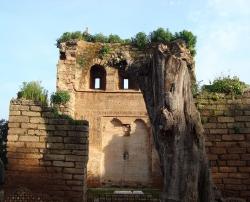 We also visited (though in a rush, as our hosts were behind schedule) the Chellah Necropolis, which bears witness to the Roman occupation of the city before the Merinids, of Berber origin, settled there to found their kingdom and create the city of Salé, which faces Rabat. Those interested can take a look at the tourism site for the Rabat region:
http://www.toutrabat.com/necropole-chellah-rabat.php
In short, this trip was far too short to see everything.
Morocco: A land of contrasts to explore
We realized that Morocco offers incredible riches and that tourists will definitely get their money's worth. But to really experience it, I think you shouldn't hesitate to travel from one city to another, as our hosts told us that each offers very different things and emotions. Apparently, Fez is nothing like Marrakech, Meknes isn't Rabat, and Tangier differs from Casablanca.
And I haven't even mentioned the hospitality of the Moroccan people, which was, as is often the case, marked by great generosity toward us.
I have such incredibly strong memories of the people I met, the sights, and the sensations that I only have one desire: to go back and take my time! I’m actually wondering about a longer journey. Does anyone have any advice for me? I’m all ears. What routes should I take? What are the most beautiful cities, the most authentic sites, the best museums? Should I try a trek or a trip into the desert? In short, I'm looking for anything that will help me plan an unforgettable trip.
Thanks in advance for your help!

Comments (2)