
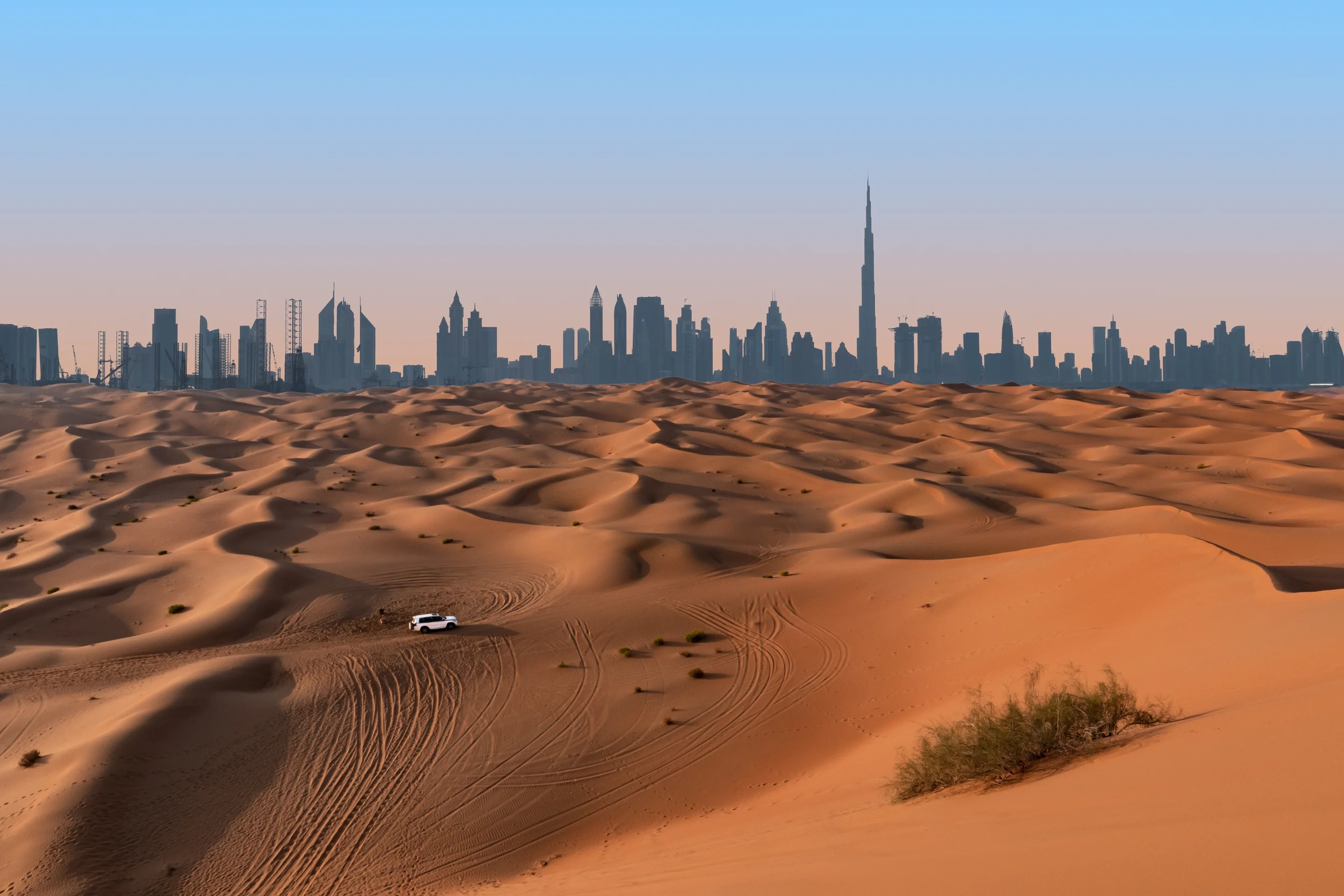
Five days, three emirates, one luxury car, and memories that will last a lifetime. When I decided to discover the United Arab Emirates beyond just lounging on a hotel deck chair, I didn't expect such an intense experience. Between the dizzying skyscrapers of Dubai, the pristine marble of the Sheikh Zayed Grand Mosque in Abu Dhabi, and the absolute silence of the Mleiha desert, this road trip gave me much more than just a vacation: it was a visual knockout at every turn.
I’m sharing it all with you, day by day, including my personal highlights, practical tips, and, most importantly, the experiences that are truly worth the splurge. Because yes, some things in the Emirates are expensive. But some are worth every dirham spent.
Day 1: Landing in the future, my first few hours in Dubai
Picking up my car: the real start of the adventure

My flight landed in the early afternoon at Dubai Airport. After the formalities (which were quick, I have to admit), I headed straight to the rental counter. For this road trip, I wanted a vehicle that could keep up with the Emirati highways, where gleaming SUVs and German sedans are the norm.
I had booked a few weeks before my departure through a specialized local agency to get the best value for money. I treated myself :) If you're interested, here is the link to book your BMW rental in Dubai on Renty.ae. My advice: don't wait to book, especially in high season (November to March). Good vehicles go fast and prices climb as the date approaches.
💡 Tip: Check that your contract includes unlimited mileage and the Salik toll passes (automatic system). It will save you from any unpleasant surprises when you return the car.
Keys in hand, I left the airport heading toward Downtown Dubai. First shock: Sheikh Zayed Road, that 12-lane highway lined with futuristic towers. It feels like being in a sci-fi movie, except it’s real and you’re cruising at 120 km/h (75 mph).
Downtown Dubai at sunset

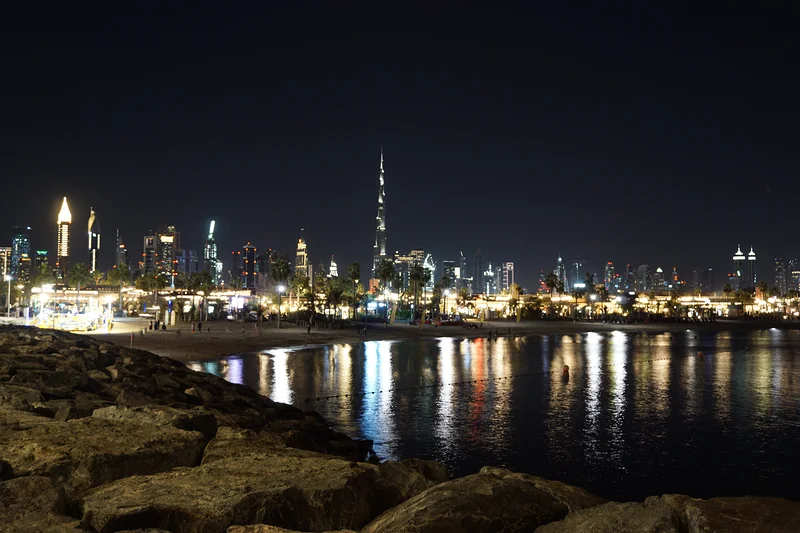
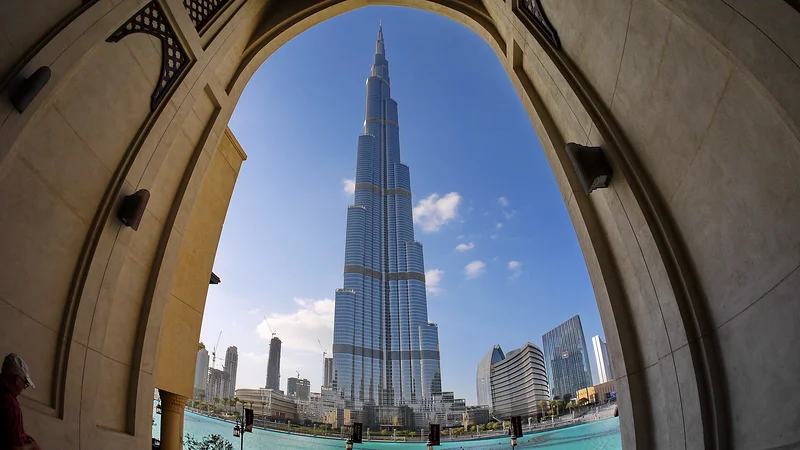
I dropped my bags at the hotel in the late afternoon, perfect timing to catch the golden hour at the Burj Khalifa. I’d seen pictures of this 828-meter tower a thousand times. In person, it’s something else entirely. It dwarfs everything around it, even though the neighborhood isn't short on impressive skyscrapers.
I opted for the trip up to At The Top SKY, the observatory on the 148th floor. More expensive than the standard access to the 124th floor? Yes, about 400 AED (€100). But the unobstructed view, the private lounge, and especially the lack of crowds are well worth the extra cost. You can take your time and really soak it in.
Back on the ground, I waited for nightfall to watch the fountain show in front of the Dubai Mall. Every 30 minutes, water jets dance to music, illuminated by thousands of lights. It’s free, accessible to everyone, and yet magical every single time.
My first memorable dinner: At.mosphere

For my first night, I had booked a table at the At.mosphere restaurant, located on the 122nd floor of the Burj Khalifa. The highest restaurant in the world, nothing less.
The bill? Expect at least 600-800 AED per person (€150-200) for a decent dinner with a glass of champagne. It’s expensive, clearly. But eating 442 meters above the ground with the city illuminated at your feet is the kind of experience you don't have every day.
⚠️ Important: Book several days in advance and ask for a window table. Without that, you’re paying top dollar for a view of... the restaurant dining room.
Day 2: Two faces of Dubai, from souks to yachts
Old Dubai: where it all began

An early wake-up call to discover a side of Dubai that many tourists skip: the historic Al Fahidi district. No glass towers here. Just narrow alleyways, traditional houses with wind towers (the ancestor of air conditioning), and cafes where time seems to stand still.
I crossed the Dubai Creek on an abra, those small wooden boats that shuttle people across for 1 dirham (€0.25). Yes, one dirham. In a city where everything seems to cost a fortune, this 5-minute crossing offers an unexpected contrast.
On the other side, the Deira souks were waiting for me. The Gold Souk first, where entire shop windows overflow with 22 and 24-karat jewelry. Prices are negotiable, but expect tough sellers. I spent a good hour wandering around, more for the spectacle than to buy.
The spice souk right next door is perfumed with saffron, cardamom, and incense. I bought a few souvenirs for a handful of dirhams. The atmosphere there is more relaxed, and the merchants are less pushy.
Jumeirah Beach and the iconic Burj Al Arab

A radical change of scenery in the afternoon. I headed to Jumeirah Beach to catch a glimpse of the Burj Al Arab, that sail-shaped hotel often marketed as "the only 7-star hotel in the world." In reality, a 7-star classification doesn't officially exist. It’s a 5-star hotel, but with a level of luxury that defies imagination.
You can't just walk into the hotel. But there is one option: book tea or a meal at one of its restaurants. Expect at least 500 AED (€125) for an afternoon tea. Excessive? Maybe. But it gets you inside this monument and is quite the sight to behold.
For my part, I preferred admiring the silhouette of the Burj Al Arab from the nearby public beach, feet in the sand. Sometimes, the best views are free.
Dubai Marina by night: private cruise

The evening was my big "treat yourself" budget item for the day: a private yacht cruise in Dubai Marina at sunset.
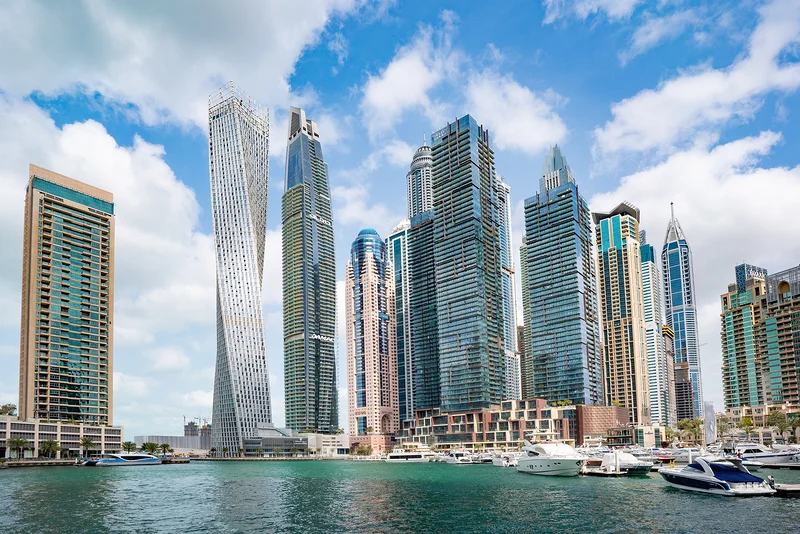
The concept is simple: you rent a yacht (starting from 600 AED for 2 hours, about €150, for the smaller models) and sail between the skyscrapers of the Marina, then toward Palm Jumeirah and the Burj Al Arab as seen from the sea.
The crew takes care of everything. Music, cold drinks, and especially that rare feeling of floating between two worlds: the calm water of the Gulf and that insane skyline gradually lighting up. It was there, glass in hand on the aft deck, that I truly understood the essence of Dubai: a place designed to create extraordinary moments.
Day 3: Road trip to Abu Dhabi, the capital of superlatives
A 1.5-hour scenic drive
On the morning of the third day, I left Dubai heading for Abu Dhabi, the capital of the Emirates. About 140 km of impeccable highway, with a 140 km/h speed limit on some sections. The GPS said 1h15, but I took a little longer to enjoy the scenery.
What strikes you on this road: the contrast between the ochre desert that stretches as far as the eye can see and the gigantic industrial installations that pop up from time to time. You pass by Jebel Ali, the largest man-made port in the world. A reminder that this region isn't just about tourism.
The Sheikh Zayed Grand Mosque: my absolute favorite

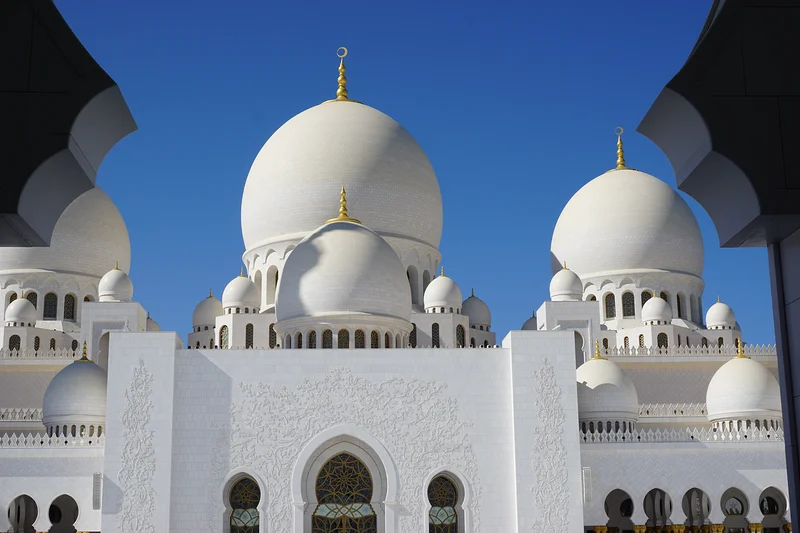
I’ll write this without hesitation: the Sheikh Zayed Grand Mosque is the most beautiful monument I visited in the Emirates. By far.
Imagine: 82 white domes, over 1,000 columns, Swarovski crystal chandeliers weighing several tons, the largest hand-woven carpet in the world (5,627 m²), and marble so white it becomes blinding under the sun. The complex can accommodate 40,000 worshippers. The numbers are dizzying, but it’s the harmony of the whole place that really leaves a mark.
I stayed for nearly three hours, much longer than planned. I paced through the galleries, photographed the reflections in the pools, and watched visitors from all over the world wandering in silence.
- Free entry: No reservation required, but bring a form of ID.
- Hours: Open every day except Friday morning. Arrive early (9 AM) to avoid the crowds.
- Dress code: Modest clothing is required. Abayas are provided for free to women at the entrance.
- Recommended time: At least 2 hours to enjoy it without rushing.
The Louvre Abu Dhabi and Qasr Al Watan

After the mosque, I moved on to the Louvre Abu Dhabi. The building designed by Jean Nouvel is worth the detour alone: a giant dome made of 8,000 metallic stars that filter the desert light. The "rain of light" effect inside is very well done.
The collections blend Eastern and Western works in an original chronological approach. Expect 63 AED for entry (about €16) and at least 2 hours for the visit.
Right next door, Qasr Al Watan (Palace of the Nation) has opened its doors to visitors only in recent years. It’s the presidential palace, and you can visit a part of it. The interior is insanely opulent: mosaics, monumental chandeliers, a library with 50,000 books. A dive into the pomp of Emirati power.
Emirates Palace: a gold-dusted coffee
To end this day in Abu Dhabi, I stopped at the Emirates Palace, one of the most expensive hotels ever built (3 billion dollars, they say).
Even without staying there, you can stroll through the lobby and, most importantly, treat yourself to the famous gold-leaf cappuccino at the Le Vendôme cafe. Price: about 65 AED (€16) for a coffee. Absurd? Totally. But the setting, the atmosphere, and the "I was there" factor make it a fun souvenir. And honestly, the coffee was good.
Back to Dubai in the late evening, with my head full of images.
Day 4: Sharjah and the Mleiha desert, the emirate we forget too often
Sharjah, the cultural capital of the Emirates
For this fourth day, I wanted to step out of the Dubai-Abu Dhabi duo that all tourists do. Heading to Sharjah, the emirate next to Dubai, only 20 minutes away by car.
The atmosphere changes immediately. Sharjah is more conservative (alcohol is prohibited there, for example), but also more authentic in a way. Less bling-bling, more culture.
I made a quick stop at the Museum of Islamic Civilization, housed in a renovated old souk. The collections trace the history of Islam and Arab science. Fascinating for anyone interested in the region, and a good bit of context before diving into the desert.
The Mleiha desert: far from the tourist safaris

In the afternoon, I hit the road toward Mleiha, about an hour from Dubai. That’s where I had one of the most striking experiences of the trip.
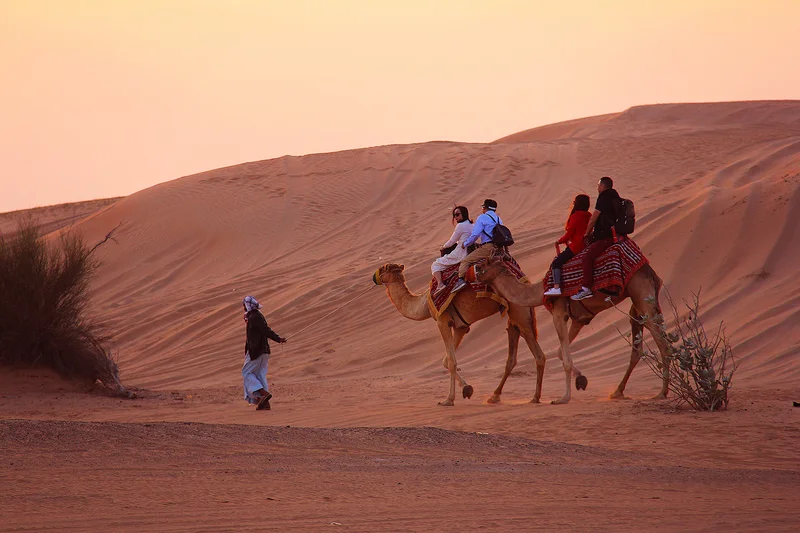
Mleiha is a desert listed as a UNESCO World Heritage site for its archaeological sites. Traces of human life dating back 130,000 years have been discovered there. But it’s also a landscape of golden dunes, spectacular rock formations like Fossil Rock and Camel Rock, and above all, a tranquility you no longer find in the classic tourist areas.
I had booked a premium safari through the Mleiha Archaeological Centre. I drove my rental car to the meeting point (normal road, no problem), then hopped into a Land Cruiser driven by Saeed, a local driver who knows every dune by heart.
⚠️ Good to know: You cannot go dune bashing with a rental car. Contracts strictly forbid it, and in any case, you need a special "desert driving" permit that tourists cannot obtain. Go through an agency; it’s the only legal and safe option.
The dune bashing itself is a life-sized rollercoaster. We climbed ridges, barreled down 45-degree slopes, and sand sprayed under the wheels. Saeed was smiling, Arabic techno music was blasting, and I was holding on for dear life. Twenty minutes of pure adrenaline.
Dinner under the stars in a Bedouin camp
After the safari, we headed to a private Bedouin camp set up in the middle of the dunes. There, everything slows down. I was served Arabic coffee with cardamom, dates, and then a full dinner with grilled meats, mezze, and freshly baked bread.
But the real moment of grace came after the meal. Lying on cushions, I looked up at the sky. Zero light pollution, thousands of stars visible to the naked eye. An astronomy guide (included in my premium package) pointed out the constellations, Mars, and Jupiter.
The silence of the desert at night is something physical. You can almost hear it. This evening alone was worth the trip.
| Safari type | Estimated price | Duration | Takeaway |
|---|---|---|---|
| Classic group safari (Dubai) | 150-250 AED | 5-6h | Friendly but touristy, crowded camps |
| Private Mleiha safari | 800-1500 AED | 5-7h | Quiet, unique landscapes, stargazing |
| Premium VIP safari | 2000+ AED | Custom | Private camp, gourmet dinner, total exclusivity |
Day 5: Palm Jumeirah and the grand finale
Driving on "the palm": the wow factor

Last day. I saved Palm Jumeirah for the end, like dessert.
Driving on this man-made, palm-shaped island is surreal. You drive up the "trunk," branch out onto the "fronds" lined with multi-million dollar villas, and at the very end, you reach Atlantis The Palm, that pink palace recognizable among a thousand.
I stopped at The Pointe, a complex of restaurants and shops facing the Atlantis. The spot is perfect for a morning coffee with a view of the hotel and, in the distance, the Dubai Marina skyline.
The Atlantis: diving into another world
I spent a good part of the morning at the Atlantis. Not to sleep (rooms start at 1500 AED per night), but to visit the Lost Chambers Aquarium.
This aquarium themed around the lost city of Atlantis is home to 65,000 marine animals. You wander through underwater tunnels, surrounded by rays, sharks, and multicolored fish. Entry: 135 AED (about €35). For families, it’s a must.
The Aquaventure Waterpark right next door is one of the largest water parks in the world. I didn't have time to go, but if you’re traveling with children or friends who love thrills, plan for a half-day.
Brunch at Saffron: the legend

For my last meal in Dubai, I opted for the Saffron brunch, the buffet restaurant at the Atlantis. I had heard it described as an institution, and I understand why.
The buffet is gargantuan: all-you-can-eat seafood, sushi, grilled meats, endless desserts, and above all, a festive atmosphere on Fridays (the traditional brunch day in the Emirates). Expect about 500-600 AED with drinks. It’s expensive, but it’s a meal you’ll remember.
Back to the airport: lessons from this road trip
Returning my car to the airport in the late afternoon, I took stock of these five days. What did this trip teach me?
First, that the Emirates are not just Dubai. Abu Dhabi has a different soul, more composed, more cultural. Sharjah surprises with its authenticity. And the Mleiha desert offers a moment of silence in a country that never sleeps.
Second, that some "expensive" experiences are truly worth their price. Not all of them. But dinner at At.mosphere, the night in the desert, the cruise in the Marina... Those moments stay with you.
Finally, that driving yourself changes everything. You go where you want, when you want. You stop for a photo, you improvise a detour. That freedom, in a country as well-equipped for driving as this, is a real plus.
Practical info for your luxury road trip in the Emirates
Realistic budget: what does it really cost?
Here is a summary of my main expenses for this 5-day stay:
| Expense category | Estimated amount | Comment |
|---|---|---|
| Car rental (premium SUV, 5 days) | 1500-2500 AED | Varies by model and season |
| Gas | 150-200 AED | Gas is cheap in the Emirates |
| Accommodation (4-5★ hotel, 4 nights) | 2000-4000 AED | Wide range depending on luxury level |
| Restaurants and meals | 1500-2500 AED | Including 2-3 high-end restaurants |
| Activities (Burj Khalifa, safari, cruise...) | 1500-2500 AED | Depending on chosen options |
| TOTAL | 6650-11700 AED | Approx. €1700-3000 |
This budget corresponds to a comfortable trip with some luxury experiences. You can do it for less by choosing 3-star hotels and avoiding fine dining. You can also spend much more by opting for palaces and exclusive VIP experiences.
Driving tips in the Emirates
Driving in the Emirates is surprisingly easy for anyone used to driving. The roads are excellent, well-marked, and the GPS works perfectly.
A few things to know:
- Speed: 120-140 km/h on highways, 60-80 km/h in the city. Speed cameras are everywhere, and fines are steep.
- Salik tolls: Automatic system in Dubai. Your rental car must be equipped with a tag. Check that fees are included in the contract or charged automatically.
- License: A standard driver's license is accepted for tourists. No need for an international permit.
- Alcohol: Zero tolerance. Do not drink if you are driving; the penalties are very severe.
- Parking: Paid in most tourist areas. Expect 2-4 AED per hour. Malls generally offer free parking.
💡 My advice: Download the RTA Dubai app before you leave. It shows parking, tolls, and helps you navigate the city.
When to go?
The best time to visit the Emirates is from October to April. Temperatures hover between 20 and 30°C (68-86°F), ideal for enjoying outdoor activities.
From May to September, it’s summer. It’s 40-50°C (104-122°F) and the air is stifling. Hotels offer rock-bottom prices, but honestly, spending more than 10 minutes outside is a feat.
Regarding Ramadan: this holy month (dates vary each year) involves restrictions on consuming food and drinks in public during the day. Restaurants remain open but with adapted hours. If possible, avoid this period for a first trip, unless you want to experience this particular cultural event.
The 5 luxury experiences worth every dirham

To summarize this road trip, here is my top 5 list of moments where I spent money without regret:
- Dinner at At.mosphere (Burj Khalifa): For the dizzying view and the unique experience of eating 442 meters above the ground.
- The night in the Mleiha desert: For the silence, the stars, and the total disconnection far from the urban hustle.
- Private cruise in Dubai Marina: For that feeling of freedom facing the illuminated skyline at sunset.
- Sheikh Zayed Grand Mosque: Free, but so grandiose that it deserves its place in this top list.
- Brunch at Saffron: To finish in style with a memorable feast facing the ocean.
These Emirates surprised me. I expected constant flashiness, but I also found beauty, silence, and genuine encounters. This road trip was my way of seeing the country differently, at my own pace. And honestly, I would do the exact same itinerary again tomorrow.
Have a great trip, and don't hesitate to ask me your questions in the comments!
Comments (0)
No comments yet. Be the first!