
A sacred islet between sea and legends
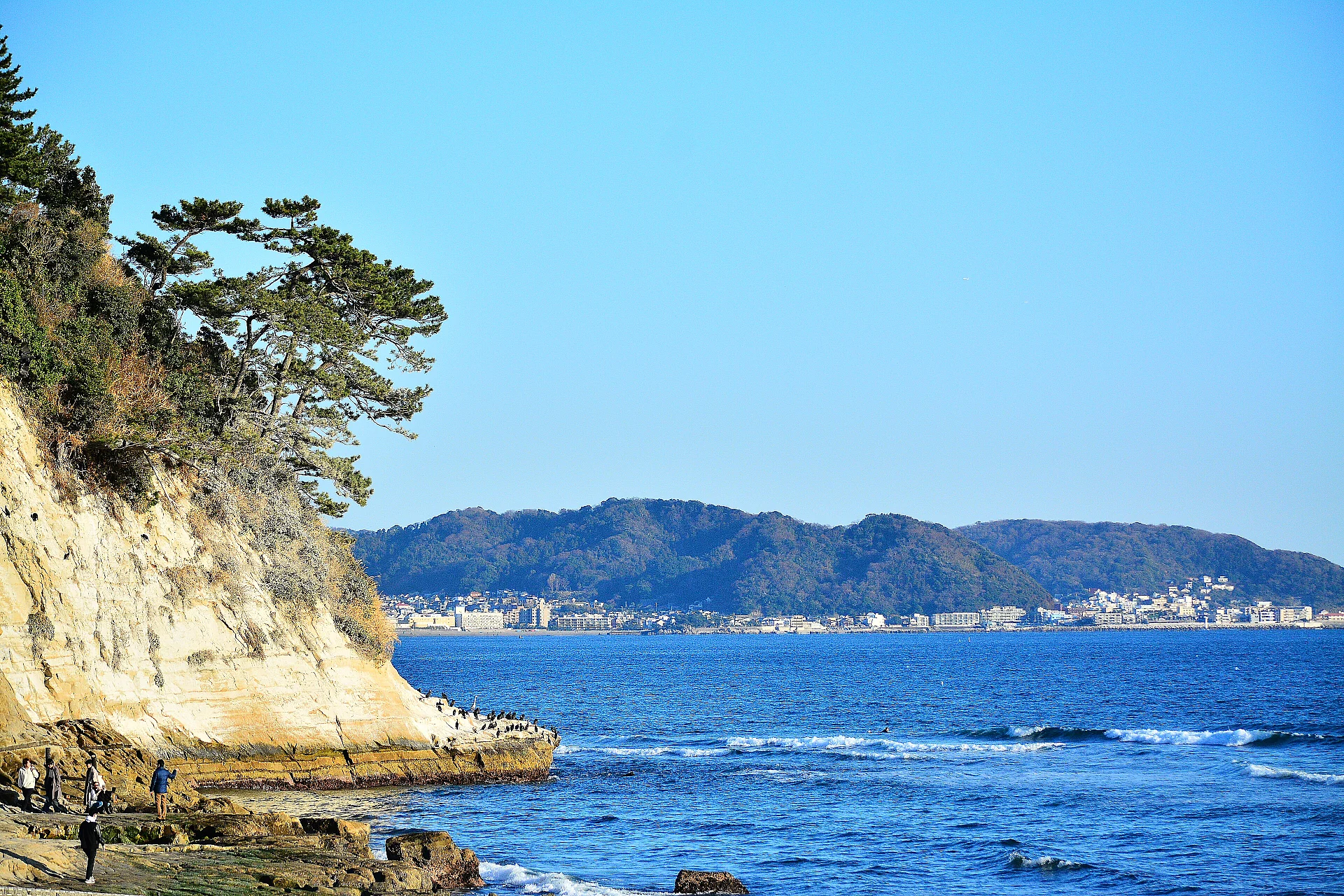
At the mouth of the Katase River in Sagami Bay, this small island measuring less than 4 km in circumference packs in shrines, sea caves, and cliffside gardens. Administratively attached to Fujisawa, it serves as the beating heart of the Shonan coastal resort region, offering a vibe similar to the lively beach towns of Southern California.
An island dedicated to a goddess
Legend has it that Enoshima emerged from the waves in the 6th century, shaped specifically to shelter Benzaiten, the goddess of music and arts. The Enoshima Shrine, spread across multiple elevations, traces this spiritual history spanning nearly fifteen centuries, with written records dating back to 1047 in a Buddhist text.
Caves carved by the waves
The Iwaya Caves, sculpted entirely by marine erosion, split into two separate galleries accessible for a small fee, with the first tunnel reaching 152 metres in depth and the second running 56 metres. Historically, these chambers served as a rigorous training ground for Buddhist monks.
A British botanical legacy
At the highest point of the island, the Samuel Cocking Garden owes its name to a British merchant who set up a power plant and botanical greenhouses here in the 19th century. While those early industrial structures are gone, the garden itself endures, welcoming upwards of 500,000 visitors every year.
To skip the steep stone staircases leading up to the garden, a three-stage outdoor escalator system called Luminous Way lets you ride to the top for a small extra fee.
Ideal for: shrine enthusiasts, casual day hikers, and couples looking for a scenic date spot.
Less ideal for: visitors with limited mobility, as the terrain turns rugged and steep almost immediately past the bridge and the initial shrine entrance.
An Olympic sailing hub
The Enoshima harbor hosted the sailing events for the 1964 Olympic Games, and returned to the global stage for the 2020 Games, cementing its long-standing maritime pedigree.
How long for this activity
Half a day