
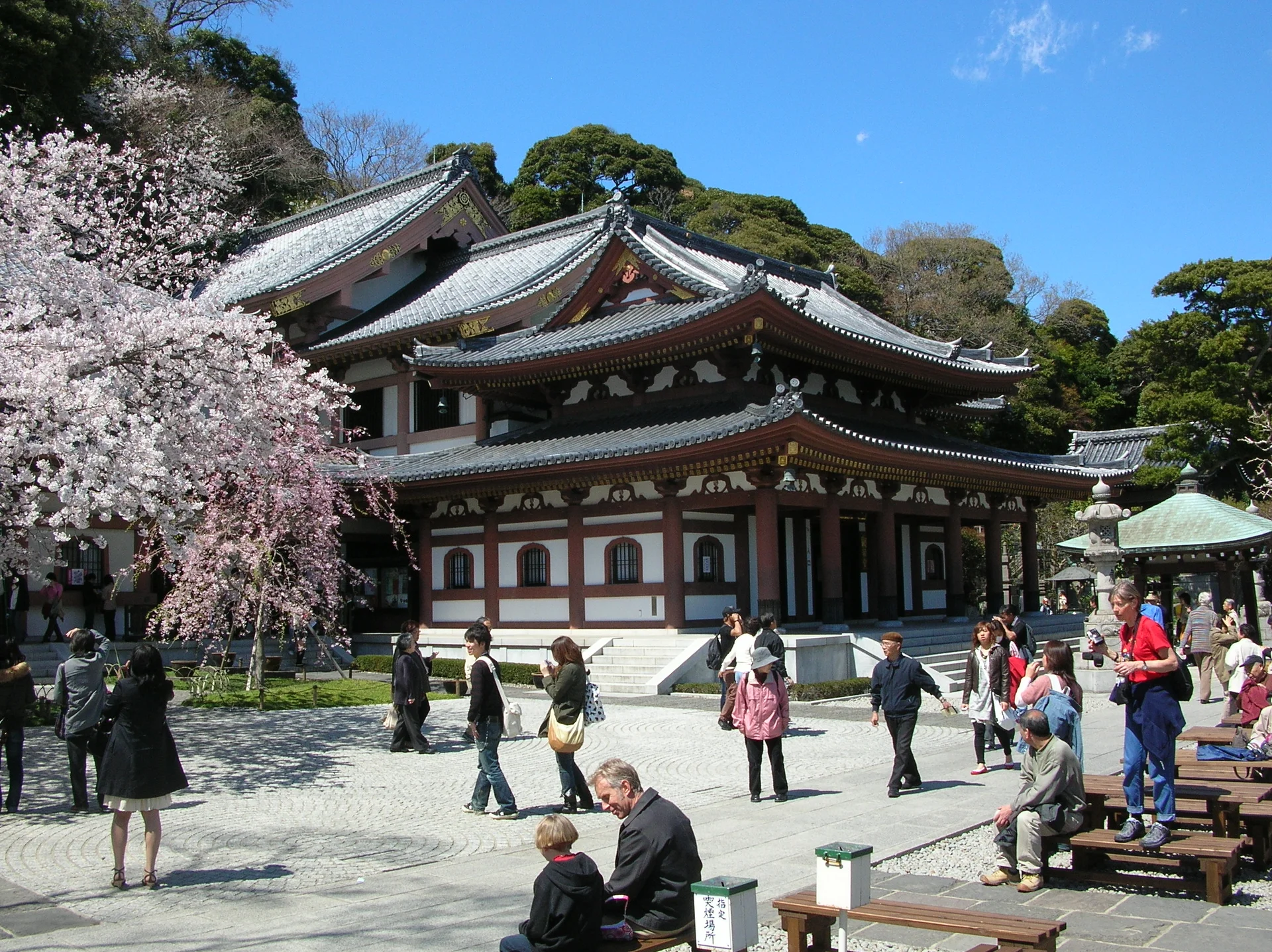
A 1,300-year-old statue
Visitors to the Hase-dera Temple in Kamakura primarily come to see a camphor wood statue, which ranks among the largest in Japan at 9.18 meters tall.
Gilded in gold leaf, it depicts Kannon, the Japanese name for Guanyin, the most popular Buddhist deity, shown here as a standing goddess in a state of enlightenment.
Beyond its impressive scale and material, the eleven-headed statue is said to date back to the year 721.
It marked its 1,300th anniversary in 2021.
According to a common legend in Japan, a twin statue carved from the same camphor tree is located at a temple of the same name in Sakurai, in the Nara Prefecture.
You can also view hundreds of small jizō statues on the temple grounds, where they serve as the protector bodhisattva of children.
These figures are dedicated to children who passed away at a young age and are the focus of a specific, reverent practice.
A scenic setting
Hase-dera Temple offers more than just its statues.
Every visitor is drawn to the elaborate Japanese garden located at the temple entrance.
Set on the lower level, it features ponds that create a quiet, gentle atmosphere suitable for reflection.
Following the winding paths leads to an elevated terrace that provides a clear view of the Sagami Bay.
It makes for a practical spot to relax with a picnic if the weather is clear.
To help with that, authentic local shops line the surrounding area, offering portable meals like bento boxes, which are convenient for a quick bite.
Finally, the Bentsen-Kutsu cave, carved directly into the hillside, offers an immersive experience for those interested in the mysticism of Eastern philosophies.
Numerous smaller statues are also found within this mysterious, rock-hewn space.
Opening hours
The Hase-dera Temple operates on two different schedules throughout the year. From March through September, you can visit between 8:00 AM and 5:30 PM. From October through February, the temple is open from 8:00 AM to 5:00 PM.

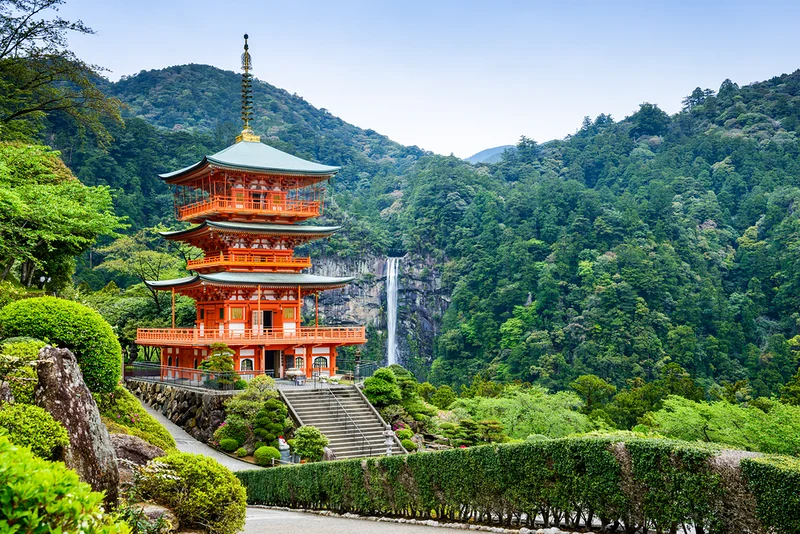
What I loved most about this temple is its beautiful garden with a panoramic view! It was very relaxing and keeps its charm all year round. You can also discover a significant number of Jizo statues there, dedicated to children who have passed away. But the place is not eerie or melancholic.
Furthermore, the main statue is very old, a real treasure! It is a beautiful place to discover Buddhist beliefs.