
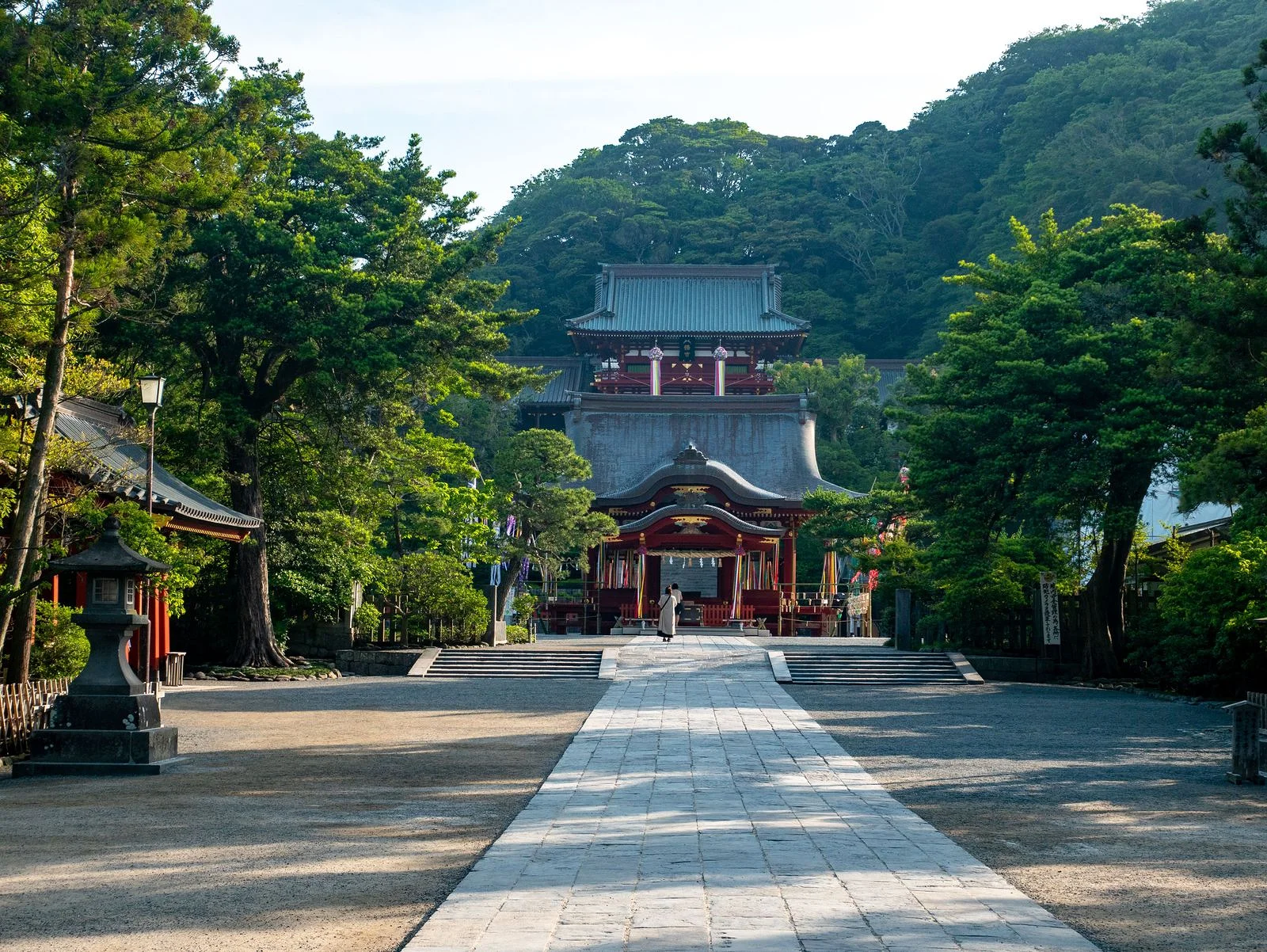
Visiting Tsurugaoka Hachiman-gū, warrior history and spirituality in Kamakura
Dominating the center of town, Tsurugaoka Hachiman-gū is the most significant Shinto shrine in Kamakura. Founded by the Minamoto clan in the 12th century, it embodies both religious devotion and the military past of this former samurai capital.
A monumental entrance in the heart of the city
From the train station, a wide path lined with torii gates and cherry trees leads to the shrine. This walkway, known as Dankazura, is particularly impressive in the spring, when the blooming trees form a pink tunnel for several hundred meters. At the end of the path, the shrine grounds open up with a pond decorated with small red bridges, often home to koi and turtles.
The area gets quite busy on weekends and during major Shinto festivals, but the scale of the site keeps foot traffic moving smoothly.
A site shaped by the history of Japan
Built in 1063 and moved to its current location in 1180 by Minamoto no Yoritomo, the founder of Japan's first shogunate, the shrine is dedicated to Hachiman, the patron god of warriors. The staircase leading to the main pavilion symbolizes both spiritual elevation and political power.
Key events from the feudal era took place here, and some structures on the site retain traces of that period. A small museum on-site displays armor, ancient calligraphy, and ritual objects related to the shogunate.
Religious life and seasonal landscapes
Beyond its historical importance, Tsurugaoka Hachiman-gū remains an active place of worship. Traditional weddings, New Year ceremonies, and festivals still draw many devotees. The annual Yabusame festival in September features mounted archers firing at targets while galloping down the central path, perpetuating this ritual samurai practice.
Outside of major events, the shrine offers quieter corners, particularly around the lotus ponds in summer or in the small peony garden. The entire complex remains picturesque throughout the year, with views of the city from the top of the stairs.
Opening hours
| Monday | 06:00-20:00 |
|---|---|
| Tuesday | 06:00-20:00 |
| Wednesday | 06:00-20:00 |
| Thursday | 06:00-20:00 |
| Friday | 06:00-20:00 |
| Saturday | 06:00-20:00 |
| Sunday | 06:00-20:00 |
*Information subject to change

A very beautiful shrine, with its gardens and ponds. If you get the chance, visit on the second Sunday of April. The Kamakura Festival is held there. You can see traditional acrobatics, horseback archery, and even a dance in period costumes. It is, in fact, the place where Shizuka Gozen, a tragic heroine of the medieval period, is said to have danced. In any case, it is a pleasant and lively place all year round!