
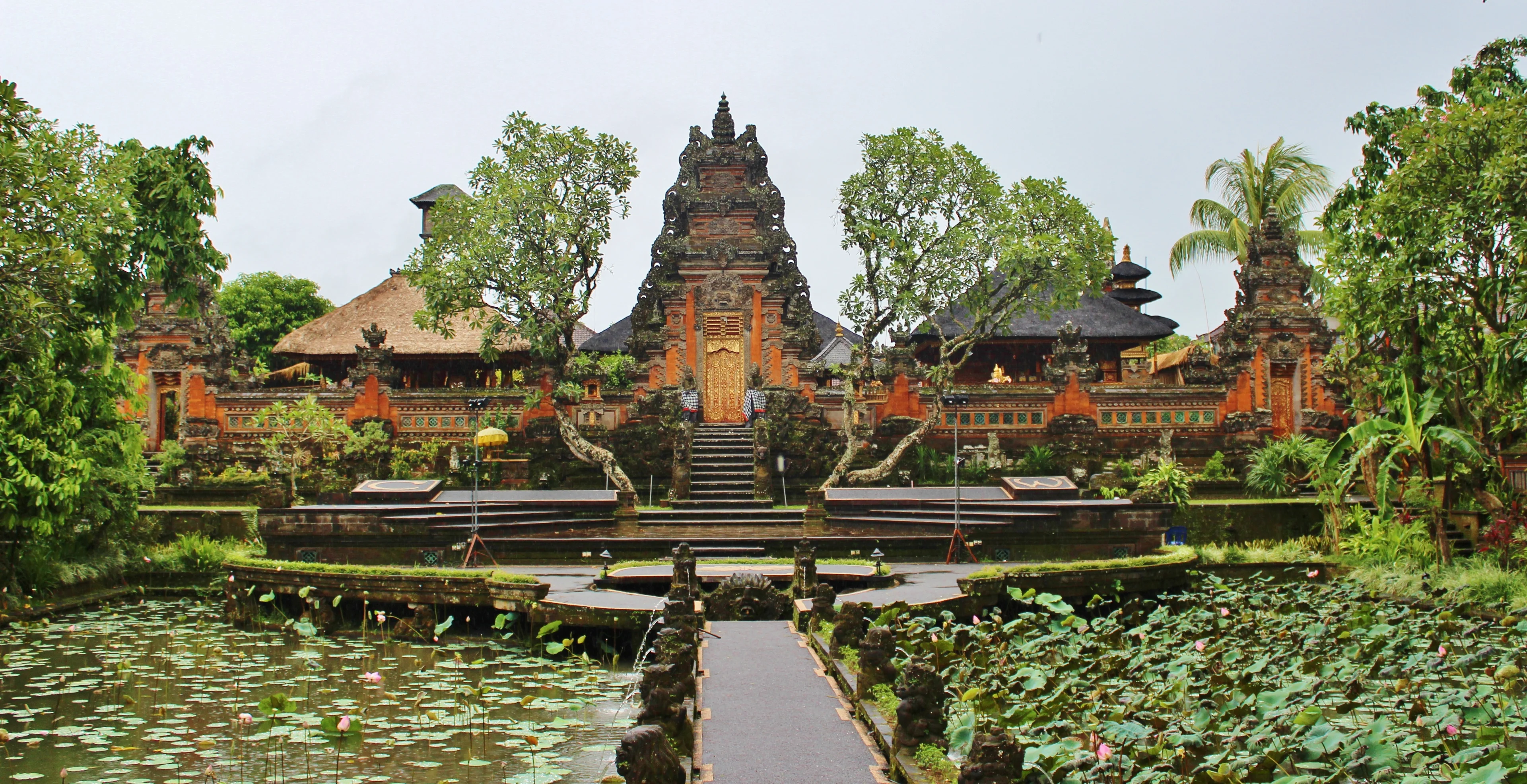
Ubud

Top 5 most beautiful cities in Bali to visit2026 ranking

Discover the most appreciated cities in Bali by our members. Feel free to publish your own reviews to take part in this collaborative ranking.

The most beautiful cities in Bali

#1 Ubud +14 recs

As the cultural heart of Indonesia, Ubud is famous for its terraced rice paddies, ornate temples, and traditional crafts. Located in the center of the Hindu island of Bali, this artistic hub sits at the confluence of two rivers. You can catch performances of legong and gamelan, the local dance and music, or spend your time exploring the many art galleries. Nature lovers will find plenty to explore here as well, with tropical forests surrounding the town. The name Ubud literally translates to medicine, reflecting a long history of traditional healing. This legacy continues today through the abundance of hiking trails, yoga studios, and spas. You might even find yourself trying a four-hand Balinese massage or digging into local specialties like nasi goreng (fried rice), bebek betutu (slow-cooked duck), and babi guling (Balinese-style roast pork).

The climate is tropical and equatorial, with a dry season from April to October and a wet season from November to February. Heavy rain is most common during January and February.

A jungle downtown, respecting nature and macaques

Start your visit at the Monkey Forest Sacred Sanctuary, located in a wooded area that houses a temple of the dead and evil spirits. Out of respect for local superstition, no one enters the temple grounds. You can still admire the intricate Hindu sculptures and the lively atmosphere. Just stay alert around the thousands of monkeys living here. They are drawn to anything shiny or edible. If you want to feed them, only do so in the presence of monkey experts, who are employees of the nature reserve.

Next, head to the fine arts museum, Purilukisan Museum. You will discover the kamasan painting style along with the work of Nyoman Lempad and Aries Smith. In the evening, make your way to the Puri Saren Ubud, the Royal Palace that marks the center of the village. It hosts impressive traditional performances.

A short distance away, Lempad’s House is worth the stop. This was the home of the renowned Balinese artist Gusti Nyoman Lempad, who lived to be 116 years old. Another notable residence is the Walter Spies House, named after the Moscow-born artist who invited celebrities like Charlie Chaplin to stay there. Today, it is open to everyone as the Campuhan hotel.

Art is everywhere

The Neka Art Museum is a private institution that chronicles the history of Balinese painting and the impact of Western influences on the craft. You will appreciate the educational exhibits, the clear timeline, and the impressive selection of international works.

Art enthusiasts should also visit the museum of Antonio Blanco, often called the Dali of Bali. The setting is a beautifully maintained mansion. His works, some of which are erotic, were once targeted by censors. After touring the studio, grab a drink on the terrace of the Bridge Café. The view overlooking the river and the gardens is quite pleasant.

Down below, do not miss the Pura Gunung Lebah temple, set in a lush environment that is perfect for relaxing.

How to get there

Airlines including Qatar Airways, Singapore Airlines, and Cathay Pacific offer service from major US hubs to Denpasar with stops in cities like Singapore, Hong Kong, or Doha.

How to get around

Purchase your Blue Bird taxi ride at the airport, which is the national company, for a fixed rate of ±300,000 Rp (about $19). Expect a travel time of 1.5 to 2.5 hours depending on when you arrive. Traffic in Bali is very dense, and you will rarely drive faster than 20 mph.

Ubud is compact and pleasant, making it easy to see on foot. To reach the rice paddies, rent a bicycle or a scooter for ±30,000 to 50,000 Rp per day (about $2 to $3).

Must-see

#2 Tegallalang +3 recs

Tegallalang sits in the Gianyar province on the island of Bali in Indonesia. It is known for its terraced rice paddies, a traditional agricultural layout carved into hillsides at an altitude of 600 meters. Perfectly positioned between the town of Ubud and the sacred Lake Batur, it is a standard stop for anyone traveling through Bali.

Beautiful rice fields in Indonesia

The rice terraces of Tegallalang rank among the most visited sites on the island of Bali. They operate on the Subak principle, an agricultural management system created in the 9th century by the saint Rsi Markandeya that is specific to Indonesia. In this complex water distribution system, priests oversee irrigation and farming schedules. You can take scenic walks through the Tegallalang rice paddies, often for a small entrance fee of around 25,000 IDR (about $1.60). In recent years, swings and a zipline have been added to accommodate the rise in tourism.

To relax after exploring the fields, head to the sacred springs of Tirta Empul, built in 1957 by the first Indonesian president Soekarno in the Tegallalang region. While the water in the bathing pools is quite cool, it is believed to purify those who bathe in it, as the temple is dedicated to Vishnu, the Hindu god of water. Be sure to properly knot your sarong before entering the site.


Artisan capital of Bali

Along with the nearby small village of Pakudui, Tegallalang is famous for its thriving craft scene focused on wood carving techniques. This local art is passed down through generations, and their creations, including bowls, dishware, and small decorative items, are sold globally. You will likely find something to take home at the town market.

Regarding religious heritage, the area around Tegallalang was once home to a powerful Brahmin caste. In Manuaba, a small village a few miles from Tegallalang, you will find the Pura Griya Sakti temple, built in the 17th century. Among the temples to see in this part of the island, do not miss the Lake Batur temple, perched in the middle of the caldera at an altitude of 1,000 meters. The Gunung Kawi temple in Tampaksiring is another essential stop. Built in the 10th century, it features a dozen mausoleums carved directly into the rock face, within cavities nearly seven meters high. The tombs hold members of the royal family from that era. Note that to reach Gunung Kawi, you must climb a total of 230 stone steps that wind through lush rice paddies.

When to go

The best time to see the rice paddies of Tegallalang is right before the harvest, specifically in May and June or between September and November.

How to get there

The best way to reach Tegallalang is by motorized vehicle, either a car or a scooter. Additionally, many local agencies organize their own shuttle excursions directly to the rice terraces.

#3 Karangasem +3 recs


Karangasem is a regency located on the far eastern side of the island of Bali in Indonesia. It served as the seat of a historically powerful Balinese kingdom. The rulers took the name Anak Agung, a direct reference to Mount Agung. At 10,308 feet, this is the highest volcano on Bali, and the ruling dynasty considered it the center of the world. By the 19th century, the nine kingdoms of Bali had gradually fallen under Dutch administrative control. The Besakih temple, the most significant on the island, and the vestiges of Semarapura remain as markers of the grand history of Karangasem's sovereigns.


Surrounding areas: remnants of a kingdom

On the road to Karangasem, stop at the historic site of Klungkung, or Semarapura, which holds the remains of the former royal capital. Its courthouse, built in 1710, is packed with traditional Balinese frescoes, carvings, and paintings. The site preserves a deep cultural and ritual legacy from the Anung dynasty. Closer to Karangasem, a trip to Tirtagangga is essential. This water palace was founded in the mid-19th century by the Rajah of Tampalura. After suffering damage during the 1963 eruption of Mount Agung, the pools and gardens were carefully restored for public access. In a similar vein, the Soekasada Ujung water palace is worth the detour. Built right on the coastline, it once served as an observation point for monitoring maritime traffic coming from the neighboring island of Lombok.

The Karangasem region is dense with temples. The nearest is Lempuyang Luhur, a complex dedicated to Shiva that consists of seven distinct temples. Be prepared for a climb of 1,700 steps to reach the top. Not far away, on the slopes of Mount Agung, stands the most sacred temple in Bali: Besakih. It encompasses nearly 80 individual temples scattered across a wide area, all dedicated to the three major Hindu deities, Brahma, Vishnu, and Shiva.


Eastern Bali: rice paddies and the coast

Experience the local geography of Karangasem by hiking in Sidemen, a lush valley filled with vibrant green rice terraces. For those looking for a physical challenge, you can arrange a trek to summit Mount Agung.

The Karangasem coastline is equally striking. The small village of Amed, with its black volcanic sand beaches, offers a quiet, authentic atmosphere. Beyond the beaches, diving enthusiasts should head to Tulamben, a coastal spot known for exceptional marine life. Resting on the seafloor here is the wreck of the Liberty, an American cargo ship sunk by a Japanese submarine in 1942 during World War II.


When to go

Plan your trip to Bali during the dry season, which runs from April through September.


Getting there

From Denpasar, where the international airport is located, you can take a taxi or a shuttle to Karangasem. Alternatively, renting your own vehicle gives you the freedom to explore the rest of the island at your own pace.

Must-see

#4 Tabanan +3 recs

Tabanan serves as the capital of the district of the same name, a rice-growing region on the island of Bali tucked between the Batukaru mountains to the north and the island's west coast. During the colonial era, the Dutch government recognized Tabanan as one of the eight official Balinese kingdoms. The city itself does not hold much for the average traveler, but the surrounding countryside is dense with sights, from the Jatiluwih rice terraces, a designated Unesco World Heritage site, to the wave-battered Tanah Lot temple.


The rice-growing region of Tabanan

The landscape around Tabanan is defined by lush green terraces and traditional farming. Before or after your trip to Jatiluwih, stop by the Mandala Mathika Subak Museum in Tabanan, which details the subak system, an irrigation method invented in 9th-century Indonésie. Every rice paddy owner receives water from a shared canal branch, which allows for coordinated water distribution among all farmers. At the center of every subak sits a water temple, as the system relies on a deep intersection of nature, culture, and religion. Because rice is viewed as a divine offering, every step of planting and harvesting involves sacred rituals. This is the Tri Hita Karana, a Balinese concept describing the relationship between nature, humanity, and the divine.

In Tabanan itself, stop by the local market or grab lunch at one of the many warungs, small family-run shops serving rice-based dishes. You can also visit the Bali Butterfly Park, a nearly 3,500-square-meter reserve that houses hundreds of butterfly species, including several that are endangered.


Temples of the Tabanan region

A few miles from Tabanan along the coast, you will find the iconic Tanah Lot, or Sea Temple, perched on a rock formation surrounded by the ocean. It is said to be the work of Nirartha, a 15th-century Buddhist priest. The Taman Ayun temple, built in 1634, is located in the neighboring town of Mengwi. It is a large temple complex that originally belonged to a powerful local family. The grounds are filled with gardens and merus, the multi-tiered pagodas that symbolize the sacred Hindu mountain.

If you have time to venture further, head toward Lake Bratan, a high-altitude lake where you can see the Ulun Danau water temple, built in 1663 to honor the goddess of lakes and rivers, Danau. The final temple to see in the Tabanan region is Pura Luhur Batukaru, a sanctuary built into the mountainside surrounded by jungle in the 11th century by the holy man Mpu Kuturan.


When to go

The best time to visit the Tabanan regency is during the dry season, which runs from May through October.


How to get there

The airport for Bali is located in the neighboring city of Denpasar. From there, you can take a bus or a taxi to reach Tabanan. Many hotels also offer shuttle services for guests.

Must-see

#5 Denpasar +2 recs

As the capital of Bali, Denpasar is the primary entry point for many arriving on this Indonesian island. While it lacks the coastal appeal of the beach towns, the city is worth at least a day or two of your time.

History, art, and religion

Denpasar serves as the administrative and economic hub of Bali, yet it retains a provincial feel despite its capital status. The modern architecture is functional rather than aesthetic, and the traffic can be intense, which is why most travelers skip the city entirely to head straight for the coast. However, the city holds real substance for those interested in history, art, and local traditions. The Bali Museum (Museum Negeri Provinsi) is essential for its collections covering various Balinese regions and eras. You will find traditional costumes, weaponry, jewelry, household artifacts, masks, and textiles. The museum offers a deep look into the past of Denpasar and its surroundings. As the former capital of the Badung Kingdom and a site of Dutch colonization in the early 20th century, the city is a repository of Balinese history. Like the rest of the island, it is dotted with temples, including Pura Maospahit, Pura Agung Jagatnatha, and Puri Pemecutan.

Performances, markets, and food

For a look at the local art scene, head to the Taman area to visit the Werdhi Budaya Art Center. It features two large open-air amphitheaters that host nightly kecak dance performances, alongside theater, concerts, and modern dance. The center also frequently holds exhibitions. Denpasar is a high-energy city, and its markets are the best place to experience that intensity.

The Pasar Kumbasari is known for its fabrics, while Pasar Badung is the place to look for furniture and woven rattan goods. You will find plenty of local handicrafts to bring home. The night market is particularly popular with locals for grabbing a meal right at the stalls. Try mie goreng (stir-fried noodles) or nasi goreng (fried rice), followed by fresh, local tropical fruit for dessert.

When to go

The best months to visit Denpasar are May, June, September, and October. The weather is pleasant with lower humidity, and the crowds are thinner than in July and August. You should avoid those peak summer months if possible, as prices can jump by 50 percent (roughly 2,000,000 to 3,000,000 IDR or $130 to $195 per night for mid-range lodging). However, if you are in Denpasar in July, do not miss the colorful kite festival.

Getting there

There are no direct flights from the US to Denpasar, so expect a travel time of at least 20 hours with one or two layovers. For airfare, expect to pay between 8,500,000 and 10,200,000 IDR (about $550 to $650) during the off-season, with higher prices during the busy summer months. The Ngurah Rai International Airport is located about a 30-minute drive from the center of Denpasar.

Latest reviews

A true paradise on Earth

I completely fell in love with Ubud, on the island of Bali in Indonesia. Located in the middle of rice paddies, it is a haven of peace, popular with Westerners looking for relaxation and digital nomad…

39 0

Beautiful area to see

The town of Ubud itself is very interesting to visit, with its pretty temples and its monkey forest that families will love. I especially enjoyed the bike tour we did to visit the rice terraces. Reall…

28 0

Discovering Indonesian culture

If you want your vacation in Bali to help you learn a little more about Indonesian culture, I recommend spending a day or two in the Balinese capital. Markets where you will see local crafts (furnitu…

25 0

Great activities

Parties, beaches, culture, spirituality, nature, everything is right there or in the surrounding area

20 0

Rankings by travellers, for travellers

Our rankings are powered by thousands of reviews from travelers like you, not the arbitrary pick of a single editor. Every positive review you publish raises the destination’s score.

1 positive review = +1 reco

Your voice matters!

Have you travelled and discovered amazing places? Share your experience and help the community rank the most beautiful destinations! Sign up for free to post reviews and make your voice heard.