Visiting Tabanan
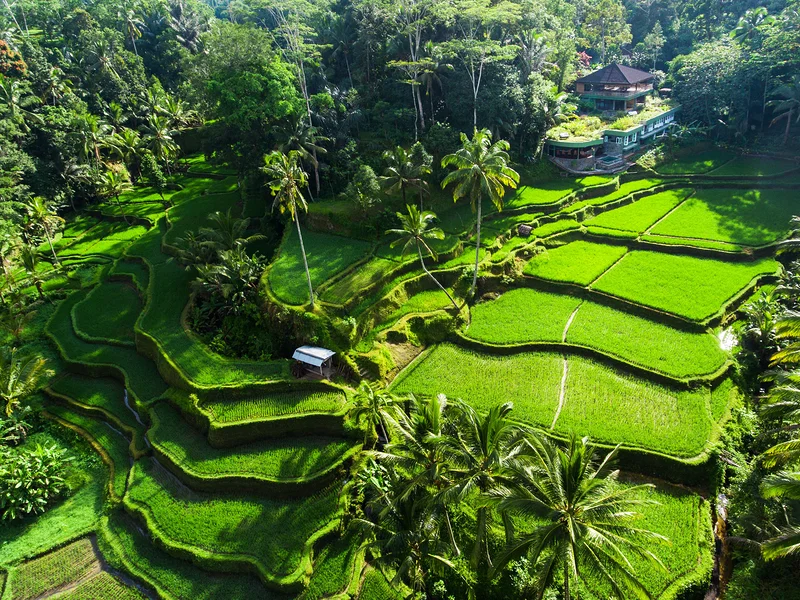
Tabanan serves as the capital of the district of the same name, a rice-growing region on the island of Bali tucked between the Batukaru mountains to the north and the island's west coast. During the colonial era, the Dutch government recognized Tabanan as one of the eight official Balinese kingdoms. The city itself does not hold much for the average traveler, but the surrounding countryside is dense with sights, from the Jatiluwih rice terraces, a designated Unesco World Heritage site, to the wave-battered Tanah Lot temple.
The rice-growing region of Tabanan
The landscape around Tabanan is defined by lush green terraces and traditional farming. Before or after your trip to Jatiluwih, stop by the Mandala Mathika Subak Museum in Tabanan, which details the subak system, an irrigation method invented in 9th-century Indonesia. Every rice paddy owner receives water from a shared canal branch, which allows for coordinated water distribution among all farmers. At the center of every subak sits a water temple, as the system relies on a deep intersection of nature, culture, and religion. Because rice is viewed as a divine offering, every step of planting and harvesting involves sacred rituals. This is the Tri Hita Karana, a Balinese concept describing the relationship between nature, humanity, and the divine.
In Tabanan itself, stop by the local market or grab lunch at one of the many warungs, small family-run shops serving rice-based dishes. You can also visit the Bali Butterfly Park, a nearly 3,500-square-meter reserve that houses hundreds of butterfly species, including several that are endangered.
Temples of the Tabanan region
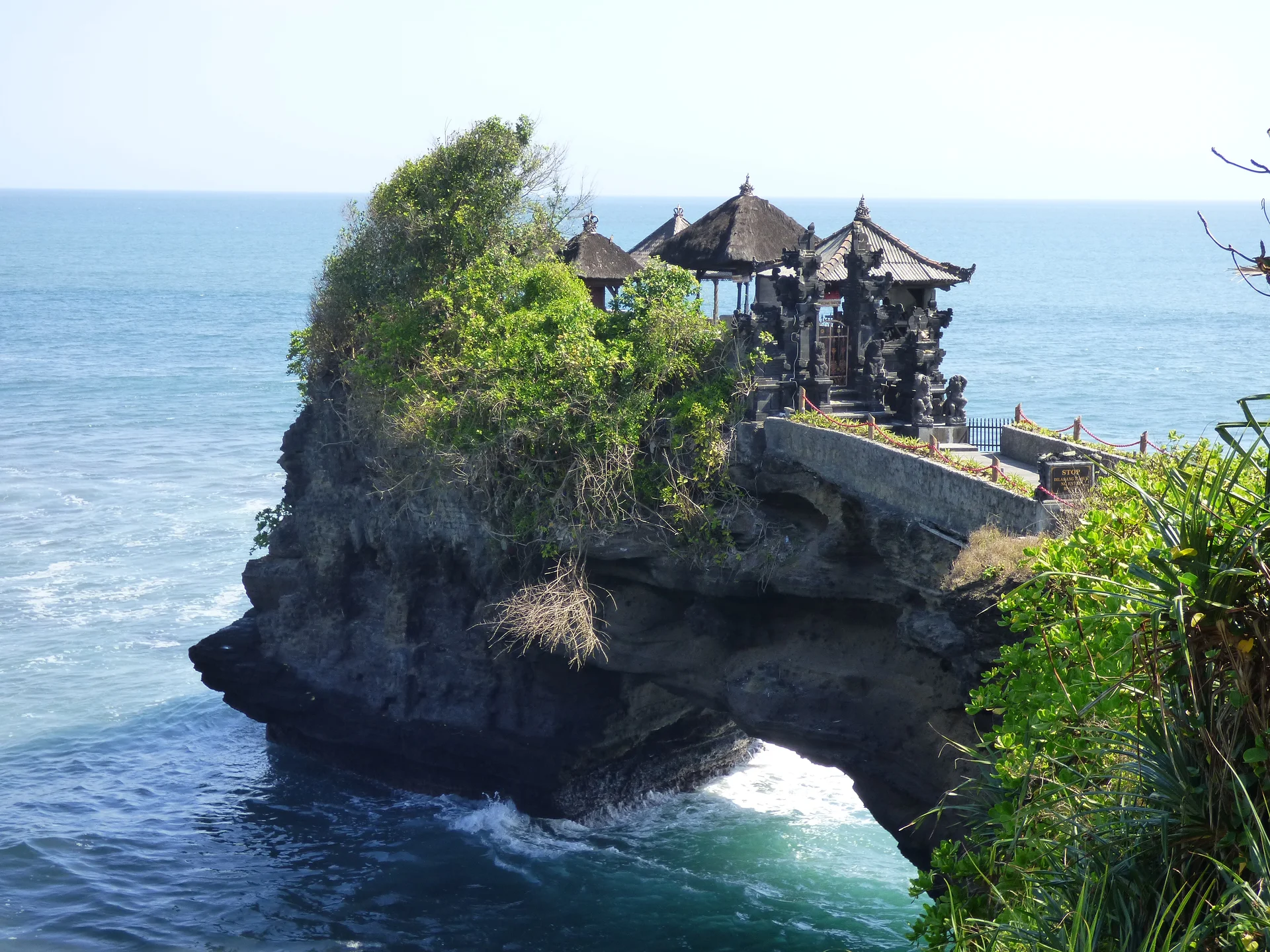
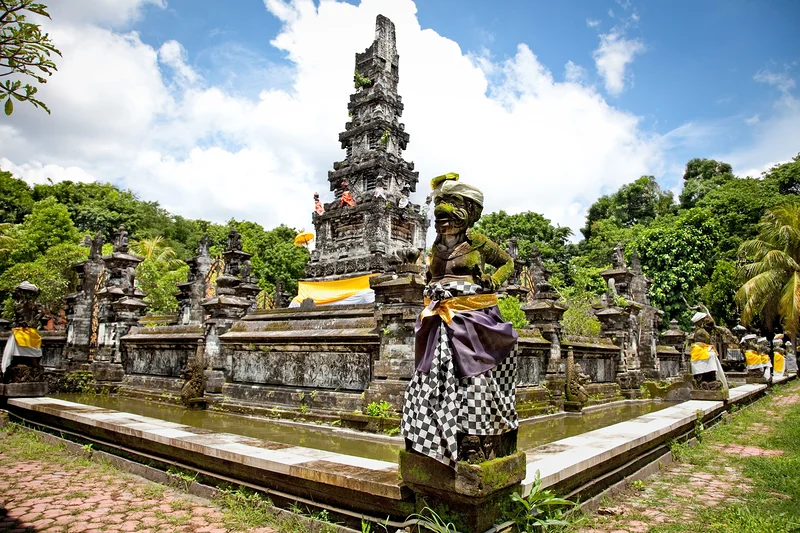
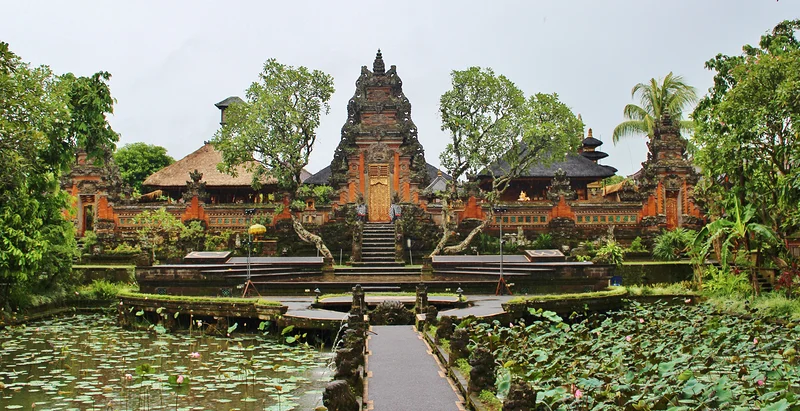
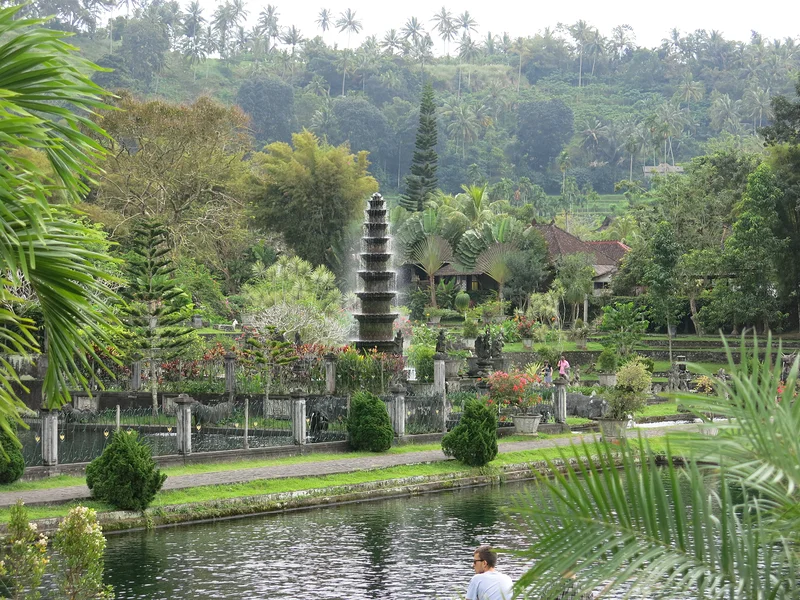
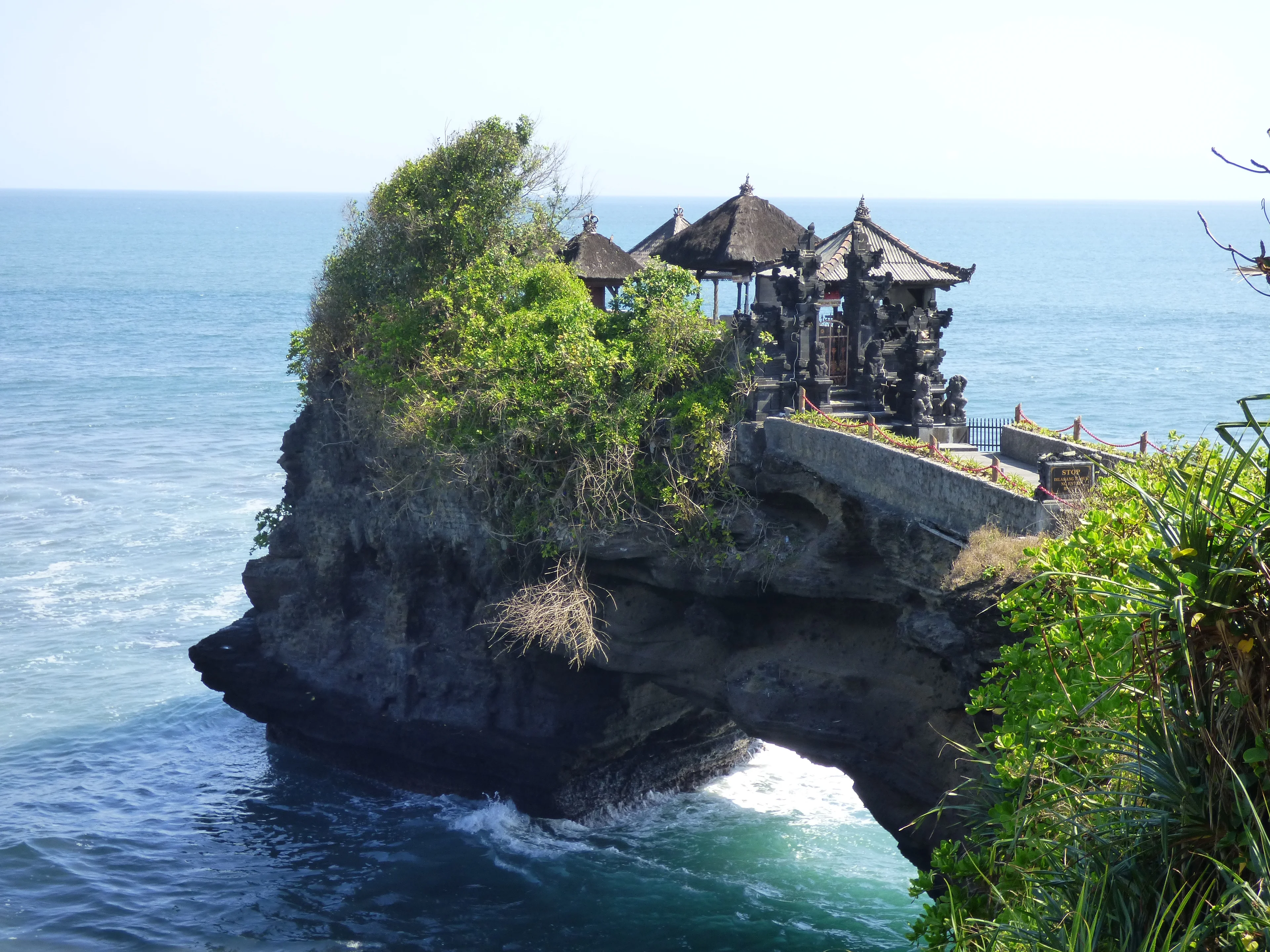
A few miles from Tabanan along the coast, you will find the iconic Tanah Lot, or Sea Temple, perched on a rock formation surrounded by the ocean. It is said to be the work of Nirartha, a 16th-century Hindu priest. The Taman Ayun temple, built in 1634, is located in the neighboring town of Mengwi. It is a large temple complex that originally belonged to a powerful local family. The grounds are filled with gardens and merus, the multi-tiered pagodas that symbolize the sacred Hindu mountain.
If you have time to venture further, head toward Lake Bratan, a high-altitude lake where you can see the Ulun Danu water temple, built in 1663 to honor Dewi Danu, the goddess of lakes and rivers. The final temple to see in the Tabanan region is Pura Luhur Batukaru, a sanctuary built into the mountainside surrounded by jungle in the 11th century by the holy man Mpu Kuturan.
When to go
The best time to visit the Tabanan regency is during the dry season, which runs from May through October.
How to get there
The airport for Bali is located in the neighboring city of Denpasar. From there, you can take a bus or a taxi to reach Tabanan. Many hotels also offer shuttle services for guests.