Visiting Fuerteventura
An island about a hundred kilometres long, with no forest and no real mountain: ochre hills, dead volcanoes, and a sea that changes colour at every cove. Its highest point, Pico de la Zarza, stops at 807 metres. The whole island is a UNESCO biosphere reserve.
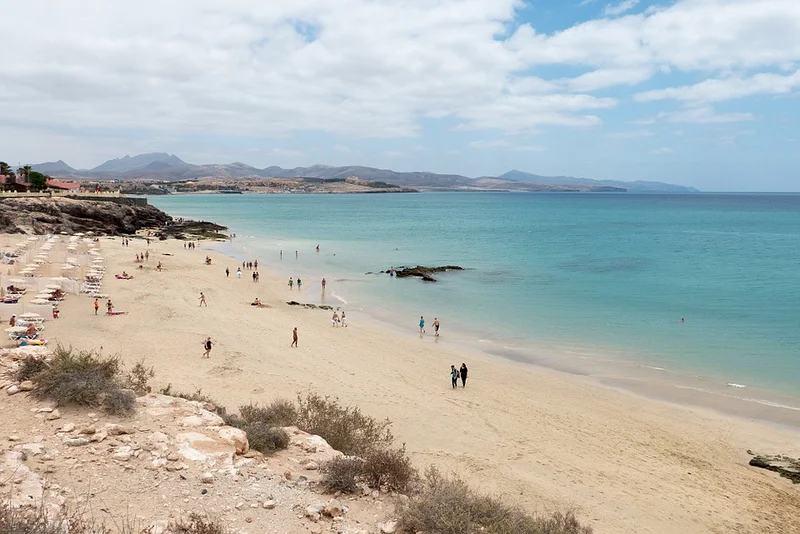
Here, the landscape is the beach. In the north, the sand of the Corralejo dunes runs right down to the water. In the south, the Jandía peninsula lines up kilometres of golden sand. And the wind, never still, dries your skin as fast as it fills the kitesurfers' sails.
You'll love it if
- You want huge beaches where you can walk for an hour without meeting anyone
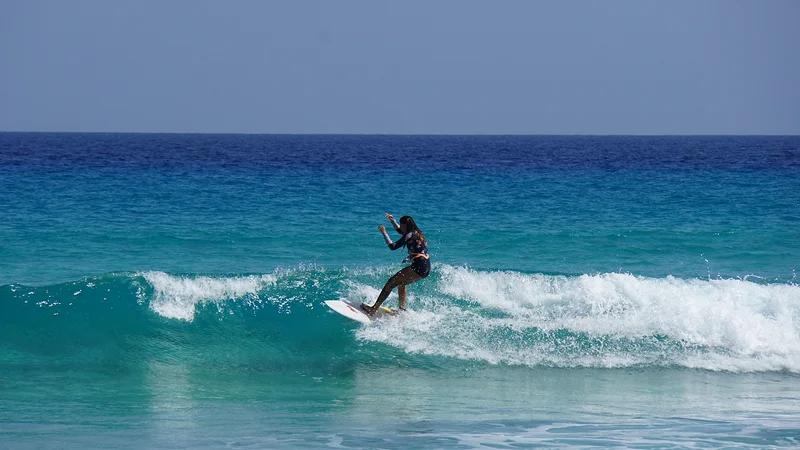
- Kitesurfing, surfing or windsurfing appeal to you
- You're after sunshine in the middle of winter
Look elsewhere if
- Wind quickly wears you out
- You want forests, old towns and museums
- You plan to do without a car
The must-sees
-
South of Corralejo, a natural park of white sand slopes down to turquoise water. The road runs straight through it: pull over and walk east, and the dunes are empty fifty metres from the car. In the evening the sand turns pink. On the sea side, the Grandes Playas stretch for kilometres, but the wind lifts the sand there: a windbreak is no luxury.
-
2 Lobos island Day trip
A volcanic islet a quarter of an hour by boat from Corralejo, with no cars and no permanent residents. A trail loops around it in three to four hours, with a climb to the Caldera crater, and the La Concha lagoon is good for a swim. Access is limited to 400 visitors a day, in two time slots. Apply for your free permit online, up to five days ahead, even if you book an organised trip.
-
Twelve kilometres of wild sand at the foot of the Jandía mountains, on the far side of the island. You get there on a dirt track from Morro Jable, some twenty kilometres of bends above the drop. The view is worth the drive. The swim is not: the currents are dangerous and there are no lifeguards. Check that your rental contract allows unpaved tracks.
-
4 Betancuria and the Ajuy coast
In a fold of the western hills, Betancuria was the island's first capital, founded in the early fifteenth century. Its white houses surround the church of Santa María. Carry on to Ajuy, on the coast: a path follows the cliff to large sea caves, cut into the oldest rocks in the Canaries. Come late in the afternoon, when the low light grazes the stone.
-
On the east coast of Jandía, at low tide, the sea pulls back behind a sandbar and leaves a shallow lagoon. It's the playground of the kitesurfing and windsurfing schools, and the wind blows almost every day. Even if you don't ride, come and wade through the warm lagoon at low tide: check the tide times the day before.
The classic trap
Heading for Lobos without a permit. The boat will take you, but the islet is a nature park with limited access: without a personal permit, you stay on the jetty. Apply online as soon as your dates are set. It's free, and summer slots go fast.
Our itineraries in Fuerteventura
| Length | Itinerary | What you'll see |
|---|---|---|
| Long weekend (4 days) | Corralejo › dunes › Lobos › El Cotillo | White sand, islet, northern lagoons |
| 1 week | Corralejo › Lajares › Betancuria › Ajuy › Costa Calma › Morro Jable | The north, the interior, the southern beaches |
| 10 days | Corralejo › El Cotillo › Betancuria › Sotavento › Cofete › Lanzarote | The whole island, then its neighbour |
The island is long: from Corralejo to Morro Jable, allow close to two hours by road. Don't do it all from one base: sleep in the north, then in the south. And if you have a spare day, Lanzarote is half an hour by ferry from Corralejo.
When to visit Fuerteventura
| Appeal | Season | Temperatures | Sea | Crowds and prices |
|---|---|---|---|---|
| WinterDec. to Feb. | 16 to 22 °C | 18 to 19 °C | High | |
| SpringMarch to May | 17 to 24 °C | 18 to 19 °C | Medium | |
| SummerJune to Sept. | 21 to 29 °C | 20 to 23 °C | High | |
| AutumnOct. and Nov. | 19 to 27 °C | 21 to 23 °C | Medium |
Our advice
Aim for October or November: the sea has kept the summer's warmth, the wind eases and prices haven't yet climbed to winter levels. In summer, the trade wind blows hard almost every day: perfect for sails, less so for a day on a towel.
Getting to Fuerteventura
-
On a direct flight The easiest
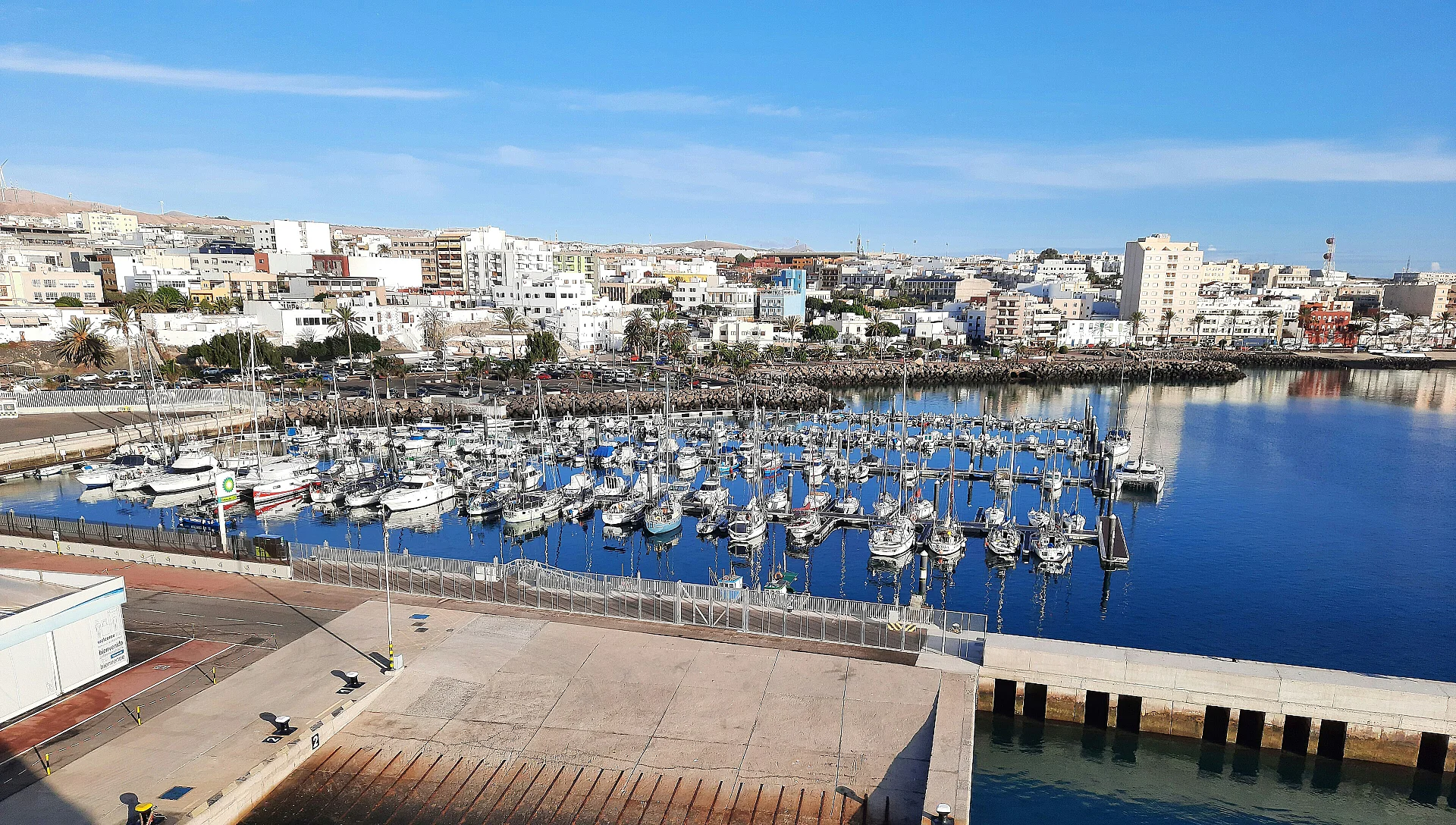
Direct flights link Fuerteventura with London and several other UK and Irish airports, in around four hours. The airport is five kilometres from Puerto del Rosario, in the middle of the east coast.
-
Via Madrid or another island The most choice
If your airport has no direct flight, connect through Madrid or Gran Canaria, which both have several flights a day to the island.
-
From Lanzarote or Gran Canaria By sea
The ferry links Playa Blanca, in the south of Lanzarote, with Corralejo in about half an hour. In the south, Morro Jable is close to two hours by boat from Las Palmas de Gran Canaria.
Coming for the southern beaches? Pick up a car at the airport and take the Jandía road, about an hour away. For the north, Corralejo is forty minutes away.
Getting around Fuerteventura
Rent a car: buses link the main towns, but not often, and they go neither to Cofete nor to the isolated beaches. Roads are good and straight, traffic light. Choose a slightly heavier model rather than the smallest: the wind pushes light cars hard on the coastal stretches.
Good to know
Many rental contracts ban dirt tracks, including the one to Cofete. Read the clause before you set off, or book a 4x4 trip. And leave nothing visible in the car at beach car parks.
What to eat in Fuerteventura
- Queso majorero: the island's goat's cheese, fresh, semi-cured or aged, sometimes rubbed with paprika or gofio. It was the first Canarian cheese to earn a protected designation of origin.
- Papas arrugadas: small potatoes boiled in salted water, skins wrinkled, served with red mojo, spicy, and green mojo, made with coriander.
- Cabrito: kid goat stew, the festive dish of the island's interior.
- Vieja: a white-fleshed rock fish, grilled or boiled, with papas and mojo.
- Gofio: flour made from toasted grain, stirred into milk or broth, or eaten as a dessert. It's on every table.
For fish, head to the harbours: Morro Jable, El Cotillo, Corralejo. Ask for the catch of the day and its price by weight before you order. Buy cheese at the farms inland, where they let you taste it.
Where to stay in Fuerteventura
| Area | What for | Good to know |
|---|---|---|
| Corralejo | Dunes, Lobos, restaurants | The liveliest base |
| El Cotillo and Lajares | Surf, lagoons, villages | Quiet in the evening |
| Caleta de Fuste | Sheltered beach, golf, close to the airport | A resort, little charm |
| Costa Calma and Sotavento | Kitesurfing, lagoon, long beaches | The strongest wind |
| Morro Jable | Sandy beach, Cofete, southern ferry | Far from the north |
How much does a trip in Fuerteventura cost?
| Trip | Length | Budget per person |
|---|---|---|
| Budget (apartment, bus, market shopping) | 7 days | €450 to €750 |
| Comfort (4-star hotel, car, restaurants) | 7 days | €1,000 to €1,600 |
| Luxury (5-star hotel, kitesurf lessons, excursions) | 7 days | €2,200 to €4,000 |
- Timing: Christmas, February and August are the most expensive weeks. May, June and November are the kindest to your budget.
- The car: it's the big item, but it replaces your excursions, and fuel costs less than on the mainland.
- Board sports: a group kitesurf lesson is paid by the hour, and a week-long course costs as much as a hotel.
- Meals: a set menu in an inland village costs far less than a terrace on the Corralejo seafront.
Traditions and way of life in Fuerteventura
People speak Spanish, and a buenos días followed by a gracias is enough to open doors. Islanders call themselves majoreros, a name that goes back to the island's first peoples, and which the cheese and the goats share.
The island's history has a French accent: Betancuria is named after Jean de Béthencourt, the Norman who founded it in the early fifteenth century. Later, the writer Miguel de Unamuno was exiled here, in 1924. You can visit his house in Puerto del Rosario.