
Puerto del Rosario is the capital of Fuerteventura, one of the Spanish Canary Islands. The city is known for its marina and lively little fishing harbors. It owes its economic vitality, which helped it establish itself as the island's capital toward the end of the 19th century, primarily to its strategic location as a meeting point for wealthy merchants.

Nowadays, it's common to see cruise ships stopping in this seaside city. This is the case, for example, with the company Costa Cruises 2020, which decided to include it in its itinerary for the Canary archipelago. You will often have a free day to explore the area or simply relax, as you prefer. Even though Puerto del Rosario is less famous than other Canarian destinations, it would be a shame to miss the opportunity to discover it. You’ll appreciate the picturesque charm of its whitewashed houses just as much as its open-air sculpture park. What are the must-see sights? What are the main activities cruise passengers can look forward to during a stopover on the island?
The monuments of Puerto del Rosario
A stopover is the perfect chance to discover remarkable buildings, especially those lining the bright, white streets of the old town. We’re thinking in particular of the Nuestra Señora del Rosario church (Calle Leon y Castillo), a parish whose architecture is reminiscent of those built by the Spanish in the New World. Another highlight is the Miguel Unamuno House-Museum, just a stone's throw from the church (Calle Virgen del Rosario). It was in this 19th-century building that the Spanish writer and philosopher lived. Today, the establishment hosts photo exhibitions, early 20th-century furniture, and other historical artifacts. It’s well worth a visit, even if you aren't familiar with Miguel Unamuno's work.
You will undoubtedly fall under the spell of Puerto del Rosario's waterfront. Take the time to stroll along it and admire the sculptures scattered throughout the area. You’ll likely be intrigued by the giant reproductions of seashells, quirky works by Canarian artist Juan Bordes that turn this spot into a free, open-air museum. If you’re a museum lover, why not extend your walk to the Juan Ismael Art Center (Calle Almte. Lallemand)? You’ll find contemporary collections of paintings, sculptures, photos, and more.
But let’s be honest: if, like many others, you chose the Canaries for the sea and sun, the beaches of Puerto del Rosario will not disappoint.
Playa Chica and Playa Blanca: exceptional beaches you shouldn't miss
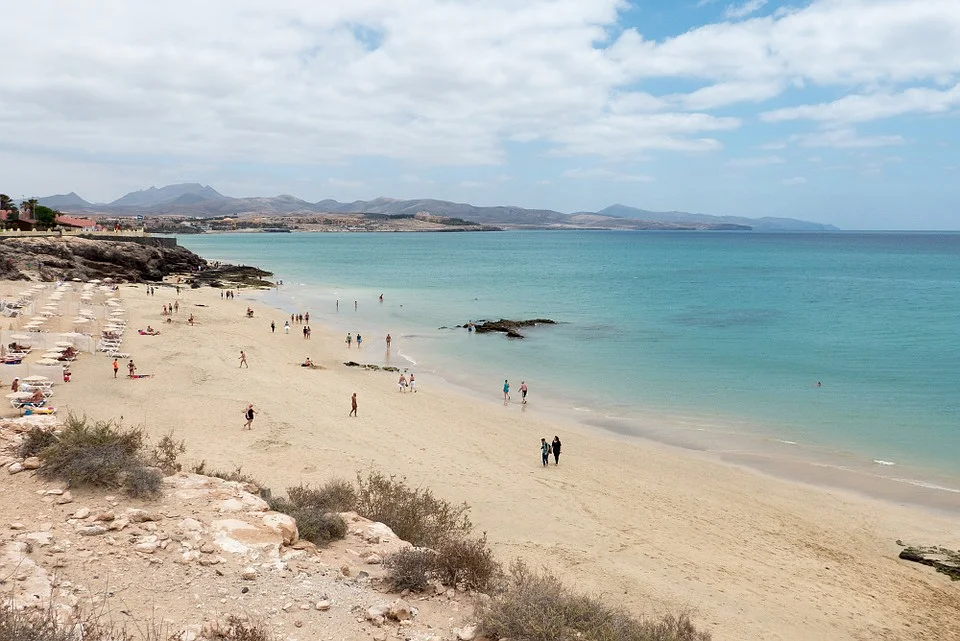
Playa Chica is located near the port of Puerto del Rosario, just to the west. This small beach is especially pleasant because it rarely gets crowded, attracting mostly locals from the capital. It is best enjoyed for its crystal-clear water and fine sand. You’ll also find good facilities and beachfront restaurants with views of the turquoise ocean.
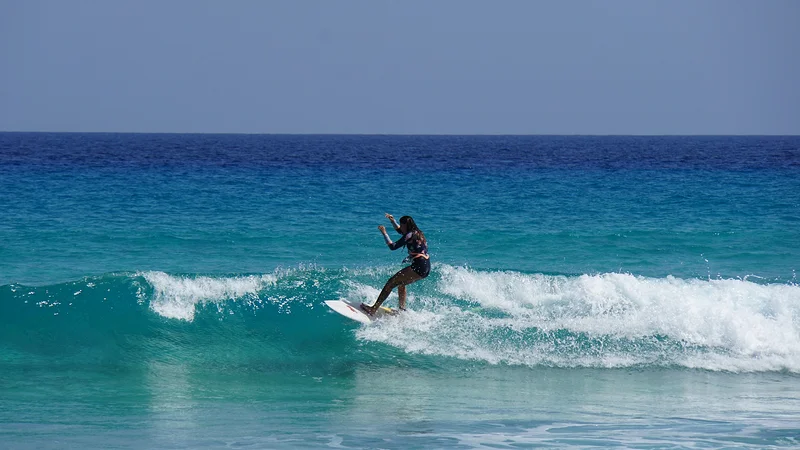
Playa Blanca, on the other hand, is one of the most popular beaches on the outskirts of Puerto del Rosario. It is located 1 km south of the center and Playa Chica. Offering great swimming conditions, it shares similarities with Playa Chica: fine sand and generally calm waves in the swimming area, which should put your mind at ease if you are traveling with children. Outside of the designated swimming zones, there are areas more exposed to wind and waves, making them a paradise for windsurfers and surfers.
A starting point for discovering other parts of Fuerteventura

Puerto del Rosario is a lively city, but it is less touristy compared to other parts of Fuerteventura and the Canary Islands. The city often serves as a hub for travelers wishing to explore inland destinations or head to other islands in the archipelago. Puerto del Rosario is served by numerous bus and boat lines, making various themed excursions possible.
For example, you can explore the center of Fuerteventura to visit other charming towns like Caleta de Fustes, a rather upscale seaside resort bordered by a golf course and a marina, about a 15-minute drive away. You can also head north toward the town of Corralejo, about 30 minutes away, known among other things for its long beach dotted with dunes of varying heights. In this area, visitors are moved by the nearly pristine ecosystem, particularly in the nature park of the same name, where the low population density has helped preserve nature.

Nothing is stopping you from venturing to Costa Calma or Morro Jable either. These two towns are located on the Jandía peninsula in the south of Fuerteventura, about an hour's drive from Puerto del Rosario. They are appreciated for the biological richness of their seabed and the many native plant species that populate the nature park of the same name. But these destinations owe their appeal primarily to the presence of water sports schools. Locals and visitors alike try their hand at popular disciplines like windsurfing, surfing, or scuba diving, to name just a few.
Canarian gastronomy
Finally, to end on a different note, a trip or cruise to the Canary Islands offers the opportunity to discover a unique cuisine.
Canarian cooking is essentially based on local produce and freshly caught fish. Among the fish dishes served, fried, grilled, or marinated, are scare (parrotfish), chincharre (mackerel), and dente (dentex). Meat dishes will also delight your taste buds, such as baifo asado (roast kid goat) or pork that is oven-baked or marinated. Traditional specialties are also in the spotlight. This is especially true for puchero canario (a typical island stew) or papas arrugadas, small, wrinkled potatoes cooked in their skins and served with the signature mojos sauce. Queso majorero is also the pride of Fuerteventura. Made from goat's milk, this highly renowned cheese is protected by a designation of origin.
Comments (0)
No comments yet. Be the first!