

Cagliari, the Sardinian capital travelers speed right past
Most visitors touching down at Elmas Airport grab their rental car keys and head straight for the northern beaches.
That is a mistake. The city they leave in their rearview mirror boasts over 300 days of sunshine a year and a well-earned nickname: La Città del Sole.
Founded by the Phoenicians and successively ruled by the Romans, Pisans, and Spanish, the city wears every era right in its stone. Even Ibn Battuta, passing through in the 14th century, noted in his journals the striking fortress visible from the sea. That citadel is Il Castello, and it is still right there, glowing in the sunset and suspended above the Gulf of Angels.
A city for those who want Sardinia beyond the beach
Cagliari is a real city, home to a university, 150,000 residents, and a distinct rhythm of its own. Sure, the beaches are reachable by bus straight from downtown, but coming here for sand alone misses the point.
Great destination for:
- Fans of multicultural heritage spanning Phoenician, Roman, Pisan, and Spanish eras
- Travelers looking to combine city energy, food, and coastal time in a single trip
- Curious visitors eager to dive into deep Sardinian culture, neighborhood festivals, and local markets
- Off-season travelers searching for mild Mediterranean weather during the winter months
- Families with kids, especially for the Molentargius regional park and its resident pink flamingos
- Solo travelers, thanks to a safe urban environment, easy transit, and a lively student scene
Not ideal for:
- Anyone seeking only isolated white-sand beaches, which require a car to reach
- Travelers hunting for rural, sleepy Sardinian villages, since Cagliari is a true urban capital
- Ultra-tight budgets in July and August, when lodging and flights hit peak rates
Reasonable pricing for a Mediterranean capital
| Expense type | Indicative range |
|---|---|
| Budget lodging (hostel, B&B, Marina or Stampace neighborhood) | $28 to $55* / night |
| Comfortable lodging (3 to 4-star hotel, Castello or Marina neighborhood) | $88 to $176* / night |
| Quick bite (café, focaccia, panino, market bar) | $5.50 to $14* |
| Sit-down dinner (Sardinian trattoria, fresh seafood) | $22 to $50* |
| Transit and activities (day bus pass, museum admissions) | $5.50 to $17* |
| Daily backpacker budget | $55 to $83* |
| Daily comfort budget | $143 to $250* |
What to know before you arrive
The historic center is entirely walkable. The four ancient districts are compact and well-connected on foot, featuring public elevators to help you climb up toward Il Castello from Piazza Yenne. The CTM bus network covers the entire city, including the beach at Poetto just 15 minutes away. Tickets can be bought at newsstands or tobacco shops.
Italian is the main language, though English works fine in most tourist hotels and restaurants. Knowing a few words of Italian or Sardinian always goes a long way. The historic neighborhoods are safe day and night, though standard caution applies after 10 PM in quieter, isolated pockets.
Il Castello: the citadel towering above it all
This is where Cagliari reveals itself in a single glance. The hilltop neighborhood perched on limestone cliffs concentrates the remnants of every past civilization: the Cathedral of Santa Maria built in the 13th century by the Pisans and later remodeled in the baroque style, the Torre dell'Elefante and Torre di San Pancrazio dating back to 1307, and former Aragonese palaces converted into university buildings.
The Bastione di Saint Remy is the most photogenic panoramic terrace in town. At sunset, the orange rooftops and the Gulf of Angels take on tones you will not soon forget. Admission is free.
The Cittadella dei Musei houses the National Archaeological Museum, headlined by the mysterious Nuragic statues known as the Giants of Monte Prama, discovered in 1974 with origins that remain fiercely debated. Give yourself at least 2 hours here.
Friendly tip: To skip the climb from the Marina district, take the free elevator tucked behind Piazza Yenne. It drops you off right at the level of the Bastion Saint Remy without breaking a sweat.
The Marina and Stampace: neighborhoods with a pulse
Via Roma, lined with arcades and early 20th-century palazzos, makes a grand first impression for travelers arriving by sea. Just behind it, the Marina district is a tight grid of narrow alleys filled with trattorias, wine bars, and artisan shops. Piazza Yenne stays active around the clock.
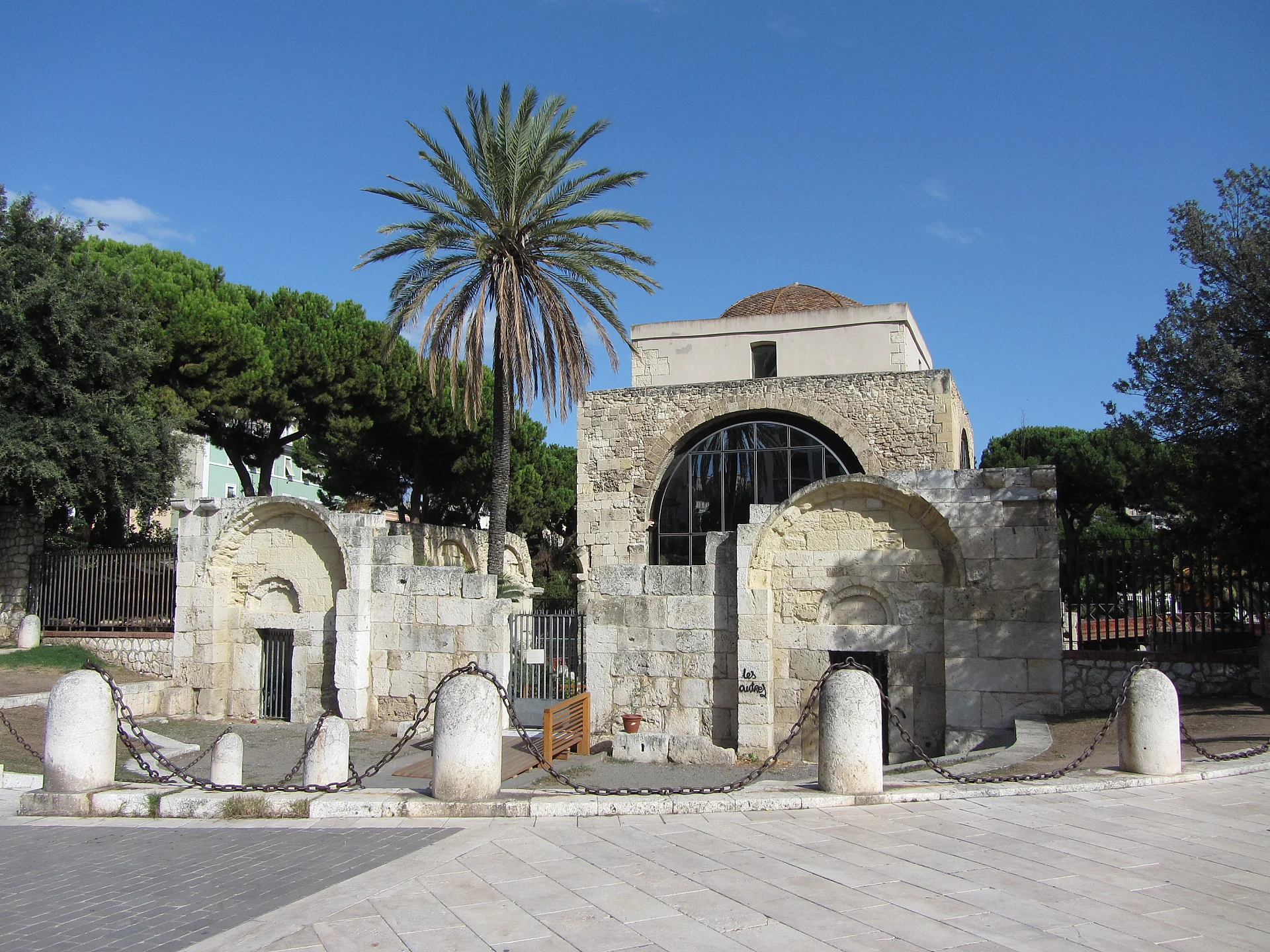
Stampace, the oldest neighborhood, feels more intimate and less tourist-focused. It holds the 2nd-century Roman amphitheater carved straight into the rock, the baroque church of Sant'Efisio dedicated to the city's patron saint, and a 12-acre botanical garden founded in 1858 with over 3,000 plant species. It provides a genuinely refreshing escape on hot afternoons.
Friendly tip: The San Benedetto market, one of Italy's largest indoor food markets, is currently partially closed for renovation. While waiting for its full reopening, the Via Quirra market serves as an excellent alternative to track down fresh seafood, pecorino cheese, and Sardinian cured meats starting at 7 AM.
Poetto, Molentargius, and the Sella del Diavolo: nature at the end of a bus line
The beach at Poetto stretches for 8 kilometers. Fine, bright sand and a 15-minute bus ride from downtown make it the outdoor living room for locals. Crowds swell in July and August, so arrive early in the morning or head toward the quieter ends of the shore.
Right behind Poetto, the Molentargius regional park is a wetland sanctuary where colonies of pink flamingos nest. You can rent bikes to pedal between the lagoons and spot herons and avocets. Admission is free. The sharp contrast between the buzzing beach and this wild sanctuary a few feet away captures the unique character of the city.
For a hike with sweeping views, the Sella del Diavolo promontory overlooking the bay of Cagliari is easily reached by bus from the center. The summit offers a 360-degree panorama of the sea and the cityscape. Tackle the trail in the morning during the summer, as midday temperatures get intense quickly.
Day trips from Cagliari: Roman ruins and remote beaches
The ruins of Nora in Pula, 40 km to the southwest, rank among the best-preserved archaeological sites in the Mediterranean. Founded by the Phoenicians and expanded by the Romans, the ancient city juts out into the sea, featuring an ancient theater still facing the crashing waves. Plan for a half-day visit.
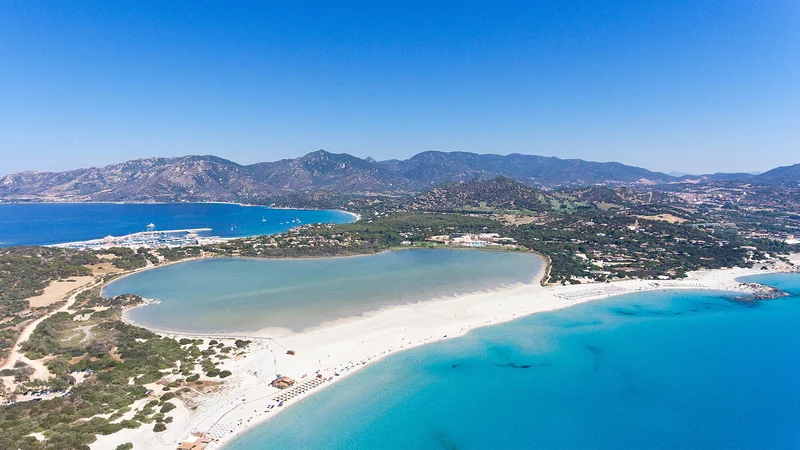
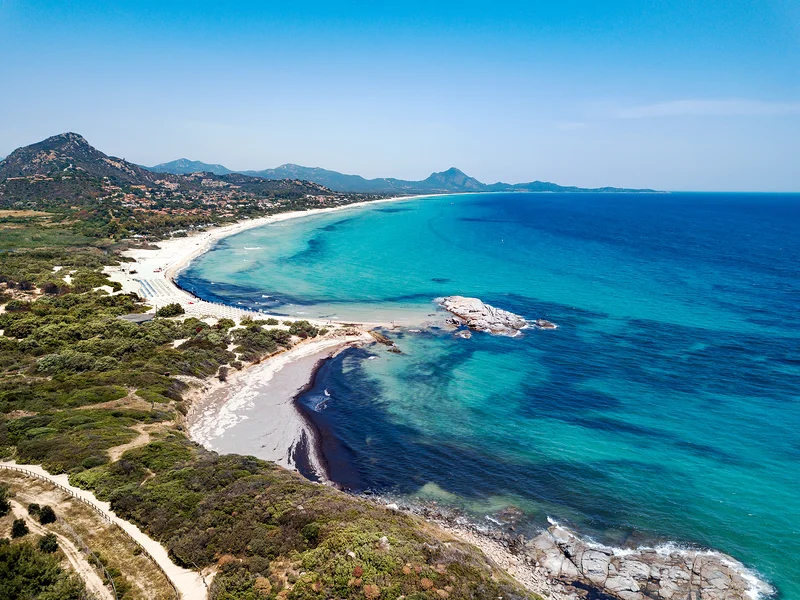
The beaches of Chia and Villasimius rank among the finest in the Mediterranean with crystal-clear waters, white dunes, and secluded coves. Since public transit won't get you there easily, they alone justify renting a car for a few days.
Where to eat and drink in Cagliari
Sardinian cuisine deserves your full attention. Try the malloreddus alla campidanese, small shell-shaped pasta tossed in a sausage and saffron sauce, and culurgiones, traditional wheat-stitched ravioli stuffed with potato and ricotta. In the Stampace and Villanova neighborhoods, local trattorias serve these dishes in unpretentious settings at fair prices.
For seafood, the Villaggio dei Pescatori, located 10 minutes from downtown by car, serves the daily catch in a working-class neighborhood atmosphere. In winter, do not leave without trying fresh sea urchins, a seasonal delicacy served in seaside trattorias. For coffee lovers, Artesanías Café in Stampace and Caffè dell'Arte near Via Roma are top spots for espresso taken seriously.
How to get to Cagliari
Elmas Airport sits 6 km from downtown. Direct flights from European hubs run mostly during the seasonal summer schedule. Outside of peak season, direct connections become limited. A quick rail shuttle connects the airport terminal to the central train station in 7 minutes.
If you prefer ferries from mainland Italy, you can depart from Civitavecchia (Rome) in 15 hours, Naples in 16 hours, or Palermo in 12 hours. Ferries dock right downtown along Via Roma. Ferries from France typically arrive at Porto Torres on the north coast of the island, about a 2.5-hour drive from Cagliari.
Getting around Cagliari
The historic center is best explored entirely on foot. To reach Poetto beach, the Molentargius park, and the Sella del Diavolo, the CTM municipal bus network does the job. A single ticket costs around $1.50*, and a full-day pass runs less than $5.50*. Buy passes at newsstands or tobacco shops.
For exploring southern coastal spots like Chia, Villasimius, or Nora, renting a car is essential. Taxis wait near the port and train station, and rideshare apps operate in Sardinia with decent coverage directly inside Cagliari.
When to go
Spring from April to June and autumn from September to October are the ideal windows: the sea is warm enough for swimming, crowds thin out, and prices drop. Winter brings mild, quiet days perfect for museum-hopping and market strolls, with sea urchin season as a bonus. Skip July and August if you prefer to avoid heavy crowds and intense heat, especially within the stone-paved alleys of Castello.

I really loved my visit to the city of Cagliari. It is a good starting point for exploring Sardinia. The city is very colorful and remains quite authentic. The Castello district is truly magnificent. Surrounded by ramparts, it offers a stunning view of the surroundings. If possible, choose the spring, as there are fewer crowds and it is less hot.