Visiting Champagne
A chalky plain, gentle hills covered in vines, and underfoot, hundreds of miles of galleries where the bottles sleep. Champagne reads on two levels. On the surface, winegrowers' villages, Romanesque churches and half-timbered houses. Below, the cellars of the great houses, in Reims and Épernay, listed as a World Heritage Site.
The vineyard stretches over four areas: the Montagne de Reims, the Marne valley, the Côte des Blancs and, far to the south, the Côte des Bar. Between the two great wine towns, Troyes keeps one of the finest old towns in France. You come for the cellars, the tastings with growers and the little roads, not for mountains or the sea.
You will love it if
- You want to go down into the cellars and taste champagne where it is made
- You like little vineyard roads and stone villages
- You want a short break an hour from Paris by train
Give it a miss if
- You do not drink alcohol: almost every visit revolves around wine
- You are after dramatic scenery: everything here is gentle
- You want to explore the vineyard without a car or a bike: the villages are poorly served
The must-sees
-
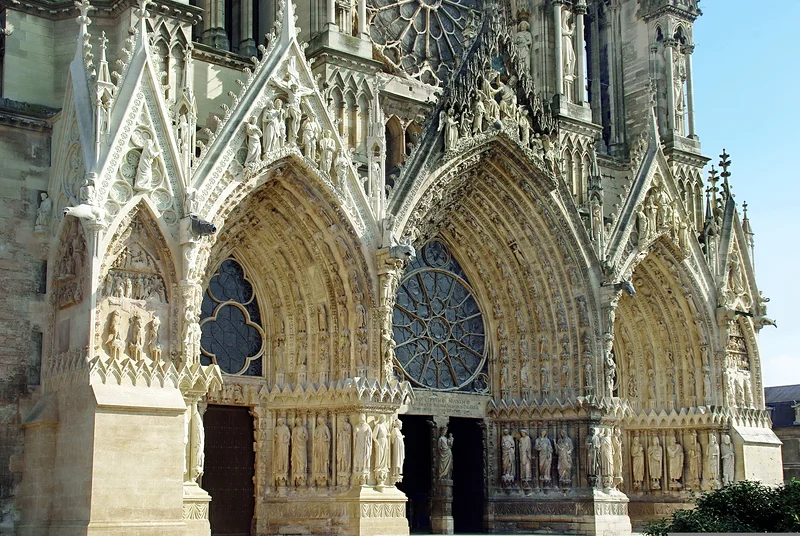
1 Reims Cathedral +2 recs
The coronation cathedral, where almost every king of France received his crown. More than 2,300 statues adorn its façade, including the Smiling Angel, now the emblem of the city. Come back on a summer evening, when a light show colours the façade as it was in the Middle Ages.
-

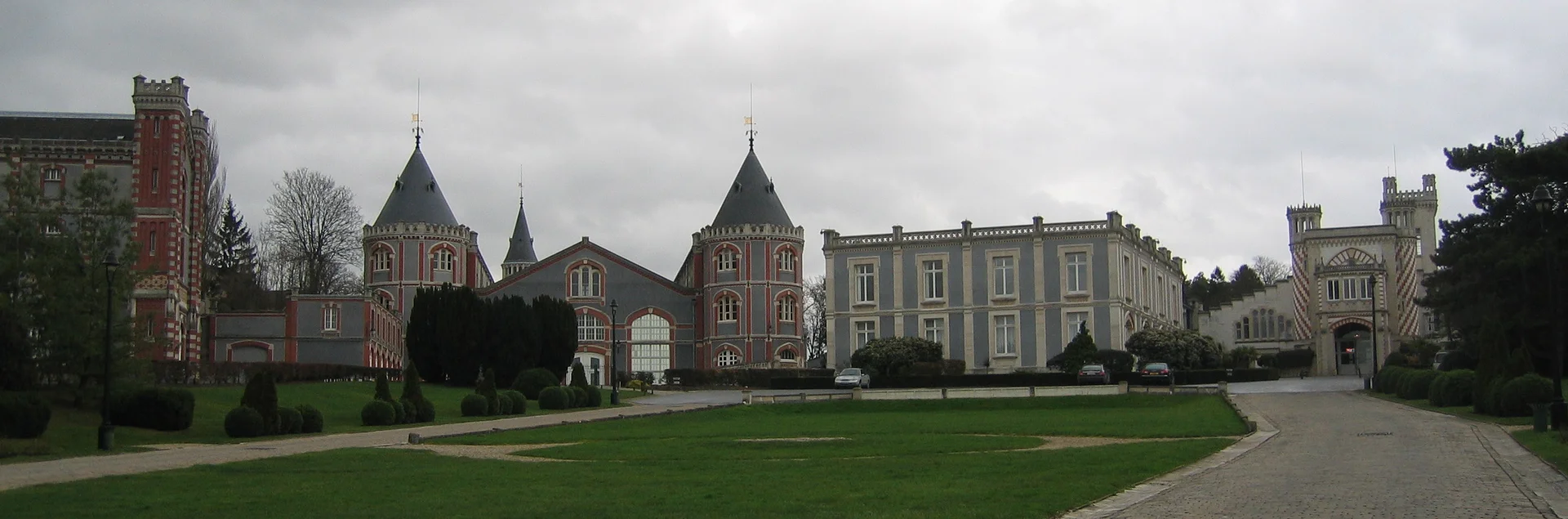
2 The Pommery cellars +15 recs
An estate that looks like an English castle, built over old Gallo-Roman chalk quarries. You go down 116 steps to walk eleven miles of galleries, where contemporary artworks sit beside the bottles. Book the tour with tasting, especially at weekends.
-
3 Avenue de Champagne in Épernay
Half a mile of champagne house façades, and beneath the road, millions of bottles. Moët & Chandon opens its cellars here, and the Château Perrier houses the Champagne wine museum. Walk up the avenue at dusk, when the façades light up.
-
Cobbled lanes, half-timbered houses leaning towards each other, and churches with sumptuous stained glass. The cathedral of Saint-Pierre-et-Saint-Paul keeps a rare collection. Get lost in the Ruelle des Chats, so narrow that the roofs almost touch.
-
5 Hautvillers and the Montagne de Reims Wine route
The village where the monk Dom Pérignon perfected champagne, with its wrought-iron signs and its view over the Marne valley. Higher up, the Verzy forest hides the faux, beech trees twisted like umbrellas. Park and walk among the vines: every village has a grower who opens his door.
The classic trap
Visiting only the great houses of Reims and Épernay. They are superb, but the real face of Champagne is with the growers in the villages, who pour their own cuvée in their kitchen or vaulted cellar. Keep at least half a day for the wine route, and call the day before: many only receive visitors by appointment.
Our itineraries in Champagne
| Length | Itinerary | What you see |
|---|---|---|
| 2 days | Reims › Épernay | The cathedral, the great cellars, the Avenue de Champagne |
| 4 days | Reims › Montagne de Reims › Épernay › Côte des Blancs | The cellars, the growers and the hillside villages |
| 1 week | Reims › Épernay › Côte des Blancs › Troyes › Côte des Bar | The whole vineyard, north to south, and the old town of Troyes |
Start with Reims, for the cathedral and a first cellar. Then head to Épernay on the Montagne de Reims tourist route, stopping at Verzenay and Hautvillers. Got a week? Drive down the Côte des Blancs, then on to Troyes and the Côte des Bar, where growers are more discreet and prices gentler.
When to visit Champagne
| Appeal | Season | Outside | In the cellars | Crowds and prices |
|---|---|---|---|---|
| WinterDec. to Feb. | 0 to 6°C | 10 to 12°C | Low | |
| SpringMar. to May | 6 to 18°C | 10 to 12°C | Medium | |
| SummerJune to Aug. | 13 to 25°C | 10 to 12°C | High | |
| AutumnSept. to Nov. | 6 to 20°C | 10 to 12°C | Medium |
Our advice
Aim for June or September. In June the vines are in flower and the terraces open up. September is harvest time: the slopes come alive, but many growers, overwhelmed, close their doors to visitors. Bring a jumper whatever the season: the cellars stay at 10 or 12°C, even in high summer.
Getting to Champagne
-
By Eurostar and TGV The simplest
From London, the Eurostar reaches Paris Gare du Nord in about two hours twenty. Walk ten minutes to Gare de l'Est, where the TGV reaches Reims in forty-five minutes. For Épernay, direct trains take about an hour and a quarter.
-
By plane to Paris From further afield
From Charles de Gaulle airport, a TGV reaches Champagne-Ardenne station, on the edge of Reims, in half an hour. From the rest of the world, it is the easiest gateway to the region.
-
By car from Calais For the vineyard
Take the ferry or the Eurotunnel to Calais, then the A26 motorway down to Reims in under three hours. A car remains the best way to follow the champagne tourist route, which winds from village to village.
Arrive by train and rent a car on the spot, in Reims or Épernay: you will avoid the drive and be able to visit the growers. If you plan to taste, decide who drives, or book a guided minibus tour from Reims.
Getting around Champagne
Reims, Épernay and Troyes are best explored on foot, and the train links Reims and Épernay in half an hour. For the vineyard, you need a car or a bike: buses barely serve the villages. The champagne tourist route is signposted over more than 370 miles, but a day is enough to cover a fine stretch of it.
Good to know
Tasting and driving do not mix: in France the limit is 0.5 grams of alcohol per litre of blood, lower than in England, and two glasses are enough to go over it. Spit into the spittoon, like the professionals, or let an electric bike do the work: several rental shops offer them in Épernay and Hautvillers.
What to eat in Champagne
- Biscuits roses de Reims: crisp, light pink biscuits, dipped into a glass of champagne, as tradition demands.
- Chaource: a creamy cheese from the Aube with a bloomy rind, a fine match for a glass of bubbles.
- Andouillette de Troyes: the town's speciality, best tasted grilled with Reims mustard.
- Jambon de Reims: ham cooked in jelly and coated in breadcrumbs, sliced at the charcutier's.
- Ratafia de Champagne: a sweet aperitif made from grape juice and brandy, served chilled.
- Rosé des Riceys: a rare still wine, made in a single village of the Côte des Bar.
To eat like the locals, take a table at a brasserie on Place d'Erlon in Reims, or with a grower who serves a plate of local produce with his cuvée. Look out for coteaux champenois, the region's still red and white wines, almost impossible to find elsewhere.
Where to stay in Champagne
| Area | What for | Good to know |
|---|---|---|
| Reims | Cathedral, great cellars, restaurants | 45 minutes from Paris by TGV |
| Épernay and the Marne valley | Avenue de Champagne, Hautvillers | The heart of the vineyard |
| Côte des Blancs | Growers, villages, peace | Few hotels, many guest houses |
| Troyes | Old town, outlet shops | Apart from the northern vineyard |
| Côte des Bar | Les Riceys, Essoyes, small growers | The most discreet vineyard |
How much does a trip in Champagne cost?
| Trip | Length | Budget per person |
|---|---|---|
| Budget (guest house, growers, picnics) | 3 days | €250 to €400 |
| Comfort (hotel, two great houses, good restaurants) | 3 days | €500 to €800 |
| Luxury (boutique hotel, Michelin-starred table, prestige cuvées) | 3 days | €1,200 to €2,000 |
- The great houses: a cellar tour with a glass often costs between 30 and 50 euros, more for prestige cuvées.
- The growers: tasting is often free or nearly so, in exchange for a purchase; it is also where bottles are cheapest.
- Weekends: hotels in Reims and Épernay fill up fast from April to October; book early.
- Restaurants: a weekday lunch menu costs far less than dinner, even at good addresses.
- The way home: leave room in the car, you will find it hard to leave empty-handed.
Traditions and way of life in Champagne
Champagne has seen kings come and go: from Clovis, baptised in Reims around the year 500, to Charles X in 1825, almost all were crowned here. In 1429, Joan of Arc led Charles VII here. The region was also a land of fairs in the Middle Ages, when merchants from all over Europe met in Troyes and Provins.
Sparkling wine itself was born of a flaw: the winter cold stopped fermentation, which started again in the bottle in spring. Monks like Dom Pérignon, then widows like Barbe-Nicole Clicquot, turned it into an art. Both world wars devastated the region, and the cellars served as shelters. Visiting Reims? Stop at the Museum of the Surrender, where Germany signed its capitulation on 7 May 1945.