
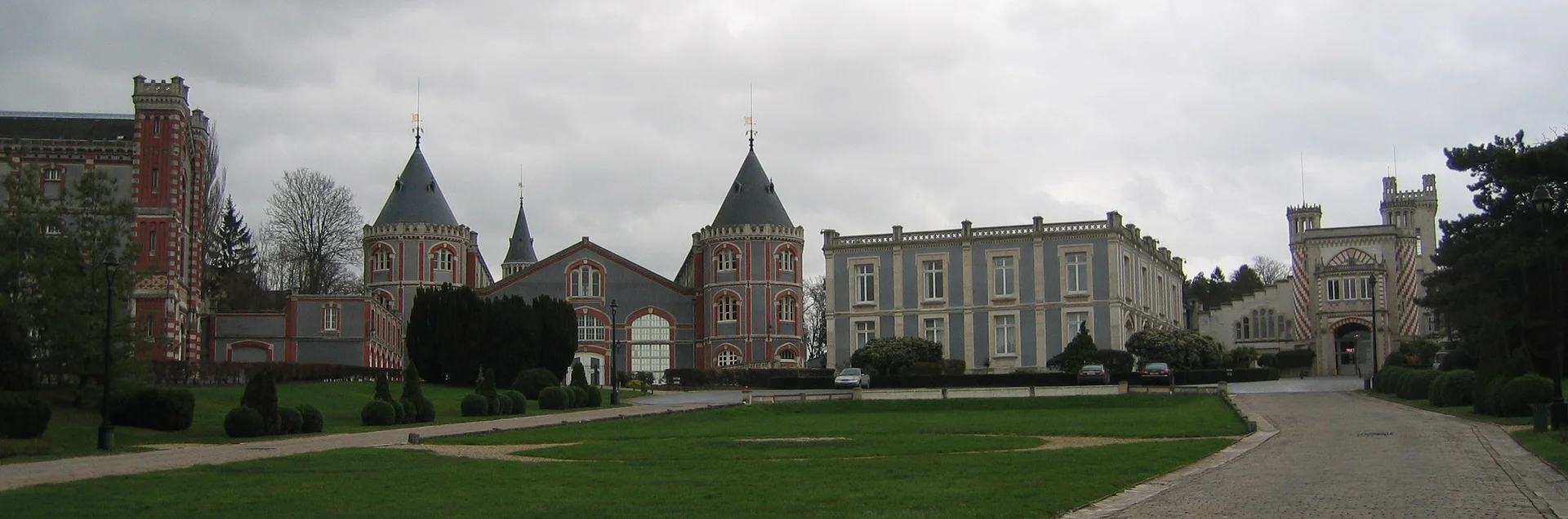
When champagne meets contemporary art 30 meters underground
The temperature here holds steady at 50 degrees Fahrenheit year-round. The air feels crisp, thick with moisture and the distinct, earthy scent of white chalk. Beneath your feet lie 18 kilometers of underground tunnels where millions of bottles rest. Welcome to the chalk cellars of the Vranken Pommery Estate in Reims, where a 19th-century widow essentially invented the champagne we drink today.
Why visit the Vranken Pommery Estate?
In 1858, Louise Pommery lost her husband and inherited a modest wine trading business. She had no experience in winemaking. Yet, she transformed this small operation into a global powerhouse. Her masterstroke came in 1868, when she purchased land riddled with Gallo-Roman chalk pits on the Saint-Nicaise hill. She then connected these massive shafts with tunnels dug by miners brought in from northern France.
Six years later, in 1874, she launched Pommery Nature, the first brut champagne in history, breaking away from the tradition of sweet wines that dominated the market at the time.
This estate, a UNESCO World Heritage site since 2015, is one of the few places in the Champagne region where wine heritage, monumental architecture, and contemporary art collide in a single tour.
The descent into the chalk pits
116 steps into an underground world
The grand staircase plunges down to the cellars, 30 meters below ground. The Kinematope light installation by artist Pablo Valbuena, permanently fixed to these stairs, sets the mood from the very first step. Down below, the temperature drops to 50 degrees Fahrenheit and humidity hits 98 percent, which are perfect conditions for aging champagne.
The chalk pits, mined since the Gallo-Roman era for building materials, form massive vertical cavities that Louise Pommery had the foresight to turn into underground cathedrals.
Bas-reliefs carved into the chalk
Sculptor Gustave Navlet, commissioned by Louise Pommery in the 19th century, carved monumental bas-reliefs directly into the chalk walls. The tunnels bear the names of world capitals, each christened as the house expanded its commercial reach. You walk from the London gallery to the New York gallery while passing walls lined with thousands of dusty bottles.
Contemporary art underground
Since 2002, the estate has hosted the Expérience Pommery each year, a contemporary art exhibition installed in the heart of the cellars. More than 300 international artists have presented works designed specifically for these spaces. Monumental sculptures, video installations, and forests of butterflies suspended from the ceiling create a dialogue with the raw chalk and the dim light of the tunnels.
The exhibition changes every year, which provides a reason to return.
This artistic choice is polarizing. Some visitors love the contrast between contemporary art and the historic cellars. Others would have preferred a more sober presentation of the underground heritage. Our take is that this blend is exactly what sets Pommery apart from every other champagne house in Reims. If you are looking for a standard tour focused strictly on winemaking, other houses will suit you better. If the intersection of art and wine intrigues you, go for it.
Villa Demoiselle, the Art Nouveau treasure of the estate
Across from the main buildings, the Villa Demoiselle warrants its own visit. Built between 1904 and 1908 by architect Louis Sorel for Henry Vasnier, the director of the Pommery house and an avid art collector, this home has survived a turbulent history. It endured world wars, abandonment, squatters, and a threat of demolition in 1980. Purchased in 2004 by Paul-François Vranken, it underwent a four-year, painstaking restoration.
Inside, the transition between Art Nouveau and Art Deco shows in every detail. You will find furniture by Majorelle, a dining room designed by Émile Gallé, glassware by Lalique, chairs by Serrurier-Bovy, and a mahogany fireplace carved with umbelliferous patterns that was presented at the 1900 World Fair.
The black crystal Zénith chandelier by Philippe Starck in the Grand Salon serves as a reminder that the space remains focused on contemporary design. Take a moment to look at the restored wall stencils. More than 20,000 sheets of gold leaf were required to recreate these decorations.
Friendly tip: The Villa Demoiselle closes between 1 p.m. and 2 p.m. and remains closed on Tuesdays and Wednesdays. Start with the cellars in the morning, then continue to the Villa after your break. Bring a warm layer for the descent. Even in the middle of summer, bare arms will regret the 50-degree temperature. An elevator is available for the ascent, so ask for it if the 116 steps back up concern you.
Opening hours
Mon to Thu and Sun: 10:00 AM to 6:00 PM.
Fri and Sat: 10:00 AM to 7:00 PM.
Villa Demoiselle: closed between 1:00 PM and 2:00 PM, and on Tuesdays and Wednesdays.
*Information subject to change

In Reims, there are several cellars and estates you can visit. The Pommery estate is a must. The grounds are stunning and well maintained. The guided tour takes you to discover the cellars and underground tunnels with a very pleasant tasting. I really loved it.