
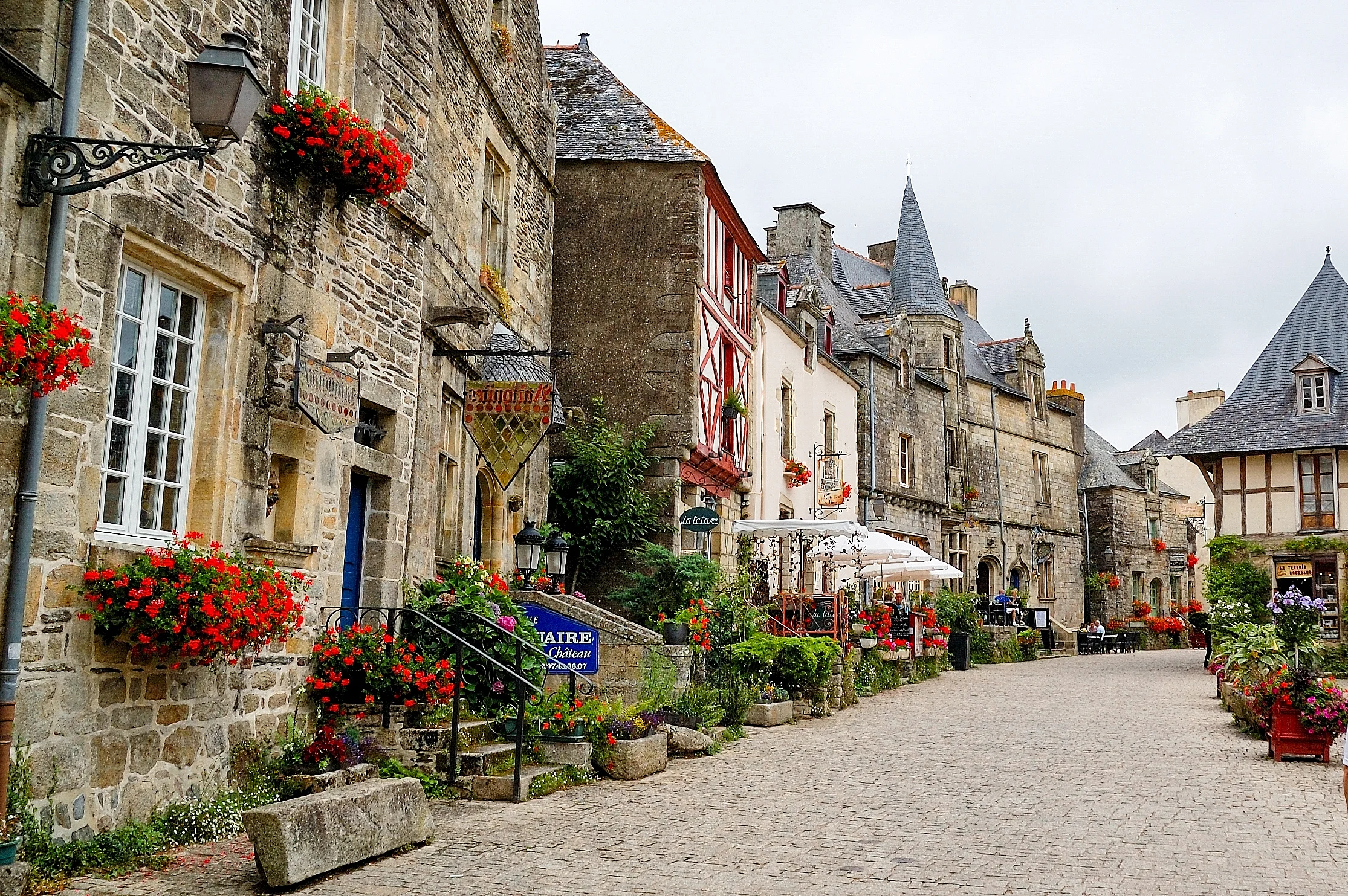
Rochefort-en-Terre, golden stone and windowboxes in bloom
There is a particular late-afternoon light that hits the pink granite, making the geranium pots hanging from the timber-framed facades glow in the setting sun.
Rochefort-en-Terre has repeatedly been voted one of France's favorite villages, and you understand why the moment you walk up its main cobblestone street. Perched on a rocky spur, this inland village in Brittany has cultivated its postcard setting for over a century, turning it into an open-air stage for visitors from around the globe.
Is this destination right for you?
Do you love car-free lanes, timber-framed houses, and artisan shops tucked inside 16th-century buildings? Are you looking for a stop between Vannes and Redon for a photogenic stroll of a few hours? You will love it here.
On the other hand, if you are hoping for a lively town with nightlife or a dense cultural scene year-round, look elsewhere. Rochefort-en-Terre is best visited during the day, and its charm relies on quiet, not hustle and bustle.
Great destination for:
- Photography enthusiasts and medieval architecture fans
- Families looking for a short walk with kids
- Road trips through Brittany with a half-day stop
Skip this destination if:
- You are planning a long stay without a car
- You want nightlife or late-night dining
- You hate tourist crowds during peak season
A reasonable budget, even in peak season
| Expense | Range |
|---|---|
| Night in a B&B | 60 to 85 € |
| Night in a boutique hotel | 90 to 150 € |
| Quick bite (creperie, galette) | 8 to 14 € |
| Restaurant meal | 20 to 35 € |
| Castle and museum admission | 6 to 9 € |
Estimated rates subject to change
Practical realities on the ground
The village is entirely pedestrian, which is a good thing since the sloping cobblestone streets are not built for cars. The main parking lot sits on the edge of town near the visitor center, and it occasionally fills up on weekends from May through September.
There are no language barriers or security issues to worry about. It is a peaceful Breton village mostly visited by French travelers and a few passing international groups. The pace is slow, bordering on sleepy off-season.
The historic heart, between stone and legends
Grand-Rue and its timber-framed houses
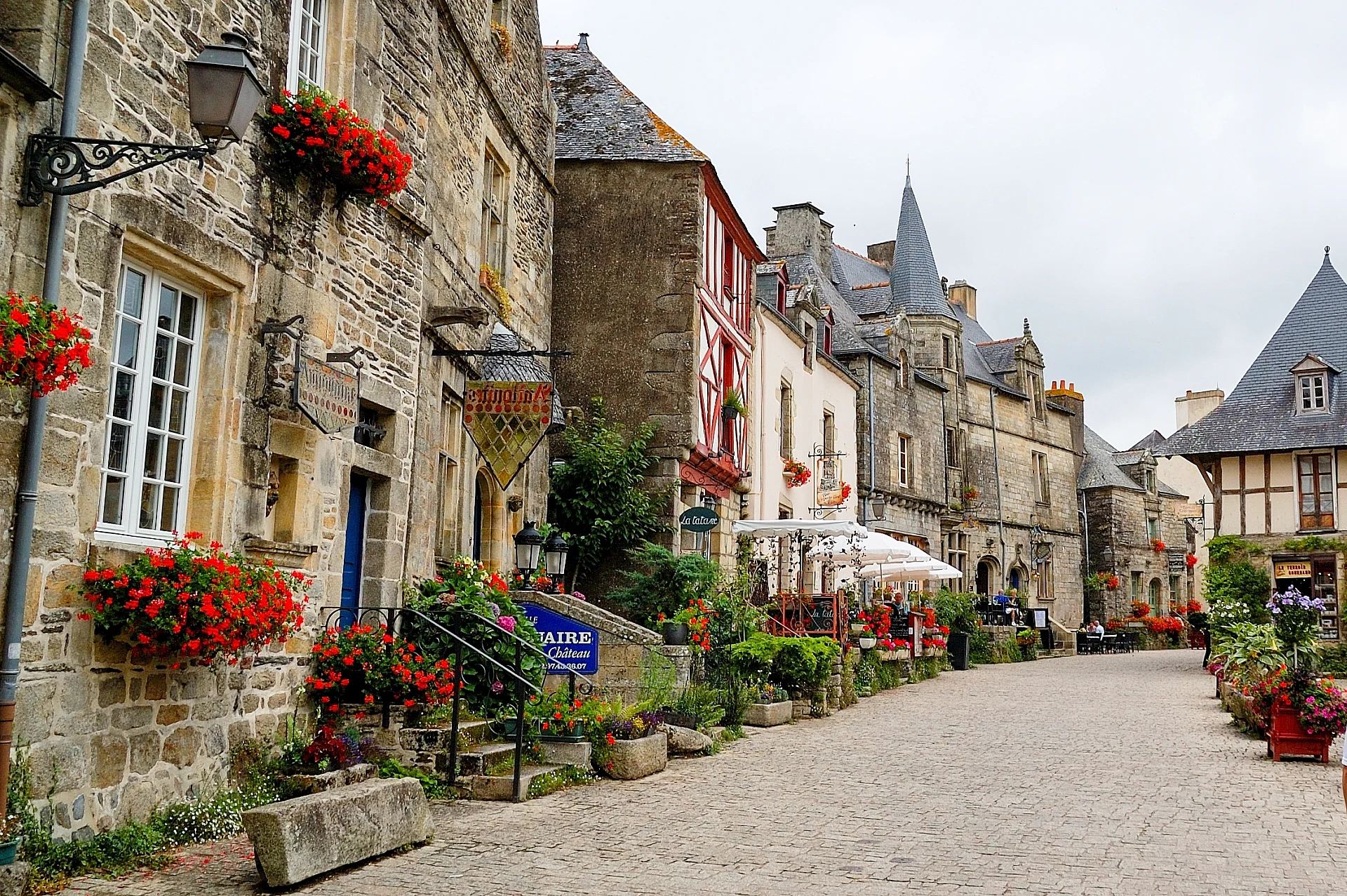
This is the classic view everyone remembers: 15th- and 16th-century timber-framed facades overflowing with red and pink geraniums hanging from the windows. The flowered house contest, launched in the early 1900s by American painter Alfred Klots, shaped this scenery that still thrives every summer.
Artisan shops (potters, glassblowers, galleries) occupy the ground floors of these buildings, creating a human-scaled shopping stroll far from standardized chain stores.
Château des Rieux and its garden
Overlooking the village from its rocky promontory, the Château des Rieux blends medieval remnants with early 20th-century reconstruction led by that same Alfred Klots, who fell under the spell of the place. You can tour a museum dedicated to local history and Breton folk arts, and the terraced garden offers an open view over the valley of the Gueuzon.
Friendly tip: arrive late in the morning on a weekday, before tour buses roll in, which usually happens between 11am and 4pm in peak season.
Sainte-Croix Chapel and its pardon
Tucked away from the main hustle, this small 16th-century chapel still hosts a traditional religious pardon every summer, keeping an ancient Breton religious practice alive. The sober interior contrasts with the ornate facade typical of local religious art.
Around the village, nature and hiking
The Gueuzon gorges wind just below the village, offering a shaded hiking trail that lets you see the settlement from a different angle among the rocks and forest. Plan about an hour for a quiet loop.
Biking enthusiasts also enjoy the surrounding country roads, which are rolling but lightly trafficked, connecting Rochefort-en-Terre to neighboring hamlets that stayed away from the tourist path.
Where to eat and drink in Rochefort-en-Terre?
The local specialty is the galette-saucisse (savory buckwheat pancake wrapped around a pork sausage), sold on the go near Place du Puits, along with sweet crepes with salted butter caramel at downtown crepereries. For a more relaxed meal, several restaurants feature Breton farm products: andouille sausage, far breton cake, and farmhouse cider.
The market, livelier in season, is a great spot to pick up farmhouse cheese and local take-home goods.
Where to stay in and around Rochefort-en-Terre?
The center of the village features a few B&Bs set inside stone houses, ideal for sleeping right in the middle of the scenery. Boutique hotels, which run a bit higher, are generally located on the edge of town.
For tighter budgets, gites and B&Bs in neighboring villages 10 or 15 minutes away by car often offer better value while keeping you close.
How to get to Rochefort-en-Terre?
The closest airport is in Rennes, about a 1-hour drive away, served by several direct flights from within Europe. Nantes airport, about 1h15 away, offers more international connections.
By car from Vannes (35 km) or Rennes (65 km), expect about 40 minutes and just under an hour respectively via local country highways. There is no direct train station in Rochefort-en-Terre; the nearest station is in Questembert, 10 km away, connected to Rennes and Vannes by regional trains.
How to get around Rochefort-en-Terre?
The village is explored exclusively on foot since its narrow lanes are closed to cars or difficult to navigate. A paid parking lot operates during peak season at the entrance to town, just a few minutes' walk from Grand-Rue.
To explore the surroundings (gorges, nearby villages), a car is essential since there is no regular public transit connecting Rochefort-en-Terre to the surrounding towns.
When to go to Rochefort-en-Terre?
Spring and early summer, from May to July, offer the best balance between blooming facades and manageable crowds. August remains gorgeous but significantly busier, with parking lots filling up early in the morning.
Fall and winter reveal a quieter, more authentic village, though some shops close their shutters until the following spring.
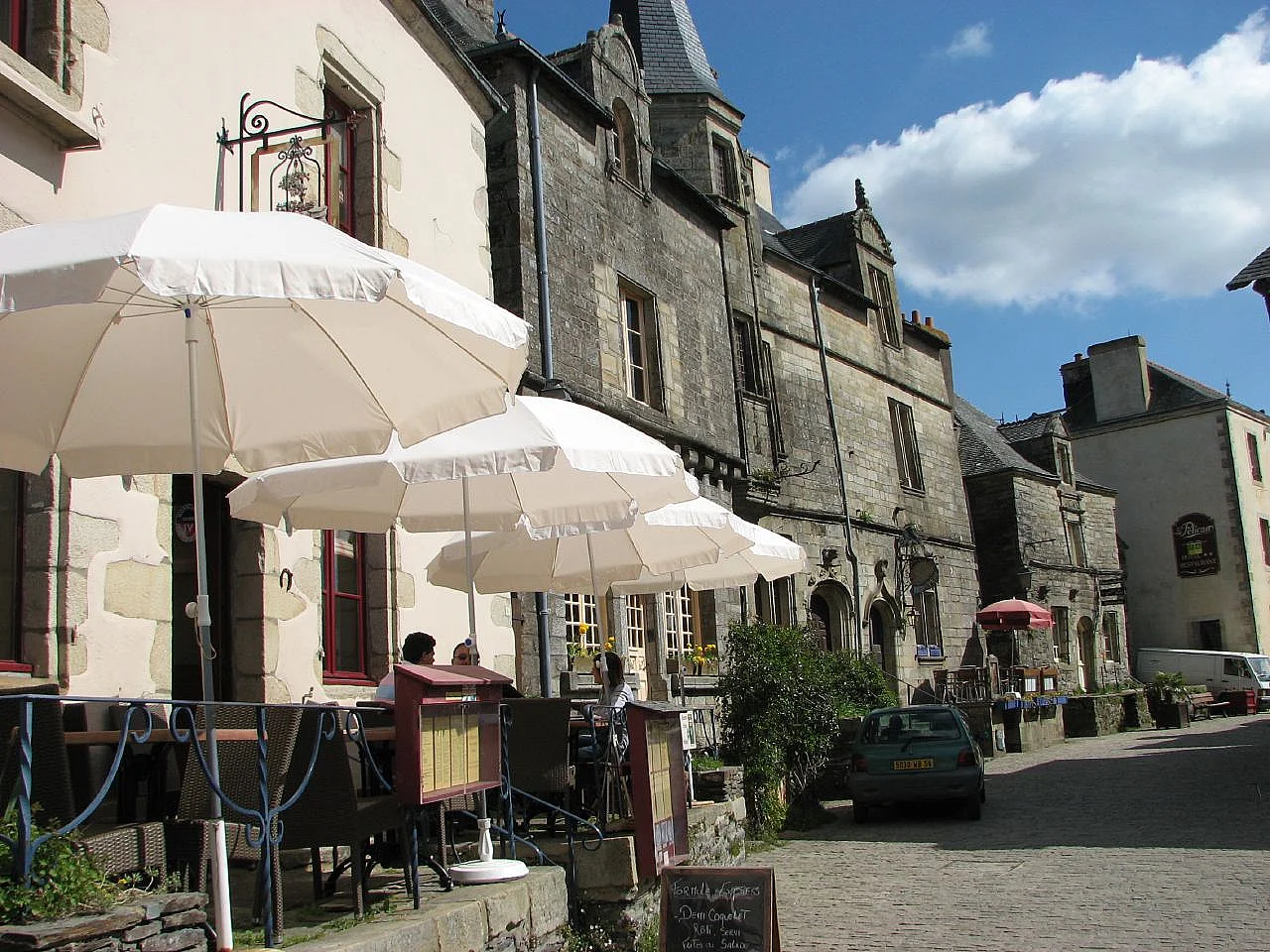
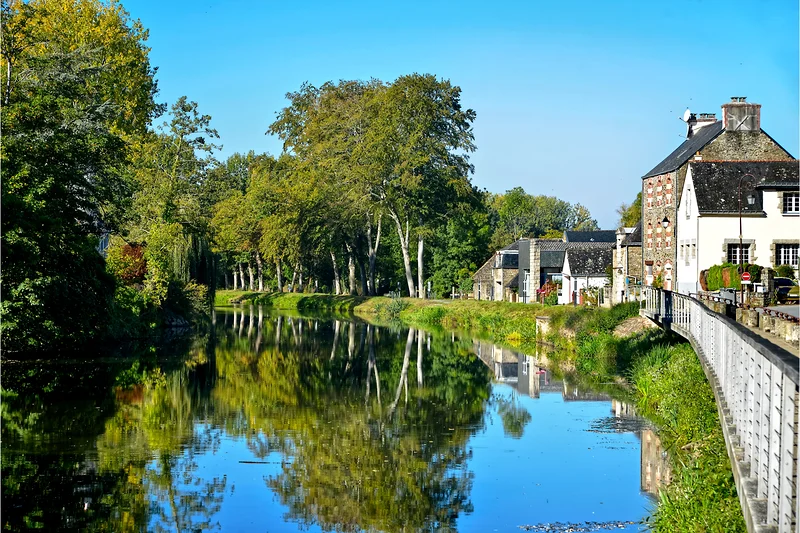
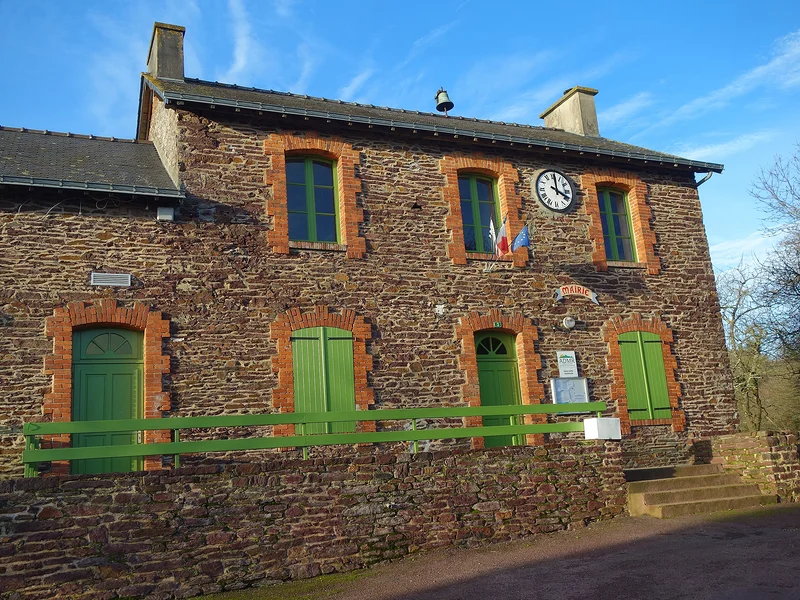
The village of Rochefort-en-Terre has been voted most beautiful village in France several times, and it is well deserved! Its little streets, typical houses, and old stones have so much charm... If you go there, don't miss the hikes in the surrounding moors, but especially the Naia Museum, located in the ruins of the castle. It is the only museum of fantastic and visionary art in France, and it is worth the trip!