
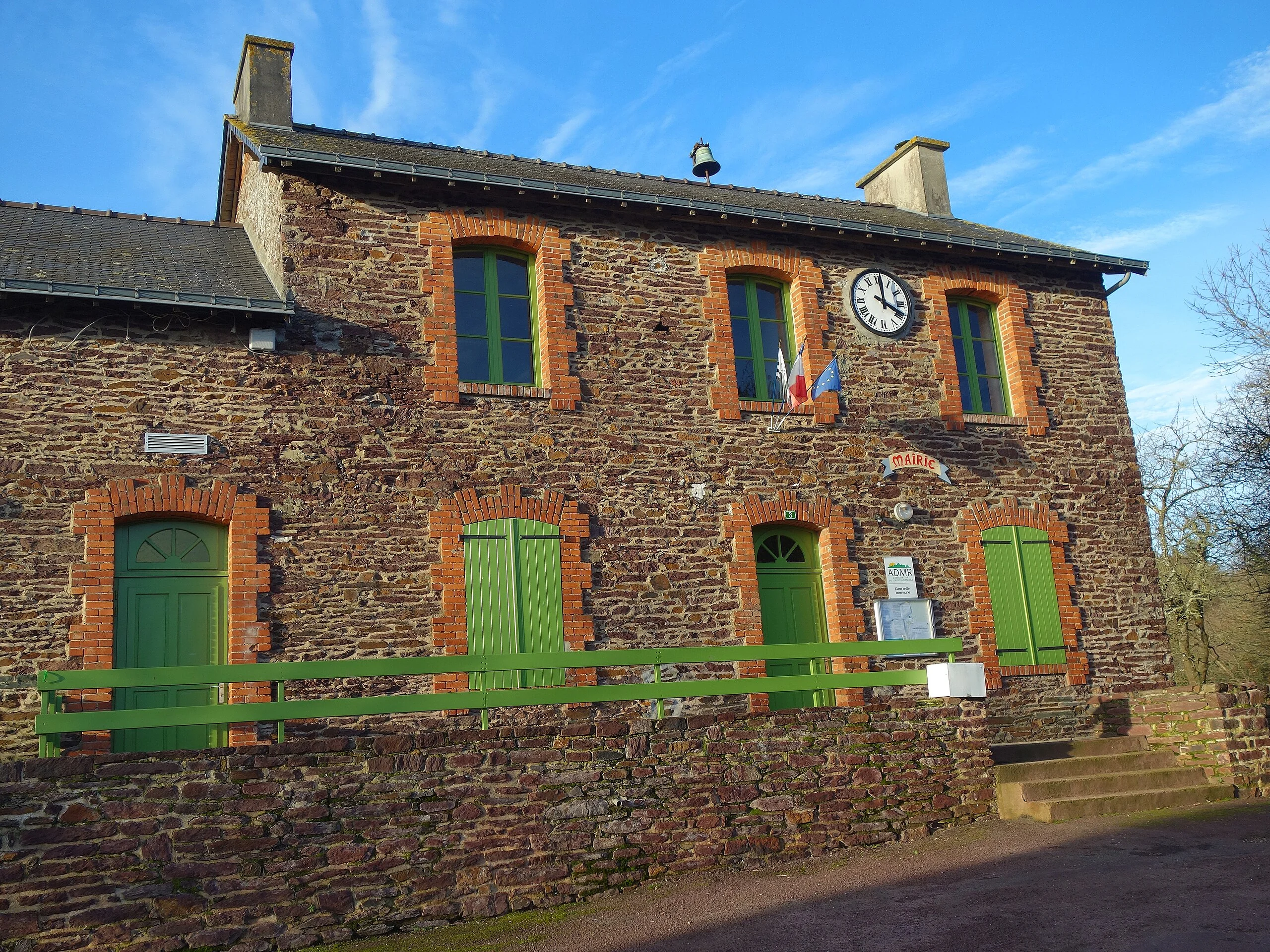
Tréhorenteuc, Where Arthurian Legend Meets the Sacred
Back in 1942, a rebellious priest arrived in the poorest village in the Vannes diocese. The bishop sent him into penance in this hamlet of 150 souls tucked away at the edge of the Morbihan. Twenty years later, Father Henri Gillard had turned a ruined church into a one-of-a-kind sanctuary known as the Grail Church, where stained glass and mosaics fuse Christian faith, Celtic symbols, and the Knights of the Round Table.
That true story tells you everything you need to know about this village. Here, folklore is not a theme park attraction. It is a matter of genuine belief, passion, and storytelling.
A Village for Dreamers, Hikers, and Seekers
If you are looking for mass-market entertainment, souvenir shops, or playgrounds for toddlers, keep driving. Tréhorenteuc appeals to those who enjoy walking, quiet observation, and letting their imagination run wild. The village is tiny. Everything that matters happens out in the forest and inside the small church overlooking the square.
Fans of Arthurian tales will find an unmatched playground here. Hikers will appreciate the varied trails winding through heathlands, purple shale outcrops, and mysterious woodlands. Families with kids over seven can easily tackle the paths, provided everyone wears sturdy shoes and packs water. Having a car is practically essential for exploring the area, though determined cyclists can bike over to Paimpont.
Very Reasonable Pricing
Admission to the church is free. Guided storytelling walks led by a professional cost between $12 and $17* per adult. Expect to pay $68 to $102* a night for a local bed and breakfast, and $14 to $21* for a traditional galette and crepe meal at a local crêperie.
The Valley of No Return and the Golden Tree
Just 500 meters from the village, a footpath plunges into the moorland. This is the entrance to the Val sans Retour, the legendary domain of Morgan le Fay. According to 13th-century medieval romances, this valley imprisoned unfaithful lovers behind invisible air walls. Sir Lancelot, raised by the Lady of the Lake, supposedly broke the spell by fighting the dragons guarding the territory.
The actual geology is just as striking. Red shale rocks breaking through the low vegetation give the landscape a wild, mineral feel. Right at the entrance to the valley, the Mirror of the Fairies pond reflects the sky in dark, still water. Standing right beside it is the Golden Tree, a chestnut trunk covered in 5,000 gilded metal leaves. Artist François Davin created it in 1991 following a wildfire that scorched 400 hectares of forest the previous year. Its branches mimic the antlers of a stag, a sacred animal in Celtic mythology.
Friendly tip: Go early in the morning or late in the afternoon. In the summer, the site gets crowded between 11 AM and 4 PM. Access to the bottom of the valley along the Rauco stream is only open from April 1st to September 15th, outside of hunting season.
Three Trail Options
The short 4 km loop lets you reach the Golden Tree and the Mirror of the Fairies before climbing back up to the ridges in about an hour and a half. The full Val sans Retour circuit is 8 km and takes 2 hours and 40 minutes of walking. It includes the Seat of Merlin, a rock formation where the wizard supposedly watched the sunset, and the Rock of False Lovers, two silhouettes turned to stone by Morgan's wrath. Wear hiking boots because some stretches are steep and rocky.
The Grail Church, Visionary Work of a Priest
From the outside, this little shale church looks just like any other Breton sanctuary. Step inside, however, and you enter a completely different universe. Father Gillard spent twenty years turning this space into a bridge between Christianity, Celtic tradition, and the Arthurian cycle. He often went without food to fund the renovations. In 1945, two German prisoners of war helped him: cabinetmaker Peter Wissdorf built the benches and the boat-hull ceiling, while painter Karl Rezabeck created the Stations of the Cross.
Every single detail deserves a closer look. On the ninth station of the Way of the Cross, Christ falls at the feet of a woman in red representing Morgan le Fay, a symbol of lust. At the back of the church, a mosaic depicts a white stag with a golden collar surrounded by four red lions. It is a scene pulled straight from the Quest for the Holy Grail, where Galahad recognizes Jesus and the four evangelists in animal form. The large stained-glass window in the chancel shows Joseph of Arimathea catching Christ's blood in a glowing green cup, the Grail.
Friendly tip: On the capital near the entrance, look for the inscription "The door is within." This phrase sums up Father Gillard's philosophy that the real spiritual journey is internal. Take the time to decode the symbols, or book a guided tour so you do not miss anything.
Storytelling Walks and Other Legendary Sites
The Brocéliande tourism offices organize storytelling walks throughout the year, mostly on weekends and during school breaks. A guide-storyteller leads you along the trails and brings the legends of Morgan, Merlin, and Viviane to life. The outing lasts about two and a half hours and costs between $12 and $17* per person. These walks frequently start from the main square in Tréhorenteuc.
If you have a few days to spare, other spots in the Brocéliande forest are worth the detour. Merlin's Tomb sits near the Fountain of Youth, about fifteen kilometers away. The Château de Comper houses the Arthurian Imagination Center, featuring exhibits, medieval shows, and kids' activities. The Barenton Fountain, where Merlin supposedly first met Viviane, requires a roughly 6 km hike from the hamlet of Folle Pensée.
Where to Eat and Drink in Tréhorenteuc
The village has two creperies worth visiting. La Grande Vallée, set in a leafy environment, serves buckwheat galettes made to order using fresh, local ingredients. It is open Wednesday through Sunday for lunch and dinner. Le Miroir aux Fées, run by a Brocéliande storyteller, features a terrace facing the trailhead for the Val sans Retour, making it ideal for a stop before or after a hike.
The Au Nombre d'Or creperie, recognized by Petit Futé and Gault et Millau, uses traditional Breton buckwheat flour and offers regional specialties. Expect to pay $18 to $23* for a full meal. For a more traditional sit-down dinner, the Auberge Le Pâtis Vert serves hearty home-style cooking with classics like couscous and traditional calf's head.
Where to Stay in and Around Tréhorenteuc
Lodging choices are limited right in the village. The P'tite maison de Trého, a renovated traditional home right in the center, puts you within walking distance of the Val sans Retour. The Auberge Val sans Retour offers rustic family rooms with a garden and terrace.
For more options, expand your search to neighboring towns. Paimpont, 15 km away, has several gîtes and bed and breakfasts clustered around its abbey and pond. Le Bois des Elfes bed and breakfast in Mauron is just 4 km away at the doorstep of the legendary forest. Travelers looking for unusual stays will find treehouses and yurts within a 20 km radius.
Getting There and Getting Around
A car is by far the easiest way to get around. From Rennes, allow 50 minutes via the RN24. From Vannes, it takes about 45 minutes via the N166. Flying in from North America, connect through Paris, take the TGV to Rennes in about an hour and a half, and pick up a rental car there for the final 50 minutes. The Rennes-Bretagne Airport is 50 km away.
Without a car, the trip gets trickier. BreizhGo buses run from the Rennes train station to Ploërmel in about an hour. From there, you will need to catch a taxi or rent an electric bike at the Tréhorenteuc tourist office. Another option is taking the BreizhGo bus line 1a from Rennes to Paimpont, then hiking into the village via the trails. Plan for a total travel time of 1 to 1.5 hours using public transit.
When to go
Spring and autumn offer the best conditions with pleasant hiking temperatures, shifting light over the moors, and fewer crowds. Summer brings heavy visitor traffic, especially in July and August. Winter has its own moody charm with morning fog blanketing the Val sans Retour, but the valley floor is closed from mid-September to late March due to hunting season. Storytelling walks run year-round, mostly on weekends.
Tréhorenteuc is ideally located for visiting the Brocéliande forest! If you are on a tight budget, a word of advice: book your nights at the municipal campsite in Paimpont, the entry-level prices are very affordable! And on the practical side, you can set up in the evening and pay for your stay the next day if you are only staying for one night (I have done it several times). In any case, be aware that to visit the forest, you will need a car: with the exception of the guided storytelling walks, there is no public transport that will take you to the various available sites. And one last little tip: be curious! This forest hides so many treasures if you wander away from the Val sans Retour! The castle of Tréhorenteuc and its White Lady, the Jardin aux Moines, the remarkable trees... plenty to ensure enchanting walks if you love folklore and nature!