Visiting Okinawa
A string of a hundred and sixty islands between Japan and Taiwan, nearly fifty of them inhabited. For more than four centuries this was the Ryukyu Kingdom, which traded with China and Japan and had its own language. What remains are castles of curving stone, red-tiled roofs guarded by terracotta lions, and a cuisine of its own.
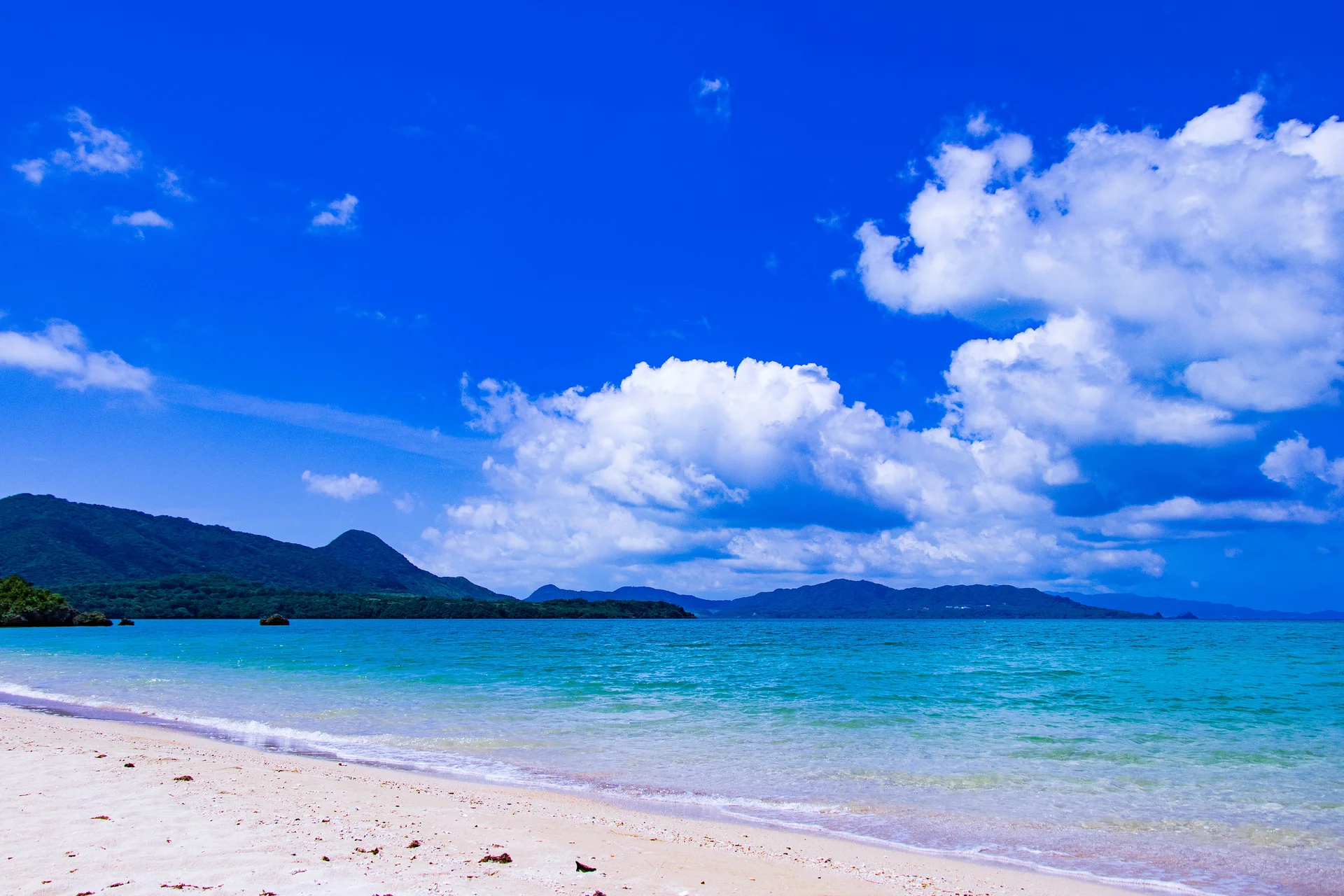
The main island also carries the memory of 1945 and the presence of American bases. Further south, Miyako and Ishigaki have nothing urban left: reef, mangrove and beaches of an almost embarrassing white. You will pick one of the two, or do both.
You will love it if
- You want Japan, but with the sea and twenty degrees in winter
- Reefs and snorkelling appeal to you more than temples
- You like hopping from island to island by boat
Give it a miss if
- You are coming for the Japan of temples and Zen gardens
- You do not want to drive, and on the left
- You can only travel between July and October, typhoon season
The must-sees
-
The palace of the Ryukyu kings looks down on Naha from its hill. The 2019 fire destroyed the great red hall, the Seiden: rebuilt as it was, it reopens to the public on 23 November 2026. Walk up through the Shureimon gate, and finish with the Kinjocho stone-paved lane, which winds down between low stone walls.
-
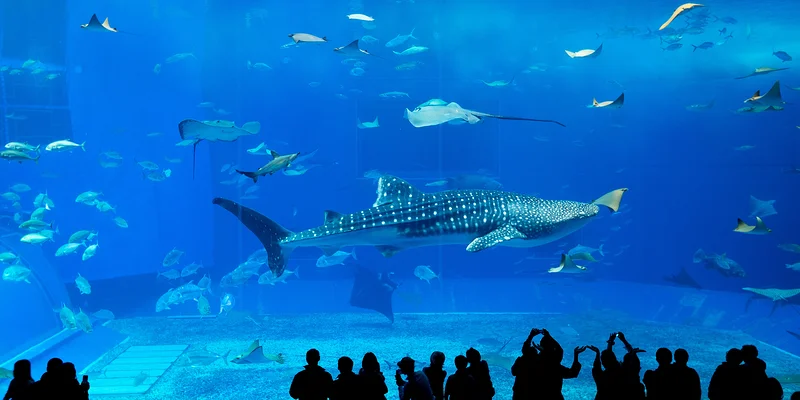
2 Churaumi Aquarium +3 recs
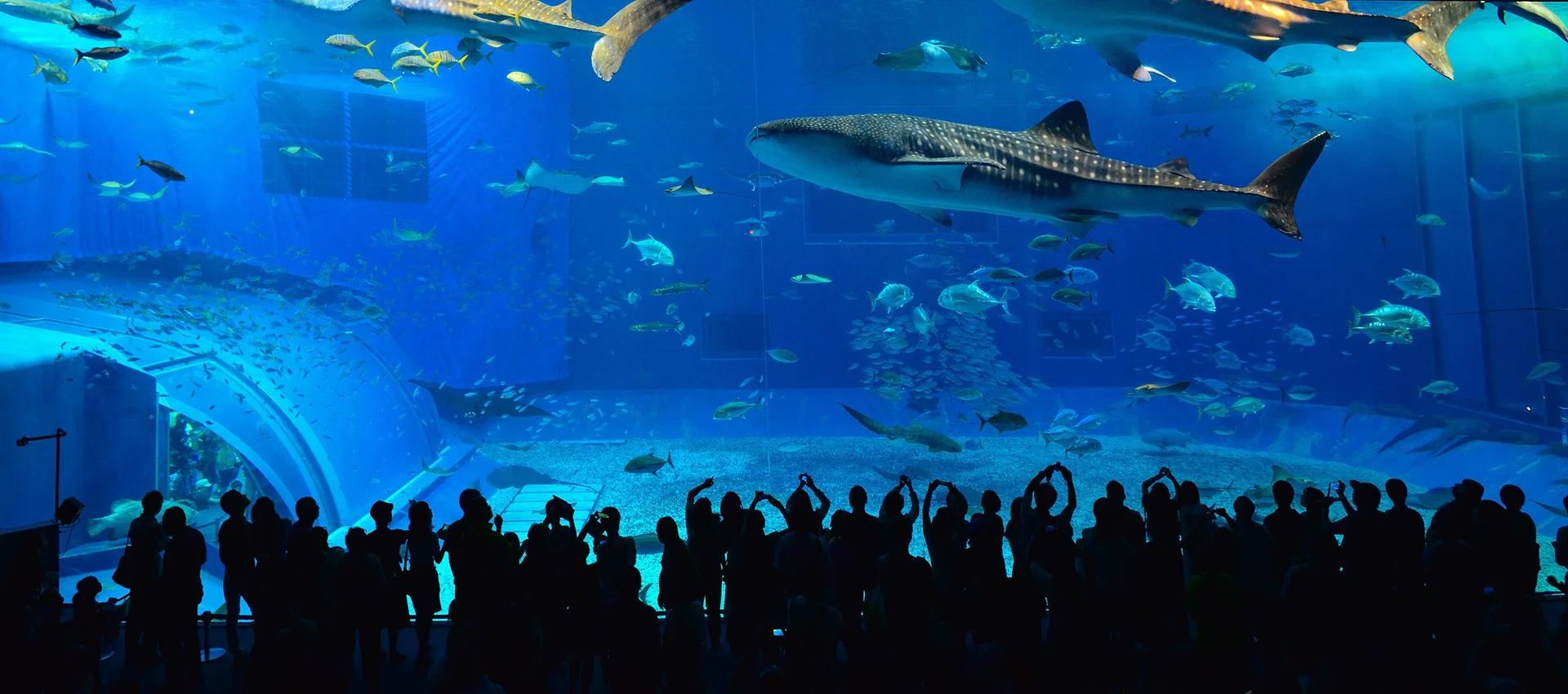
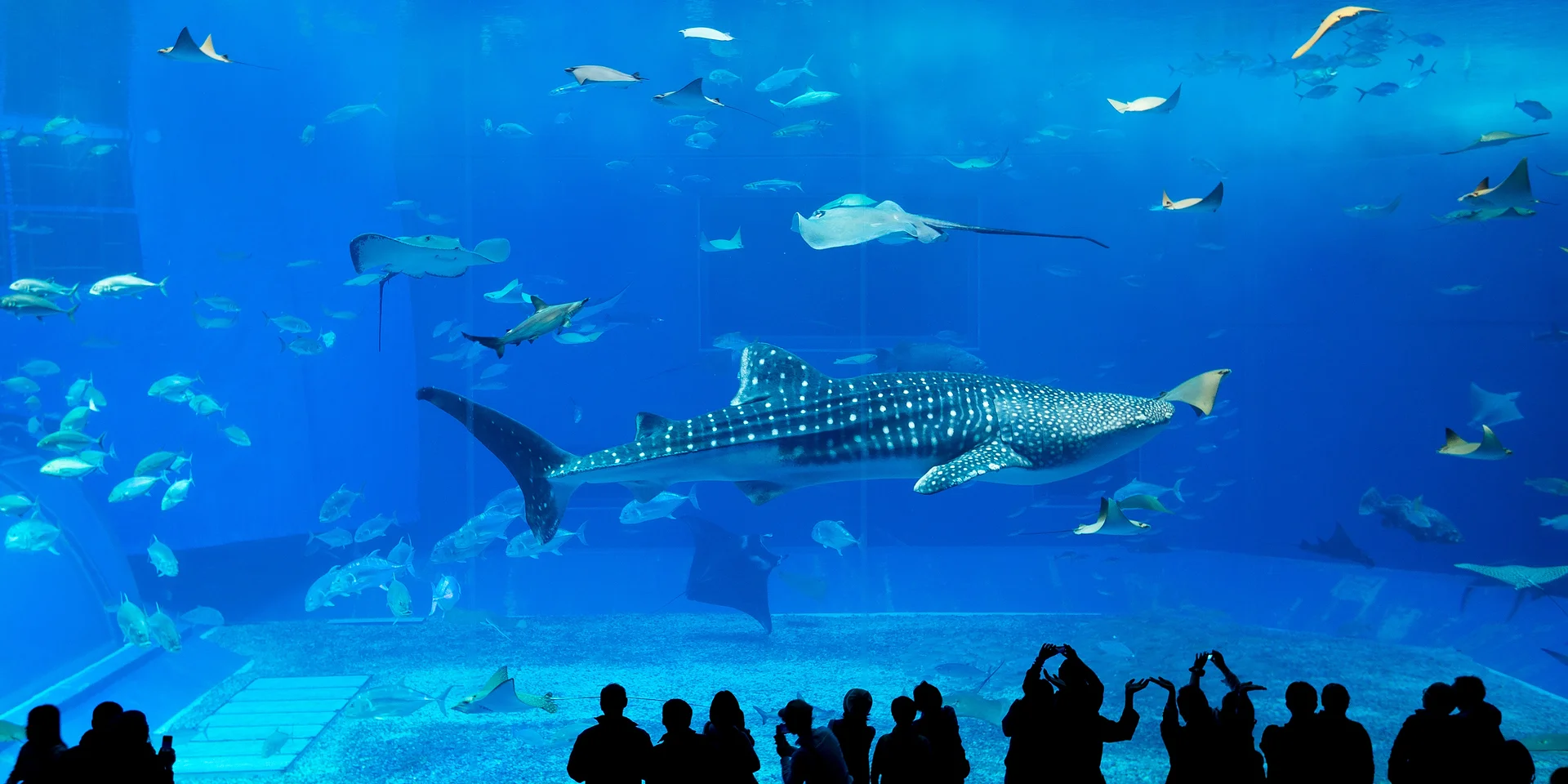
The main tank holds whale sharks and manta rays behind a window eight metres high. Tickets cost 2,180 yen. Go in at opening time, 8:30 am, then step out onto the terraces of Ocean Expo Park, facing the island of Iejima.
-
3 The Kerama Islands Nearby islands
Thirty-five minutes from Naha by fast boat, Tokashiki and Zamami have the clearest water around the main island. Aharen beach slopes gently down to the coral. From January to March, humpback whales pass off Zamami, and boat trips leave from the port to see them.
-
4 Taketomi Coral village
From Ishigaki, the boat crosses in fifteen minutes. The village fits into a few streets of white sand, lined with coral-stone walls and low houses with red roofs. Explore it by bike, early in the morning before the groups arrive, then watch the sunset from Kondoi beach.
-
A sea cave beneath the cliffs of Onna, where the light turns the water electric blue. You swim in with a mask and snorkel, often with a guide. The sea decides: when the wind blows from the north, trips are cancelled, so keep a second morning in reserve.
The classic trap
Swimming anywhere between June and September. It is box jellyfish season, the habu-kurage: on the main island, swim at lifeguarded beaches, inside the nets. And on unsupervised beaches, keep water shoes on: coral and sea urchins will cut your feet.
Our itineraries in Okinawa
| Length | Itinerary | What you see |
|---|---|---|
| 4 days | Naha › Shuri › the south › Chatan | The Ryukyu Kingdom, the memory of 1945 |
| 1 week | Naha › Kerama › Onna coast › Motobu › Nakijin | The whole main island, plus a nearby island |
| 2 weeks | The main island, then Ishigaki, Taketomi and Iriomote | Two archipelagos, from city to jungle |
On the main island, travel from south to north: Naha and its surroundings first, then the Onna coast, and Motobu to finish. Keep a whole day for the Kerama, by boat from Naha. Got two weeks? A one-hour flight takes you to Ishigaki, where the boats leave for Taketomi and Iriomote.
When to visit Okinawa
| Appeal | Season | Temperatures | Sea | Crowds and prices |
|---|---|---|---|---|
| WinterDec. to Feb. | 14 to 21 °C | 21 to 22 °C | Low | |
| SpringMar. to May | 17 to 27 °C | 22 to 25 °C | Medium | |
| SummerJun. to Sep. | 26 to 32 °C | 27 to 29 °C | High | |
| AutumnOct. and Nov. | 21 to 28 °C | 25 to 27 °C | Medium |
Our advice
Aim for April, October or November: the sea is warm, typhoons are rare and Japanese travellers are back at work. Avoid Golden Week, in late April and early May, and the rainy season, from mid-May to late June. From July to October, a typhoon can ground planes and boats for two or three days.
Getting to Okinawa
-
With a stop in Tokyo or Osaka The simplest
No direct flight links Europe or North America to Okinawa. From Tokyo, allow two and a half hours' flying to Naha, a little less from Osaka. Japanese airlines often sell the domestic leg on the same ticket as the long-haul flight.
-
Via Seoul, Taipei or Hong Kong To combine
Naha has direct flights from several Asian cities. From Taipei the flight takes barely an hour and a half: the way to pair Okinawa with Taiwan or Korea.
-
On to the outer islands Next
Ishigaki and Miyako have their own airports, an hour's flight from Naha. A few flights also link them directly with Tokyo and Osaka, without going back through the main island.
Land in Naha, pick up your car at the airport, and book the flight to Ishigaki or Miyako from the start if you plan to go: in high season, seats go fast. There is no longer a passenger ferry between the main island and the southern islands.
Getting around Okinawa
In Naha, the Yui Rail monorail links the airport, the centre and Shuri Castle: you do not need a car. As soon as you leave the city, rent one: buses are slow and infrequent to the Onna coast, Motobu and the north. Driving is on the left, and the Okinawa Expressway runs up to Nago. On the outer islands, a car or scooter is enough; on Taketomi, a bike.
Good to know
To drive, you need an International Driving Permit issued under the 1949 Geneva Convention, which the UK, the US and most English-speaking countries issue: get it before you leave. Around Naha, morning and evening traffic jams double journey times: set off before 7:30 am or after 9 am.
What to eat in Okinawa
- Okinawa soba: thick wheat noodles in a pork and bonito broth, topped with slow-cooked pork belly.
- Goya champuru: a stir-fry of bitter melon, tofu, egg and pork, the everyday dish.
- Rafute: pork braised for hours in awamori, soy sauce and brown sugar until it melts.
- Umibudo: "sea grapes", a seaweed in clusters that pops between your teeth, served with a little vinegar.
- Taco rice: taco filling on a bed of rice, born near the American bases.
- Awamori: the archipelago's distilled rice spirit, to try with water and ice.
To eat like a local, go upstairs at Makishi market in Naha: you buy your fish on the ground floor, and a restaurant cooks it for you. In the evening, look for an izakaya where someone plays the sanshin, the archipelago's three-stringed lute.
Where to stay in Okinawa
| Area | What for | Good to know |
|---|---|---|
| Naha | City, Shuri, boats to the Kerama | No car needed |
| Chatan | Sunsets, restaurants | Noise from the base's planes |
| Onna coast | Beaches, resorts, Blue Cave | A car in the evening |
| Motobu | Aquarium, Nakijin, the north | Two hours from the airport |
| Miyako | Beaches, very clear sea | An hour's flight |
| Ishigaki | Taketomi, Iriomote, reefs | Boats depend on the sea |
How much does a trip in Okinawa cost?
| Trip | Length | Budget per person |
|---|---|---|
| Budget (city hotel, monorail and buses, simple restaurants) | 7 days | €600 to €900 |
| Comfort (resort, car, restaurants) | 7 days | €1,300 to €2,000 |
| Luxury (5-star resort, boat trips) | 7 days | €3,000 to €5,000 |
- The season: Golden Week, in late April and early May, then July and August are the most expensive weeks. Aim for November or the winter months.
- Domestic flights: the return flight to Ishigaki or Miyako comes on top, and its price climbs fast in high season.
- Admissions: 2,180 yen for Churaumi Aquarium in 2026, the most expensive visit on the island.
- Boats: crossings to the Kerama and the Yaeyama islands come on top of your stay.
- Meals: a bowl of Okinawa soba or a set lunch stays cheap, far less than a resort dinner.
Traditions and way of life in Okinawa
People speak Japanese, but the elderly still speak uchinaaguchi, the island's own language. On 23 June, the archipelago stops for Irei no Hi, the day of remembrance for the 1945 battle, at the Peace Memorial Park in Mabuni. In summer, around Obon, eisa dancers parade to the beat of drums.
On roofs and by front doors, shisa, half lion, half dog, stand guard in pairs: one with its mouth open, the other closed. You will probably take a pair home. In October, Naha pulls the biggest rice-straw rope in the country, at its great tug-of-war.