
Where to stay in Hakone: the best neighbourhoods (2026)
Hakone has no single downtown. Under one name live more than 7 hot spring hamlets, connected by a switchback train, a cable car, a ropeway, and a boat. Riding them all in a single day is the main draw here. They shut down early though, with the last ropeway departing at 5:00 PM, and 4:15 PM in December and January.
The hamlet you pick dictates your evening, whether that means a commercial street with restaurants or a dinner served right at your lodging. Prices are tough to compare directly because rates are quoted sometimes per room and sometimes per person. A room for 2 without meals runs between $109 and $194*. This guide focuses on 4 areas.
Spend the night in a ryokan (traditional inn) by the water for an even more authentic experience.
Compare hotel prices in Hakone
In a hurry? Find the best accommodation deals in 3 clicks.
Compare live deals from Booking, Expedia, Agoda and other partners.
At a glance: our picks by traveller type
Pick the profile that suits you to head straight to the recommended neighbourhood.
The neighbourhood map in Hakone
Get your bearings on the neighbourhoods and must-see sights before choosing where to drop your bags. Click a name to jump to its description.
Hakone-Yumoto and Tonosawa The train terminus right at the town entrance
to arrive in the evening and grab dinner out
The main street hugs the Hayakawa River and stays active after dark with sweet manju shops, public baths, and convenience stores. The Romancecar gets here direct from Shinjuku in 80 minutes. It is the one spot in Hakone where you step off the train without wondering if the next connection is still running. Heading up the gorge toward Tonosawa, the oldest ryokan inns still have their original timber frames. What this area lacks: views of the lake or Mount Fuji, meaning every day of sightseeing starts with a commute.
Where to stay in this area
Fukuzumiro Luxury
A ryokan dating back to 1890 in Tonosawa, featuring a three-story timber building listed as a tangible cultural property and recognized among twenty notable 20th-century Japanese structures. With only 17 rooms, it serves kaiseki dinners in your room and keeps its baths open around the clock, including a large cypress tub.
Yoshiike Ryokan Mid-range
A large property located a 7-minute walk from Hakone-Yumoto station. It taps six private hot spring sources, and its Sangetsu-en strolling garden wraps around a pond. An outdoor garden pool operates from June 1 to September 30.
Onsen Hostel K's House Hakone Budget
The inn sits a 15-minute walk from the station or a 4-minute bus ride, and features its own outdoor hot spring bath. It offers dormitory beds, including a female-only option and private cabin beds, alongside traditional Japanese rooms sleeping 2 to 6 guests. A shared kitchen is available with no curfew, though the dorms are restricted to guests aged 7 and older.
Pros
- Direct Romancecar service from Shinjuku
- Open tables and convenience stores late into the evening
Cons
- No lake or Mount Fuji views from this area
- Every day of sightseeing starts with a commute
Gora and Miyanoshita On the switchback train right before the cable car
For the museums, without relying on a bus
The switchback train zigzags its way up to Gora, where the funicular takes over for the final push up the ridge. In between, Miyanoshita lines up antique shops along a sharp curve of the main highway. This is the museum zone: the open-air museum has its own dedicated train stop, and Gora Park is an easy walk from the station. The catch is the terrain since nothing is flat here, meaning you will be hauling your bags up steep inclines by hand.
Where to stay in this area
Fujiya Hotel Luxury
Opened in 1878 right on the Miyanoshita curve, pairing traditional Japanese rooflines with a classic Western hotel structure. One suite is named after Charlie Chaplin, and the bathwater comes directly from the Miyanoshita hot spring located right beneath the property.
Hakone Yutowa Mid-range
Two wings and a residence just a 5-minute walk from Gora Station, done up in a contemporary Japanese style. The water is drawn from Ninotaira, one of Hakone's 17 thermal sources, and you can book rooms with two meals included, breakfast only, or room-only.
Emblem Flow Hakone Budget
The closest address to a station in this entire guide, sitting just a 1-minute walk from Gora Station. It features simple private rooms with no dorms, complete with thermal baths, a kitchenette, and a 24-hour coin laundry.
Pros
- Museums and Gora Park within walking distance
- Two rail lines, keeping you independent from the ropeway
Cons
- Steep streets that make hauling luggage a real chore
- Zero views of the lake
The Sengokuhara Plateau To the west, a 30-minute bus ride away, with no train station
for the served dinner and milky-white water
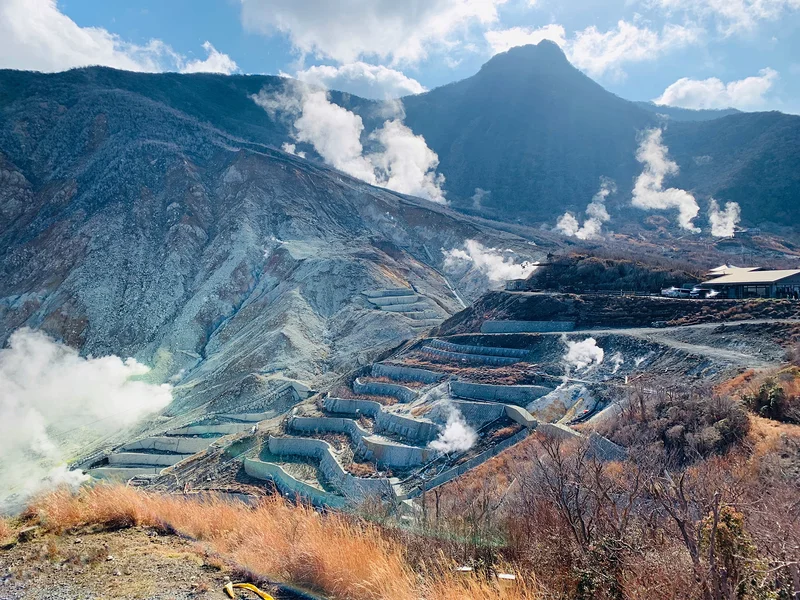
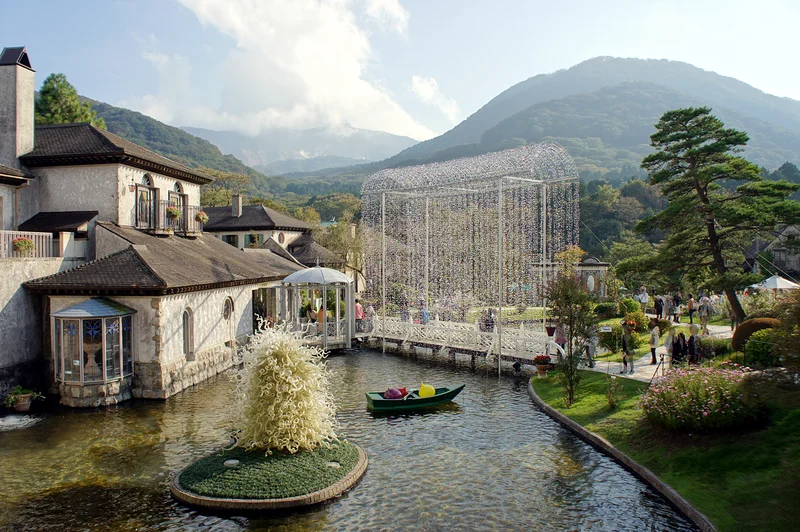
The plateau opens up suddenly after the switchbacks, with pampas grass fields that turn white in the autumn and Mount Fuji coming into view on clear days above the rooftops. No trains climb up here, the bus takes 30 minutes from Hakone-Yumoto, and a direct highway bus runs from Shinjuku to the plateau. The water flows down cloudy and white from the Owakudani springs, giving the baths a milky tint you do not see down below. In exchange, the plateau has almost no restaurants open after dark, which is why nearly every inn serves dinner.
What to see & do in the area
Where to stay in this area
Senkyoro Luxury
This property is celebrating 150 years on the plateau and draws its white water from the Owakudani springs. Several rooms in the main building feature their own private outdoor bath, and an annex villa, Okunokigi, is available for rent tucked away among the trees.
Mount View Hakone Mid-range
A 37-room inn right along the plateau road, where the direct Shinjuku bus stops right out front. It serves a Japanese kaiseki meal that changes monthly and offers three private reservable baths for an extra fee, named Kaguya, Kingyo, and Medaka.
Fuji-Hakone Guest House Budget
A family-run 15-room tatami inn without private bathrooms or toilets in the rooms, featuring a thermal bath that can be locked from the inside for private use. It charges by the room rather than per person, without meals included, and locks its front door at 11 PM.
Pros
- Baths fed by the milky waters of Owakudani
- A direct highway bus from Shinjuku
Cons
- No train station, everything is reached by bus
- Almost no dining options at night outside of the inns
Lake Ashi, Motohakone, and Hakone-machi South of the lake, around the shrine
for the water torii gate and Mount Fuji
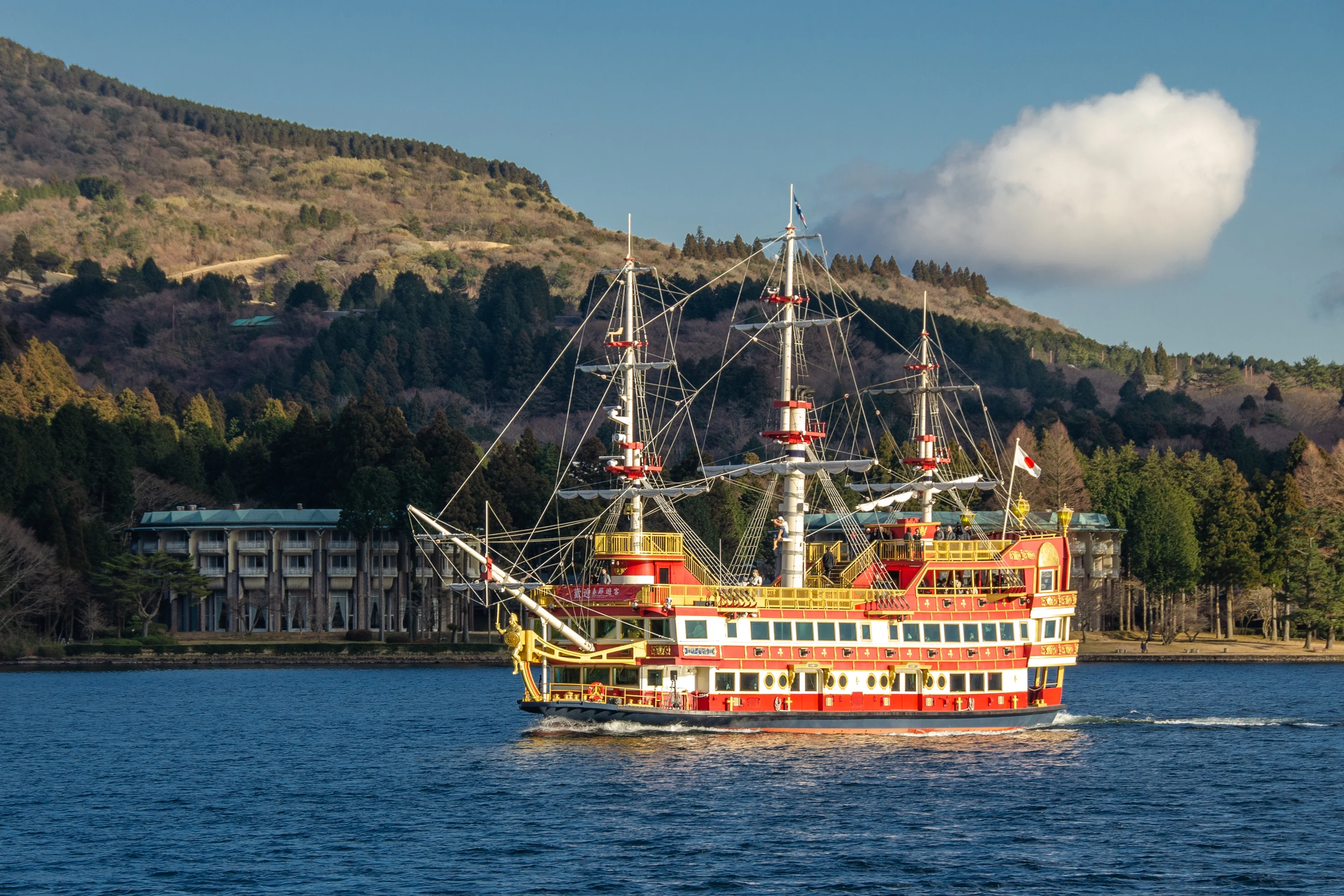
South of the lake, the road runs along the water between Motohakone and Hakone-machi, two villages separated by a cedar-lined path and the former Tokaido checkpoint. The red torii gate of the shrine stands in the water right here, and nowhere else in the town, with Mount Fuji rising behind it when the sky clears. Almost every lakeside hotel keeps a view of the water, a perk no other district can offer. Once evening hits, however, everything shuts down, the transit links stop, the tour buses head back down, and the shoreline empties out of visitors.
I recommend visiting it before taking the boat on Lake Ashi because it is right near the pier.
Where to stay in this area
Odakyu Hotel de Yama Luxury
The former villa of Baron Koyata Iwasaki, turned into a hotel in 1948 and renovated in 2015, set within a 130,000-square-meter park sloping down toward the lake. All rooms look out over the water, and the bath is fed by an alkaline spring. The French restaurant and the Japanese restaurant occupy two separate pavilions.
Hakone Hotel Mid-range
The lakeside annex of the Fujiya in Hakone-machi, featuring two bath areas on the 3rd and 4th floors, including an indoor tub that is not fed by hot springs. The view looks out over the water and toward Mount Fuji on clear days.
Moto-Hakone Guest House Budget
A small family-run guesthouse in Motohakone offering tatami rooms with futons, yukatas, and towels provided. It serves no meals and has no hot spring bath, though the Yunessun hot spring amusement park is a 15-minute bus ride away, making it the only budget stay on the south shore.
Pros
- The shrine torii gate and Mount Fuji from the shore
- Rooms facing the water
Cons
- The ropeway heading back up toward Gora stops running at 5:00 PM
- A single budget option without meals or baths
Our tips for booking the right place
- The final departure hour: The ropeway shuts down at 17:00 from February to November, and at 16:15 in December and January. The boat takes 25 to 40 minutes between lake ports depending on the route, and the bus is the only way to reach Sengokuhara, which is 30 minutes from Hakone-Yumoto. Past mid-afternoon, cross-town transit winds down for dinner, so highland inns serve evening meals that must be ordered when booking your room. Odakyu Hotel Hatsuhana runs a shuttle to Hakone-Yumoto station between 9:00 and 17:00 upon request.
- Two ways of displaying rates: Two properties in this guide list their prices in opposite ways, which is a common trap in Japanese hot spring towns. K's House Hakone quotes its rates per person, per night, except for its Japanese-style rooms. Fuji-Hakone Guest House lists rates per room, broken down for single, twin, triple, and family options without meals included. Comparing the two without checking creates an illusion of a price gap that is not actually there. Factor in the local hot spring tax of 150 JPY per person, per night, collected upon arrival.
- The private lockable bath: Public baths are strictly naked affairs, and tattoos are frequently turned away. The Yunessun thermal park in Ninotaira has a formal policy against tattooed guests, though its swimsuit zone allows them if you wear a UV shirt, and the traditional area requires covering them with on-site stickers, at least 2 per person. Several properties get around this by renting private soaking tubs. Fuji-Hakone Guest House lets you lock yours from the inside, Mount View Hakone rents 3 for an extra fee, and both Fukuzumiro and Odakyu Hotel Hatsuhana maintain family baths.
- Booking a room by Lake Ashi while planning to dine elsewhere. The ropeway shuts down at 5 PM, meaning easy transit between hamlets vanishes for the night, and dinner has to happen right where you are sleeping or in that specific village.
- Counting on the ropeway in the dead of winter without checking the schedule. Sections close down annually for maintenance, bridged by replacement buses, and service stops entirely when winds top 30 meters per second.
- Booking the cheapest listing in an area without checking the details. South of the lake, the single budget guesthouse lacks a hot spring bath and serves no meals, missing the entire point of staying in a town built for soaking.
FAQ: where to stay in Hakone
Where to stay in Hakone for a first-time visit?
Where to find budget accommodation in Hakone?
Where to stay in Hakone with family?
Is it a good idea to stay right on the shores of Lake Ashi?
Do you need a car in Hakone?
How much does a night cost in Hakone?
 Keep exploring
Discover everything in Hakone
Keep exploring
Discover everything in Hakone
Comments (0)
No comments yet. Be the first!