
Saint-Pierre, the Town That Defied Its Volcano
Fishermen haul in their night catch while the peak of Mount Pelée slowly emerges from its crown of clouds. Thousands of residents lived this quiet morning on May 8, 1902, completely unaware that it was their final dawn. In three minutes, a pyroclastic flow of several hundred degrees vaporized what was then the most modern city in the Caribbean, killing 30,000 people. Only three survivors escaped the catastrophe.
Today, this town of fewer than 5,000 residents is rising from the ashes once again, carrying a unique memory and a melancholic beauty that no other Caribbean destination can offer.
The Destination for Those Seeking Something Different
If you are heading to Martinique for a steady diet of white sand beaches and poolside cocktails, Saint-Pierre might throw you off. The town caters to curious travelers, history buffs, divers looking for a thrill, and anyone who values the soul of a place over heavy resort infrastructure. The beaches here are made of black volcanic sand, the pace is slow, and the remnants of the 1902 disaster permeate every street corner.
Families with young children looking for organized activities might find themselves disappointed. Lodging options remain modest compared to the south of the island, and restaurants close early. But for anyone willing to slow down, Saint-Pierre delivers a raw Martinican experience far from the mass tourism of the southern beaches.
Practical Info Before You Go
Since Martinique is an overseas department of France, US citizens need a valid passport. Creole blends with French everywhere, but you will get by easily without speaking the local language. Public transit exists but remains unreliable, making a rental car essential for exploring the region. Prepare for high humidity and sudden tropical downpours, especially between June and November.
A Reasonable Budget for the Antilles
Saint-Pierre makes it easier to travel on a budget than the southern part of Martinique. Expect to pay between $68 and $135* per night for a gîte or a local guesthouse. A restaurant meal runs $17-$29*, and most historical sites are free to visit. The Depaz Distillery is open to the public without a fee, and only the château requires an admission ticket of $5.70*.
Exploring the Town's Ghosts
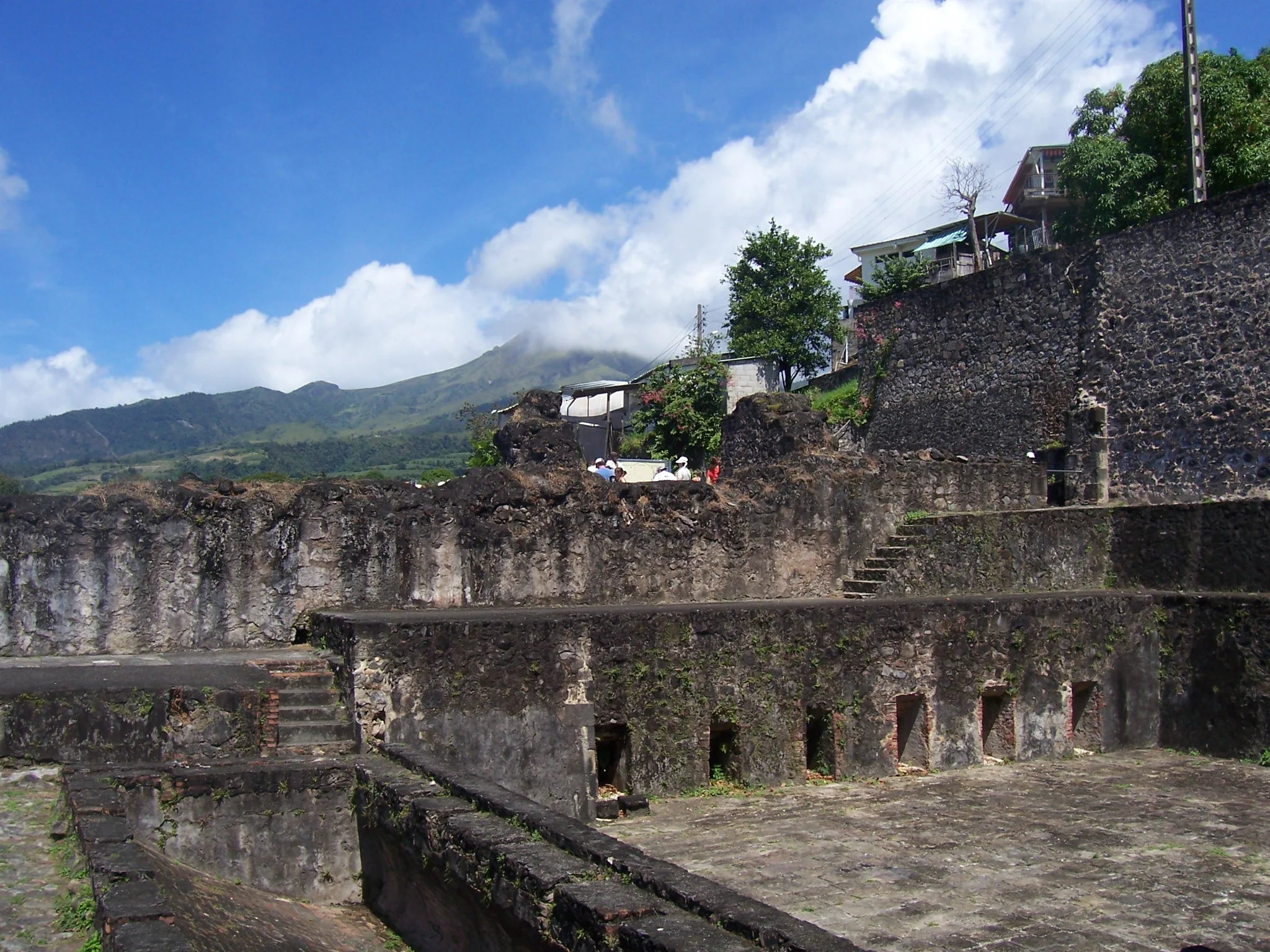
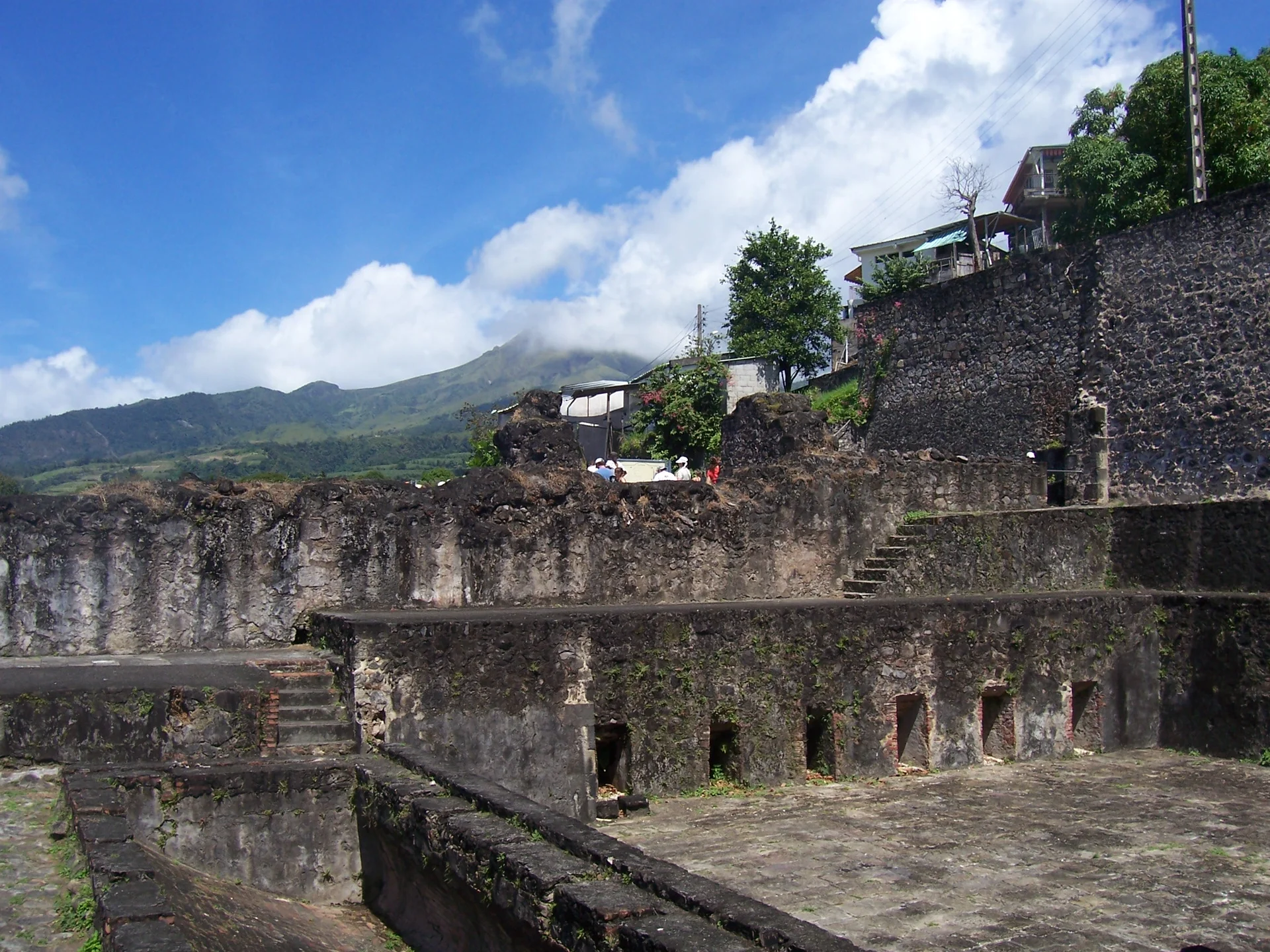
You can walk through the center of Saint-Pierre in a few hours, though it deserves a full day. The ruins of the theater, built on the model of the one in Bordeaux, still stand open to the sky. Farther along, the Cyparis Jail tells the extraordinary story of a prisoner whose stone cell protected him from the pyroclastic flow. Louis-Auguste Cyparis later became an attraction in the Barnum circus, exhibited as the sole survivor of the volcano.
Friendly tip: The Cyparis Express, a small tourist train, offers a one-hour guided tour through the main sites. It is handy when the heat gets intense, but be sure to book ahead at 0596 55 50 92 since departures are not daily.
The 1902 Catastrophe Memorial, housed in the Esnotz battery that once defended the town, preserves objects deformed by the extreme heat. The bronze cathedral bell, melted and twisted, remains one of the most striking testimonies to the eruption's violence. Nearby, the Earth Sciences Discovery Center takes a more scientific approach to Caribbean volcanism.
Diving into Sunken History
The bay of Saint-Pierre holds a secret that only divers can uncover: a dozen shipwrecks sent to the bottom on the morning of the disaster. These merchant ships, which had arrived from all over the world, were waiting to load sugar and rum when the fiery cloud ignited them and sent them plunging.
The Roraima, a 120-meter cargo ship belonging to the Quebec Steamship Company, is the most spectacular of these wrecks. Jacques Cousteau nicknamed it the wreck of angel hair because of the ribbon-like algae covering it. Resting between 36 and 55 meters deep, it is accessible to Level 2 divers and above. For beginners, the Amélie, lying at just 9 meters, offers a moving first dive into this marine graveyard.
Friendly tip: The A Papa D'lo dive shop, located across from the waterfront market, runs trips suited for all experience levels. The briefings are thorough, and the instructors know every inch of these historical wrecks. Book a day in advance, especially between February and June when visibility is at its best.
The Rum Route and the Heights of Pelée
The Depaz Distillery is worth the trip all by itself. The royal palm avenue leading to the estate offers one of the finest views on the island, with sugarcane fields in the foreground, the colonial château in the middle, and Mount Pelée in the background. Victor Depaz, the sole survivor of his family wiped out by the eruption while studying in Bordeaux, rebuilt this estate starting in 1917 as an act of faith and defiance against the volcano that destroyed everything.
Self-guided tours are free and clearly marked, with QR codes giving access to smartphone audioguides. From February to June, the distillery operates at full speed, and the scent of freshly pressed cane juice fills the air. The Le Moulin à Cannes restaurant, set in an old mill overlooking the sea, lets you extend the visit with Creole cuisine revisited by chef Gilles Malidor.
For hikers, the climb up Mount Pelée starts from Morne-Rouge, about twenty minutes from Saint-Pierre. The 2-kilometer trail up to the 1,397-meter summit is not technical but demands good physical conditioning. Set out early, as clouds typically sock in the peak by late morning.
The Wild Beaches of the North
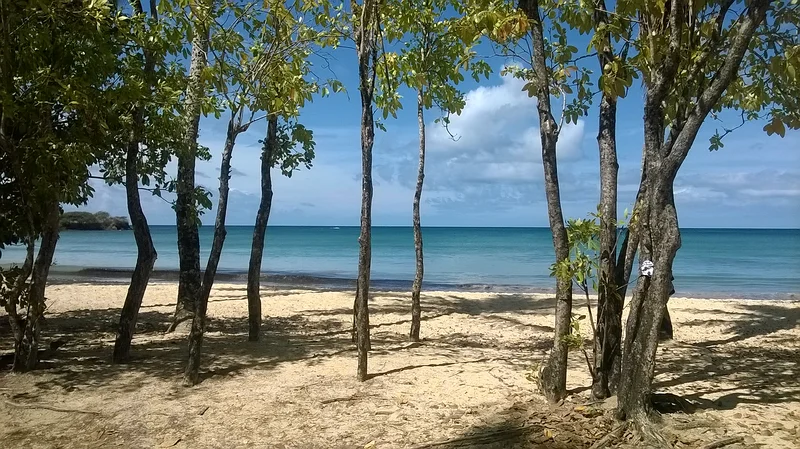
The beaches of Saint-Pierre look nothing like the postcard shores of the south. The sand here is gray and volcanic. Anse Turin Beach, just south of town, has calm waters ideal for snorkeling. Farther north, Anse Couleuvre rewards those who brave a rugged dirt road with black sand, crystal-clear water, leaning coconut palms, and near-total solitude.
The Saint-Pierre market, housed in an open-air hall facing the sea, brings the waterfront to life every morning. Tropical fruits, spices, and fresh fish make it the right spot to feel the pulse of local life. The former slave market stood precisely on this site, serving as a harsh reminder of the dark side of colonial Antillean history.
Where to Eat and Drink in Saint-Pierre
The local culinary scene remains modest but genuine. Chez Arlette, a fixture in town for over thirty years, serves unfussy Creole dishes like chicken colombo, Creole blood sausage, and octopus fricassee. The restaurant La Vague, overlooking the bay since 1951, offers a set menu around $21* that includes a welcome ti-punch. The decor is simple, but the location and generous portions make up for it.
For a more refined meal, Le Moulin à Cannes at the Depaz estate is the top table in the area. The chef works with local Martinican ingredients, serving titiris fritters, grilled balaous, and conch fricassee. Reservations are recommended, especially on Sundays when local musicians play during lunch. Créole Arts Café, located in a restored Creole cottage that was the first building rebuilt after the eruption, provides a cozy daytime alternative.
Where to Stay in Saint-Pierre and Around
Classic hotel lodging in Saint-Pierre is limited to a handful of addresses. Villa Saint-Pierre is the standard choice for anyone wanting to stay right in the village. The real strength of the area lies in gîtes and local guesthouses. Résidence Roxelle, 1.5 kilometers from the center, features apartments with a pool overlooking the Roxelane River, and the hosts offer helpful advice on local hikes.
The neighboring village of Carbet, a ten-minute drive away, has more options. The heights around Habitation Morne Étoile, set in the middle of a sugarcane plantation, appeal to travelers looking for authentic Creole style. For tighter budgets, platforms like Airbnb offer studios starting around $57* a night, often with views of Mount Pelée or the sea.
Getting There and Getting Around
Aimé Césaire International Airport in Le Lamentin has nonstop service from Miami and Montreal, and reaches Paris in 8.5 hours. Saint-Pierre sits a 45-minute drive to the north. Renting a car is essential, with daily rates running about $34 to $57* depending on the season. Shared local minibuses known as taxis-co connect Fort-de-France to Saint-Pierre for around $5.70*, but their erratic schedules make them impractical.
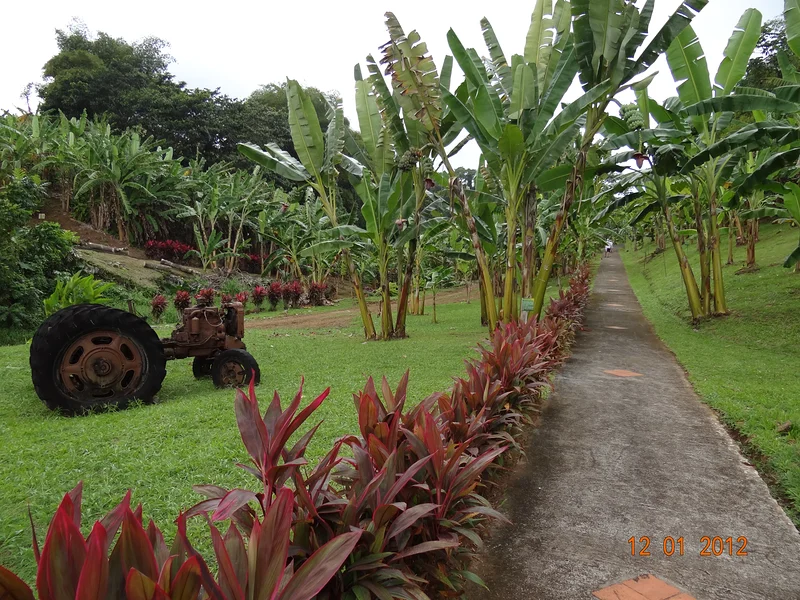
From Fort-de-France, the road hugs the Caribbean coast and passes through several fishing villages. The alternative route via the Route de la Trace, which winds through the rainforest, adds an hour to the drive but delivers dramatic scenery and possible stops at the Balata Garden or the Sacré-Cœur Basilica, a miniature replica of the one in Montmartre.
When to Go
The dry season from December to April offers the best conditions, with fewer rain showers, calm seas for diving, and manageable temperatures for hiking. The sugarcane harvest runs from February to June, making it the prime time to see the Depaz Distillery in full swing. Avoid September and October, the heart of the hurricane season, when some establishments close and hiking trails can become impassable.
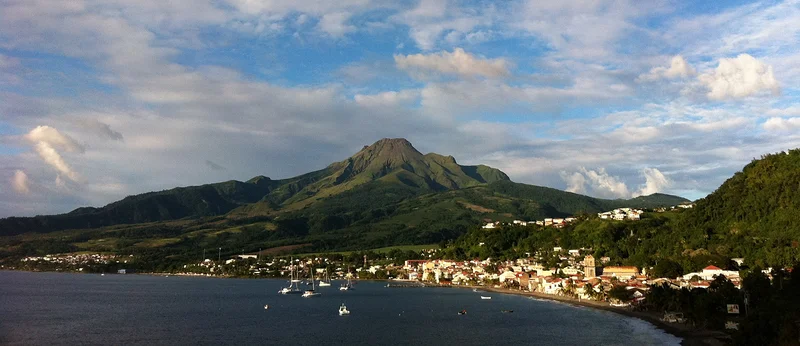
Welcome to Saint-Pierre, the former economic and cultural capital of Martinique.
Between the volcanology museum, the theater ruins (formerly a replica of the Bordeaux theater), the Cyparis dungeon (one of the 2 survivors of the 1902 eruption), and the ruins of the Bethleem asylum, lovers of culture, beautiful stonework, and history will be won over.
Now, let us be honest... the tour of the Distillerie Depaz will have its fans too. And for the foodies, there is the restaurant "la fromagerie" (it is named after the century-old tree in the area). For your info: there is a little dance party on Thursdays with Caribbean music.
Anyway, St. Pierre is not bad, especially since there is obviously a beach where you can take a nap after the sightseeing, the restaurant, and the tasting (or purchasing) of rhum agricole :-)