
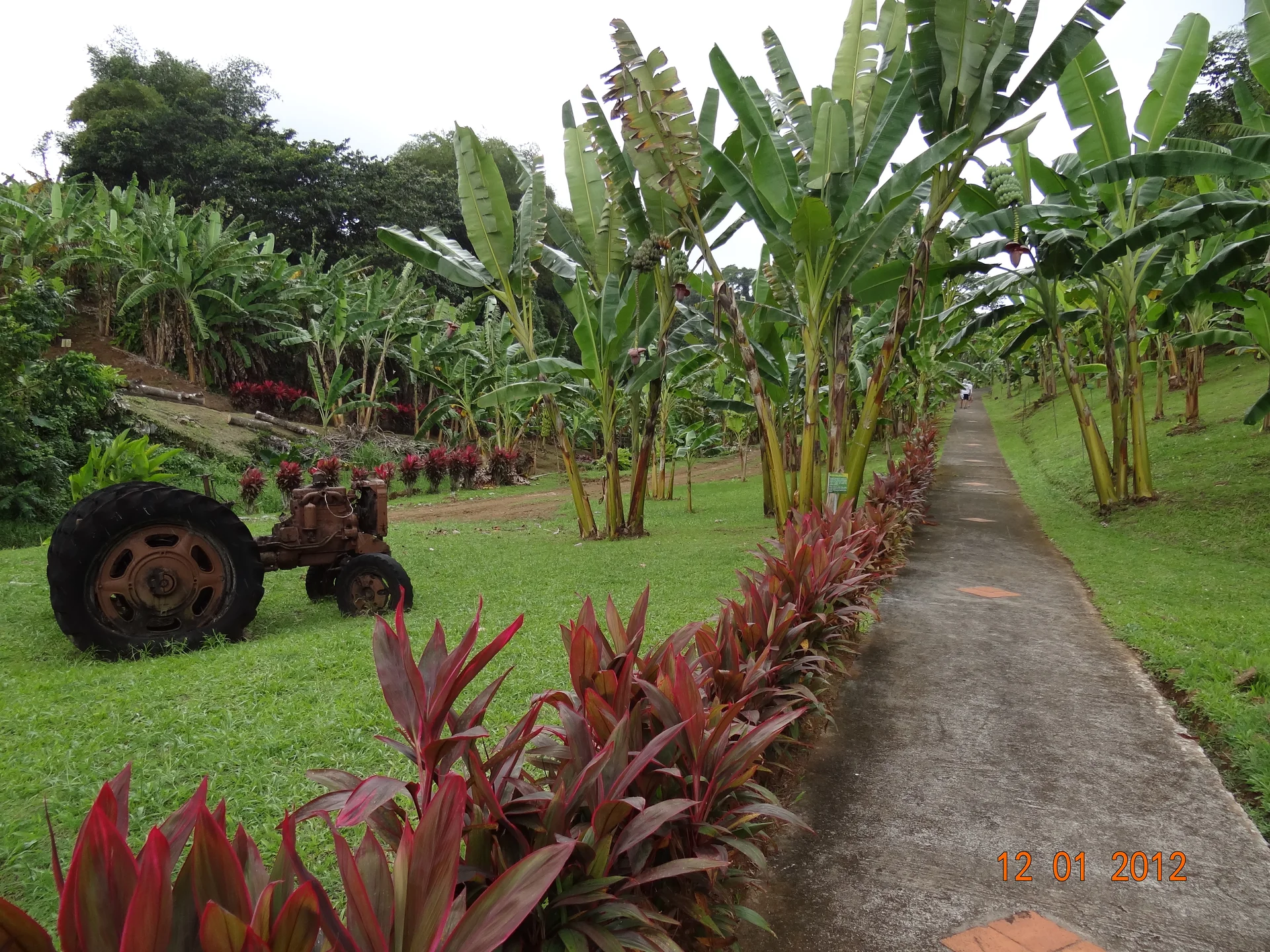
Visiting the Banana Museum
In the Americas, the banana is more than just a fruit. It is an economic driver, a piece of history, and the subject of its own specialized museum. Set in the middle of a large plantation, this site offers a look into the significance of this crop.
The History of the Banana
Located in the countryside not far from Sainte-Marie, the Banana Museum is housed within the Habitation Limbé, a stone building that displays exhibits and videos about the island's iconic fruit.
The exhibits trace the history of the banana, which feels like a native Caribbean staple but actually originated in Southeast Asia and did not arrive here until the 16th century. Thanks to the many documents and videos available in the museum, you will leave with plenty of facts. You can impress your friends by explaining that the banana plant is not a tree, but rather a giant herb. It can reach heights of 6 meters (about 20 feet), but its classification remains the same.
You will also discover the different species found on the grounds. A tour of the plantation allows you to see the 65 varieties grown here. Throughout the path, signs explain the origin of each plot. You will move from Cameroonian to Philippine, Indian to Vietnamese bananas, simply by walking through the rows of the plantation.
The Extras at the Banana Museum
After the tour, you might be curious about the range of products made from bananas. Small shops sell items like banana chips, flour, liqueur, and even banana ketchup.
If the tour has made you hungry, head to the restaurant "La Bananeraie" to enjoy Creole cuisine that highlights the banana. After a savory banana cassoulet, you can treat yourself to a banana tart for dessert.
It is a charming and tasty stop in the heart of the countryside in Martinique.
Opening hours
| Monday | 09:00-17:00 |
|---|---|
| Tuesday | 09:00-17:00 |
| Wednesday | 09:00-17:00 |
| Thursday | 09:00-17:00 |
| Friday | 09:00-17:00 |
| Saturday | 09:00-17:00 |
| Sunday | 09:00-17:00 |

J'ai vu des bananiers, ça ressemble à des petits arbres, ou grandes plantes! Ce qui m'amène à cette question : qu'est-ce qu'un arbre ?