
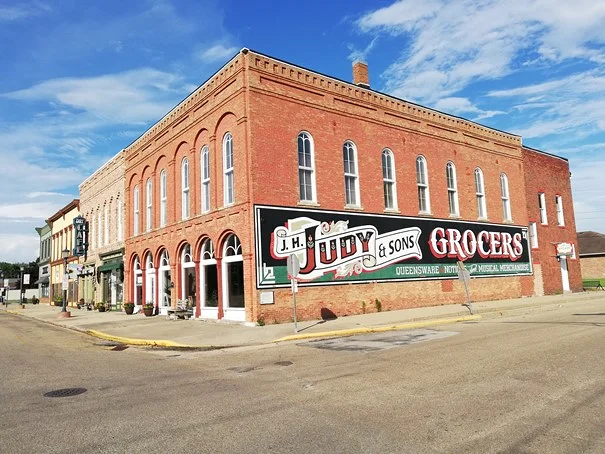
If I say "road trip across the United States," you'll almost certainly answer: "Route 66." Well, dear readers, I am sorry to break it to you, but you're barking up the wrong tree. Today, in this article, we aren't talking about Route 66 at all, but rather a completely different route, just as iconic and fascinating, though more secretive and lesser-known to the general public… Ladies and gentlemen, I have the honor of introducing you to what is nicknamed the "Blues Highway," namely Route 61 in all its glory, or rather, in all its asphalt, since I'm going to take you from one end to the other on a road trip starting from New Orleans all the way to Chicago. Along the way, we'll stop off at a few legendary American music cities like Memphis and Clarksdale, where music reigns supreme and seems to have frozen time, sending us straight back to the era of Elvis Presley, THE figurehead of rock 'n' roll, or the illustrious B.B. King, the blues icon par excellence.
So, what do you say? Are you ready for a 1,000-mile (1,600 km) getaway along the Mississippi River where, more than just a musical pilgrimage, a truly profound journey awaits you? A journey through history, the history of enslaved people on the cotton plantations of the American South and of segregationist America, as well as a journey across the larger-than-life landscapes of the United States?
If so, I have only one piece of advice for you: saddle up on a great bike or rent a nice convertible, fill up the tank, and don't forget to pack your harmonica or your favorite tunes to keep you company throughout this stunning, music-filled road trip.
Personally, my partner and I chose a big, plush, well-cushioned Harley Davidson, and I can tell you that with the wind in our faces to the tune of country music, we truly felt like we were at the gates of paradise during our entire journey!

1/ Step 1: New Orleans.


It all starts right here, in a place you could easily consider one of America's crown jewels, a city unlike any other in the States. It collects nicknames endlessly, but the one that sticks out most is the "Big Easy," perfectly capturing its relaxed, free-spirited lifestyle. This Louisiana gem lives and breathes food and music, especially jazz, which was born here and has echoed through every street corner and neighborhood ever since. This former French and Spanish colony successively welcomed thousands of African enslaved people as well as numerous Cajun and Caribbean refugees… In short, this wonderfully diverse city completely charmed me: New Orleans is easily one of my favorite highlights of this road trip!
My favorite spot
Truthfully, one of the main reasons I fell head over heels for this unique city is its unparalleled architecture. And when I say architecture, I mean those colorful houses with extraordinary wrought-iron balconies that look like finely chiseled lace; those old Spanish-style colonial homes you'll find, quite unexpectedly, in the historic French quarter, also known as the Vieux Carré or the French District. It's the city's historic center, an iconic and highly renowned spot you simply cannot miss!


"Highly renowned," especially for Bourbon Street, the neighborhood's most famous avenue known for its wild, festive atmosphere, which transforms at nightfall into the ultimate playground for partygoers and tourists alike!


Besides, walking down there in the evening with your kids isn't really recommended, since debauchery and lust are definitely on full display! But if you're free from any parental duties and responsibilities, then by all means, don't hold back and let yourself get swept away by the intoxicating energy of this wild, high-octane street where music is everywhere, alcohol flows freely, and the words "inhibitions" and "judgment" lose all meaning... Having walked through it in the late afternoon, I can tell you that even Las Vegas, nicknamed "Sin City," is an absolute amateur by comparison!


So, if I could give you one piece of advice, definitely don't hesitate to wander, stroll, and above all, daydream through the delightful and exquisite little streets of this old neighborhood, especially since there's very little chance you'll get lost, given its neatly laid-out, precise grid plan!
In fact, if you follow it scrupulously, it will lead you to stunning architectural landmarks like St. Louis Cathedral, its rectory, or even The Cabildo (the former seat of government where the Louisiana Purchase was signed in 1803, which is now a museum dedicated to the state's history). Not far from there, you'll also find Jackson Square, Plaza de Armas (the former parade ground) with its musicians and painters who delight the ears and eyes of awestruck passersby every single day, not to mention the authentic mule-drawn carriages lined up along Decatur Street, promising an unforgettable tour of the neighborhood!


Finally, make sure you don't leave New Orleans without riding one of its picturesque streetcars, which depart from Canal Street (another unmissable street!) and take you all the way to the banks of the Mississippi, specifically the Riverfront, where another major surprise awaits: the historic and legendary steamboat, the "Natchez." You'll have no choice but to stand in awe of it, and you can even hop aboard for a magical, memorable cruise, a unique journey back in time...


A journey that truly begins the moment the Natchez leaves the dock, when its brass bell starts to chime, its massive 25-ton paddle wheel begins churning the river waters, and a calliope plays tunes from the old South, instantly plunging you back into the sweet, delightful ambiance of an era when cotton was king and New Orleans was a booming port city that dazzled visitors with its vibrant Creole, African, American, and European culture!

That multicultural vibe is still very much alive today, especially through the diverse culinary specialties the city offers to any foodie willing to give in to temptation... Personally, I didn't need any convincing! At the same time, how can you resist those must-try "po' boys," "jambalayas," "gumbos," or those fresh, sweet beignets that are the pride of the city and can be enjoyed in any of the many restaurants throughout the French Quarter? Having thoroughly tasted and savored these traditional dishes, I can guarantee that leaving the Big Easy without trying its food would be an absolute crime!
And so, on that delicious, colorful note, our first stop in New Orleans comes to an end. Its melancholic beauty completely captivated and spellbound us, leaving us with one truly unique trait: belonging to no single style, yet somehow making every style its own…

2/ Stop 2: Natchez
While it was hard to tear ourselves away from the place that had enchanted us so much, our sadness quickly melted away when we arrived, after a solid three-hour drive, at the doorstep of the second city on our road trip: Natchez, where a wonderful lineup of silver linings awaited us…
First silver lining, and far from the least: this is where my partner proposed to me!
Second silver lining, for an American architecture lover like me, Natchez is packed with open-air treasures!

Local History
You can understand why this town is so near and dear to my heart, and why I couldn't wait to introduce you to it. But first, let me share a few historical details to help you better understand and appreciate the visit.
To begin with, Natchez owes its name to the Natchez Indians, its original inhabitants. While this sun-worshipping tribe lived a relatively peaceful existence for many years, their daily lives were somewhat disrupted by the arrival of the French, who in 1716 built Fort Rosalie on the steep banks of the Mississippi (the remnants of its ramparts can still be seen from Bluff Park, Natchez National Historical Park's absolute must-see spot, though we'll get back to that…).
Well, up to this point, there were no apparent worries or conflicts between the two "sides," whose relations were actually rather cordial. But this semblance of peace quickly deteriorated when, in 1728, the fort's commander decided to evict the Indians from their sacred land to make way for a tobacco plantation. Feeling threatened and seeking revenge, the Indians rose up against the French on November 29, 1729. This marked the beginning of a very bloody conflict that ended with the Natchez tribe being completely decimated, and the town taking the name "Natchez."
Tragic twist of fate or sincere tribute to the defeated tribe?
I’ll let you be the judge… In any case, if like me you are passionate about Native American culture, you should know that the "Grand Village of the Natchez Indians" awaits you on the outskirts of town to showcase this branch of Mississippi culture, which dates back at least to the 8th century. Reconstructed dwellings have been set up to illustrate the Natchez tribe's way of life, and seasonal reenactments immerse you completely in what their past life might have looked like.
So, if you have the time and inclination, definitely don't hesitate to make a detour to this site before or after admiring the magnificent, stunning mansions that fill the town, testaments to a richer, happier era in its history. Because Natchez isn't just defined by that sad and dark massacre of the Indians of the same name. At the beginning of the 19th century, it was also one of the wealthiest and most prosperous cities in the United States, largely thanks to cotton plantations and the cotton trade, which was boosted by steamboat navigation on the Mississippi River. It’s easy to understand why Natchez once boasted more millionaires than any other city in the country, save for New York, Boston, and Philadelphia, and why today we can still admire the luxurious, opulent homes left behind by that prosperous era.


Be aware that Historic Downtown Natchez contains 300 of these old Southern mansions (often remaining in the same family for over 150 years). A couple dozen of them, even while privately owned, open their doors to the public twice a year, in spring and autumn, during the Natchez Pilgrimages. Visitors can soak in the old-time Southern atmosphere, dreaming of the world of Gone with the Wind thanks to hostesses in period costume, musical and theatrical performances, and lectures, making these events, with their quaint decor and vibe, true cultural "institutions"!
To my great regret, we weren't able to attend because we weren't there during the right dates. However, we still got to marvel at the grand, distinctively charming residences of prominent citizens while strolling through the neighborhood. Our eyes were also treated to more modest, equally charming wooden plank buildings, old red-brick and pristine white churches, retro shops from a bygone era, and red-brick homes, symbols of the city's former Spanish colonial past that would accompany us throughout our road trip as we headed up along the Mississippi. Finally, wandering down alleys by horse-drawn carriage and visiting the majestic Bluff Park, where the sweet scent of magnolias, the ornate wooden gazebo, and the breathtaking view over the immense Mississippi River confirm what every visitor inevitably thinks: Natchez is unquestionably one of the finest southern gems!


With our brief tour of Natchez wrapped up, let's fire up our Harley and head toward Vicksburg, just an hour and a half away, where other major surprises await!
3/ Stop 3: Vicksburg

As we were riding along relaxed and eager to discover our next stop, a few details caught our attention and piqued our curiosity as we approached the outskirts of Vicksburg: graves, headstones, cannons, and statues standing right there on the lawn by the side of the road... Well now, what a strange welcome, and how unusual for us French travelers, who are mostly used to our cemeteries being tucked away and surrounded by long ramparts as if to protect the souls of our departed citizens! We decided to walk up to a sign to hopefully get a bit more information, and right there, we discovered we were actually at the entrance of the Vicksburg National Military Park!

But why "military"? What happened here back in the day?
Eager to find an answer, I quickly grabbed my phone and looked it up online. Suddenly, everything became clear. I learned that Vicksburg was a fortress city perched on a cliff overlooking the Mississippi, which was the site of fierce fighting during the Civil War (1861, 1865) between the industrialized Northern states (the Union) and the slave-holding Southern states (the Confederacy).
Personally, we didn't have the chance to venture into the park because we were pressed for time. But one thing is for sure: while that somewhat cold and austere welcome might have turned many people around, that wasn't the case for us at all! On the contrary, it only fueled our curiosity further and pushed us to ride on into downtown to see if the same vibe reigned there... And what a wonderful surprise it was to discover this historic heart, beating between the upper and lower town, connected by sloping streets lined with pretty, cozy red-brick houses and stunning colonial mansions. It undeniably echoes the atmosphere of Natchez, even if Vicksburg features somewhat fewer majestic residences!
Even so, there are plenty of them to make you fall in love with the town, such as Cedar Grove, Corners Mansion, George Washington Ball House, Mc Raven Home, Duff Green Mansion, and others, just to name a few of the most famous.


So you can imagine that for someone like me who loves American architecture, simply gazing at these buildings was an absolute delight. And the treat continued when we reached what was, for any self-respecting Coca-Cola fan, the cherry on top: the small Biedenharn Candy Company Museum, housed in a gorgeous 1890 building entirely dedicated to Coca-Cola!


Besides, this is where the precious beverage was reportedly bottled for the very first time back in 1894! Of course, the bottles have changed quite a bit since then, but the taste itself has stayed the same and continues to win over fans who have endless opportunities to spend their money on all kinds of souvenirs in this sweet little paradise! It took a superhuman amount of willpower on my part to resist and not buy everything in sight! That’s why my partner and I decided to head back outside and grab a refreshing drink at the patio of a charming little café right next door to the museum!


Eventually, it was time to pack up and hit the road for new adventures, but just as we had hopped back on and were ready to roll, the sight of a magnificent, extraordinary paddlewheeler three times the size of the Natchez in New Orleans forced us to make one last mandatory stop, as if the town was trying to reel us in for good...

Just look at that elegance and majesty! I don't think I've ever laid eyes on a boat of such striking beauty. Between this ship and the countless treasures hidden within the city, Vicksburg is a place that will be forever etched in my memory!
4/ Step 4: Clarksdale


After a solid three-hour drive from fascinating, captivating Vicksburg, our backsides started crying out and begging for a break! The little town of Clarksdale came at just the right time!
At first glance, it felt like something straight out of a cheesy TV thriller: not a soul in sight in a town that proudly claims to be the birthplace of the blues and home to countless legendary musicians who were born, lived, or passed through here.
For the time being, it looked like they had all skipped town for good, leaving only their ghosts behind! But you know me, a ghost-town vibe wasn't about to scare me off or make me keep driving. On the contrary, that kind of frozen-in-time setting only piqued my curiosity even more, prompting me to drag my partner along for a walk around the neighborhood. To our absolute delight, we discovered weathered storefronts and old brick buildings, some adorned with gorgeous colorful murals, giving us that wonderful feeling of being right in the heart of authentic America!


Proof of this authenticity: Madidi, a restaurant owned by Morgan Freeman that has kept its wonderfully vintage, untouched charm, and the Ground Zero Blues Club, owned by the same guy, equally rundown, yet apparently ranked among the top 100 bars and nightclubs in America!


Who would have guessed just by looking at those quiet, sleepy facades?
We were totally blown away, especially since, according to the few locals we crossed paths with and chatted with to figure out what was going on in this petrified town, all that daytime quiet and inactivity gives way to a completely different vibe at night. That's when the ghosts of the blues come alive to haunt the town's legendary juke joints, including the famous Ground Zero Blues Club and Red's!
So, beneath its goody-two-shoes exterior, it turns out Clarksdale has quite a few tricks up its sleeve, especially when it comes to the blues! This town is an absolute must-see for fans of the genre, and I strongly recommend making a mandatory stop right at the entrance of town in front of the iconic sign erected at The Crossroads, the legendary intersection where Robert Johnson supposedly sold his soul to the devil to gain his guitar virtuosity and become the exceptional bluesman we all know...

Legend or hard fact, the fact remains that Clarksdale completely captivated us!
Now, we're off to another state: Tennessee. After leaving behind the lush green landscapes, swamps, and endless cotton fields typical of Mississippi, another premier blues city awaits us. I'll let you guess its name based on these legendary lyrics sung by Eddy Mitchell:
I was listening to the disc jockey
In the car that was pulling me
On the road to Memphis
On the road to Memphis...
You've all guessed it, of course it's the inimitable Memphis, which promises plenty of surprises...

5/ Stop 5: Memphis
Among those surprises I mentioned earlier, let me introduce you to Tennessee's number-one tourist attraction and legendary street: Beale Street, which is well worth a nighttime stroll no matter what. As luck would have it, we arrived in Memphis at night! And truly, it would have been a shame to miss all those dazzling, flashy neon lights and the music echoing as if ingrained in every nook and cranny of the street...


We found ourselves drawn in by the sound of blues and a guitar riff drifting from one of the courtyards of those gorgeous retro-façaded buildings, behind which hide various restaurants, clubs, and shops in an atmosphere reminiscent of Bourbon Street in New Orleans!

What a fabulous evening we spent in that little bar! Sure, it didn't look like much from the outside, but it plunged us straight into the world of recording studios and the blues, soul, and rock 'n' roll music that made Memphis famous. As the sidewalks adorned with 150 great names in Memphis music show, ranging from Robert Johnson and B.B. King all the way to Justin Timberlake!

Not to mention the one and only Elvis Presley, whose home remains THE must-see visit in Memphis, taking a solid three hours to tour the entire property: of course, that's Graceland, undoubtedly the most famous American residence after the White House! To give you an idea, around the "King's" birthday in August, the town gets completely flooded with tourists! But the local economy certainly doesn't mind! On the contrary, to attract visitors, the city has gone all-in on this rock 'n' roll icon, whom you'll find everywhere, in every storefront, on every souvenir, on every poster...
Yet he isn't the only one who put Memphis on the map. The city has also embraced another glorious figure: Dr. Martin Luther King, who was assassinated in 1968 at the Lorraine Motel, now transformed into the National Civil Rights Museum, which I highly recommend visiting if you have the time.
Because you will definitely need time to get through this city of a thousand and one gems which, with its musical spirit and the friendliness of its locals, ranks among the most welcoming and warmest places we encountered on our trip! But let's not stop here, let's go see what's happening on other, more distant horizons...
6/ Stop 6: Lynchburg
Here, it's not about blues, soul, or rock 'n' roll, but rather alcohol, alcohol, and more alcohol... Ladies and gentlemen, we are at the gates of whiskey royalty: Lynchburg, where the number one whiskey brand, the famous Jack Daniel’s Distillery, has set up camp, or rather, its stills!


But why choose this stop when we could have driven straight through to Chicago?
Well, to be honest, while I have a very special passion for Coca-Cola and its merchandise, my partner happens to be a devoted fan and collector of whiskeys. That's why stopping at the country's oldest distillery felt less like a whiskey geek's whim and more like an absolute must-do!
And the incredible, sensational tour we got to take proved us completely right: from discovering the site's facilities to the generous tasting session, complete with our guide's wonderful, quintessential country accent, everything came together to make it a unique and unforgettable experience!


Personally, I don't drink alcohol at all and I know nothing about whiskey, but I can assure you I came away enlightened and much more cultured after this extremely enriching and captivating tour. It's fascinating for its brand history and the manufacturing process behind this precious nectar, though unfortunately, you can't actually buy a bottle here, aside from collector's editions, because the distillery is located in a "dry" county (meaning a territory where alcohol sales have been prohibited since Prohibition).
Don't worry, though, you can always console yourself with the wide array of Jack Daniel's merchandise available at their dedicated gift shop in the nearby little "downtown" area. This is the historic heart of Lynchburg, where time seems to have stopped back in the era of western saloons and cowboys... At least, that's the impression you get from these charming old-fashioned storefronts, fabulous Wild West-style signs, and the magnificent red-brick courthouse that make Lynchburg feel like an authentic, timeless village. This splendor and serenity are only ever interrupted by visitors eager to uncover the secrets behind the famous Old N° 7 and track down one of those irresistible souvenirs. Our wallets were the first casualties! But a few dollars spent could never make us regret visiting this simply magical little village, which easily ranks among my top choices for where I'd live if I had to pick... Because Lynchburg truly remains the second biggest highlight of this road trip!


But as the saying goes, "good things come in threes," and one final city on our route completely melted my heart: I am, of course, talking about Chicago, which hit me like an absolute revelation!
7/ Step 7: Chicago


What better way to cap off this road trip in grand style...!
Honestly, short of having extra time, I don't see how we could have ended this journey any better. The grand finale was packed with skyline views, the thrill of leaning out over one of the countless drawbridges offering an exceptional, breathtaking look at the emerald-green Chicago River, strolls through the city's historic and bustling neighborhood known as the "Loop," and finally, a fantastic boat cruise down that famous river that truly makes you appreciate the scale and elegance of the Chicago skyline, which is even more stunning seen from the water!


For my part, that little spin on the water left me speechless... I never would have imagined Chicago could be this breathtaking, with its massive skyscrapers each more original and unique than the last, turning the third-largest city in the United States into a veritable open-air encyclopedia of contemporary architecture, all surrounded by water.

Because Chicago isn't just defined by the river that proudly bears its name; it also boasts 16 beaches, one of which greets you right at the city limits and instantly hints at the amazing times ahead... At least, that's what crossed my mind as I straddled our Harley, riding toward the place that would capture my heart forever!


Sadly, we didn't have the time or the pleasure to explore more of this city, which once served as a refuge for Black communities arriving from the South with instruments and sheet music packed away, gradually transforming the city into the blues capital of the world. But one thing is for sure: this unfinished visit will sooner or later call us back, back to the city that also became our final sanctuary after 1,600 unforgettable, incredible miles of asphalt following the Mississippi River and its music, inevitably prompting me to wrap up this article with one simple phrase: "Life is so good"!


Comments (0)
No comments yet. Be the first!