
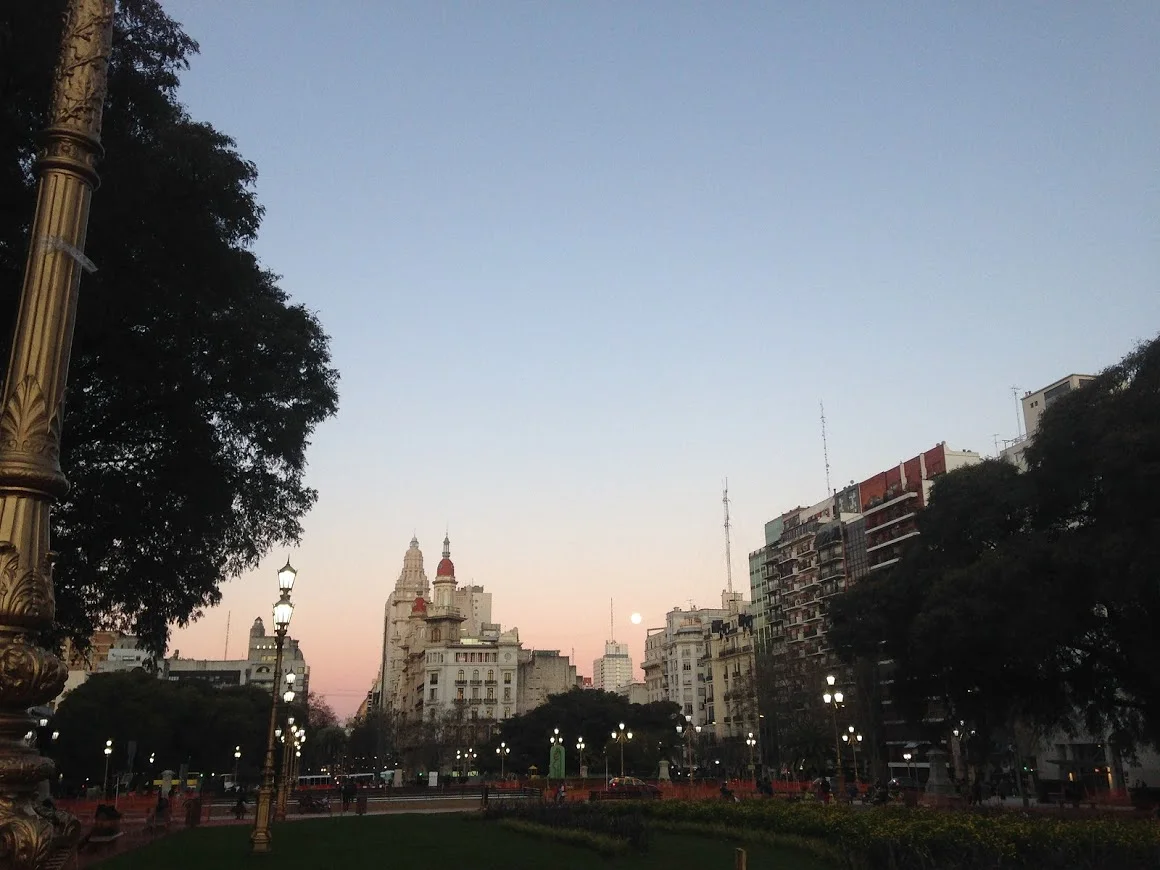
Buenos Aires is the second-largest city on the South American continent. The city proper is home to 3 million porteños, but its greater metropolitan area holds over 14 million inhabitants, accounting for a third of Argentina's total population.
In a megalopolis of this impressive scale, what strikes a visitor first is the wildly different atmosphere of each neighborhood. As you move from one "barrio" to the next, you feel as though you've stepped into a different city, or sometimes even a different country. The Retiro neighborhood is a perfect example of these contrasts, where, just a few meters apart, skyscrapers stand alongside the shantytowns of Villa 31. It is a city as paradoxical as its inhabitants: the porteños. They say that porteños are Italians who speak Spanish, think they are English, and dream of being French! While a large part of the city's population is descended from Italian immigrants, the rumor goes that they are as proud as the English and long for French elegance, as evidenced by the city's architecture.
It’s not for nothing that Buenos Aires is often called the Paris of South America, with its architecture heavily inspired by the French capital. The city is also known as "cuidad de la furia", the city of fury, a name that refers to the constant hustle and bustle of the capital.
Here is our selection of neighborhoods to visit during a stay in the Argentine capital:
A short walk through the heart of Buenos Aires

San Telmo
Our walk begins in the charming neighborhood of San Telmo. It is one of the few historic districts that has preserved its heritage despite the modernization efforts of the late 19th century, which were inspired by European cities, particularly Paris. This bohemian-style neighborhood is filled with charming shops, restaurants, boutiques, and bars. In short, it’s a neighborhood where you love to get lost. I highly recommend taking a stroll through the San Telmo Market, where you can sample delicious empanadas (a type of turnover filled with meat or vegetables) cooked right before your eyes over a wood fire.

Plaza Dorrego is also worth a visit: this small, shaded square is the perpetual stage for open-air tango performances. Don't hesitate to stop at one of the many ice cream parlors in the area; Argentines are crazy about gelato, and it rivals anything you'd find in Italy. If you are in Buenos Aires on a Sunday, you can check out the craft market that takes over the neighborhood's main streets.

Micro-centro
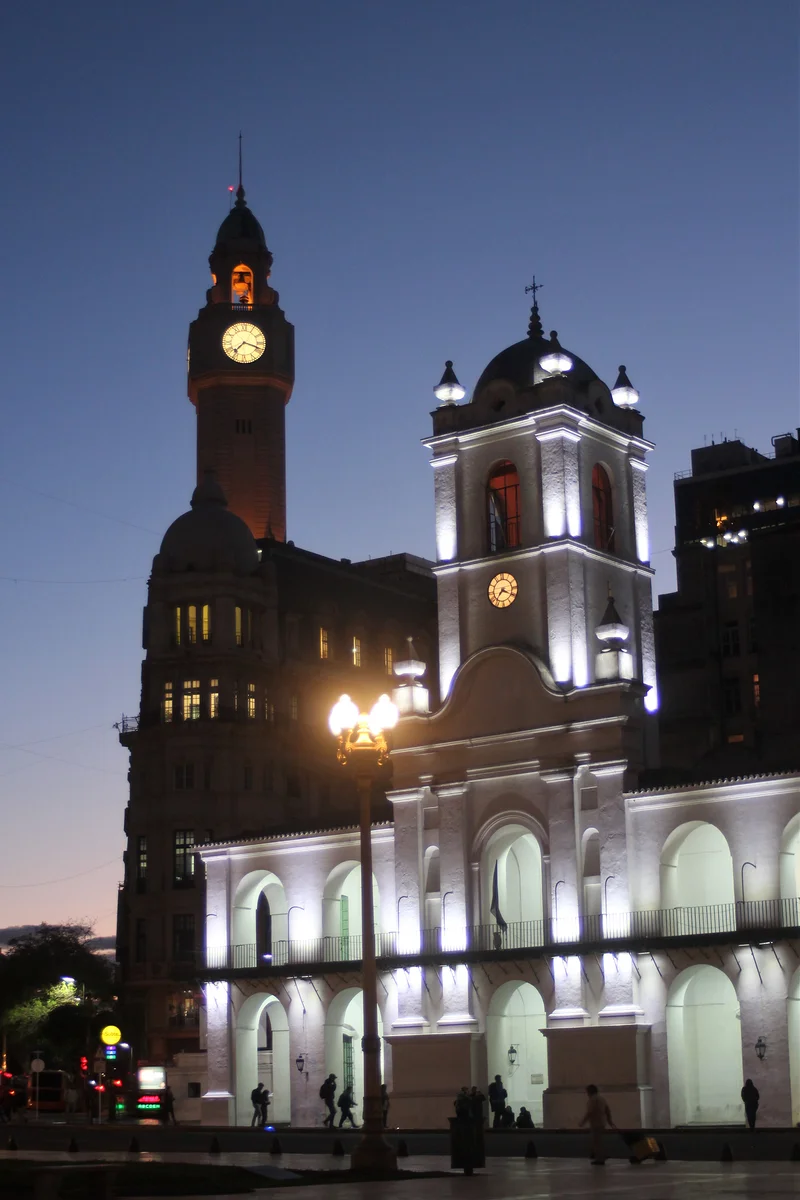
Next, we continue our path to the Casa Rosada, the presidential palace, and the iconic Plaza de Mayo, known especially for the women who demonstrated there, and still do today, to find the children they were separated from during the dictatorship. As a reminder, the country lived under a military dictatorship from 1976 to 1983. This square has also been the site of many events that shaped Argentine history. Indeed, from the balcony of the Casa Rosada, which you can see in the photo below, many speeches have been delivered to the Argentine people. Evita Perón notably gave one of her most famous speeches from this balcony in 1951, when she announced she was renouncing political life despite the fervent pleas of the Argentine people. It was from this same balcony that President De La Rúa fled in 2001 aboard a helicopter!

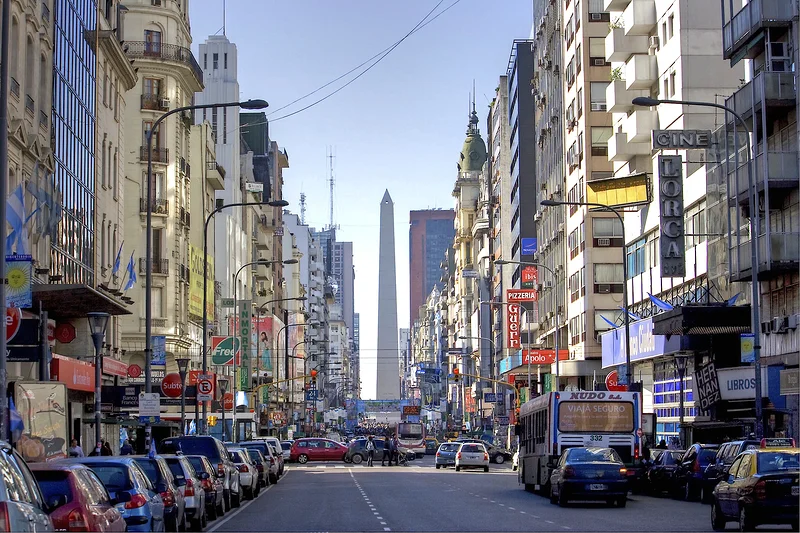
From the Casa Rosada, I recommend walking up Avenida de Mayo to the Argentine Congress. This avenue is undoubtedly the most symbolic in the city, as it connects the country's two main seats of power. Along the way, you will pass the Café Tortoni, one of the oldest in the city, known for being a meeting place for famous tango dancers and the Argentine bourgeoisie. You will cross the impressive Avenida 9 de Julio, built to be the widest in the world, where the Obelisk, one of the symbols of Buenos Aires, stands tall. You will then pass by the stunning Palacio Barolo, which offers a superb view of the city from the top of its lighthouse.
Once you reach the Congress, if you want to extend your walk, don't hesitate to head up Avenida Callao and then take Avenida Corrientes. You will come face-to-face with the Obelisco and an impressive intersection of avenues that feels like a Latin American version of Times Square. You can then head down Calle Florida, likely the only pedestrian street in the city. Its countless shops will help you find whatever you're looking to buy!

Puerto Madero
The Puerto Madero neighborhood is also worth a detour. Wedged between the much older districts of San Telmo and Microcentro, it stands out for its modernity. This area is a true showcase of successful capitalist Argentina. It brings together all the major banks, the headquarters of the largest companies, and the most expensive apartments in the city. Walking along the banks of the old port is very pleasant.
You can also take a trip to the Reserva Ecológica. Located between Puerto Madero and the Rio de la Plata, it is a true oasis of nature within the vastness of Buenos Aires. You will see many birds as well as iguanas basking in the sun. This ecological reserve is one of the only places in the city where you can walk along the Rio de la Plata and feel like you are at the seaside. Given its size, the best way to explore this park is undoubtedly by bike.


Things to see outside the center
Recoleta
The more residential neighborhood of Recoleta remains particularly pleasant. Very upscale, it is known for its many Palacios, former bourgeois mansions that are now luxury hotels, embassies, or corporate headquarters. The main tourist attraction in this neighborhood, however, remains its cemetery, which is said to be the equivalent of Paris's Père Lachaise and houses the tombs of great Argentine figures, including that of the famous Evita Perón, an actress who became a politician in the mid-20th century. If you go to the cemetery, don't miss the charming colonial-style church and the colorful cultural center located right next to it.

Palermo
How can you talk about Buenos Aires without mentioning Palermo? This neighborhood, one of the most colorful in the city, is known for its street art. For porteños, it is also the place to go out at night, with countless bars and restaurants. Offering a very pleasant environment, it is also one of the chicest neighborhoods in Buenos Aires. As a result, prices are quite high. Palermo is also known for its large green spaces. Immense parks are located near the Plaza Italia subway station. Among them, you can visit a Japanese garden, a botanical garden, and a famous rose garden, which is particularly beautiful in the spring. Note: since it is in the Southern Hemisphere, Argentina experiences spring in September, when the Northern Hemisphere enters autumn.


La Boca
Finally, I must admit I was quite disappointed by the La Boca neighborhood, famous for its brightly colored houses. The few streets where these still exist have become extremely touristy and have lost all their authenticity. Furthermore, it is important to know that the standard of living in this area is quite low and there is a certain level of insecurity; therefore, it is advisable to arrive by taxi and avoid hanging around the streets at night. The neighborhood remains interesting to visit, however, as it provides a good glimpse into the lives of the inhabitants of that era. I think a guided tour is particularly worthwhile for La Boca.

In conclusion
Whether you want to see its oldest, most modern, most urbanized, or most natural parts, whether you prefer something posh or popular, Buenos Aires offers you very different experiences. You should count on at least a week to start getting to know this destination. Do you want to visit Buenos Aires? Come discover all our tours in Argentina as a group or individually.

Comments (0)
No comments yet. Be the first!