
As a photography enthusiast and general culture lover, I was looking for an activity that would allow me to improve my photography skills while discovering unusual spots in Paris. It’s easy enough to find services for both separately, but ideally, I wanted to combine the two.
That’s why I tested a photo tour with Atypic'photo, and it was exactly what I was looking for. I’m revealing the 3 secret spots I discovered in the 20th arrondissement, and then I’ll explain how the photo workshop actually works.
3 unusual places to discover for an off-the-beaten-path tour of the 20th:
1. La Campagne à Paris, a little slice of village life in the 20th

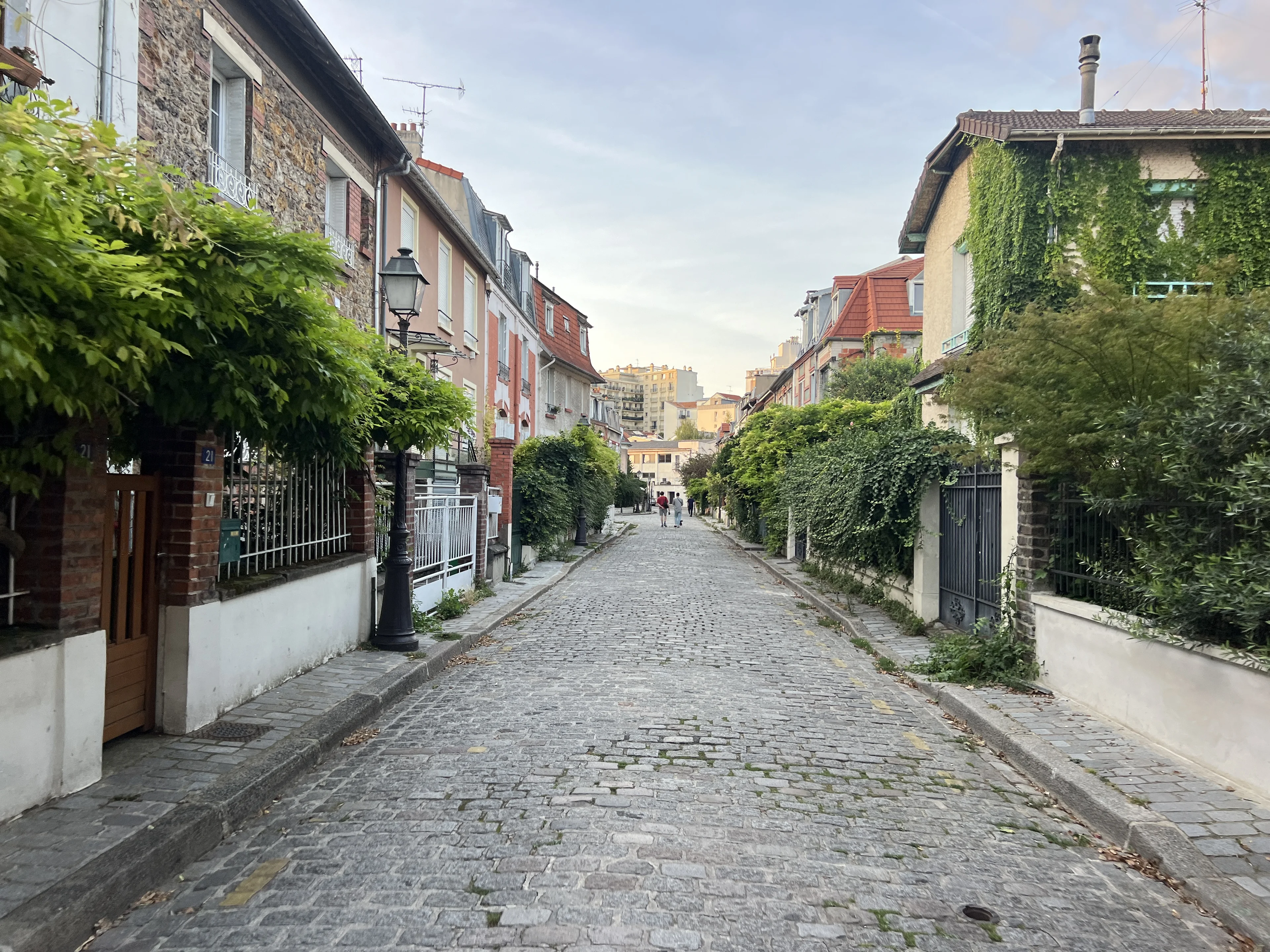
If you think Paris is just grand boulevards and Haussmann-style buildings, prepare to be surprised. Our guide took us to a corner that feels completely timeless: La Campagne à Paris. Yes, that’s actually what it’s called, and I can tell you that it feels more like the countryside than the heart of the city near the ring road.
So, where exactly is it?
La Campagne à Paris is tucked away not far from Porte de Bagnolet. Situated on a hill, this small neighborhood is a true residential island that seems to have stepped right out of another century. When you arrive, it’s hard to believe you’re still in Paris: cobblestone alleys, brick houses with colorful shutters, and above all, an incredible calm.
A working-class neighborhood turned (very) chic

A little history: the neighborhood was built at the beginning of the 20th century to house the workers in the area. At the time, the idea was to offer affordable homes, far from the unsanitary buildings in central Paris. Mission accomplished... for a few decades. Today, let’s be honest, the workers are gone, replaced by a much wealthier population, but the charm remains intact.
The small houses are surrounded by flower-filled gardens, the streets are ultra-photogenic, and you almost feel like you’re on a movie set. By climbing up a bit on Rue Irénée-Blanc, you even get a nice little view of the surrounding area.
François Hollande and La Campagne à Paris? Really!
For a fun little anecdote: François Hollande lived in this neighborhood! Yes, our former head of state knew this quiet corner, far from the hustle and bustle of the Champs-Élysées. When you stroll through these small streets, you understand why: it’s the perfect place to hide away and live in peace. It’s no wonder even public figures have settled here.
A photographer's paradise

Now for what we’re really interested in: the photos. Because clearly, if you’re looking for original spots to pull out your camera, La Campagne à Paris is a gem. Here’s why:
- Details everywhere: antique doors, cobblestones worn by time, gardens overflowing with flowers. There’s plenty to capture shots that breathe authenticity.
- Colors: red bricks, green or blue shutters, flowers climbing up the walls... You’d almost think you were in a village in the south, but no, it’s Paris!
- Surprising contrasts: the neighborhood sits in an elevated position. So, with the right framing, you can play with the contrast between the small houses and the modern buildings in the distance. A countryside vs. city mix that looks great.
2. The Jardin Naturel Pierre-Emmanuel, a wild patch of green in the heart of Paris

After the bucolic sweetness of La Campagne à Paris, we made a stop that was as unexpected as it was relaxing: the Jardin Naturel Pierre-Emmanuel. It’s a bit like nature reclaimed its rights here, far from the overly "manicured" parks we often see in the capital.
So what is this "natural garden"?
Located between Porte de Bagnolet and Père-Lachaise, this small garden opened in 1995 on a former urban wasteland. Unlike classic parks where everything is perfectly maintained, the concept here is totally different: we let nature live its best life. No perfectly mowed lawns, no geometric flowerbeds. No, here, plants grow freely, just as they would in a real natural ecosystem.
And by the way, the name "Pierre-Emmanuel" is a tribute to a famous French poet and academician who probably would have loved this little patch of wild nature in the middle of the city.
What you see there

Strolling through the paths, you discover nature that has completely re-established itself:
- Wild plants like tall grasses, brambles, and even some wildflowers.
- A natural pond where frogs, newts (it’s the first time in my life I’d seen one!), dragonflies, and birds take refuge. It’s a real treat for fans of flora and fauna.
- Trees that seem to come straight out of a forest. You almost feel like you’re in a countryside undergrowth, far from the Parisian buildings.
The garden is intentionally low-maintenance, but that’s what gives it all its charm. With every season, it changes its look: the colors, the scents, and even the light are never quite the same.
The nature anecdote: a sanctuary for biodiversity and meditation
This garden was designed to promote biodiversity in the city. It’s a true ecological refuge, where insects, birds, and small animals find a natural habitat. Dragonflies are the stars of the pond, and you can sometimes spot rare butterflies coming to feed on the flowers.
Fun fact: the place is so quiet and "timeless" that some use it as a meditation spot or for outdoor yoga classes. Yes, you’re still in Paris, but it’s as if you’d passed through a magical portal to the countryside.
A playground for photographers

On the photo side, this little park offers an incredible playground, especially if you like capturing natural and slightly raw atmospheres:
- The light filtered through the trees creates magnificent plays of shadow.
- The reflections in the pond allow you to play with symmetries and colors. Perfect for somewhat poetic shots.
- Vegetation details: dewdrops on leaves, insects in full activity, or flowers growing where you least expect them. The possibilities are endless for macro shots.
Our guide gave us a little tip: play with the blur of the vegetation in the foreground to give even more depth to your shots. The result? Photos that breathe tranquility and authenticity.
3. The Îlot Saint-Blaise, a surprising mix of old and new

To wrap up our unusual walk in the 20th arrondissement, our guide had us discover another treasure well-hidden in the 20th: the Îlot Saint-Blaise. Here, the atmosphere changes. The Îlot Saint-Blaise is a very lively neighborhood offering a surprising mix between the past and the present.
Where is it and why is it called that?
The Îlot Saint-Blaise is located around Rue Saint-Blaise, in the Charonne neighborhood, formerly an independent village that was absorbed by Paris during the 19th century. Today, you can still feel this village heritage in the small cobblestone streets and the few old buildings that have resisted the test of time.
The name "Saint-Blaise" comes quite simply from the Church of Saint-Germain de Charonne, a small, unusual, and authentic wonder located in the heart of the neighborhood. I’ll tell you more about it in a second, because it’s clearly THE gem of the area.
A neighborhood where the old meets the modern
What strikes you when arriving at Saint-Blaise is the contrast:
- On one side, there are vestiges of old Paris, with its narrow alleys, small stone buildings, and this incredible medieval church.
- On the other, modern buildings from the 1970s, built as part of an urban renovation. You might think it all clashes a bit... but in reality, it gives the neighborhood a unique charm and real character.
The most interesting streets to explore?
- Rue Saint-Blaise, obviously, which is still cobblestoned in places and is full of small shops, bars, and cafes.
- The Passage des Écoliers, super cute and perfect for photos.
- Not to mention the Church of Saint-Germain de Charonne, which is worth the visit on its own.
The Church of Saint-Germain de Charonne: a medieval gem

The Church of Saint-Germain is a little jewel that dates back to the 12th century, a rarity in Paris. Why? Because it kept its adjoining cemetery, which is almost unique in the capital. Fun fact: this is also where scenes from the series Les Brigades du Tigre were filmed.
This mix between the church, the old graves, and the ambient calm gives an almost mystical atmosphere. For photographers, it’s a real joy: the old stones, the details of the stained glass, and the play of light inside create magnificent shots. The cemetery, although small, adds an original touch, with its old graves overgrown by vegetation.
Some photo tips I picked up
This neighborhood is great for playing with contrasts:
- Highlight the gap between the old facades and the modern buildings. It makes for surprising shots.
- Cobblestone Rue Saint-Blaise is particularly photogenic at the end of the day, when the light sneaks between the buildings.
- For the Church of Saint-Germain, don’t hesitate to photograph the interior. The medieval details are magnificent, and the contrast with the exterior cemetery brings a truly unique atmosphere.
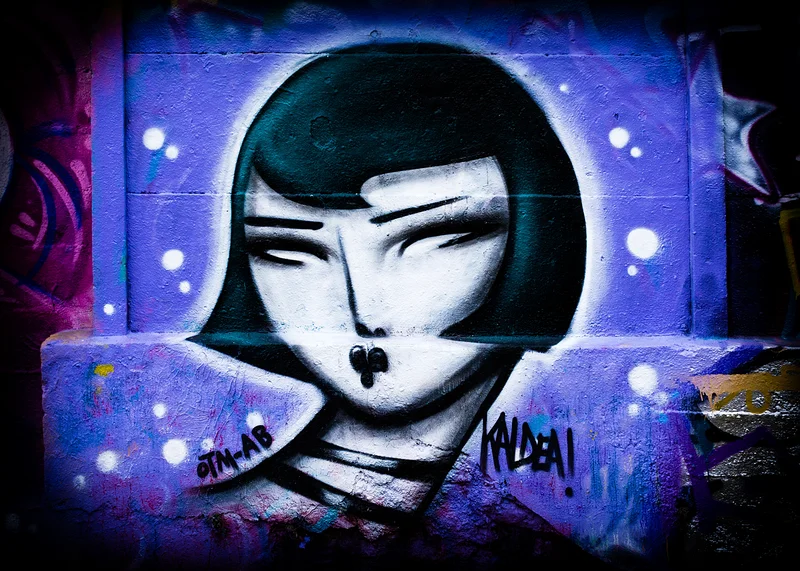
- Finally, look for the little touches of street art that liven up the walls and break the "classic" side of the place.
How the photo tour works
3 hours of walking
The walks are done in small groups, maximum 10 people. In my case, there were 8 of us if I recall. The walk starts in the morning from a meeting point located near a metro station, but some walks are scheduled for the afternoon or even the evening. The guide, Luis to name ours, introduces himself and then starts with some basic explanations on taking photos. You then head on foot to the different locations. Expect about 3 hours of walking for the whole tour.
Theoretical explanations then putting it into practice
Throughout the route, between 2 or 3 anecdotes about the places visited, the guide provides explanations on using the camera. Different themes are addressed successively, interspersed with practice sessions where everyone is free to move around and take photos. During these practice sessions, the guide goes from person to person to answer questions and provide personalized advice.
That’s how I discovered the technical basics of framing, composition (the rule of thirds, did you know it?), overexposure and underexposure, shutter speed, aperture, and depth of field...
Exchanges and comments over a coffee as a conclusion
At the end of the walk, the whole group sits down in a cafe to discuss the photos taken during the walk. The guide downloads a selection of photos taken by the participants onto his computer, then broadcasts them on his screen. For each of these photos, he gives advice, and then everyone can share questions and comments.
Who is this course for, and for what type of camera?
It’s quite broad; beginner photographers as well as advanced ones will learn things, since the guide spends a bit of time with everyone to provide personalized advice. You can even be accompanied by people without a camera (it will be cheaper for them!). I remind you that the walk itself is a great activity, making you discover unusual places in Paris.
As for the cameras, just about anything can work: smartphone, DSLR, mirrorless. For my part, I used a brand new Sony Alpha 6, a mirrorless camera offering plenty of possibilities, provided you learn how to use it, and that is really not obvious without guidance.
How much does all this cost?
All prices are displayed on the Atypic website, which I invite you to consult for up-to-date rates. In summary, at the time I’m writing this article, for a 3-hour photo tour in Paris, expect:
- 49€ for a participant with a camera
- 29€ for an accompanying person without a camera
- Free for children under 10 accompanying an adult
Also, know that besides the unusual spots in the 20th arrondissement, other walks are available in the capital: street art in Montmartre, the Butte aux Cailles, the secret of the Mouzaia... This organization also offers photo walks following the same concept in Lyon and Nantes!

Comments (1)