
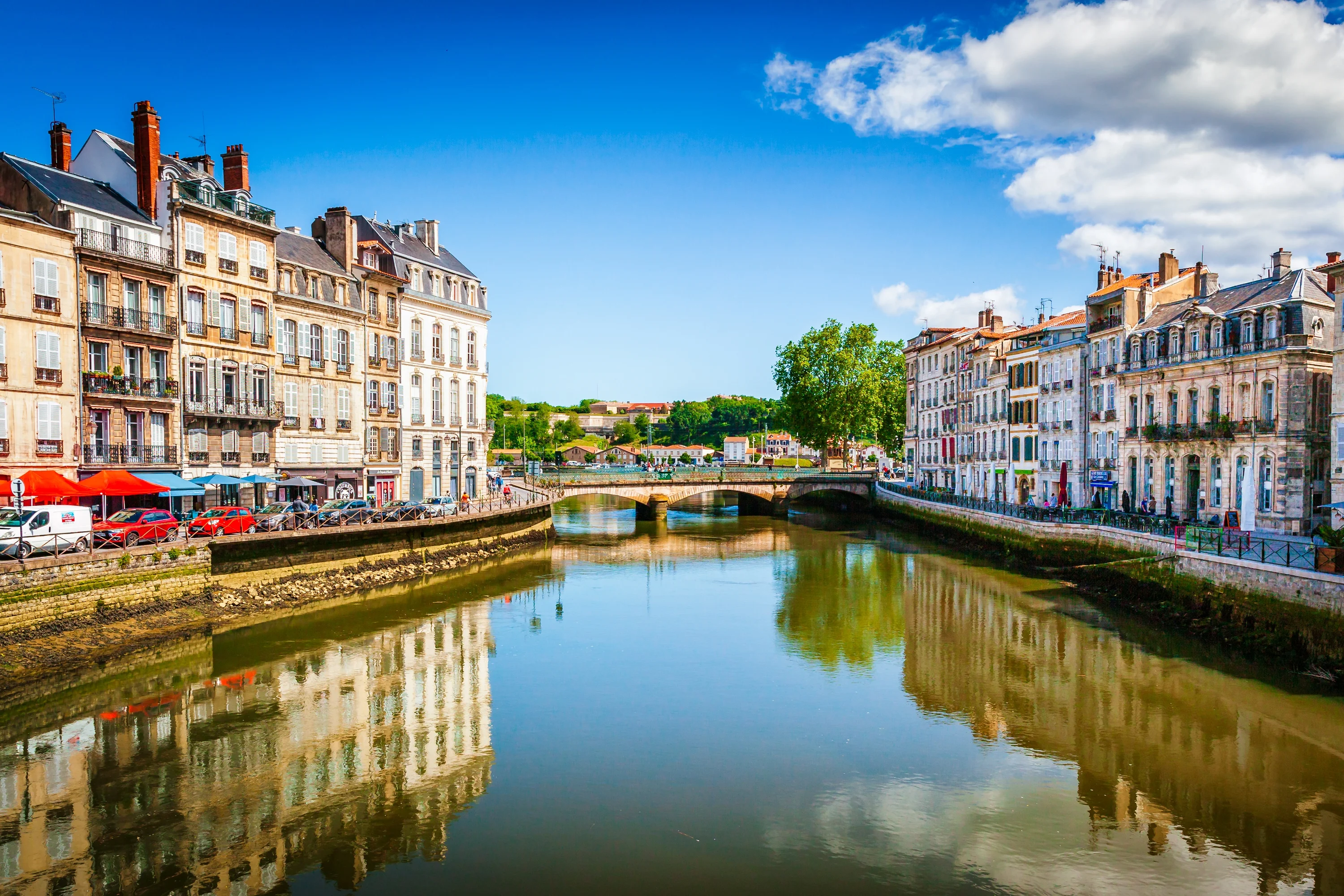
Bayonne, in the Pyrénées-Atlantiques, flirts with the mountains and its neighbor, Spain.  Bayonne, a city of Aquitaine.
The locals are called Baionar in Basque. Even though they are French, they are Basque by birth, it’s in their genes, under their skin. What reigns supreme here is the spirit of celebration, the "Féria," and Basque songs, which are woven into the culture of the local people. Their attachment to their roots, their land, and their traditions is profound, and they love to share it. This is much more than just a vacation spot; you’re going to fall in love with an entire way of life.
Long ago, the city was named Lapurdum. It was a Roman camp that would eventually give its name to the province of Labourd. Its name, Baiona, didn't appear until the beginning of the 12th century.
 The city has repelled many an invader, 14 attempts in three centuries, and from that came its motto, "Nunquam polluta" in Latin, which translates to "Never sullied." There were so many unsuccessful attempts to take the city that it was as if it were blessed by the gods.
Like a sun-ripened fruit, the city is sliced into different neighborhoods...
The Saint-Esprit neighborhood, with its 12th-century church, is the area that welcomed  foreigners and immigrants before being hungrily swallowed up by Bayonne. The neighborhood was once a commune in its own right, known as Saint-Esprit-lès-Bayonne, before being integrated into Bayonne in 1857, though it kept the name Saint-Esprit. Located on the route to Santiago de Compostela, its first inhabitants were mostly religious figures who built hospices and churches. It was here that chocolate, or at least the preparation of it, was discovered in 1615, thanks to Anne of Austria. We still produce very high-quality chocolate here today. Many of the foreign families and immigrants were of Portuguese origin, and they were all considered citizens after the Revolution. Many were apothecaries, shipowners, or merchants who integrated easily into the Bayonne population, which recognized their expertise.
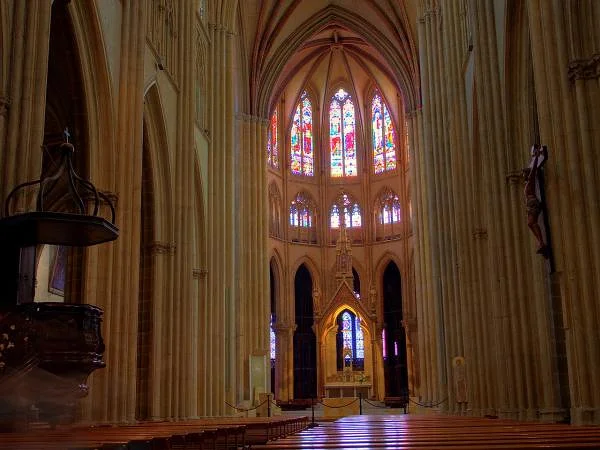
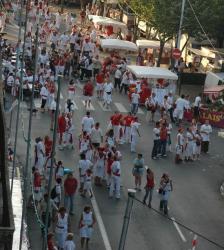 As you wander around, you’ll make some lovely discoveries: the church and its Gothic vaults, the Place de la République. Take the time to stroll; you won't regret it...
Bayonne holds the title of "Oldest bullfighting arena in France", not a small feat, which it has held since August 21, 1853. That was where the first Spanish-style bullfight in France took place.
A second neighborhood, just let yourself be guided, it’s pure pleasure... Le Grand Bayonne.
You are now at the very origins of the city; the city center is also a bustling shopping district. The oldest square in the old town is the Place de la Liberté; look at the paving stones, which reproduce the coats of arms of Aquitaine, Labourd, and Gascony. Until the 17th century, the city was crisscrossed by waterways used for trade. The Rue du Port-Neuf is a former canal. The arcaded houses lining this street are built on stilts, and the timber framing and shutters are painted in red, brown, green, or blue. On the banks of the Nive, where fish were once unloaded, you’ll find two towers at the very end of the quay and the Rue Tour-de-Sault. Come on, one last little effort, and you’ll arrive at the Rue d'Espagne, with its tall, narrow houses, wrought-iron balconies, timber framing, and door knockers... in fact, all of Bayonne is right here.
The third neighborhood, just as delicious and sweet as the other two... Le Petit Bayonne.
This is the liveliest and most popular neighborhood. However, it wasn't always a given; the area was 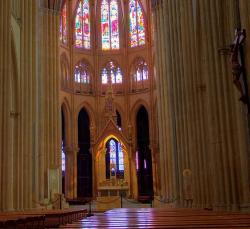 reserved for bishops, these gentlemen weren't exactly known for their sense of humor, but it later served as a refuge for many Spanish Basques during the rise of Francoism. If your curiosity is stronger than your aching legs, you will quickly reach the Porte de Mousserolles and the Vauban ramparts.
We are now in the cultural heart of the city, home to the Basque Museum and the Musée Bonnat.
To finish my spiel, let's talk about festivals, music, and then... ham.
Music, with the La Ruée au Jazz festival all summer long, concerts galore, and the bullfights with the temporada starting in July.
Bayonne is one of the premier centers for bullfighting in France, the oldest bullfighting city, and all summer long, several novilladas also take place. The city is a member of the Union of French Bullfighting Cities.
It is in Bayonne that the Ham Fair, to which the city gave its name, is held during Holy Thursday, Friday, and Saturday.
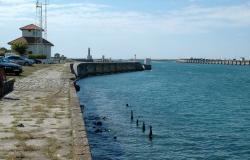
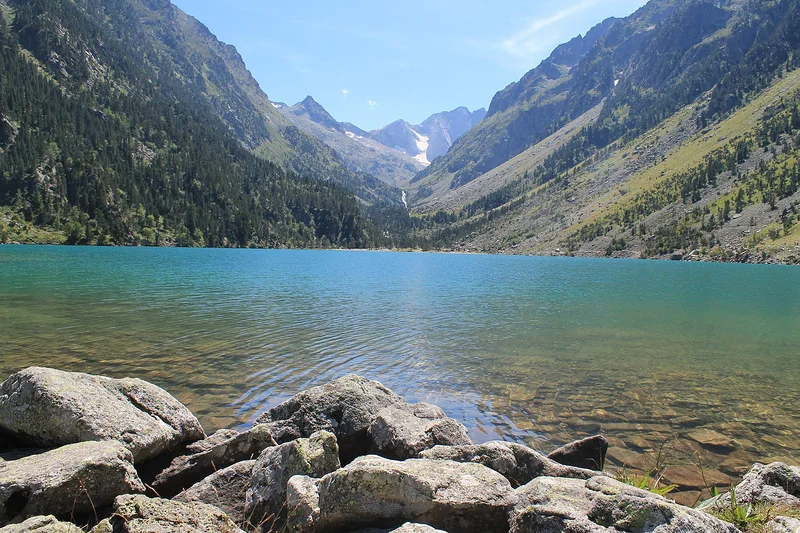
I haven't told you about its beaches, the sun, or the mountains...
..... ???? No ??? But honestly, is it even necessary?.....

Comments (1)