Corcovado is a 704-meter granite peak overlooking Rio de Janeiro, topped by the iconic Christ the Redeemer statue, a symbol of Brazil. Since the early 19th century, paths have allowed visitors to reach the summit for bay views. Whether hiking or taking the cog train, you will cross the Tijuca Forest.
The Metropolitan Cathedral of Porto Alegre is a striking religious landmark defined by intricate mosaics. These panels feature religious figures and symbols rendered in vibrant Murano blue glass. Built between 1921 and 1973, it replaced a 1774 structure commissioned when Porto Alegre became the capital of the state of Viamão to reflect its new status.
Located in the heart of Rio de Janeiro, Candelária Church stands out for its baroque and neoclassical architecture from the colonial era. Known for its imposing facade and ornate interiors, this landmark also holds significant historical weight. It is a worthwhile stop while exploring the city center, near the Theatro Municipal and the Biblioteca Nacional.
The Church of Saint Francis in Salvador stands as a premier example of baroque architecture in Brazil. Beyond its austere facade lies a lavish interior featuring Portuguese azulejos and gilded woodwork. This historic site highlights the Franciscan influence during the country's colonial era, with a cloister showcasing intricate tilework depicting biblical scenes.
The Cathedral of Florianópolis has anchored the Praça XV de Novembro (15th of November Square) since 1773. Dedicated to Our Lady of Exile, it houses a 1924 German organ, a historic 5.8-ton carillon, a cedar sculpture of the Flight into Egypt, and vibrant stained glass. This national monument showcases three centuries of Brazil history.
Built in 1749, the Chafariz de São José is widely considered the finest example of baroque stonework in Brazil. Carved from quartzite, this structure served three distinct purposes as a public fountain, laundry, and watering trough. It remains unique in the state for its oratory and functional century-old aqueduct, marking a vital piece of colonial history.
The Rosario Church in Tiradentes was built in the 18th century by enslaved Africans. Its understated baroque architecture and carved wooden altars reflect the craftsmanship of this community. Perched on a hill, it offers a peaceful view of the city and surrounding mountains. Its history makes it a site of remembrance.
The Santo Antonio Church, built in the 18th century in Tiradentes, is a masterpiece of Brazilian Baroque. Its lavish interior, covered in over 400 kg of gold, reflects colonial-era wealth. With a facade carved by Aleijadinho and an 18th-century Portuguese organ, it sits high above the city, offering views of the Serra de São José mountains.
The Serra das Paridas Archaeological Site, located near Lençóis, features rock paintings thousands of years old. You must hire a local guide to view these human and animal figures. Some carvings are famous for their resemblance to extraterrestrial motifs. Set in a protected landscape, the site blends archaeology with the unique scenery of the Brazilian sertão (backcountry).
The Orthodox Cathedral of São Paulo stands out in the Brazil metropolis for a reason. It is modeled after the Hagia Sophia in Istanbul. Admire the shimmering domes and intricate stained glass. Built in 1940, it is the primary place of worship for Orthodox Christians in São Paulo and the largest in the Americas. It sits minutes from Avenida Paulista, right across from the Paraíso metro station.
The São Paulo Cathedral is a massive neo-Gothic landmark, save for a dome inspired by Brunelleschi in Florence. Construction finally aligned with Maximilian Emil Hehl's original 1913 designs after a 2002 renovation. Inside, you will find the largest pipe organ in the Americas, featuring 12,000 pipes built by Balbiani & Bossi in Milan.
The Arcos da Lapa are the remains of an 18th-century aqueduct built by Portuguese colonists. This colonial landmark was repurposed in the 19th century to carry the yellow Bondinho tram, a symbol of Rio de Janeiro. Today, the surrounding neighborhood is a nightlife hub where samba sessions and live rock music fill the streets.
The Selarón Steps are a public staircase transformed into urban art by Chilean-born artist Jorge Selarón, who lived right across the street. He started this project to honor Brazil, covering the 215 steps in blue, yellow, and green tiles. Featuring 2,000 ceramic pieces, this unique landmark in Rio de Janeiro evolved until 2013.
The Metropolitan Cathedral of Brasília is a 20th-century religious landmark designed by architect Oscar Niemeyer. Built from concrete and glass, it defies traditional cathedral designs with its free-flowing curves. As the first monument built in Brasilia, it resembles two hands reaching toward the sky. It has been listed by the Instituto do Patrimônio Histórico e Artístico Nacional (National Institute of Historic and Artistic Heritage) since 1991.
The Itaipu Dam is the second most powerful hydroelectric plant on the planet. Its name means singing stone in Guarani, a local indigenous language. Construction required massive engineering feats, including diverting the Paraná River and building a dam over 7 kilometers long with 40,000 workers. Today, its 20 turbines help Brazil save 434,000 barrels of oil daily.
The Saint Sebastian Cathedral in Rio de Janeiro is a modernist architectural marvel, instantly recognizable by its unique conical shape. Four massive stained glass windows bathe the interior in dramatic light, creating a sense of grandeur and serenity. More than a place of worship, it is a bold work of art and a symbol of Brazil.
Arcos da Lapa is like a modern aqueduct right in the heart of the popular Lapa neighborhood. I suggest waiting a few minutes to take a picture of the tram passing over it or, even better, taking the t…
Arcos da Lapa is like a modern aqueduct right in the heart of the popular Lapa neighborhood. I suggest waiting a few minutes to take a picture of the tram passing over it or, even better, taking the tram across it yourself.
You are just a short distance from the Selaron Steps, a must-see in the area. You should also know that every Friday, a typical Brazilian street party happens in this neighborhood under the arches. And it is seriously crazy!
It is not worth making a special trip to the Saint Sebastian Cathedral in Rio de Janeiro. However, if you are passing through the Lapa or Santa Teresa neighborhoods, you can make a stop there because…
It is not worth making a special trip to the Saint Sebastian Cathedral in Rio de Janeiro. However, if you are passing through the Lapa or Santa Teresa neighborhoods, you can make a stop there because this cathedral is really different from the others. It is a gray pyramid, which reminds me a bit of the architecture in Brasilia, the country's capital. Inside, the stained glass windows are magnificent and there is also an impressive organ.
When you visit Santa Teresa, I recommend taking the Selarón Steps. The Chilean artist of the same name covered the steps with various mosaics that made him famous. Today you will see hundreds of influ…
When you visit Santa Teresa, I recommend taking the Selarón Steps. The Chilean artist of the same name covered the steps with various mosaics that made him famous. Today you will see hundreds of influencers there taking photos. Try to go early in the morning to avoid the crowds. The atmosphere is cheerful even if some of the alleys in the immediate vicinity are not recommended in the evening.
Corcovado, or Christ the Redeemer, is one of the Seven Wonders of the World. Perched at the top of a hill with arms wide open, it sits 710 meters above the ground, though the statue itself is only 38…
Corcovado, or Christ the Redeemer, is one of the Seven Wonders of the World. Perched at the top of a hill with arms wide open, it sits 710 meters above the ground, though the statue itself is only 38 meters tall. This monumental statue of Christ is one of the largest in the world. You can get up to the site on foot, by bus, or by taxi. The view is incredible, especially since you can see Sugarloaf Mountain and the entire bay of Rio de Janeiro from the observation deck.
It dominates the city from its highest point. It is massive with its enormous blocks of dark stone. The griffins carved into its walls are terrifying. It reminds me of certain cathedrals in East Germa…
It dominates the city from its highest point. It is massive with its enormous blocks of dark stone. The griffins carved into its walls are terrifying. It reminds me of certain cathedrals in East Germany. Could it be related to the German immigration that is very present in the region?
Very informative
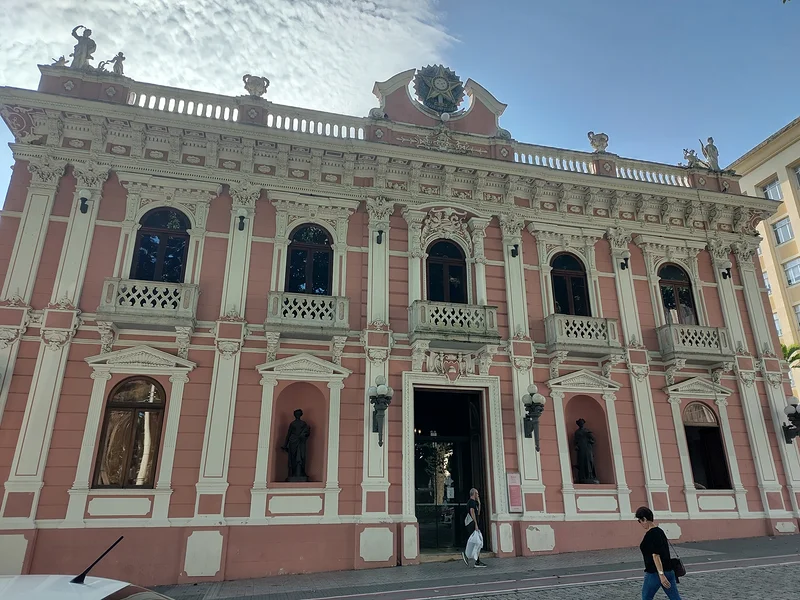
The palace houses the Santa Catarina historical museum and retraces a significant episode in Brazilian history. The first Republic of Floriano Peixoto faced strong opposition from the southern federal…
The palace houses the Santa Catarina historical museum and retraces a significant episode in Brazilian history. The first Republic of Floriano Peixoto faced strong opposition from the southern federal states, where large landowners wanted to keep the rights that the Empire had granted them, specifically the ability to own slaves. A real naval battle took place right in the bay of Florianopolis.
It overlooks the pretty, tree-lined XV de Novembre square. Its peach color is unique. I cannot comment on the inside.
Very informative
Great documentation on the local Native Americans, the slave revolts that led to the creation of quilombos (rebel villages, now of Black descent), and the enrichment of the Portuguese colonists who le…
Great documentation on the local Native Americans, the slave revolts that led to the creation of quilombos (rebel villages, now of Black descent), and the enrichment of the Portuguese colonists who left from this port with all the gold from Brazil. Do not expect a view of the city, as the fort is surrounded by forest with information on the species of trees planted there.
A quick look
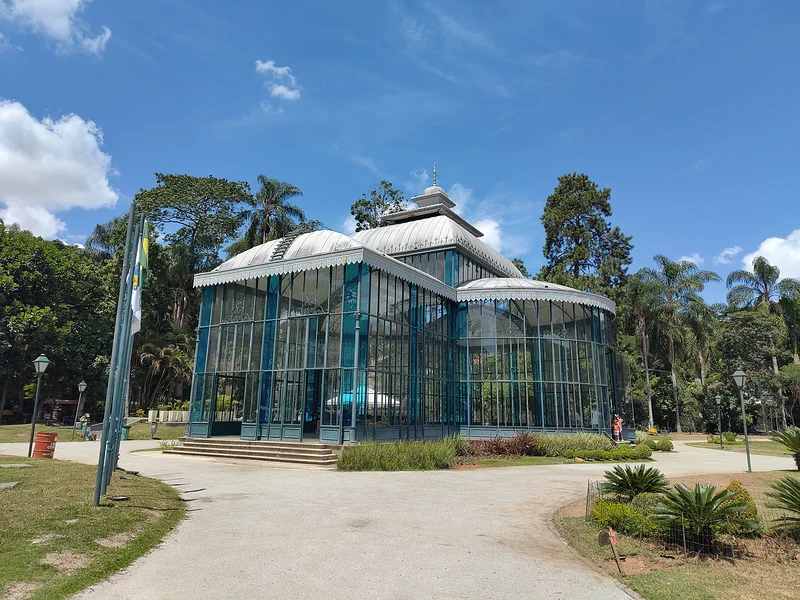
Among the many villas in the historic center, this palace is just another building, a tad more remarkable. Go take a quick look, but do not stay long to suffocate under the glass roof!
A good landmark
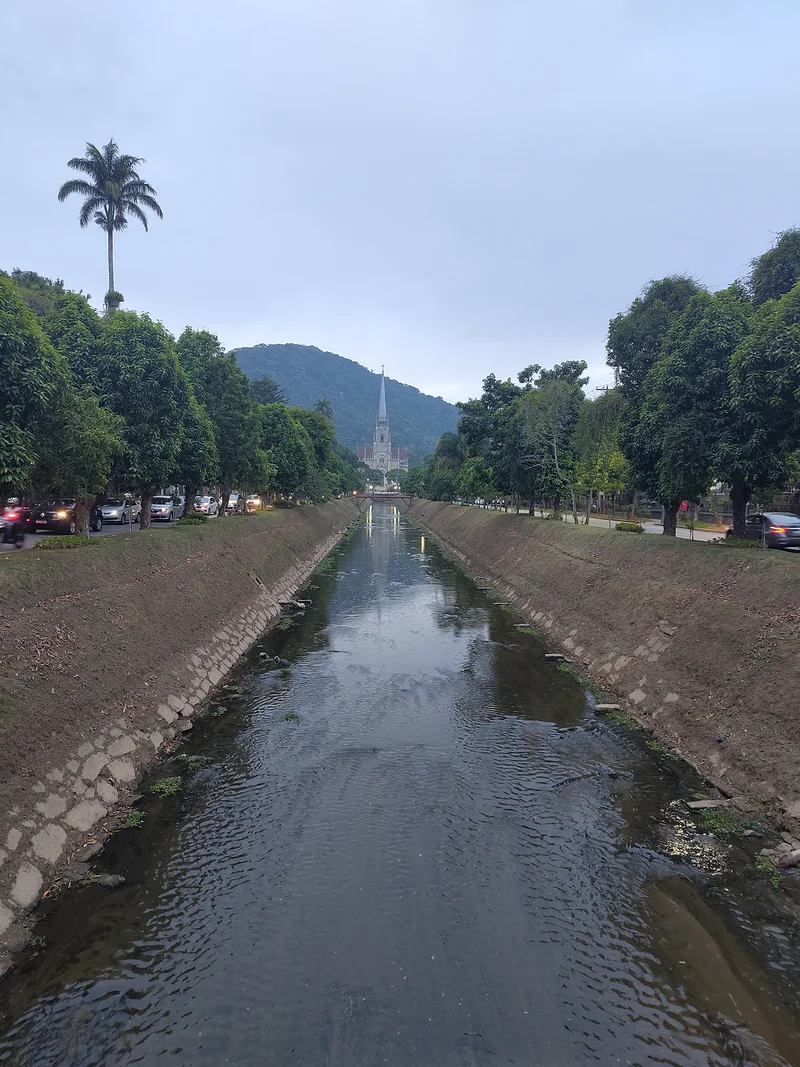
As for the architecture, we have seen better. This cold gray facade is not the most attractive. But in a way, it has its charm when it reflects in the city canals.
Our rankings are powered by thousands of reviews from travelers like you, not the arbitrary pick of a single editor. Every positive review you publish raises the destination’s score.
1 positive review =
+1 reco
Your voice matters!
Have you travelled and discovered amazing places? Share your experience and help the community rank the most beautiful destinations!
Sign up for free to post reviews and make your voice heard.