
Cathedral of Florianópolis: Witness to three centuries of Brazilian history
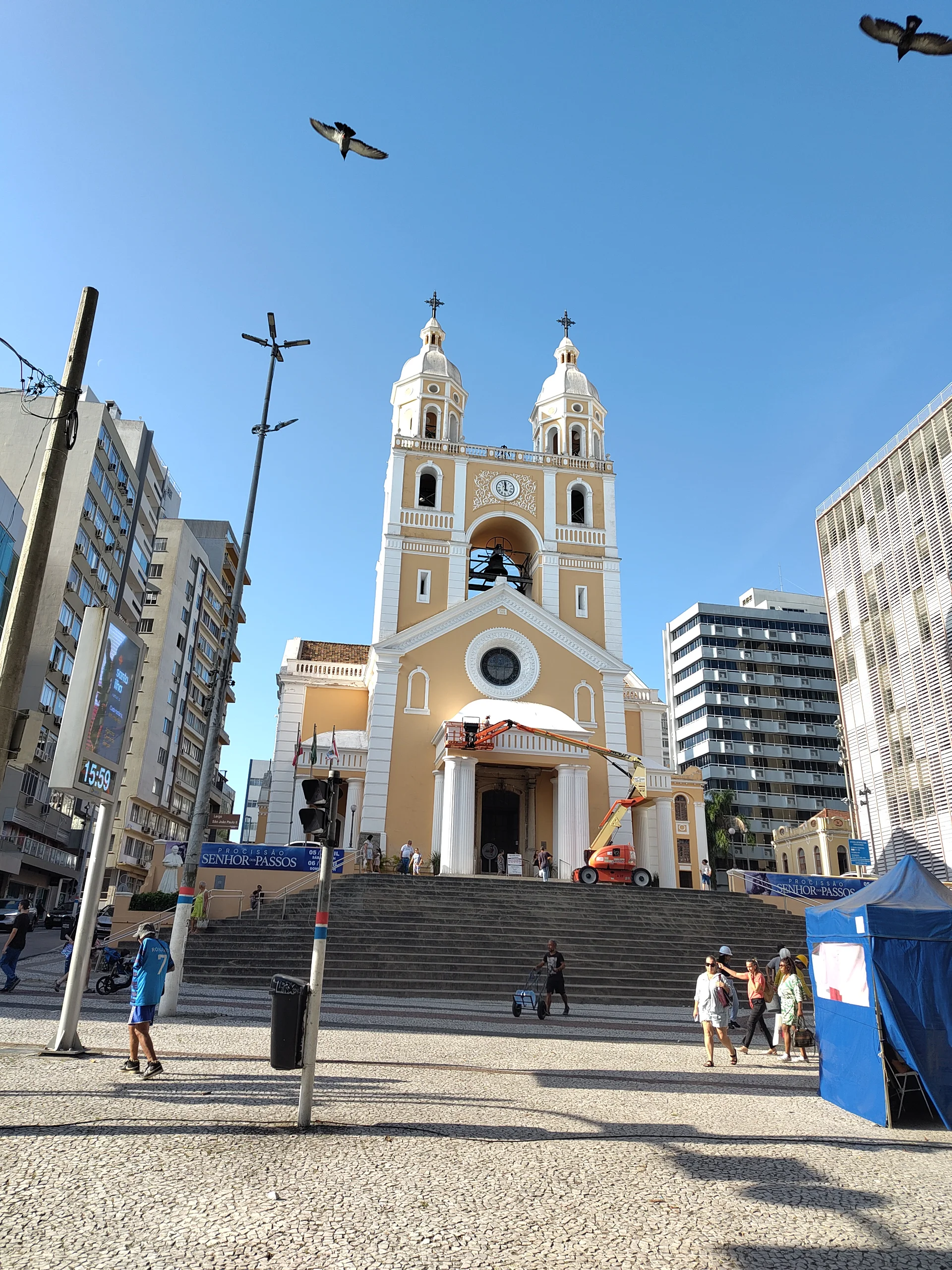
On the Praça XV de Novembro (15th of November Square), the pale pink cathedral has anchored the historic center of Florianópolis since 1773. The chime of its German bells still sets the rhythm for neighborhood life. Inside, the cool stone interior offers a reprieve from the tropical heat, and stained-glass windows cast soft light over the wooden pews.
Why visit this cathedral?
The Cathedral of Florianópolis, dedicated to Nossa Senhora do Desterro (Our Lady of Exile), embodies the history of the city since its inception. The original chapel was built in 1673 by the bandeirante Francisco Dias Velho, the city founder. The present structure, built between 1753 and 1773, became a cathedral in 1908 when the diocese was established.
This mother church has seen it all, including 17th-century assassinations within its walls, major architectural overhauls, and imperial ceremonies. Classified as a National Historic Heritage site, it remains the spiritual and historical heart of the capital of Santa Catarina.
A monumental ensemble revealed in layers
The early 20th-century neoclassical architecture
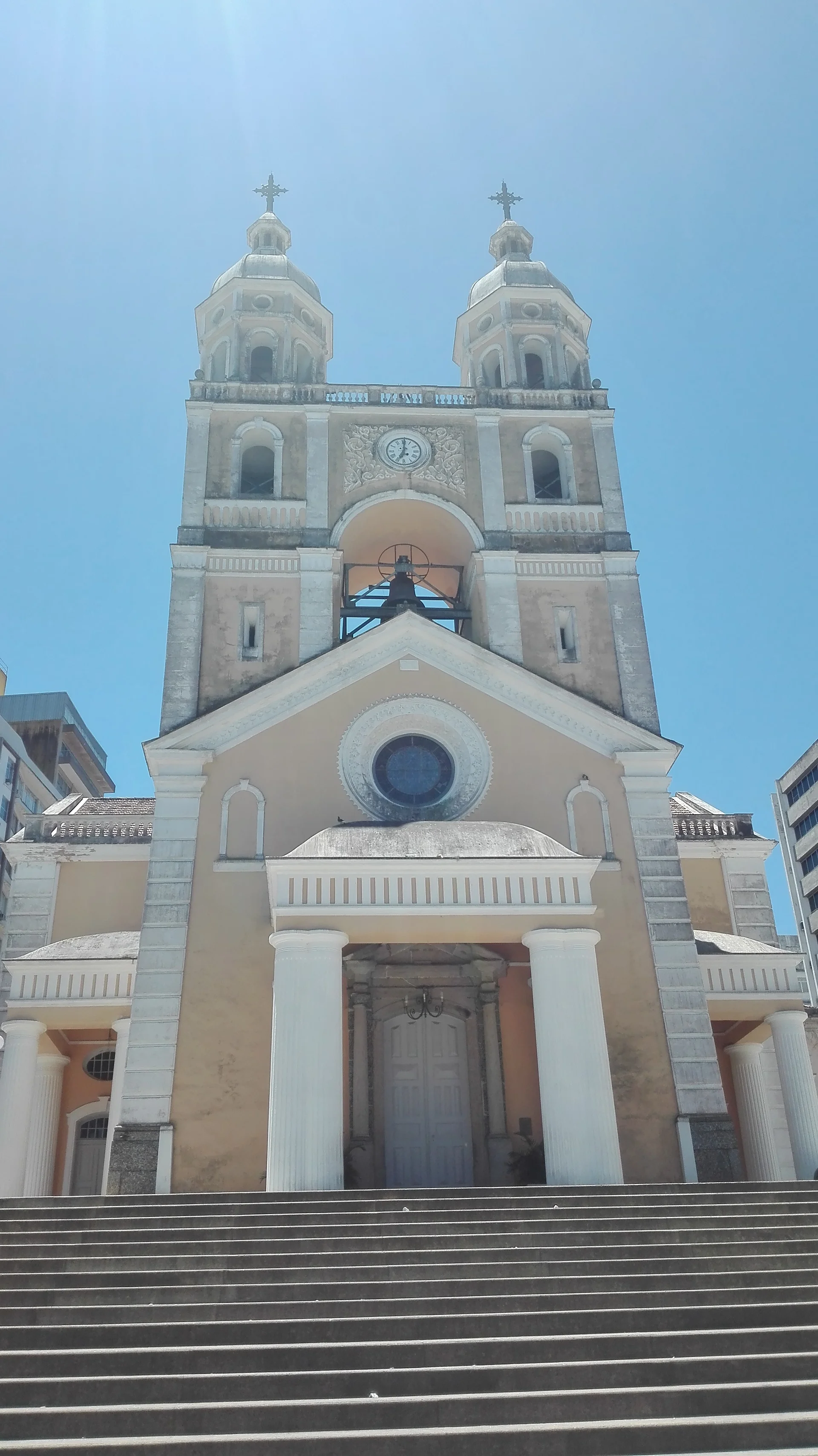
The major renovation of 1922, carried out for the centennial of Brazil's independence, fundamentally changed the cathedral's appearance. The two towers flanking the main facade date from this period. The neoclassical portico adds a sense of gravity to the entrance.
A German clock has sat above the pediment since 1897, marking the hours for the entire city. The architectural style blends Portuguese colonial roots with European touches introduced over time.
The largest carillon in South America
On November 25, 1922, the feast day of Saint Catherine, five bells from Germany were blessed and installed in the towers. They joined two older bells gifted by Emperor Dom Pedro II in 1872 and 1896. The set weighed 5.8 tonnes (about 12,787 pounds) and was the largest carillon in Latin America at the time. Their sound still resonates during masses and religious events.
Treasures of sacred art
The interior holds notable pieces. The "Flight into Egypt" sculpture, blessed in 1902, depicts the Holy Family in life size. The Tyrolean artist Ferdinand Demetz carved it by hand from a single block of cedar, a feat of technical and artistic skill.
The pipe organ, built in 1924 by the German firm Speith Orgelbau of Rietberg, features two manual keyboards, a pedalboard, and approximately 1,100 pipes. The stained-glass windows, installed in 1949 and crafted in São Paulo, bathe the nave in light that shifts throughout the day.
Visiting the cathedral today
The cathedral is open for free visits outside of religious services. Plan for 20 to 30 minutes to explore the space. The building serves as an ideal starting point for exploring the historic center. The Palácio Cruz e Souza (Cruz e Souza Palace) faces the cathedral, while the public market is just a few blocks away.
The atmosphere changes throughout the day. Mornings bring calm and low-angled light across the pink facades, while evening services draw worshippers into a space of quiet reflection.
Good to know:
- Free admission for all visitors
- Accessible to those with limited mobility
- Photography allowed outside of ceremonies
- Respectful attire recommended (shoulders and knees covered)
- Several daily masses for those wishing to attend a service
Opening hours
| Monday | 12:15-19:15 |
|---|---|
| Tuesday | 12:15-19:15 |
| Wednesday | 12:15-19:15 |
| Thursday | 12:15-19:15 |
| Friday | 12:15-19:15 |
| Saturday | 12:15-19:15 |
| Sunday | 07:30-20:30 |
Free admission outside of religious services. Mass times vary.

It overlooks the pretty, tree-lined XV de Novembre square. Its peach color is unique. I cannot comment on the inside.