
Visiting the Church of Saint Francis
Located in the historic center of Salvador, the Church of Saint Francis stands as one of the most prominent examples of Portuguese colonial architecture in Brazil. Built during the 17th and 18th centuries by the Franciscan order, the site is defined by its ornate interior and a history deeply intertwined with colonial expansion and religious orders.
A simple facade hiding an opulent interior
From the outside, the building features a relatively restrained architectural style typical of Franciscan construction. Once you step through the doors, however, you encounter a dramatic interior: walls covered in blue and white azulejos (ceramic tiles) imported from Portugal, finely carved woodwork finished with gold leaf, and a baroque altar of exceptional detail.
The contrast between the sober exterior and the exuberant interior is one of the most striking features of the site.
Azulejos as a testament to Portuguese art
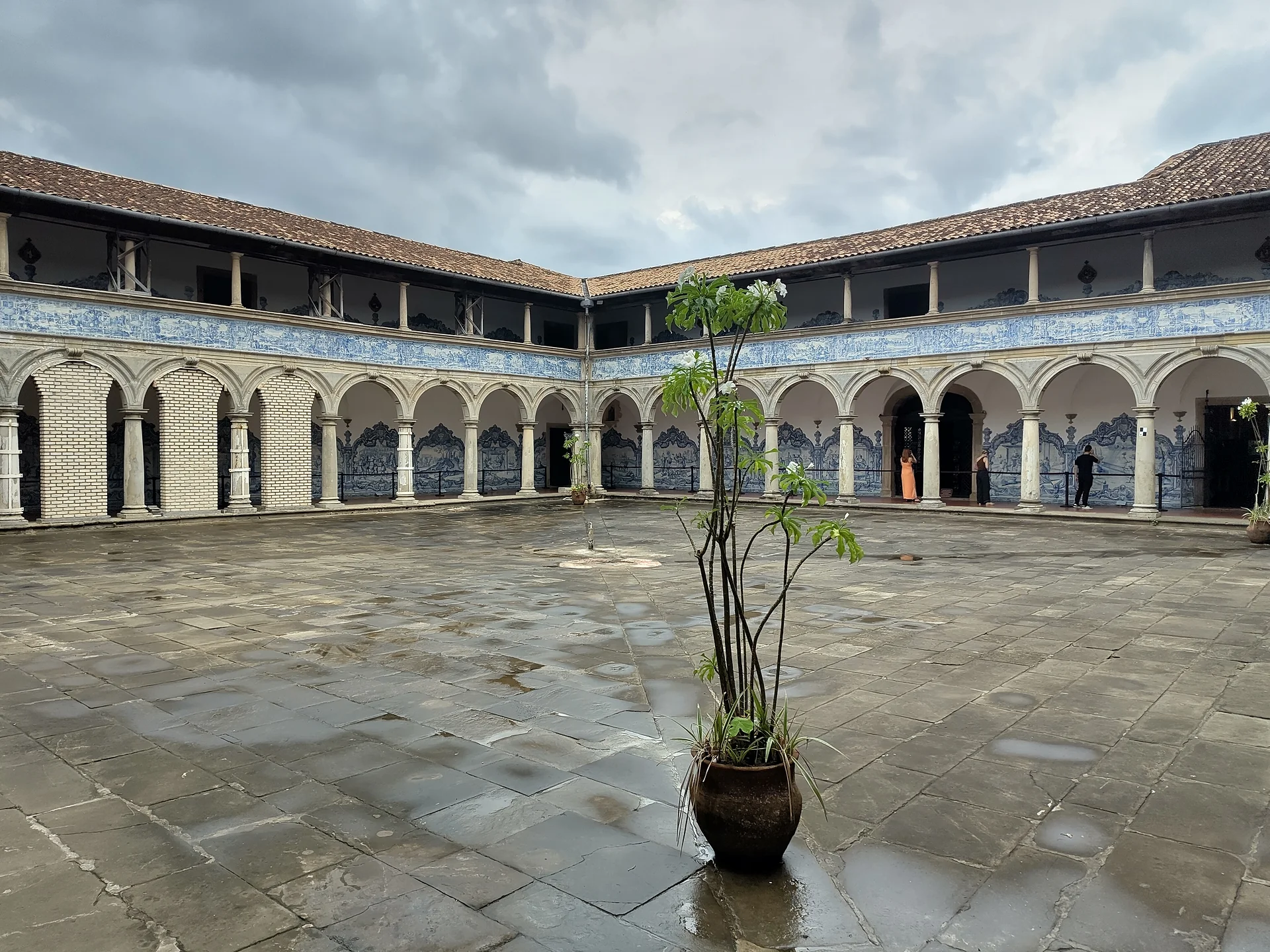
The azulejos lining the walls of the cloister are among the most significant in Brazil. These painted ceramic tiles depict biblical scenes and moral maxims inspired by ancient philosophy. They reflect the artistic refinement of the colonial era and the cultural influence Portugal exerted on Brazil.
A symbol of the Franciscan presence
Beyond its aesthetic appeal, the church reflects the major role of the Franciscans in the evangelization of Brazil. Founded to support the establishment of Catholicism in the region, the site has remained an influential religious center for centuries. Ceremonies are still held here today, continuing the long-standing spiritual tradition of the location.
Opening hours
| Monday | 09:00-17:00 |
|---|---|
| Tuesday | 09:00-17:00 |
| Wednesday | 09:00-17:00 |
| Thursday | 09:00-17:00 |
| Friday | 09:00-17:00 |
| Saturday | 09:00-17:00 |
| Sunday | 10:00-15:00 |
Closed on national holidays except for exceptions.

Lots of rooms covered in azulejos and a gold-covered baroque church.