Algeria: Africa's Largest Country That Almost Nobody Visits
Africa's largest country sits roughly 10 to 12 flying hours from the US East Coast, yet draws a fraction of the international visitors that Morocco or Tunisia pull in. No overrun medinas packed with selfie sticks, no backpacker hostels on every corner: 925,000 square miles of Mediterranean coastline, Berber mountain ranges, and Saharan desert, with foreign visitor numbers that remain almost comically low.
A destination that asks you to commit
This is not a plug-and-play trip, and that's exactly the point. Tourist infrastructure is thin, getting around takes planning, and some areas of the deep south require a licensed local guide. For travelers who can work within those constraints, the payoff is real.
thumb_up A good fit for:
- Desert lovers and anyone drawn to vast Saharan landscapes
- Archaeology enthusiasts, especially Roman-era sites
- Hikers looking to explore the Hoggar or Kabylie ranges
- Travelers who want genuine human connection, not the sanitized version tourism usually delivers
- Anyone curious about Berber culture and Arab-Andalusian heritage
- Budget-conscious travelers who want a Mediterranean country without Mediterranean prices
warning Not a good fit for:
- Travelers who expect a smooth, well-oiled tourism machine with English-speaking guides and boutique hotels
- Anyone looking for nightlife and a party scene
- Those hoping to rent a car and drive freely across the entire country
- Solo female travelers with limited international experience, particularly outside major cities
- All-inclusive beach resort seekers
One of the most affordable countries on the Mediterranean
| Trip type | Where | Length | Estimated budget |
|---|---|---|---|
| Beach vacation | Béjaïa / Mostaganem | 1 week | ~43,000 DZD to 86,000 DZD (roughly $320 to $640) |
| Guided Sahara trek | Tamanrasset / Hoggar | 10 days | ~100,000 DZD to 200,000 DZD (roughly $740 to $1,480) |
| City cultural trip | Algiers / Constantine / Tlemcen | 5 days | ~36,000 DZD to 72,000 DZD (roughly $265 to $530) |
| Archaeological road trip | Timgad / Tipasa / Djémila | 10 days | ~57,000 DZD to 115,000 DZD (roughly $425 to $850) |
| Mountain hiking | Kabylie / Djurdjura | 1 week | ~43,000 DZD to 86,000 DZD (roughly $320 to $640) |
Is Algeria safe to visit?
Algeria's reputation took a serious hit during the civil war of the 1990s and hasn't fully recovered in the Western imagination. The reality on the ground is different. The terrorism risk has dropped significantly, and the major northern cities are safe for foreign visitors. Before you book, check the US State Department's Algeria travel advisory at travel.state.gov and enroll in the Smart Traveler Enrollment Program (STEP) to receive any security alerts directly.
Two areas deserve extra caution: the border regions with Libya and Mali, and parts of the deep south where a licensed local guide is legally required. These aren't reasons to avoid the country. They're just part of preparing for a destination that hasn't been packaged for mass tourism yet.
Traveling solo as a woman in Algeria
Worth addressing directly. Algerian society is conservative, and women traveling alone can encounter persistent staring or unsolicited comments, more so outside major cities. That's not a reason to skip the trip, but it's worth going in prepared.
Covering shoulders and knees cuts down on most of those situations considerably. For the Saharan regions, traveling with a companion or joining an organized group is the practical call. Algerian women are often your best resource: don't hesitate to position yourself near them on public transit or in shared spaces.
750 miles of coastline, almost no crowds

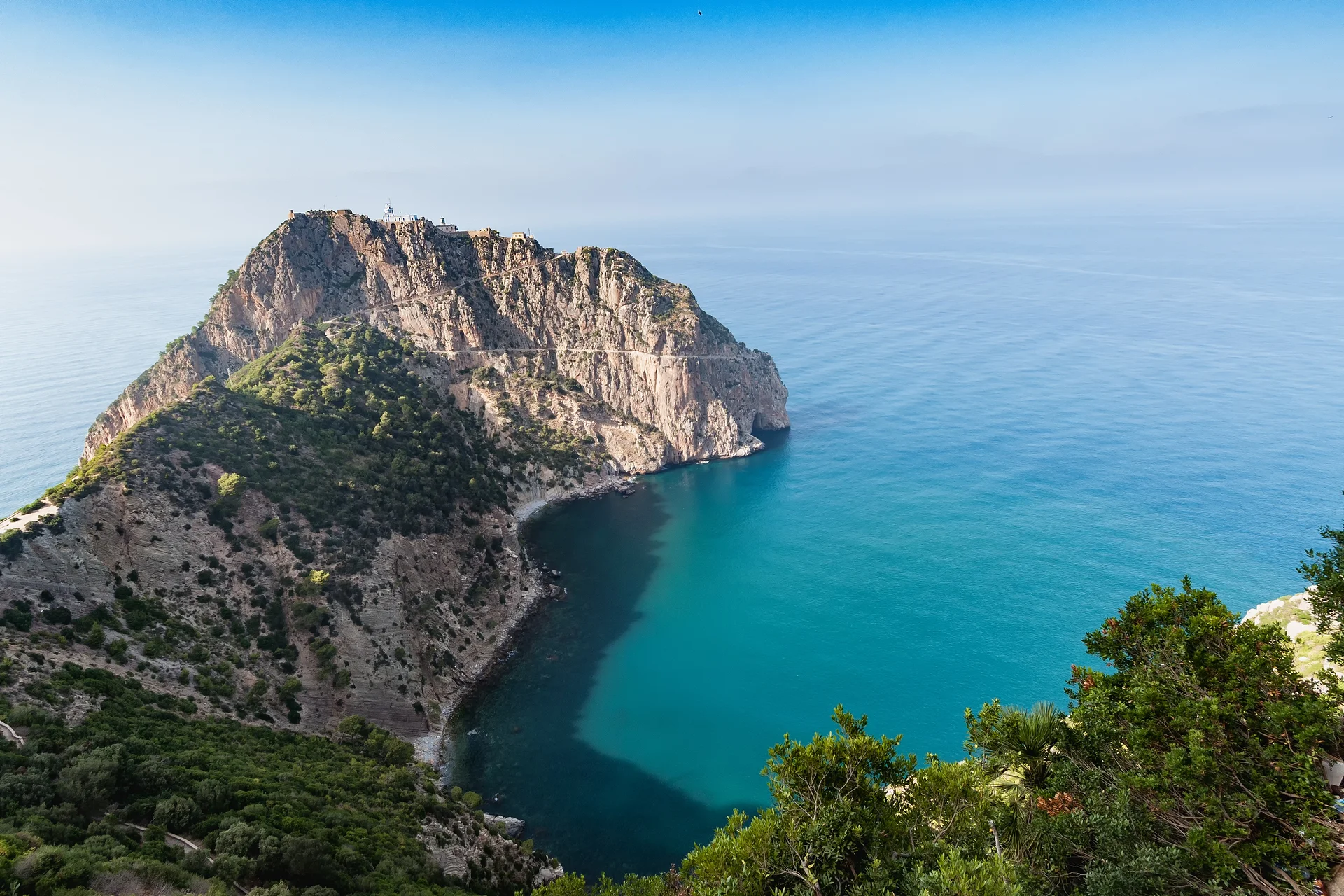
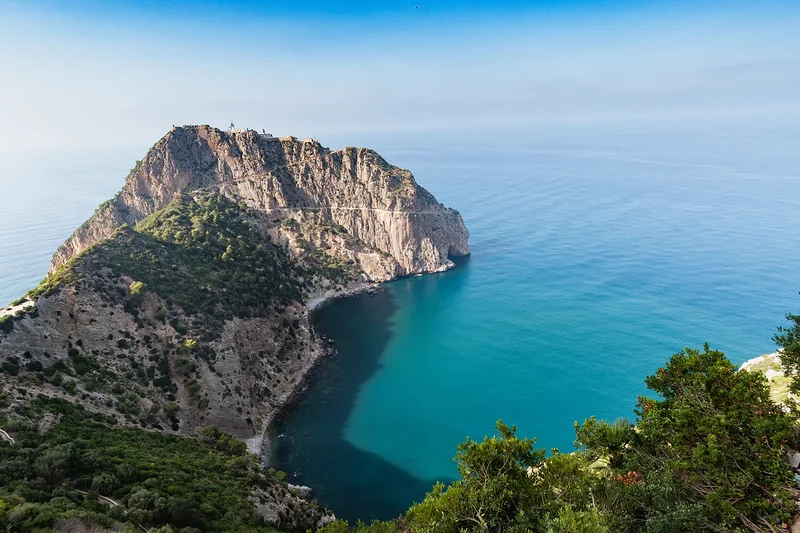
The Algerian coast is one of the Mediterranean's best-kept secrets. Largely undeveloped, almost absent from international travel catalogs, it strings together stretches of clear water that you'll often have entirely to yourself, except in July and August when Algerians themselves head to the beach in force.
Béjaïa, in the Petite Kabylie region, pulls off the rare combination of sea and mountains in one place. The beaches at Saket and Tichy are genuinely beautiful, and Gouraya National Park right nearby delivers serious wild landscape. Further west, Mostaganem has family-friendly beaches like Les Sablettes and well-preserved Ottoman architecture in its old quarters.
If you're flying into Algiers, Zéralda, about 20 miles west of the capital, is a low-key, well-equipped option for a beach day or two.
Insider tip: For turquoise water and dramatic cliffs far from any crowd, head to Rachgoun and Sassel, near Aïn Témouchent in the far west. These beaches are the real deal for anyone after a truly unspoiled stretch of coast.
The northern mountains, a hiker's territory

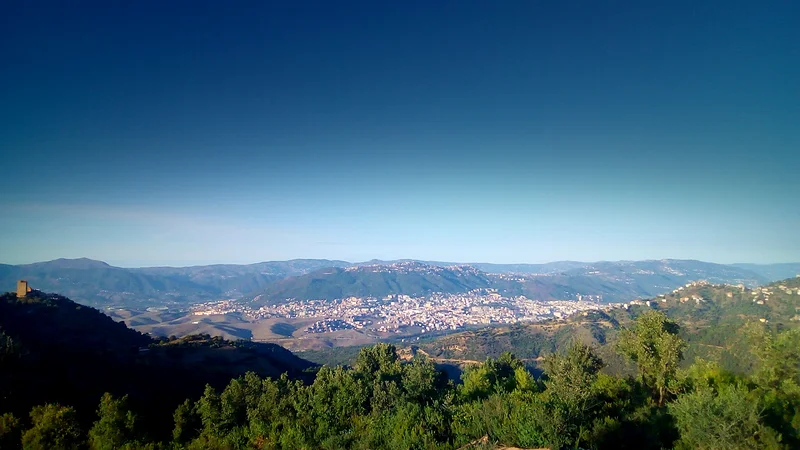
Northern Algeria is dominated by the Tell Atlas, a green, rugged mountain range that almost no foreign travelers explore. Kabylie is the standout region: Berber villages perched on ridgelines, well-marked hiking trails, and a culture and language entirely distinct from Arabic.
The Djurdjura massif tops out above 7,500 feet and shelters a national park that gets real snow in winter. It's one of the only places in North Africa where you can ski. In summer, the trails open up to sweeping views over the Kabyle valleys. The city of Tizi Ouzou is the logical base for exploring this area.
The Sahara: the world's greatest desert?

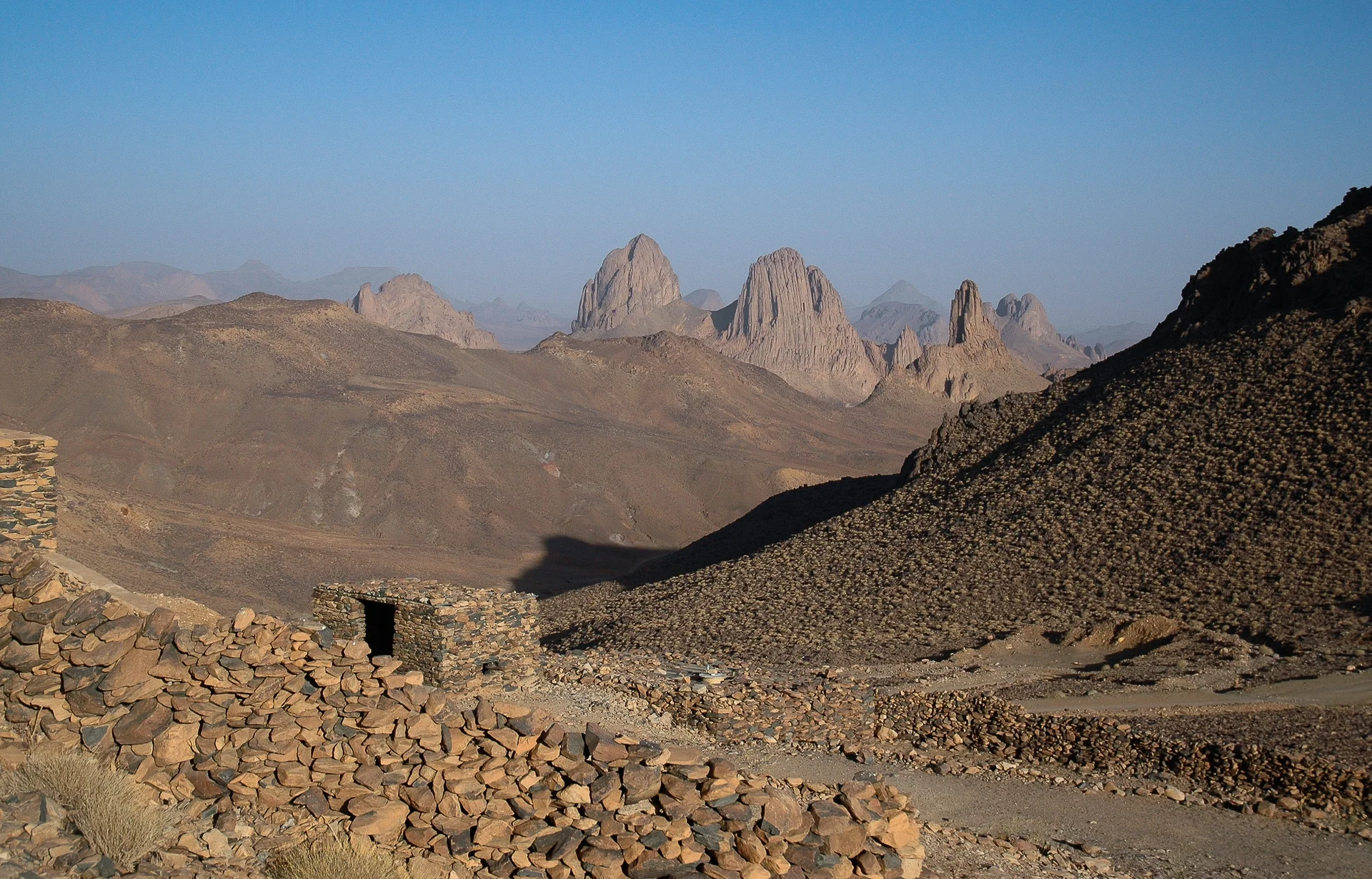
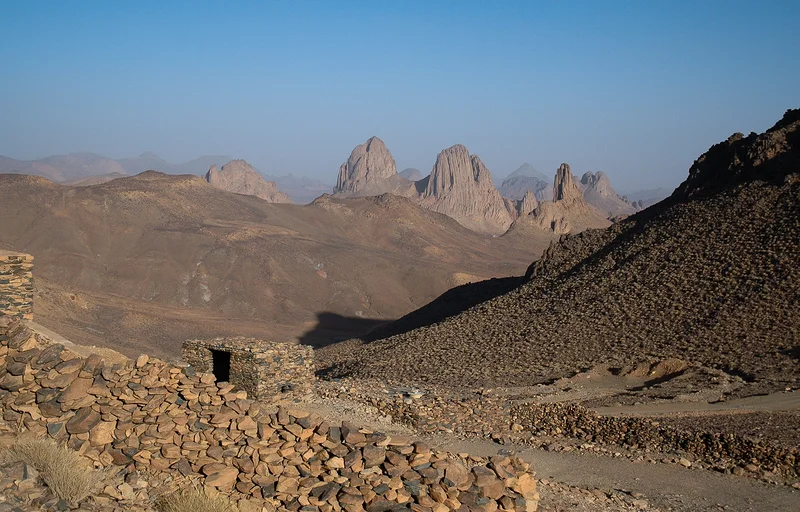
Algeria holds the largest share of the Sahara of any country in Africa. And this is not a uniform expanse of sand dunes. It shifts between golden dunes, rocky plateaus, lost oases, and canyons carved over millennia, more like the American Southwest scaled up to an almost incomprehensible size.
Tassili n'Ajjer, a UNESCO World Heritage Site, preserves prehistoric rock art thousands of years old. The Hoggar massif, reached from Tamanrasset, throws up bizarre volcanic formations in near-total silence. At the Assekrem plateau, 9,100 feet up, the hermitage of Charles de Foucauld (a French Catholic missionary who lived here in the early 1900s) frames one of the most affecting sunrises you're ever likely to see.
The Algerian Sahara ranks among the three most impressive deserts we've had the chance to visit. It's a shame so few travelers make it out here.
Three thousand years of history in one country
Roman archaeological sites

Algeria is one of the richest countries in Africa for archaeological sites. Tipasa, a UNESCO-listed Roman city, sits above the Mediterranean with quiet grandeur. Timgad, nicknamed the "Pompeii of Africa," preserves a Roman street grid that's almost entirely intact: streets, forum, bathhouses, all of it still readable in a way that's genuinely rare in North Africa.
The major cities

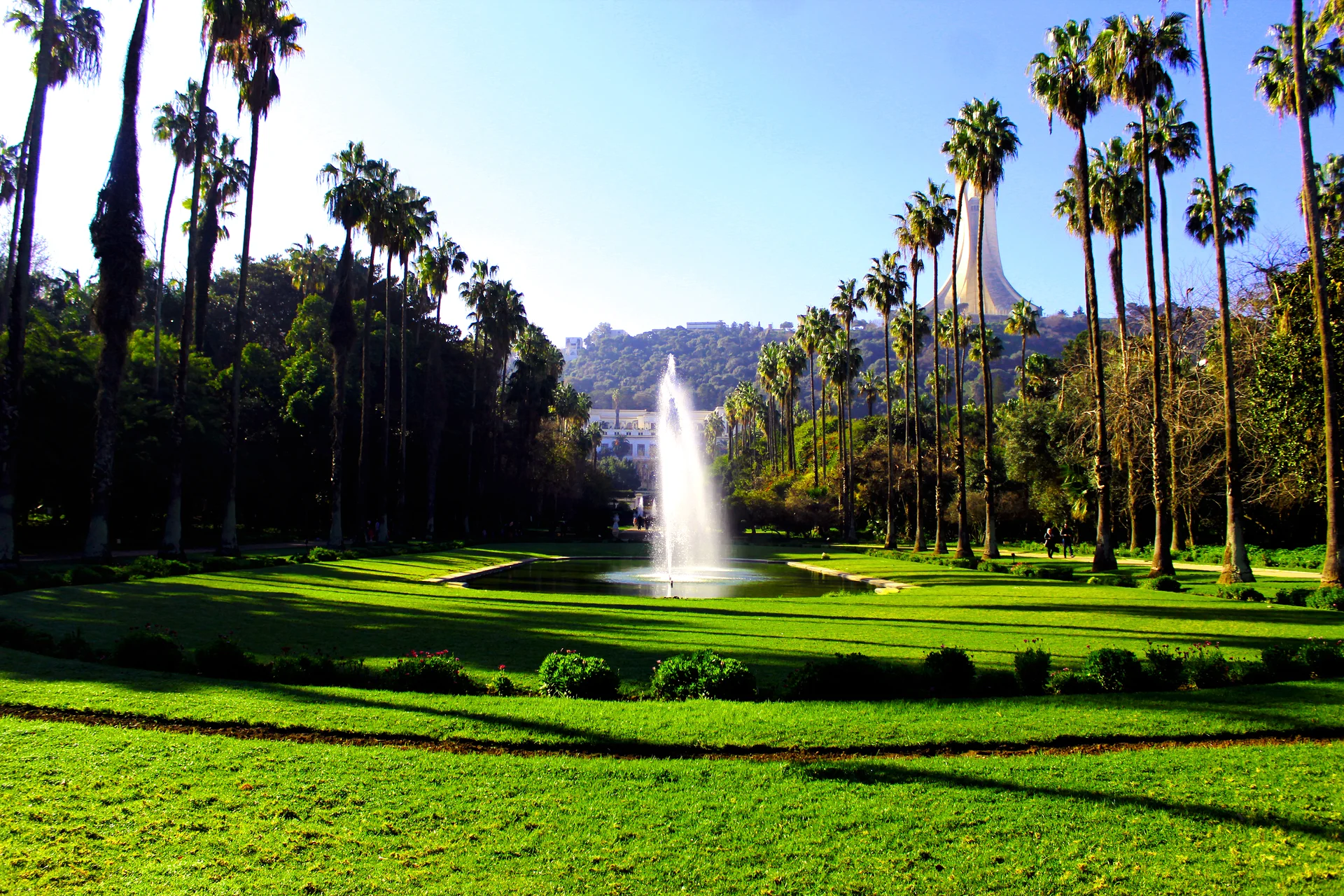
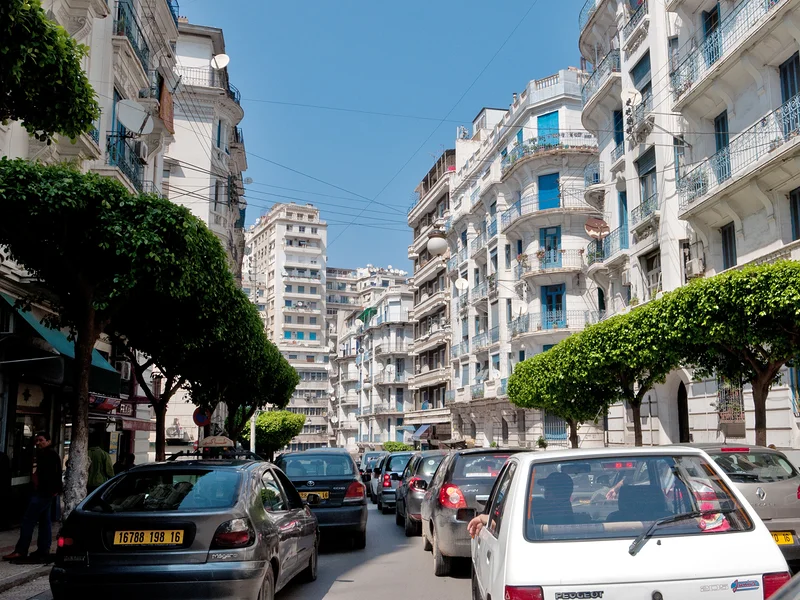
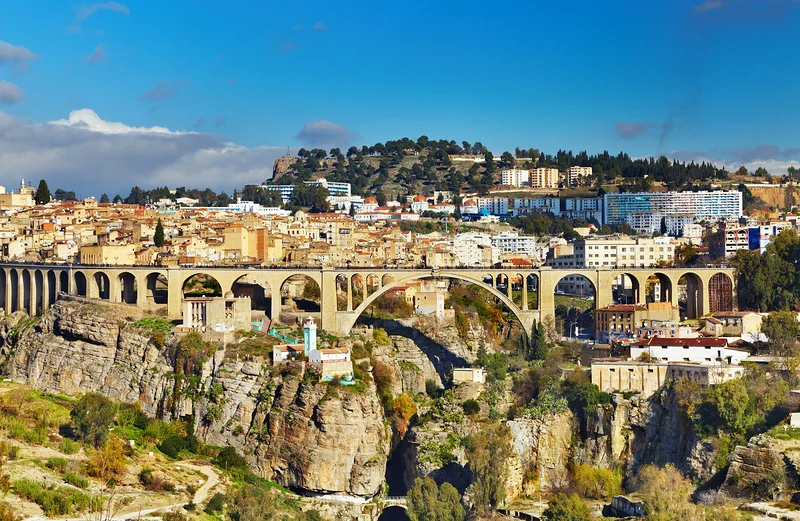
The Casbah of Algiers, another UNESCO site, is a maze of whitewashed alleys where Ottoman and Arab-Andalusian history shows up on every facade. In Tlemcen, the mosque of Sidi Boumediene stands as one of the finest expressions of Islamic civilization in the Maghreb during its medieval golden age. And Constantine, perched above its gorges and connected by suspension bridges including the famous Sidi Rached Bridge, is a city that will genuinely make your stomach drop.
Oran, the major city of the west, earns a stop too. Once nicknamed the "little Paris" of North Africa for its cosmopolitan character, it's better known today as the birthplace of raï, a musical genre that grew out of working-class cabarets in the 1920s as a way to say publicly what society preferred to keep quiet.
Craftsmanship passed down through generations

Local markets are where you get closest to the country's craft traditions: clay pottery, Kabyle silver jewelry with geometric patterns, rugs in bold colors. The Timgad Festival, held every summer inside the Roman ruins, brings together Arab, Berber, and Mediterranean artists in a setting that's hard to beat.
Algerian food: where spice meets honey
Algerian cooking is generous and aromatic. Chorba, a herb, vegetable, and lamb soup, is what you want on a cool evening in the Atlas. Couscous comes in dozens of regional variations, and every family has its own recipe, passed down and guarded accordingly.
Bourek, brick pastry stuffed with meat, fish, or shrimp, shows up everywhere at any hour. Mechoui, a whole lamb roasted on a spit, is reserved for major occasions. Getting invited to share one with a local family is one of the most memorable things that can happen to you on this trip.
On the sweet side, Algerian pastries built on almonds, honey, and orange blossom reach a level of refinement that surprises most first-timers: baklava, gazelle horns, makrout (semolina and date pastries). A Turkish coffee on a terrace with an assortment of these is one of the better ways to spend an afternoon.

When to go to Algeria
The sweet spot is January through May. Spring is mild in the north, Kabylie turns green, and the desert is still accessible. Fall, from September through November, works well for cities and the coast.
July and August are a bad idea anywhere inland: temperatures regularly push past 104°F. For Sahara trekking, the optimal window runs December through April, when nights are cold but days are manageable.
If you're non-Muslim and easy access to food and drink during the day matters to you, check the Ramadan dates before you book.
Getting to Algeria
There are no direct flights from the US to Algeria. The standard routing is through a European hub, most commonly Paris, London, or Madrid, with a connection to Algiers, Oran, Constantine, or Annaba. Air Algérie covers most of these routes. Total travel time from the US East Coast typically runs 12 to 15 hours depending on your connection. Transavia also operates routes from several European cities.
A less obvious option: the ferry from Marseille to Algiers or Oran with Algérie Ferries. The crossing takes 20 to 24 hours. Slower, but significantly cheaper if you're bringing a vehicle over from Europe.
Getting around Algeria
For long distances between northern cities, the train is comfortable and inexpensive. The national rail network SNTF connects Algiers to Oran, Constantine, Annaba, and several other destinations. Long-distance buses cover an even wider network at very low fares. Shared taxis, called louages, are the most flexible option for intermediate trips.
Renting a car deserves serious thought, and not just because vehicles are genuinely hard to find. Algerian roads, particularly around major cities, are known for unpredictable driving conditions and variable road quality. In the Sahara, a 4x4 with a local driver-guide is not just recommended, it's legally required in certain regulated zones.
Air Algérie runs domestic flights to the south, including Tamanrasset and Djanet. These flights save thousands of miles of rough track and are reasonably priced. For Kabylie or the coast, local public transit gets the job done.