
Visiting Djemila Ruins
A UNESCO World Heritage site
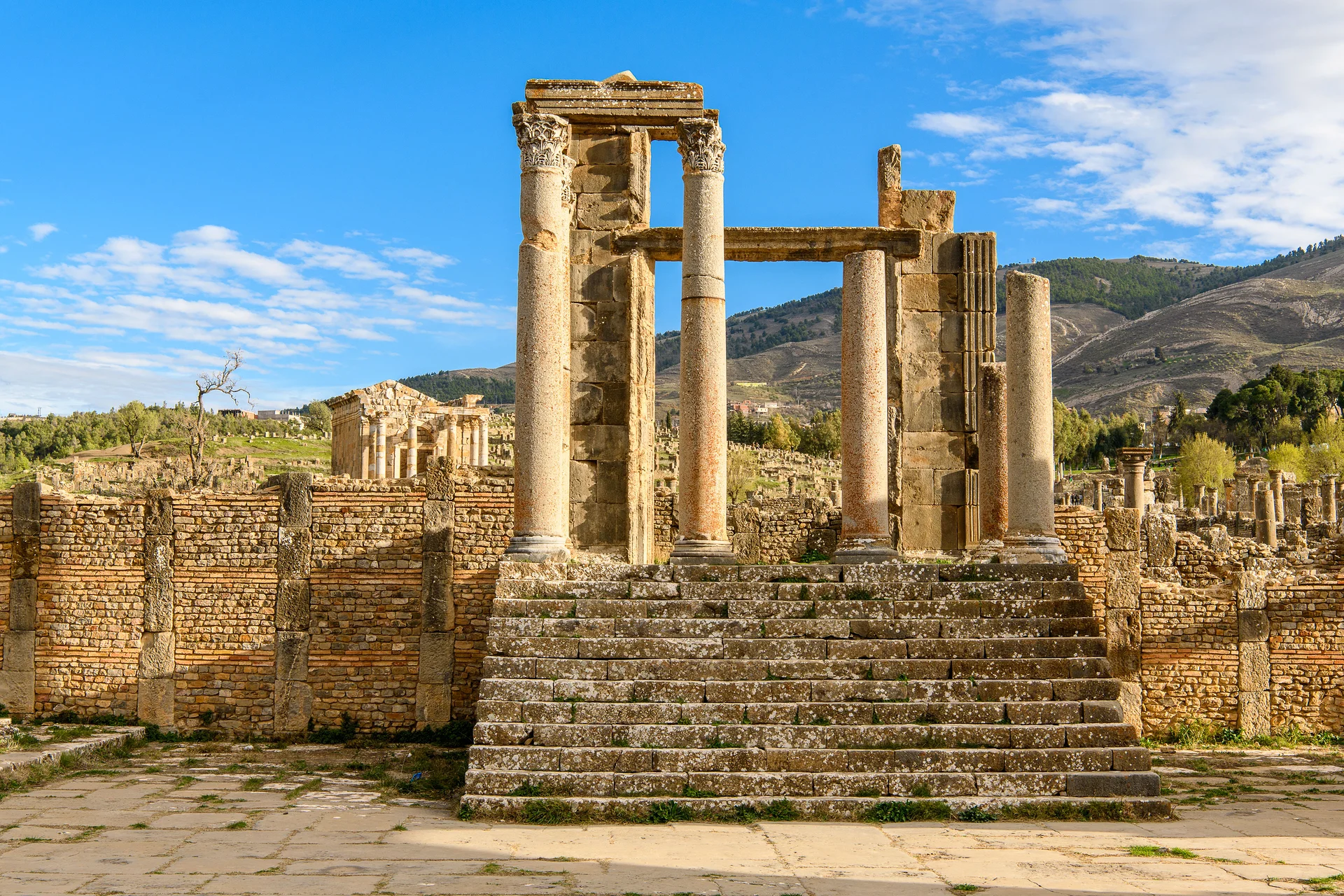
Tucked into the mountains of Petite Kabylie, Djemila Ruins, also known by its ancient name Cuicul, rank among the best-preserved Roman archaeological sites in Africa. Designated as a UNESCO World Heritage site, they reflect the scale of the Roman Empire and its reach in this region. Established in the 1st century, this former military colony evolved into a prosperous city fueled by agriculture and trade.
A walk through the Roman history of Algeria
Walking through Djemila, you will see remarkably intact remains. The forum, the center of political and social life, stands out for its scale and imposing columns. The thermae (public baths), temples, and homes decorated with mosaics offer a look into the Roman way of life. The amphitheater, which once held thousands of spectators, serves as another example of Roman architectural engineering. Take the time to traverse the paved alleys and experience the scale of this ancient city.
A museum to round out your visit
The Djemila Museum, located near the ruins, displays an impressive collection of artifacts unearthed on the site. You can view statues, tools, and particularly detailed mosaics depicting mythological scenes and daily life. These pieces round out the visit by providing additional context on the history of the region.
Opening hours
| Monday | 08:00-18:00 |
|---|---|
| Tuesday | 08:00-18:00 |
| Wednesday | 08:00-18:00 |
| Thursday | 08:00-18:00 |
| Friday | 08:00-18:00 |
| Saturday | 08:00-18:00 |
| Sunday | 08:00-18:00 |
*Information subject to change

Surrounded by mountains, you can discover an entire ancient Roman city at your own pace. The site is large, and it will take you several hours to see it.
A few recommendations:
- Watch out for the heat, as there is little shade, so bring a hat and a water bottle.
- If you cannot present an Algerian passport, make sure you are accompanied by someone who has one, otherwise, it is not possible to enter. Supposedly, it is for YOUR safety, but I do not really understand why. I think it is a shame not to do everything possible to show the world the richness of Algerian heritage!